The ‘Stonehenge giant’ statue is put up for ren

25 09 2012

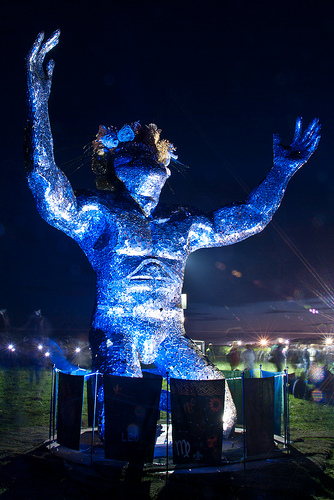
A seven-tonne steel statue, erected at Stonehenge each year to mark the summer solstice, is to be rented out.

The 22ft (6.70m) figure, known as the Ancestor, cost more than £35,000 and took nine months to build.

The Ancestor is over 20ft tall and weighs more than seven tonnes

The Ancestor is over 20ft tall and weighs more than seven tonnes

But its creators, Andy Rawlings and Michelle Topps, have been unable to sell it and now want to rent the statue out for festivals and events.

Mr Rawlings said: “We haven’t seen a penny for him so now we need the Ancestor to be working for us.”

The monumental statue with “head thrown back and arms open wide” made its debut at the summer solstice celebrations at Stonehenge in 2010.

And until recently, the “Big Man” had a prominent position outside the Holiday Inn on the A303 at Solstice Park in Amesbury.

Now it is back at the couple’s workshop undergoing refurbishment and “some anti-rust treatment”.

“He’s actually cost us closer to £40,000 – he’s had a new arm and we were paying for the insurance on having him outside the Holiday Inn,” said Mr Rawlings.

“It’s all costing us and we really need him [the Ancestor] to pay for himself now.”

Created out of thousands of hand-cut pieces of steel welded to a steel frame, the statue can – according to Mr Rawlings – be “easily” dismantled and loaded on to a 7.5 tonne lorry.

‘Easy to assemble’

“People don’t realise how easy he is to assemble and just how moveable he is,” said Mr Rawlings.

“With a crane-assisted lorry, two people can do it in a couple of hours.

“And we really like the idea of renting him out – either for a day or long-term – and taking him to festivals or places like Landsend, Blackpool or even football clubs.

“And he’ll be back for the summer solstice at Stonehenge again next year.”

Refurbishment is expected to be completed within the next couple of months, after which the Ancestor will be available to hire.

Link source: http://www.bbc.co.uk/news/uk-england-somerset-19697900

Blog sponsored by ‘Stonehenge Guided Tours’ www.StonehengeTours.com

The Stonehenge News Blog


Stonehenge marks Autumn Equinox.

23 09 2012

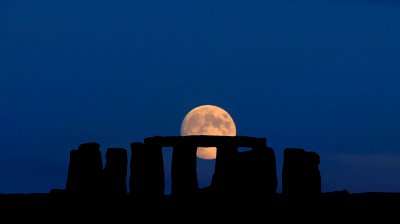
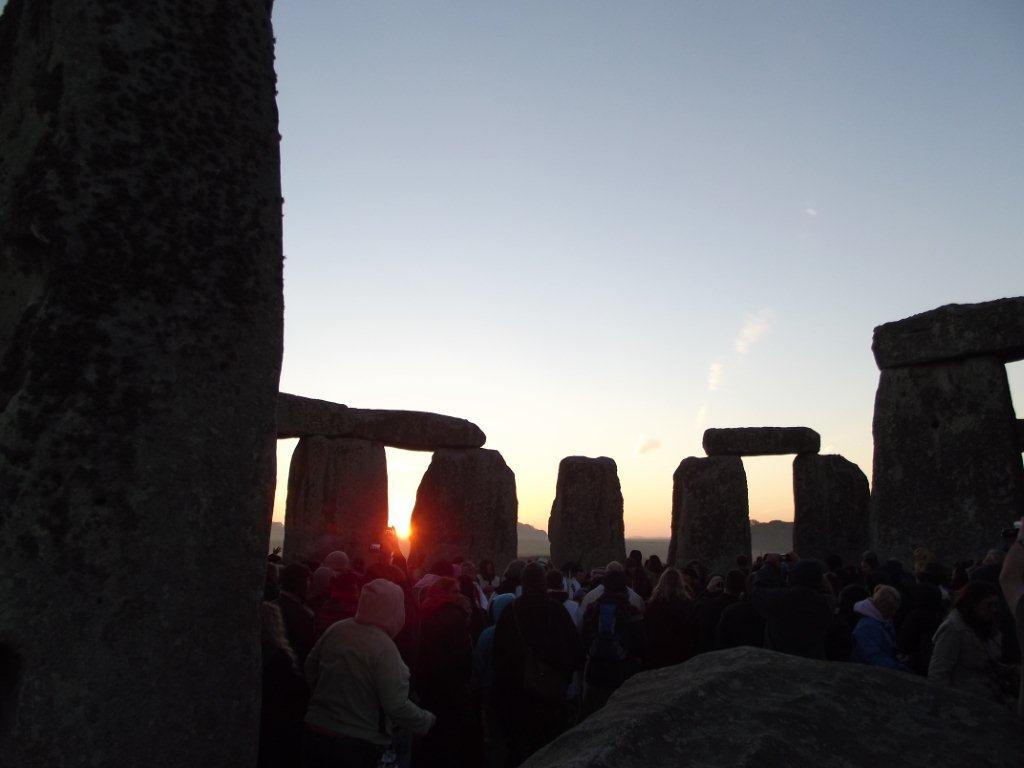
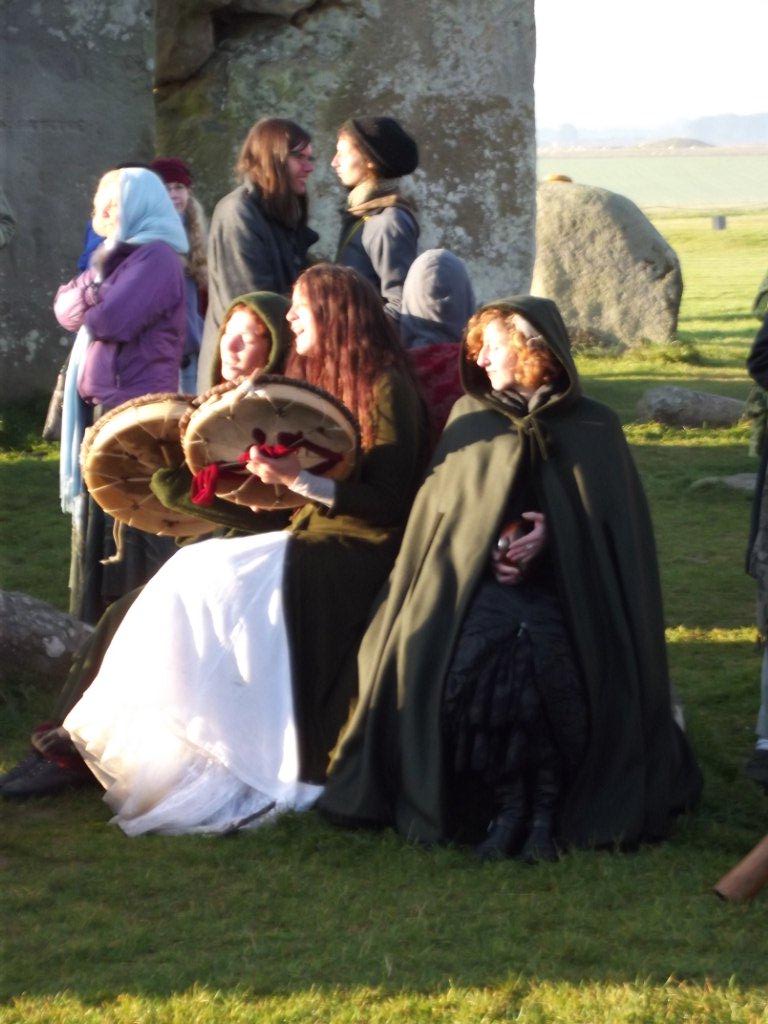
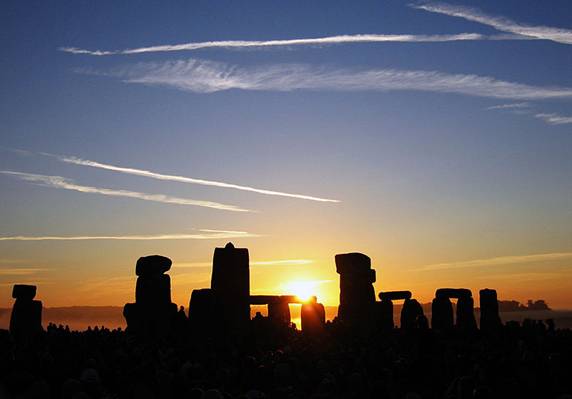
100’s of people gathered at Stonehenge to mark this years Autumn Equinox and enjoyed a spectacular sunrise.

Stonehenge has been an important religious site for over 4,000 years. Modern druids have been celebrating the Autumnal Equinox there since the early 20th Century.

On September 21st – 23rd every year 100’s of people travel to ancient religious sites, such as Stonehenge and Avebury in England, in order to celebrate the Spring and Autumn Equinox. The Autumn Equinox is also known as Mabon and is an important festival day for many modern pagans.

People were unable to access Stonehenge during the Equinox and Solstice after a ban was imposed in 1985 at the request of English Heritage. This ban was lifted in 2000 and annual celebrations have been held ever since

Almost all pagans celebrate a cycle of eight festivals. Four of the festivals have Celtic origins and are known by their Celtic names, Imbolc, Beltane, Lughnasadh and Samhain. The other four are points in the solar calendar. These are Spring and Autumn Equinoxes, and the Summer and Winter Solstices.

Autumn Equinox Photo stream – click here

The Autumnal Equinox marks the moment when the sun crosses the equator on its apparent journey southward and we experience a day and a night that are of equal length. It’s the time of the final harvest when many crops including apples, grapes, nuts, squash, corn, and berries are gathered. Astrologically speaking, this is the date when the Sun enters the sign of Libra, the balance.Stonehenge Autumn Equinox 2012

The equinoxes (there are two- the Vernal Equinox, when the Sun enters Aries around March 21, is the first day of spring) have a rich place in mythology and ancient tradition. From Stonehenge in the British Isles to the pyramids in Central America, ancient cultures created means by which to measure the change of the seasons. For example, the Anasazi Indians of Chaco Canyon, NM made a hole between some boulders that the sun could shine through. The shafts of sunlight made a dagger shape of the far wall and they drew a spiral there to mark the equinox. It is said that the Druids would cut wands from the willow trees at this time of year. The willow was sacred to them and the wands were seen as powerful tools for use in divination.

Mythically, this is the day when the god of light is defeated by his twin and alter-ego, the god of darkness. It is the time of year when night conquers day- propelling us toward the Winter Solstice which marks the longest night of the year. Mabon, a Welsh god who symbolizes the male fertility of the land, is associated with the Autumnal Equinox. In some myths, he is seen as the male counterpart to Persephone of the Greek myths.

During the weeks around the Equinox, assess your harvest of the seeds of dreams and goals you planted earlier this year. Analyze your progress, acknowledge your successes, and give thanks. After that point of balance, natural law encourages us to turn inward for growth. Like Persephone going to the underworld on her annual journey, the time from the Autumnal Equinox to the Winter Solstice is a perfect opportunity to take a deep look inside yourself. Weed out what has completed its cycle and nourish the roots of what you want to grow again in spring.

Link: http://beforeitsnews.com/spirit/2012/09/autumnal-equinox-2012-harvest-your-gold-2445928.html
L
ink: http://news.nationalgeographic.com/news/2012/09/110921-autumnal-equinox-northern-hemisphere-first-day-fall-2012-science/
Link:

Blog sponsored by The Stonehenge Tour Company – www.StonehengeTours.com

Merlin says “A Spectacular sunrise and a peaceful gathering made this years Equinox celebrations one to remember”

The Stonehenge News Blog


Autumnal Equinox 2012

18 09 2012
The Autumn Equinox (also known as Mabon) is celebrated when day and night are of equal duration before the descent into increasing darkness and is the final festival of the season of harvest.  For many pagans, this is the time to reflect on the past season, and to recognize the balance of the year has changed. 2012 Autumnal Equinox takes place on September 22nd, at 16.49am UK time , but when ‘open access’ to Stonehenge starts is decided by English Heritage and depends on visibility.

The sunrise is at 6.48am.  Equinox sunrise is Saturnday 22 September 2012, expect English Heritiage to open their gates around 6 a.m

Stonehenge EqunoxPublic access to Stonehenge is denied after dark, so if you want to see the sunset on September 22nd (18.59pm), you’ll have to stand on either the Avenue or on the side of the A344

The Autumnal Equinox

In September is the Fall Equinox, which has come to be called Mabon by many contemporary Neo-Pagans. Occuring approximately on September 21st, this is the day when the hours of daylight and nighttime are once again balanced. Calender days from now until the Winter Solstice will slowly get shorter and shorter in their daylight hours.

Agriculturally, this time of year the harvest is now in full swing, with late summer and fall fruits, vegetables and grains being gathered up before winter. This is the time of year a lot of canning or preserving of garden foods takes place. Hunting season also starts around this time, and this was when farmers would slaughter animals and preserve meat for the coming months as well.

This holiday is the last of the harvest holidays which began with the summer solstice and continued with Lammas.

September 22nd Harvest time!
The Autumn Equinox or Harvest Home is also called Mabon, pronounced ‘MAY-bon’, after the Welsh god Mabon ap Modron, which means literally ‘son of mother’. Mabon appears in ‘The Mabinogion’ tale. The Druids call this celebration, Mea’n Fo’mhair, and honour The Green Man, the God of the Forest, by offering libations to the trees. The Welsh know this time as ‘Alban Elfed’, meaning ‘light of autumn’. This is the point of the year when once again day and night are equal – 12 hours, as at Ostara, the Spring Equinox. The Latin word for Equinox means ‘time of equal days and nights’. After this celebration the descent into winter brings hours of increasing darkness and chiller temperatures. It is the time of the year when night conquers day. After the Autumn Equinox the days shorten and nights lengthen. To astrologers this is the date on which the sun enters the sign of Libra, the scales, reflecting appropriately the balanced day and night of the equinox. This was also the time when the farmers brought in their harvested goods to be weighed and sold.

Harvest festival This is the second festival of the season of harvest – at the beginning of the harvest, at Lammas, winter retreated to his underworld, now at the Autumn equinox he comes back to earth. For our Celtic ancestors this was time to reflect on the past season and celebrate nature’s bounty and accept that summer is now over. Harvest Home marks a time of rest after hard work, and a ritual of thanksgiving for the fruits of nature. This is the time to look back on the past year and what you have achieved and learnt, and to plan for the future. The full moon nearest to the Autumn Equinox is called the Harvest Moon and farmers would harvest their crops by then, as part of the second harvest celebration. Mabon was when livestock would be slaughtered and preserved (salted and smoked) to provide enough food for the winter. At the South Pole they will be celebrating the first appearance of the sun in six months. However, at the North Pole they will be preparing for six months of darkness. During Medieval times, the Christian Church replaced Pagan solstices and equinox celebrations with Christianized occasions. The Autumn equinox celebration was Michaelmas, the feast of the Archangel Michael.

The triple Goddess – worshipped by the Ancient Britons, is now in her aspect of the ageing Goddess and now passes from Mother to Crone, until she is reborn as a youthful virgin as the wheel of nature turns. At the Autumn equinox the goddess offers wisdom, healing and rest. Mabon Traditions The Wicker man There was a Celtic ritual of dressing the last sheaf of corn to be harvested in fine clothes, or weaving it into a wicker-like man or woman. It was believed the sun or the corn spirit was trapped in the corn and needed to be set free. This effigy was usually burned in celebration of the harvest and the ashes would be spread on the fields. This annual sacrifice of a large wicker man (representing the corn spirit) is thought by many to have been the origin of the misconception that Druids made human sacrifices. ‘The reaping is over and the harvest is in, Summer is finished, another cycle begins’ In some areas of the country the last sheaf was kept inside until the following spring, when it would be ploughed back into the land. In Scotland, the last sheaf of harvest is called ‘the Maiden’, and must be cut by the youngest female in attendance.

To Autumn O Autumn, laden with fruit, and stained With the blood of the grape, pass not, but sit Beneath my shady roof, there thou may’st rest, And tune thy jolly voice to my fresh pipe; And all the daughters of the year shall dance, Sing now the lusty song of fruits and flowers. William Blake Mabon is a time to reflect, as we reap the harvest of experience from the past year – the completion of another turn of the Great Wheel. Corn Dollies Corn dollies were also made from the last sheaf and kept in the house to protect the inhabitants from bad spirits during the long winter. Apples To honour the dead, it was also traditional at Mabon to place apples on burial cairns, as symbolism of rebirth and thanks. This also symbolizes the wish for the living to one day be reunited with their loved ones. Mabon is also known as the Feast of Avalon, deriving from the meaning of Avalon being, ‘the land of the apples’.

Merlin says “Equinoxes do not always occur on the same day each year, and generally will occur about 6 hours later each year, with a jump of a day (backwards) on leap years”

Link: http://pagancalendar.co.uk/

Follow Stonehenge on Twitter for latest Equinox news and information – click here

Blog sponsored by  www.StonehengeTours.com

Merlin @ Stonehenge –
The Stonehenge Stone Circle Website


Distracted motorists have most accidents passing Stonehenge

14 09 2012

Distracted motorists have more accidents passing Stonehenge than any other British landmark, a new study found

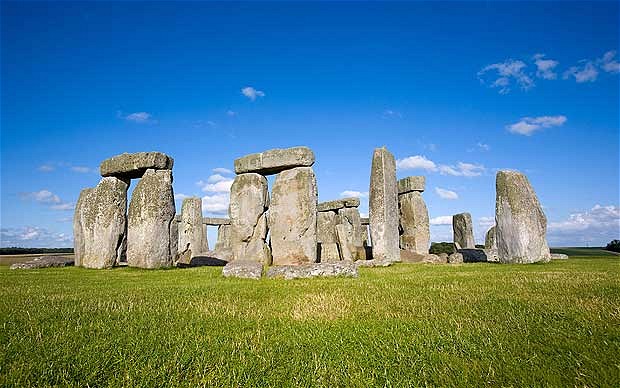
Be careful driving past Stonehenge. It's the landmark most likely to distract motorists. Photo: Alamy

Be careful driving past Stonehenge. It’s the landmark most likely to distract motorists. Photo: Alamy

Distracted motorists have more accidents passing Stonehenge than any other British landmark, a new study found.

Over a third of drivers, 34 per cent, have had a prang or near miss in the UK as a result of taking their eyes off the road to admire a view.

And an admiring 14 per cent have slammed on the brakes to get a longer look – typically reducing their speed by 27 mph.

Accidents resulting from these distractions cause an average 413.56 pounds of damage each time, the study by insurance firm MORE TH>N found.

A quarter of motorists, 26 per cent, have been distracted by the pre-historic monument of Stonehenge near Amesbury, Wiltshire.

Rubber-neckers there typically take their eyes of the road three times, each for 3.74 seconds.

This mean motorists – doing 40 mph – could drive past for 200 metres without paying attention to the road.

A careless 13 per cent of those who were distracted by Stonehenge have crashed or almost crashed as a result, the study of 2,000 motorists found.

The Angel of the North, in Gateshead, Tyne and Wear, is the second most dangerous landmark and the Blackpool Tower, in Lancs, third.

A captivated 18 per cent and 12 per cent of motorists find their eyes drifting towards these sites as they pass.

Just over one in ten of these drivers, 11 per cent, have had or nearly had an accident at these two beauty spots.

The top ten also includes the Scottish Highlands, the House of Parliament, Windsor Castle, Tower Bridge, and Clifton Suspension Bridge.

Cheddar Gorge and Severn Bridge complete the list.

Motorist Jason Richardson, from Southampton, Hants, said he often admires the view as he drives around the country for work.

The sales director, 32, said: “I spend my life on the road visiting customers and it can be incredibly boring looking at miles of tarmac on the motorways.

“So when you see a spectacular view or a landmark you have read about or seen on TV it is hard to keep your eyes on the road.

“I have driven past Stonehenge and the Angel of the North and had to settle for a peek because I didn’t have time to stop.”

Janet Connor, from MORE TH>N, said: “Travel guides, friends and family often encourage us to take the scenic route.

“But until now the perils of admiring the world beyond the windscreen have not been fully explored.

“The UK is blessed with some amazing sights but motorists need to keep their eyes on the road and resist the lure of staring at them while driving.

“To avoid having an accident, park-up and enjoy the view safely.”

Top ten accident hostpots.

1. Stonehenge, Wiltshire

2. Angel of the North, Gateshead

3. Blackpool Tower, Blackpool

4. Scottish Highlands (towards Glencoe)

5. Big Ben/Houses of Parliament, London

6. Windsor Castle, Windsor

7. Tower Bridge, London

8. Clifton Suspension Bridge, Bristol

9. Cheddar Gorge, Somerset

10. Severn Bridge, Aust-Chepstow

Link Source: http://www.telegraph.co.uk/earth/environment/archaeology/9540840/Distracted-motorists-have-most-accidents-passing-Stonehenge.html

Sponsored by ‘Stonehenge Guided Tours’ www.StonehengeTours.com

Stonehenge Stone Circle News Blog


Herders rather than farmers, built Stonehenge

10 09 2012

The ancient builders of Stonehenge may have had a surprisingly meaty diet and mobile way of life. Although farming first reached the British Isles around 6,000 years ago, cultivation had given way to animal raising and herding by the time Stonehenge and other massive stone monuments began to dot the landscape, a new study finds.

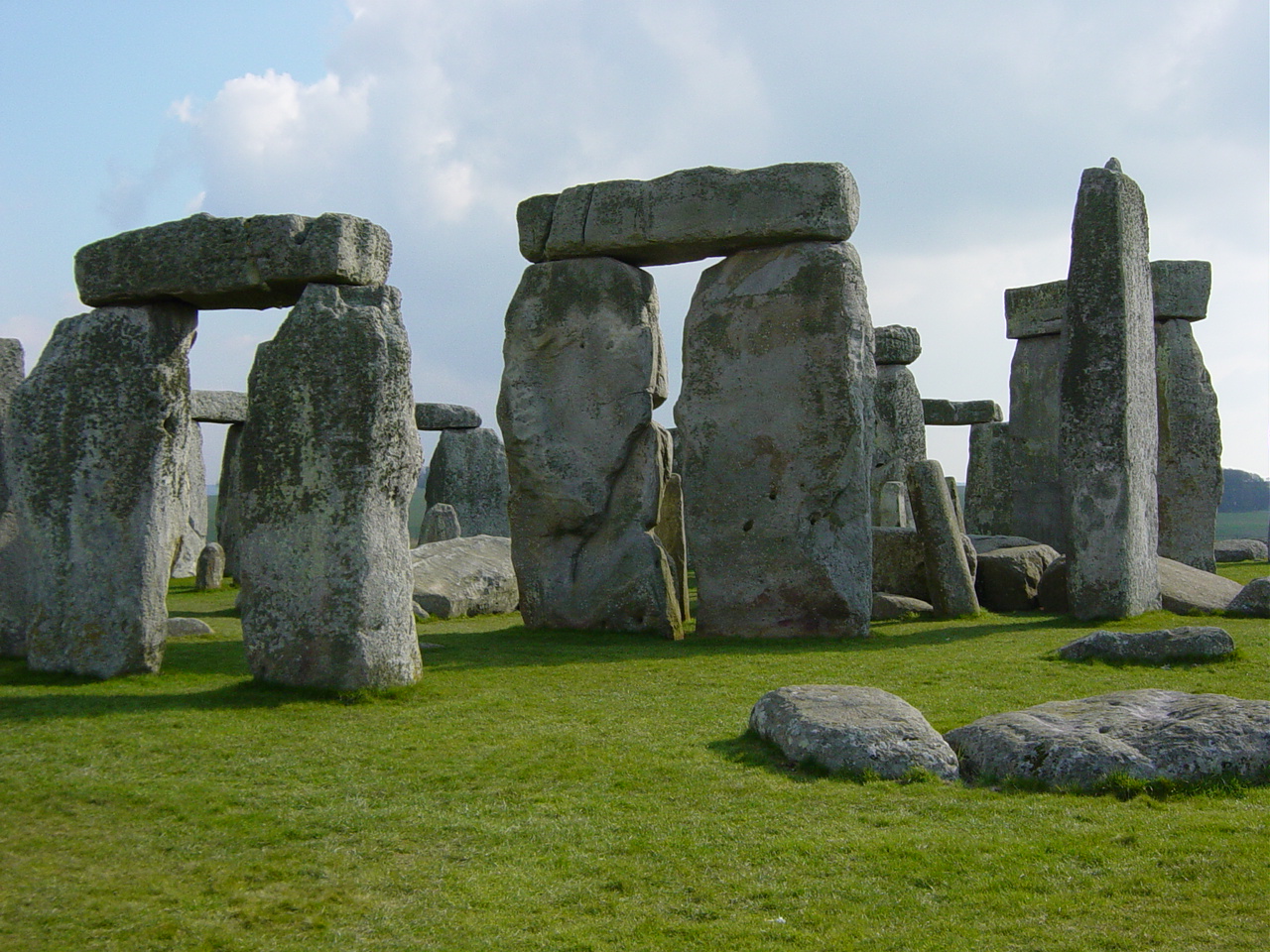
Stonehenge in southern England may have been built by herders, not farmers, suggests a new analysis of crop remains from the last several millennia.

Stonehenge in southern England may have been built by herders, not farmers, suggests a new analysis of crop remains from the last several millennia.

Agriculture’s British debut occurred during a mild, wet period that enabled the introduction of Mediterranean crops such as emmer wheat, barley and grapes, say archaeobotanists Chris Stevens of Wessex Archaeology in Salisbury, England, and Dorian Fuller of University College London. Farming existed at first alongside foraging for wild fruits and nuts and limited cattle raising, but the rapid onset of cool, dry conditions in Britain about 5,300 years ago spurred a move to raising cattle, sheep and pigs, Stevens and Fuller propose in the September Antiquity.

With the return of a cultivation-friendly climate about 3,500 years ago, during Britain’s Bronze Age, crop growing came back strong, the scientists contend. Farming villages rapidly replaced a mobile, herding way of life.

Many researchers have posited that agriculture either took hold quickly in Britain around 6,000 years ago or steadily rose to prominence by 4,000 years ago. In either case, farmers probably would have assembled Stonehenge, where initial work began as early as 5,500 years ago, with large stones hauled in around 4,400 years ago (SN: 6/21/08, p.13).

But if Stevens and Fuller’s scenario of British agriculture’s ancient rise, demise and rebirth holds up, then small groups of roaming pastoralists collaborated to build massive, circular stone and wood structures, including Stonehenge. Shifts from farming to pastoralism, sometimes accompanied by construction of stone monuments, occurred around the same time in parts of Africa and Asia, the researchers say.

“Part of the reason why pastoralists built monuments such as Stonehenge lies in the importance of periodic large gatherings for dispersed, mobile groups,” Fuller says. Collective meeting spots allowed different groups to arrange alliance-building marriages, crossbreed herds to boost the animals’ health and genetic diversity and hold ritual feasts. At these locations, large numbers of people could be mobilized for big construction projects, Fuller suggests.

“A predominantly pastoralist economy in the third millennium B.C. accords well with available evidence and provides a suitable backdrop to the early development of Stonehenge,” says archaeologist Timothy Darvill of Bournemouth University in England. But he believes many large stones were brought to Stonehenge during a later upswing in cereal cultivation, as pastoralism receded in importance.

Stevens and Fuller compiled data on more than 700 cultivated and wild food remains from 198 sites across the British Isles whose ages had been previously calculated by radiocarbon dating. A statistical analysis of these dates and associated climate and environmental trends suggested that agriculture spread rapidly starting 6,000 years ago. About 700 years later, wild foods surged in popularity and cultivated grub became rare.

Several new crops — peas, beans and spelt — appeared around 3,500 years ago, when storage pits, granaries and other features of agricultural societies first appeared in Britain, Stevens and Fuller find. An influx of European farmers must have launched a Bronze Age agricultural revolution, they speculate.

Stevens and Fuller’s analysis offers only a general breakdown of how farming and pastoralism developed in Britain, asserts archaeologist Alasdair Whittle of Cardiff University in Wales. The scale of cultivation, even during times characterized by relatively abundant remains of domesticated plants, remains uncertain, Whittle says.

Even if farmers didn’t built Stonehenge, cultivators erected plenty of massive stone monuments, Whittle holds.
Bruce Bower
Link source: http://www.sciencenews.org/view/generic/id/343984/title/Herders%2C_not_farmers%2C_built_Stonehenge

Sponsored by ‘Stonehenge Guided Tours’ www.StonehengeTours.com
The Stonehenge News Blog


Stonehenge. Henge Diggers – Salisbury & South Wiltshire Museum

8 09 2012

Saturday 8 September 2012 – Saturday 12 January 2013. This photographic exhibition captures the actions and emotions of archaeologists from universities across Britain whilst they carried out ground-breaking new work to reinterpret the Stonehenge landscape.  Bill Bevan was resident photographer on site for three years during the excavations of the internationally important Stonehenge Riverside Project (2004-2010).  His photographs and the accompanying text offer the visitor an unusual and revealing vantage point from which to view the archaeologists at work. 

Stonehenge Riverside Project is a joint collaboration between archaeologists at the Universities of Sheffield, Manchester, Bristol, UCL and Bournemouth.   This exhibition has been funded by Arts Council England and Manchester University in partnership with Salisbury Museum.

Henge Diggers

An exhibition of how archaeologists work on-site, Themes of the exhibition include the working practices of archaeologists, the brief deposition of tools that mimic the ancient tool deposits they excavate, the repetitive nature of excavation and notions of time and space. All photographs are from the Stonehenge Riverside Project. Thank you to the directors of the project for generously given access to the excavations. More information about the project can be found here –www.shef.ac.uk/archaeology/research/stonehenge

Check out http://www.billbevanphotography.co.uk/ for more information about Bill’s projects.

picture credit: In The Shadow 1 by Bill Bevan, 95 x 70 cms, (c) Bill Bevan


Booking:  No booking required.


Sponsored by ‘Stonehenge Guided Tours’ – www.StonehengeTours.com

Merlin says: “Went today with the kids, well worth a visit!”

Merlin @ Stonehenge Stone Circle
The Stonehenge News Blog



Stonehenge Film Location. Thor – The Dark World

30 08 2012

FILM crews have been at Stonehenge this morning – and rumour is they were working on upcoming Hollywood blockbuster Thor: The Dark World.

Chris Hemsworth as Thor. Pic by PA.

Chris Hemsworth as Thor. Pic by PA.

The film, starring Chris Hemsworth, Natalie Portman, Tom Hiddlestone, Stellan Skarsgård and Anthony Hopkins, is to be the eighth instalment in the Marvel Comic adaptations which have been proving a hit with cinemagoers worldwide, as well as a sequel to 2011 film Thor, directed by Kenneth Branagh.

The set at the historic monument was shrouded in secrecy on Wednesday morning but reliable sources state the location shoot for the blockbuster was being done under the film’s working title of Thursday Morning.

Australian heartthrob Hemsworth played Thor in the first film as well as in the recent Avengers movie, and also appeared in The Cabin in the Woods and Snow White and the Huntsman this year as well as 2009’s Star Trek.

Thor: The Dark World continues the adventures of Thor as seen in The Avengers, and is set to be released in November next year.

Filming on the Alan Taylor-directed production has been taking place at various locations in the UK, thought to include London and Bourne Wood near Farnham.

It is not known if any more action is due to take place at Stonehenge.


Link Source: Salusbury Journal – http://www.salisburyjournal.co.uk/news/salisbury/salisburynews/9898652.Film_being_shot_at_Stonehenge/

Sponsored by Stonehenge Guided Tours. www.StonehengeTours.com

Merlin says: “All good for Wiltshite Toursm”

Merlin @ The Stonehenge News Blog


UN launches ‘Heritage of Astronomy’ portal. Includes Stonehenge Monument

25 08 2012

A picture shows the prehistoric monument of Stonehenge, a UNESCO World Heritage Site, on Salisbury Plain in Wiltshire, in central southern England, on July 12, 2012.

Stonehenge Heritage PortalA pharaonic temple in Egypt, a 3,000-year-old pillar in China and a 1920s tower in Berlin have been inscribed on a UN-backed heritage list for astronomy, unveiled on Friday which also includes Stonehenge. Observatories in Britain, France and the United States, a pharaonic temple in Egypt, a 3,000-year-old pillar in China and a 1920s tower in Berlin have been inscribed on a UN-backed heritage list for astronomy, unveiled on Friday.

The Portal to the Heritage of Astronomy (http://www2.astronomicalheritage.net/) aims to give astronomical sites the same place in public awareness as UNESCO’s World Heritage List does for places of historical importance. The website was launched on the sidelines of an International Astrononomical Union (IAU) meeting in Beijing on Friday, the IAU said in a press release. It is being backed by the UN Educational, Scientific and Cultural Organisation (UNESCO). The portal has a preliminary listing of around three dozen sites, ranging from prehistoric caves to 20th-century observatories, but should expand swiftly in the coming months, the IAU said. Among the first entries are Stonehenge, which is aligned along the axis of the midwinter sunset and midsummer sunrise, and the Dengfeng Observatory in Henan, China, where Tang Dynasty astronomers used a pillar to measure the Sun’s shadow and thus calculate the length of the year. There are also the Royal Observatory in Greenwich, the Meudon Observatory in France, the Mount Wilson Observatory in California and the 1920s “Einstein Tower” in Potsdam, all sites where important contributions were made in the era of modern science. Eventually, the portal will not only feature sites and monuments, but also other types of astronomical heritage such as portable instruments and intangible cultural practices, as well as “dark-sky” locations, meaning places where the night sky can be viewed without pollution from man-made light. “A lot of our most precious astronomical heritage—both ancient and modern—is under threat. If we don’t act to try to protect and preserve it, we run the risk of losing it,” said the IAU’s Clive Ruggles, a professor of archaeoastronomy at Britain’s University of Leicester.

Read more at: http://phys.org/news/2012-08-heritage-astronomy-portal.html#jCp

Sponsored by ‘Stonehenge Guided Tours’ www.StonehengeTours.com

Merlin @ Stonehenge
The Stonehenge Stone Circle News Blog


Your guide to the August night sky, Stonehenge Landscape, Wiltshire

1 08 2012

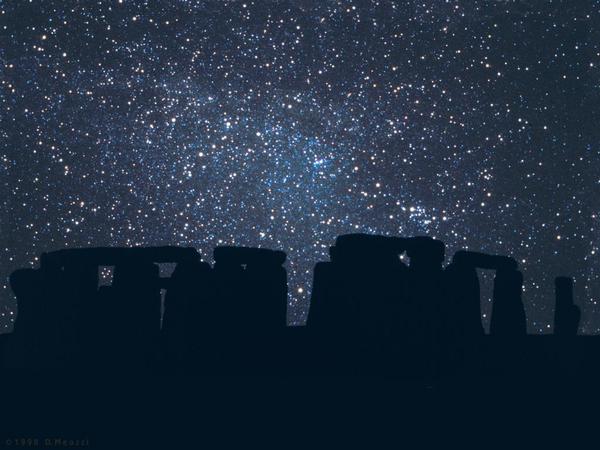
Stonehenge Landscape, Wiltshire.  Big, open skies are a defining feature of the countryside and on a clear night you can see some 4,000 stars sparkling in our universe.

Situated on the edge of Salisbury Plain, the prehistoric ceremonial landscape of Stonehenge occupies a large, sparsely populated area of ancient downland ideal for star gazing. The monuments here are directly connected to the skies above, with stones aligned to moonrises and moonsets, in addition to the Midsummer and Midwinter solstices. Keep an ear out for the Stone Curlew’s haunting ‘coo-ree’ bird call, particularly in autumn.  Terrain and safety: The route to the star-gazing spot follows regular tracks through the fields. Grassy areas are fairly smooth; off the worn route grass can be tall and tussocky. Be aware that the Cursus Barrows field is grazed by cattle. Byway 12 has some large potholes, becoming deep puddles after rain.
 Location: 2 miles west of Amesbury, near the junction of the A303 and A344. Stonehenge car park closes in the evening, but it is possible to park nearby. Grid ref: SU120420

Your guide to the summer night sky, Stonehenge Landscape, Wiltshire
In prehistoric times the night sky would have looked very different. The stars were much clearer and stories about them were likely to have been included in a rich oral history, now lost. Today, light pollution makes it difficult to see all but the brightest stars (© Tony Evershed).  Enter a prehistoric ceremonial landscape: hundreds of monuments with physical and visual connections to each other, to the land and to the skies above. All this lies on the edge of Salisbury Plain, a large, sparsely populated area of downland good for star gazing.

The August skies are filled with all manner of interesting objects that can be viewed in dark sky conditions. Arrive before sunset to see the ancient earthworks at their best in slanting evening light. The banks of the 4,000-year-old Stonehenge Avenue can be seen leading north-east, away from the stone circle.
The Perseid meteor shower is set to peak around 12/13 August, but it’s well worth keeping an eye out for meteors any time from July 23 to August 22. The thin, crescent moon will be out of the way early, setting the stage for a potentially spectacular show.
For best viewing, pick a cloudless night and look to the northeast after midnight.
Overhead there is the summer triangle starting with Vega (a bright white star which is almost overhead, part of the constellation Lyra), Deneb to the left in Cygnus (the swan constellation) and Altair, south east in Sagitta/Aquila. These stars can be used as pointers to other stars. Go to Vega and look westward to find the bright reddish star Arcturus, part of Bootes the Kite. The pretty group of curved stars to the east of Arcturus is Corona Borealis, a cornet of stars. The Plough/Big Dipper is in the north west sky and becomes the tail and rear end of the Great Bear/ Ursa Major.
If the sky is dark and clear of any clouds you should be able to make out the Milky Way, a ribbon of millions of stars threading its way across the heavens. If you are using binoculars this really is a stunning sight.

Download the National Trust Stonehenge Guide (PDF) here: http://www.nationaltrust.org.uk/servlet/file/store5/item479325/version1/w-walk-stonehenge_dark_skies2010.pdf
More Night walks: http://www.nationaltrust.org.uk/visit/activities/walking/view-page/item479320/

Sponsored by ‘The Stonehenge Tour Company’ www.StonehengeTours.com

Merlin says “Neolithic Britons might have held objects of the sky as gods, and predicting the will of the gods was something essential to their existence, thus mixing the concepts we distinguish from each other today – religion and astronomy.”

Merlin @ Stonehenge


Stonehenge Landscape. Events and Tours – August 2012

28 07 2012

Summer Stonehenge archaeology walk (4th / 18th August 2012)

Discover the wider Stonehenge World Heritage Site with a guide and discover hidden histories, ancient mysteries, and downland wildlife.

Stonehenge Landscape ToursExplore the downs in summer with an afternoon walk up on the downs to visit the ancient archaeology and varied wildlife of the Stonehenge World Heritage Site. On this three mile walk with views of the Stone Circle, we’ll visit ancient earthworks that have revealed much about the people who once lived and celebrated here. Talking points include the Cursus, the many and varied barrows, an ancient avenue connecting ceremonial centres, and a rich diversity of wildlife.

  • Dress for the weather – bring a hat and sunscreen as there’s little shade out on the downs – and wear stout footwear. You may like to bring a cooling drink and a snack.
  • Meeting at the Stonehenge car park SP4 7DE (not NT) by the two ‘touching stones’ at the top of the slope that leads down towards the Stonehenge Cafe.
  • Dogs on leads welcome
  • Accompanied children welcome, free
  • Although your guide will tell you about it, this walk doesn’t visit the Stone Circle. You might like to visit it before or after the walk; NT members are admitted free.
  • Access is by pedestrian and farm gates; the terrain is mostly grassland and trackways, often uneven underfoot. Cattle and sheep graze the gently sloping downs.

Durrington Walls to Stonehenge… and back again! (9th August 2012)

Join this walk to imagine yourself walking in the footsteps of Neolithic revellers…

Explore the Stonehenge World Heritage Site and especially the close connections between the two great henge monuments of Durrington Walls and Stonehenge. Your guide will take you on a circuit of around 6 miles over the downs, also exploring some of the less visited monuments that together form the Stonehenge World Heritage Site.


  • Please dress for the weather and wear stout footwear. Wrap up warm ‘ it gets chilly up on the downs!
  • Meeting at Woodhenge Car Park (not NT) (SP4 8LR) – take turn-off signed to Woodhenge from A345 between Amesbury and Durrington. Parking at own risk. No parking charge.
  • Dogs on leads welcome
  • Accompanied children welcome, free
  • Access is by pedestrian and farm gates; the terrain is mostly grassland and trackways, often uneven underfoot. Cattle graze the gently sloping downs. Toilets in Stonehenge Car Park (on walk route).

Stargazing and storytelling, meteors and myths

Discover the night sky through telescopes and exciting myths and legends. (15th August 2012)

Join our friendly team of astronomers for an adventure exploring the night sky with telescopes, alongside legends told by our own starry storyteller, activities, and toasting marshmallows. As well as learning about the constellations, we hope the Perseid Meteor Shower will be putting on a show! Telescopes and expertise are provided by Chipping Norton Amateur Astronomy Group, storytelling with Lizzie Bryant.

  • Bring a torch. Wrap up warm – we recommend plenty of layers, gloves, scarf and a hat – and wear stout footwear. Bring your own seating and blankets. You may like to bring a drink and a snack, too.
  • Meeting on byway 12, close to the Stonehenge Car Park (which will be closed when the event starts) parking at own risk – OS grid reference SU 120 424, postcode SP4 7DE.
  • Ideal for accompanied children, 8 years and up
  • Access is by pedestrian and farm gates; the terrain is grassland, and trackways that are uneven underfoot and sometimes potholed.

Wings over Stonehenge – Military Airplane Competition centenary walk

This walk will commemorate the centenary of the Military Aeroplane Competition held at Lark Hill in August 1912 in which Colonel Sam Cody’s bi-plane ‘The Cathedral’ was the outright winner.

Walk in the slipstream of the early pioneer military aviators at Larkhill. See where the Bristol Boxkite made its first flight in 1910 and where the first British military aeroplane unit was formed in 1911. These walks will cover how aviation developed on Lark Hill from 1909-1914 and how military aviation ‘took off’around Stonehenge from 1914-1918. These walks aim to recreate the period with contemporary photographs and maps and include viewing the early hangars and crash sites.

  • Please dress for the weather and wear stout footwear. You are welcome to bring a snack and a drink to enjoy on the walk.
  • Meeting on Wood Road, Larkhill, grid reference SU143438; the post code is SP4 8LX.
  • Accompanied older children welcome, free
  • Access is by pedestrian and farm gates; the terrain is public roads, as well as grassland and trackways, uneven underfoot.

More Information: Lucy Evershed,             01980 664780      stonehenge@nationaltrust.org.uk

Booking Essential            0844 249 1895
A 5% booking fee applies. Phone lines are open Mon to Fri 9am-5.30pm, plus Sat and Sun 9am-4pm.
Booking Fee Applies
http://www.nationaltrust.org.uk/

Merlin says  “These are truly great events and need to be booked in advance”

Sponsored by ‘The Stonehenge Tour Company’ www.StonehengeTours.com

Merlin @ Stonehenge
The Stonehenge Stone Circle website