Neolithic New Year Walk – Stonehenge Landscape

28 12 2012

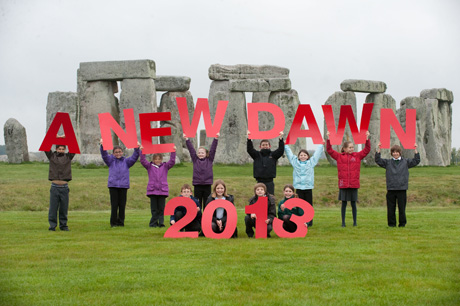
Welcome in 2013 with a walk around the ancient monuments of the Stonehenge Landscape. Booking essential.

Stonehenge Landscape ToursAncient ceremonial landscape of great archaeological and wildlife interest

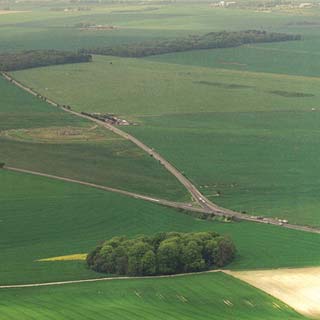
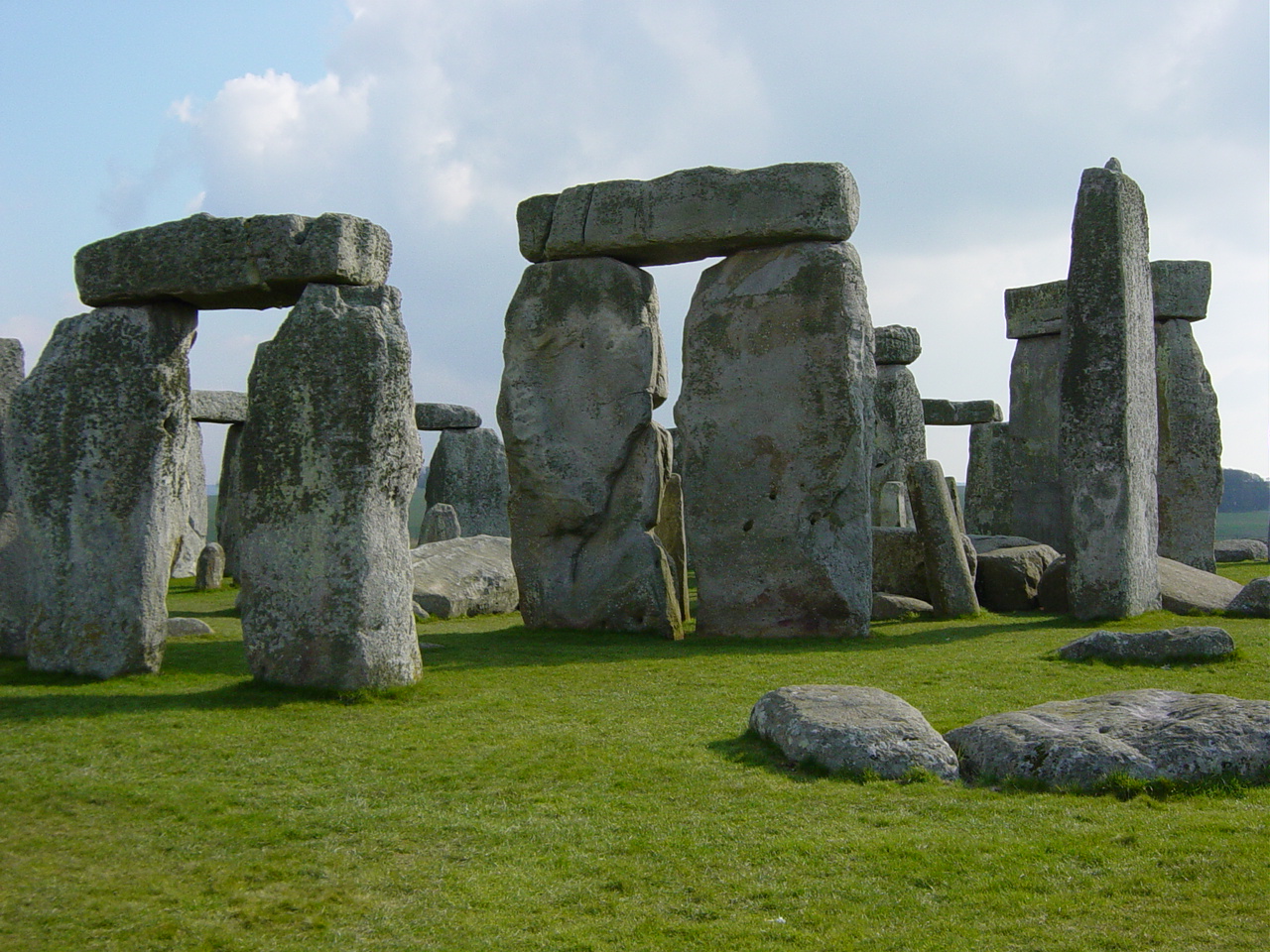
Within the Stonehenge World Heritage Site, the National Trust manages 827 hectares (2,100 acres) of downland surrounding the famous stone circle.

Walking across the grassland, visitors can discover other prehistoric monuments, including the Avenue and King Barrow Ridge with its Bronze Age burial mounds.

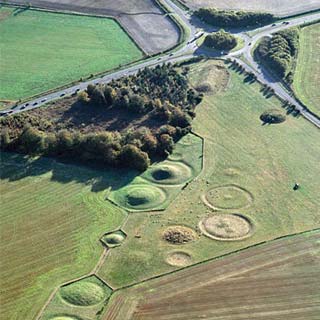
Nearby, Winterbourne Stoke Barrows is another fascinating example of a prehistoric cemetery. While Durrington Walls hides the remains of a Neolithic village.

The best approach to the famous stone circle is across Normanton Down, a round barrow cemetery dates from around 2600 to 1600BC.


Improvements to A303 Stonehenge World Heritage Site

1 11 2012

Work which will allow visitors to enjoy an improved experience when visiting the Stonehenge World Heritage Site will start on the A303 in Wiltshire on Monday, 5 November.

Stonehenge road improvementsThe six month scheme will involve improvements to the Longbarrow roundabout at the junction of the A360 and A303. This will allow the closure of the A344, which runs next to the Stonehenge monument.

Highways Agency project sponsor, Mark Arberry, said: “This is an important contribution to the long term management plan for Stonehenge to improve the setting of the monument and ensure its preservation as an iconic World Heritage Site. “The proposed improvements to the northern and eastern approaches to the roundabout will accommodate changes in traffic flows following the A344 closure and the centre of the roundabout itself will be moved.”

New lanes will be added to the roundabout to take the extra traffic caused by the closure of the A344 and the centre of the roundabout itself will be realigned.

English Heritage has been fully consulted during planning for the scheme and an archaeologist will be on site during the excavation work.

Traffic signals will be used for minor advanced works on the A360 north of the roundabout for one week between 9am and 3pm from the 29 October. The main work will require lane closures on the approaches to Longbarrow Roundabout for the duration of the work with a temporary 40mph speed limit in place.. The A360 south of Longbarrow will be closed for up to eight days and nights on dates to be confirmed during either February or March. Clearly signed diversion routes will be in operation using the A345 or the A36 dependant on journey destinations.

The scheme has been planned to cause the least possible disruption but road users are advised to allow extra time for their journeys.

Traffic updates: http://www.fleetdirectory.co.uk/

Stonehenge news blog sponsored by ‘Stonehenge Guided Tours’ www.StonehengeTours.com
F
ollow us on Twitter for updates: https://twitter.com/ST0NEHENGE

Merlin at Stonehenge


Visit Wiltshire. New look website aims to boost tourism in Wiltshire

19 10 2012

Discover a county rich in heritage

VisitWiltshire has launched a brand new tourism website, http://www.visitwiltshire.co.uk  The redesign of the site has focused on building a portal which showcases the best of Wiltshire tourism to give visitors a user-experience that is inspirational, informative, engaging and welcoming.

VisitWiltshire is forecasting that the new website will increase the number of visitors to http://www.visitwiltshire.co.uk by 30 per cent.

The new website will be promoted extensively to VisitWiltshire’s target UK and international markets through a number of digital marketing initiatives launching in October – including, for the first time ever, video advertising on the London Underground.

Fiona Errington, marketing manager for VisitWiltshire, said: “Our aim in developing this site has been to raise awareness of Wiltshire’s fantastic tourism offer, inspiring new visitors, and encouraging repeat visitors to stay longer and explore the whole of the county.

Visit Wiltshire Website Extract
Take some time out and escape to Wiltshire this year. Find out more about this mysterious and beautiful part of the UK, let us be your guide for all the information you will need.

Stonehenge & Avebury

Wiltshire is proud to be the home of Stonehenge and Avebury which form part of a UNESCO World Heritage Site and our mystical landscape.

Take a tour of Stonehenge and discover more about the neolithic man and the landscape they shaped. At Avebury, walk amongst the stones, visit the Alexander Keiller Museum to find out about the arcaeological excavations Keiller did in the 1930s and visit the Avebury Manor and Garden, nearby West Kennet Long Barrow.

Link: http://www.visitwiltshire.co.uk/explore/stonehenge-and-avebury
Link: http://www.thisiswiltshire.co.uk/news/9993296.New_look_website_aims_to_boost_tourism_in_Wiltshire/

Merlin says “Great to see Visit Wiltshire have launched a new web site, which will  help tourism in the West”

News blog sponsored by “Stonehenge Guided Tours” – www.StonehengeTours.com

Stonehenge News Blog


Stonehenge News. Read all about it!

10 10 2012
Once again Stonehenge and Wiltshire is in the spotlight.  The recent revealing 3D laser resilts have uncovered some fascinating facts.  Stonehenge is being talked about across the world which can only be good for South West toursim.  Here is a small selection of Stonehenge Newslinks:

Stonehenge secrets revealed by laser scan
BBC News
Researchers using laser technology at Stonehenge have uncovered evidence which they say shows the importance of the midwinter sunset to its creators. The scan by English Heritage showed significant differences in how various stones were shaped and
 

BBC News
Stonehenge dressed to impress
Stuff.co.nz
A cutting-edge laser scan of Stonehenge has shown how Britain’s enigmatic neolithic monument was built to enhance the dramatic passage of sunlight through the circle of stones at midsummer and midwinter. The slabs were intended to appear at their best 
 
Stonehenge was an ‘art gallery’ suggests new study
TNT Magazine
Laser scans have revealed prehistoric carvings of axe heads, which are invisible to the naked eye. The surface of the 83 remaining stones was scanned using state-of-the-art 3D scanners. These recorded using billions of points of microtopographically. 

TNT Magazine
New Stonehenge secrets revealed
Evening Standard
Professor Clive Ruggles, emeritus professor of achaeo-astronomy at University of Leicester, said: “This extraordinary new evidence not only confirms the importance of the solstitial alignment at Stonehenge, but also show unequivocally that the formal  
Revealed: Early Bronze Age carvings suggest Stonehenge was a huge prehistoric art gallery
Stonehenge News Blog
A detailed laser-scan survey of the entire monument has discovered 72 previously unknown Early Bronze Age carvings chipped into five of the giant stones.

Evening Standard
Lasers find secrets of Stonehenge
This is Bath
They’ve dug under it, mapped it, photographed it and dated it, but a new laser scan of Stonehengehas told scientists even more things they didn’t already know about the ancient Wiltshire monument – including which way the monument ‘faced’. The scan  
The story of British art
The Guardian
From the earliest evocative stone structures at Skara Brae and Stonehenge to the disturbing 20th-century portraits by Francis Bacon and Lucian Freud, the art inspired by the British isles tells a truly spectacular story. Through painting, sculpture  
Midwinter Sun Link to Stonehenge – ITV News
Read Midwinter Sun Link to Stonehenge latest on ITV News. All the Tuesday 9th October 2012 news.#
Midwinter sun linked to Stonehenge – Stonehnege Tours. The latest 3D laser technology has revealed new evidence of the importance of the midwinter sunset to the ancient creators of Stonehenge. 
Laser uncovers new Stonehenge evidence (From Salisbury Journal)
NEW evidence to suggest the importance of the solstices at Stonehenge to its creators has been discovered by English Heritage. A 3D laser scan was used to 
Blog Sponsored by ‘Stonehenge Guided Tours’ www.Stonehengetours.comFor all the latest news on Stonehenge follow us on Twitter:
https://twitter.com/ST0NEHENGE

The Stonehenge News Blog


Stonehenge marks Autumn Equinox.

23 09 2012

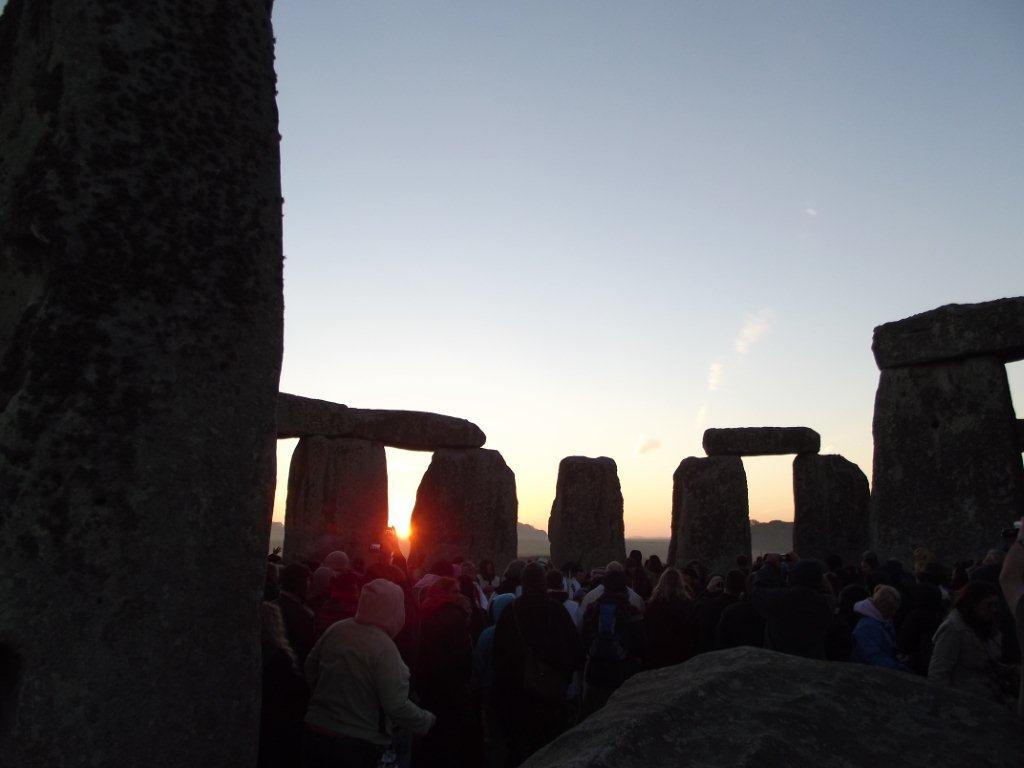
100’s of people gathered at Stonehenge to mark this years Autumn Equinox and enjoyed a spectacular sunrise.

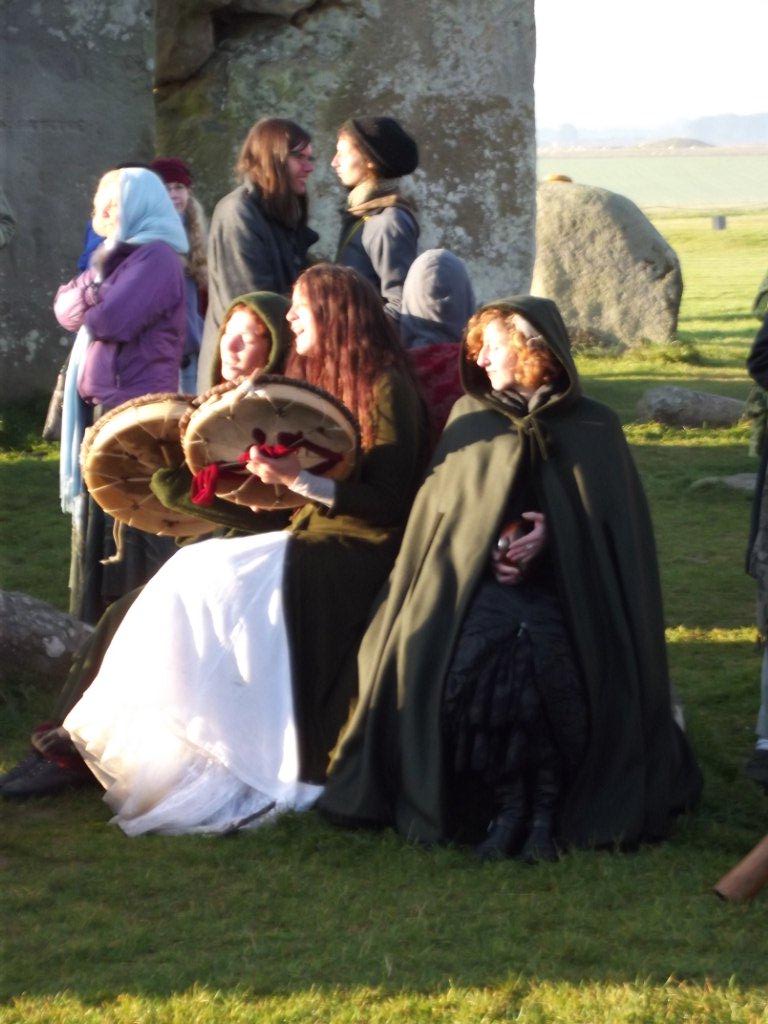
Stonehenge has been an important religious site for over 4,000 years. Modern druids have been celebrating the Autumnal Equinox there since the early 20th Century.

On September 21st – 23rd every year 100’s of people travel to ancient religious sites, such as Stonehenge and Avebury in England, in order to celebrate the Spring and Autumn Equinox. The Autumn Equinox is also known as Mabon and is an important festival day for many modern pagans.

People were unable to access Stonehenge during the Equinox and Solstice after a ban was imposed in 1985 at the request of English Heritage. This ban was lifted in 2000 and annual celebrations have been held ever since

Almost all pagans celebrate a cycle of eight festivals. Four of the festivals have Celtic origins and are known by their Celtic names, Imbolc, Beltane, Lughnasadh and Samhain. The other four are points in the solar calendar. These are Spring and Autumn Equinoxes, and the Summer and Winter Solstices.

Autumn Equinox Photo stream – click here

The Autumnal Equinox marks the moment when the sun crosses the equator on its apparent journey southward and we experience a day and a night that are of equal length. It’s the time of the final harvest when many crops including apples, grapes, nuts, squash, corn, and berries are gathered. Astrologically speaking, this is the date when the Sun enters the sign of Libra, the balance.Stonehenge Autumn Equinox 2012

The equinoxes (there are two- the Vernal Equinox, when the Sun enters Aries around March 21, is the first day of spring) have a rich place in mythology and ancient tradition. From Stonehenge in the British Isles to the pyramids in Central America, ancient cultures created means by which to measure the change of the seasons. For example, the Anasazi Indians of Chaco Canyon, NM made a hole between some boulders that the sun could shine through. The shafts of sunlight made a dagger shape of the far wall and they drew a spiral there to mark the equinox. It is said that the Druids would cut wands from the willow trees at this time of year. The willow was sacred to them and the wands were seen as powerful tools for use in divination.

Mythically, this is the day when the god of light is defeated by his twin and alter-ego, the god of darkness. It is the time of year when night conquers day- propelling us toward the Winter Solstice which marks the longest night of the year. Mabon, a Welsh god who symbolizes the male fertility of the land, is associated with the Autumnal Equinox. In some myths, he is seen as the male counterpart to Persephone of the Greek myths.

During the weeks around the Equinox, assess your harvest of the seeds of dreams and goals you planted earlier this year. Analyze your progress, acknowledge your successes, and give thanks. After that point of balance, natural law encourages us to turn inward for growth. Like Persephone going to the underworld on her annual journey, the time from the Autumnal Equinox to the Winter Solstice is a perfect opportunity to take a deep look inside yourself. Weed out what has completed its cycle and nourish the roots of what you want to grow again in spring.

Link: http://beforeitsnews.com/spirit/2012/09/autumnal-equinox-2012-harvest-your-gold-2445928.html
L
ink: http://news.nationalgeographic.com/news/2012/09/110921-autumnal-equinox-northern-hemisphere-first-day-fall-2012-science/
Link:

Blog sponsored by The Stonehenge Tour Company – www.StonehengeTours.com

Merlin says “A Spectacular sunrise and a peaceful gathering made this years Equinox celebrations one to remember”

The Stonehenge News Blog


Herders rather than farmers, built Stonehenge

10 09 2012

The ancient builders of Stonehenge may have had a surprisingly meaty diet and mobile way of life. Although farming first reached the British Isles around 6,000 years ago, cultivation had given way to animal raising and herding by the time Stonehenge and other massive stone monuments began to dot the landscape, a new study finds.
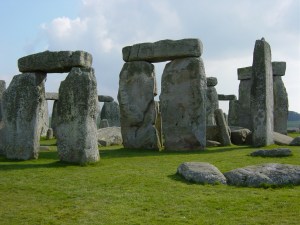
Stonehenge in southern England may have been built by herders, not farmers, suggests a new analysis of crop remains from the last several millennia.

Stonehenge in southern England may have been built by herders, not farmers, suggests a new analysis of crop remains from the last several millennia.

Agriculture’s British debut occurred during a mild, wet period that enabled the introduction of Mediterranean crops such as emmer wheat, barley and grapes, say archaeobotanists Chris Stevens of Wessex Archaeology in Salisbury, England, and Dorian Fuller of University College London. Farming existed at first alongside foraging for wild fruits and nuts and limited cattle raising, but the rapid onset of cool, dry conditions in Britain about 5,300 years ago spurred a move to raising cattle, sheep and pigs, Stevens and Fuller propose in the September Antiquity.

With the return of a cultivation-friendly climate about 3,500 years ago, during Britain’s Bronze Age, crop growing came back strong, the scientists contend. Farming villages rapidly replaced a mobile, herding way of life.

Many researchers have posited that agriculture either took hold quickly in Britain around 6,000 years ago or steadily rose to prominence by 4,000 years ago. In either case, farmers probably would have assembled Stonehenge, where initial work began as early as 5,500 years ago, with large stones hauled in around 4,400 years ago (SN: 6/21/08, p.13).

But if Stevens and Fuller’s scenario of British agriculture’s ancient rise, demise and rebirth holds up, then small groups of roaming pastoralists collaborated to build massive, circular stone and wood structures, including Stonehenge. Shifts from farming to pastoralism, sometimes accompanied by construction of stone monuments, occurred around the same time in parts of Africa and Asia, the researchers say.

“Part of the reason why pastoralists built monuments such as Stonehenge lies in the importance of periodic large gatherings for dispersed, mobile groups,” Fuller says. Collective meeting spots allowed different groups to arrange alliance-building marriages, crossbreed herds to boost the animals’ health and genetic diversity and hold ritual feasts. At these locations, large numbers of people could be mobilized for big construction projects, Fuller suggests.

“A predominantly pastoralist economy in the third millennium B.C. accords well with available evidence and provides a suitable backdrop to the early development of Stonehenge,” says archaeologist Timothy Darvill of Bournemouth University in England. But he believes many large stones were brought to Stonehenge during a later upswing in cereal cultivation, as pastoralism receded in importance.

Stevens and Fuller compiled data on more than 700 cultivated and wild food remains from 198 sites across the British Isles whose ages had been previously calculated by radiocarbon dating. A statistical analysis of these dates and associated climate and environmental trends suggested that agriculture spread rapidly starting 6,000 years ago. About 700 years later, wild foods surged in popularity and cultivated grub became rare.

Several new crops — peas, beans and spelt — appeared around 3,500 years ago, when storage pits, granaries and other features of agricultural societies first appeared in Britain, Stevens and Fuller find. An influx of European farmers must have launched a Bronze Age agricultural revolution, they speculate.

Stevens and Fuller’s analysis offers only a general breakdown of how farming and pastoralism developed in Britain, asserts archaeologist Alasdair Whittle of Cardiff University in Wales. The scale of cultivation, even during times characterized by relatively abundant remains of domesticated plants, remains uncertain, Whittle says.

Even if farmers didn’t built Stonehenge, cultivators erected plenty of massive stone monuments, Whittle holds.
Bruce Bower
Link source: http://www.sciencenews.org/view/generic/id/343984/title/Herders%2C_not_farmers%2C_built_Stonehenge

Sponsored by ‘Stonehenge Guided Tours’ www.StonehengeTours.com
The Stonehenge News Blog


UN launches ‘Heritage of Astronomy’ portal. Includes Stonehenge Monument

25 08 2012

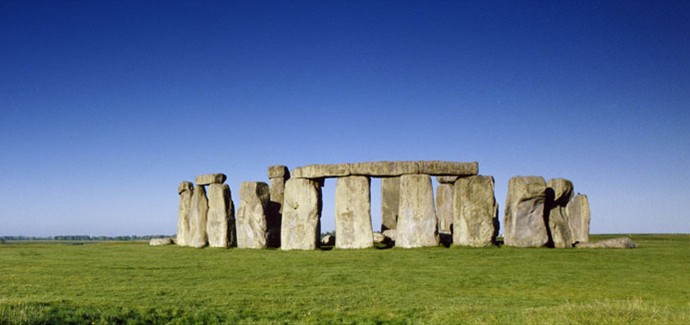
A picture shows the prehistoric monument of Stonehenge, a UNESCO World Heritage Site, on Salisbury Plain in Wiltshire, in central southern England, on July 12, 2012.

Stonehenge Heritage PortalA pharaonic temple in Egypt, a 3,000-year-old pillar in China and a 1920s tower in Berlin have been inscribed on a UN-backed heritage list for astronomy, unveiled on Friday which also includes Stonehenge. Observatories in Britain, France and the United States, a pharaonic temple in Egypt, a 3,000-year-old pillar in China and a 1920s tower in Berlin have been inscribed on a UN-backed heritage list for astronomy, unveiled on Friday.

The Portal to the Heritage of Astronomy (http://www2.astronomicalheritage.net/) aims to give astronomical sites the same place in public awareness as UNESCO’s World Heritage List does for places of historical importance. The website was launched on the sidelines of an International Astrononomical Union (IAU) meeting in Beijing on Friday, the IAU said in a press release. It is being backed by the UN Educational, Scientific and Cultural Organisation (UNESCO). The portal has a preliminary listing of around three dozen sites, ranging from prehistoric caves to 20th-century observatories, but should expand swiftly in the coming months, the IAU said. Among the first entries are Stonehenge, which is aligned along the axis of the midwinter sunset and midsummer sunrise, and the Dengfeng Observatory in Henan, China, where Tang Dynasty astronomers used a pillar to measure the Sun’s shadow and thus calculate the length of the year. There are also the Royal Observatory in Greenwich, the Meudon Observatory in France, the Mount Wilson Observatory in California and the 1920s “Einstein Tower” in Potsdam, all sites where important contributions were made in the era of modern science. Eventually, the portal will not only feature sites and monuments, but also other types of astronomical heritage such as portable instruments and intangible cultural practices, as well as “dark-sky” locations, meaning places where the night sky can be viewed without pollution from man-made light. “A lot of our most precious astronomical heritage—both ancient and modern—is under threat. If we don’t act to try to protect and preserve it, we run the risk of losing it,” said the IAU’s Clive Ruggles, a professor of archaeoastronomy at Britain’s University of Leicester.

Read more at: http://phys.org/news/2012-08-heritage-astronomy-portal.html#jCp

Sponsored by ‘Stonehenge Guided Tours’ www.StonehengeTours.com

Merlin @ Stonehenge
The Stonehenge Stone Circle News Blog


Stonehenge Landscape. Events and Tours – August 2012

28 07 2012

Summer Stonehenge archaeology walk (4th / 18th August 2012)

Discover the wider Stonehenge World Heritage Site with a guide and discover hidden histories, ancient mysteries, and downland wildlife.

Stonehenge Landscape ToursExplore the downs in summer with an afternoon walk up on the downs to visit the ancient archaeology and varied wildlife of the Stonehenge World Heritage Site. On this three mile walk with views of the Stone Circle, we’ll visit ancient earthworks that have revealed much about the people who once lived and celebrated here. Talking points include the Cursus, the many and varied barrows, an ancient avenue connecting ceremonial centres, and a rich diversity of wildlife.

  • Dress for the weather – bring a hat and sunscreen as there’s little shade out on the downs – and wear stout footwear. You may like to bring a cooling drink and a snack.
  • Meeting at the Stonehenge car park SP4 7DE (not NT) by the two ‘touching stones’ at the top of the slope that leads down towards the Stonehenge Cafe.
  • Dogs on leads welcome
  • Accompanied children welcome, free
  • Although your guide will tell you about it, this walk doesn’t visit the Stone Circle. You might like to visit it before or after the walk; NT members are admitted free.
  • Access is by pedestrian and farm gates; the terrain is mostly grassland and trackways, often uneven underfoot. Cattle and sheep graze the gently sloping downs.

Durrington Walls to Stonehenge… and back again! (9th August 2012)

Join this walk to imagine yourself walking in the footsteps of Neolithic revellers…

Explore the Stonehenge World Heritage Site and especially the close connections between the two great henge monuments of Durrington Walls and Stonehenge. Your guide will take you on a circuit of around 6 miles over the downs, also exploring some of the less visited monuments that together form the Stonehenge World Heritage Site.


  • Please dress for the weather and wear stout footwear. Wrap up warm ‘ it gets chilly up on the downs!
  • Meeting at Woodhenge Car Park (not NT) (SP4 8LR) – take turn-off signed to Woodhenge from A345 between Amesbury and Durrington. Parking at own risk. No parking charge.
  • Dogs on leads welcome
  • Accompanied children welcome, free
  • Access is by pedestrian and farm gates; the terrain is mostly grassland and trackways, often uneven underfoot. Cattle graze the gently sloping downs. Toilets in Stonehenge Car Park (on walk route).

Stargazing and storytelling, meteors and myths

Discover the night sky through telescopes and exciting myths and legends. (15th August 2012)

Join our friendly team of astronomers for an adventure exploring the night sky with telescopes, alongside legends told by our own starry storyteller, activities, and toasting marshmallows. As well as learning about the constellations, we hope the Perseid Meteor Shower will be putting on a show! Telescopes and expertise are provided by Chipping Norton Amateur Astronomy Group, storytelling with Lizzie Bryant.

  • Bring a torch. Wrap up warm – we recommend plenty of layers, gloves, scarf and a hat – and wear stout footwear. Bring your own seating and blankets. You may like to bring a drink and a snack, too.
  • Meeting on byway 12, close to the Stonehenge Car Park (which will be closed when the event starts) parking at own risk – OS grid reference SU 120 424, postcode SP4 7DE.
  • Ideal for accompanied children, 8 years and up
  • Access is by pedestrian and farm gates; the terrain is grassland, and trackways that are uneven underfoot and sometimes potholed.

Wings over Stonehenge – Military Airplane Competition centenary walk

This walk will commemorate the centenary of the Military Aeroplane Competition held at Lark Hill in August 1912 in which Colonel Sam Cody’s bi-plane ‘The Cathedral’ was the outright winner.

Walk in the slipstream of the early pioneer military aviators at Larkhill. See where the Bristol Boxkite made its first flight in 1910 and where the first British military aeroplane unit was formed in 1911. These walks will cover how aviation developed on Lark Hill from 1909-1914 and how military aviation ‘took off’around Stonehenge from 1914-1918. These walks aim to recreate the period with contemporary photographs and maps and include viewing the early hangars and crash sites.

  • Please dress for the weather and wear stout footwear. You are welcome to bring a snack and a drink to enjoy on the walk.
  • Meeting on Wood Road, Larkhill, grid reference SU143438; the post code is SP4 8LX.
  • Accompanied older children welcome, free
  • Access is by pedestrian and farm gates; the terrain is public roads, as well as grassland and trackways, uneven underfoot.

More Information: Lucy Evershed,             01980 664780      stonehenge@nationaltrust.org.uk

Booking Essential            0844 249 1895
A 5% booking fee applies. Phone lines are open Mon to Fri 9am-5.30pm, plus Sat and Sun 9am-4pm.
Booking Fee Applies
http://www.nationaltrust.org.uk/

Merlin says  “These are truly great events and need to be booked in advance”

Sponsored by ‘The Stonehenge Tour Company’ www.StonehengeTours.com

Merlin @ Stonehenge
The Stonehenge Stone Circle website


A New Dawn for Stonehenge

26 07 2012

Stonehenge Improvements: Work Starts On Site

Work to realise the long-held vision to return Stonehenge to a more tranquil setting and improve its visitor facilities has officially started. Successful fundraising also means that virtually all of the total project cost has now been secured with only £500,000 left to raise, English Heritage has announced.

School children from Greentrees Primary School near Salisbury on a recent visit to Stonehenge.

School children from Greentrees Primary School near Salisbury on a recent visit to Stonehenge.

Contractor VINCI Construction UK has taken possession of the site at Airman’s Corner, 1.5 miles to the west of the Stones, to start construction of the new exhibition and visitor building out of sight of the stone circle. In September, the Highways Agency will start work to upgrade Longbarrow Roundabout prior to the closure of the A344 in April 2013.

The £27-million project is financed almost entirely by Heritage Lottery Fund money, commercial income and philanthropic donations including significant gifts from the Garfield Weston Foundation, the Linbury Trust and the Wolfson Foundation.

A new dawn

Dr Simon Thurley, Chief Executive of English Heritage, said: “A new dawn at Stonehenge is truly upon us. Though the stones themselves have never failed to awe visitors their setting has been a national embarrassment and disgrace. After nearly 30 years English Heritage finally has a scheme that will transform the setting of the stones and our visitor’s experience of them. The restoration of the landscape together with a major new exhibition on site will finally give our greatest and most famous monument the treatment it deserves.

“Almost all the money to achieve our vision comes from commercial or private sources. We are tremendously grateful to have so many partners and private sector sponsors supporting us along the way.”

Heritage Minister John Penrose said:  “People have been talking about the project for nearly 30 years and so I’m absolutely delighted that work is finally underway to preserve this internationally recognisable prehistoric World Heritage Site, and to improve the visitor experience for those who come to marvel at it too.”

Transforming the setting of Stonehenge

The project, developed with the support of the National Trust, Wiltshire Council, the Highways Agency, and Natural England, will transform the setting of Stonehenge. The section of the A344 which currently runs past the monument – almost touching the Heel Stone – will be closed and grassed over, reuniting the stone circle with its ancient processional way and the surrounding landscape. The remaining part of the A344 will be closed to public vehicles, and will become the route of a new visitor shuttle service to the stones.

The existing outdated facilities, car park, fences and clutter near the monument will be removed. Visitors will be welcomed at the new facilities located at Airman’s Corner and, instead of approaching the stone circle from the east on a busy road, they will approach over chalk downland from the west either via a 10-min journey on the visitor shuttle, or on foot.

New exhibition, education rooms and more

A visit to the stones will, for the first time, be enhanced by a large exhibition which will tell the story of this complex site and its relationship with the wider landscape. It will feature important objects excavated near Stonehenge on loan from the Wiltshire Heritage Museum and the Salisbury and South Wiltshire Museum.

Sensitively designed by Denton Corker Marshall, the low-key visitor building also features education rooms and much improved amenities with full disabled access.

Visitor centre opens Autumn 2013

The Stonehenge project will be completed in two phases:

  • In autumn 2013, the new visitor facilities and galleries will open and the A344 will be closed to traffic. (The section of the A344 adjacent to the stones will already have been closed earlier in 2013.) Visitors will be taken to near the stones on a low-impact shuttle, with the option to disembark mid-way at a landscape viewpoint and walk to the stones from there.
  • By summer 2014, the existing car park, toilets, shop and fencing near the stones will have been removed and restoration of the landscape will be well underway. Visitors will be able to walk and enjoy the wider landscape and other outstanding prehistoric monuments.

Throughout the construction, Stonehenge will continue to welcome visitors as normal at its existing facilities. An opening date for the new visitor building will be announced in 2013, and the switch-over to the new facilities will be overnight so that there will be no disruption to visitors.

Visit the English Heritage website for more details: http://www.english-heritage.org.uk

Sponsored by ‘The Stonhenge Tour Company’ – www.StonehengeTours.com

Merlin @ Stonehenge


Circle of light: how Stonehenge shapes a landscape

17 07 2012

Jonathan Jones continues his story of British art in pictures with a look at the mystical monument on Salisbury Plain that has haunted the British imagination for centuries
Stonehenge Art 

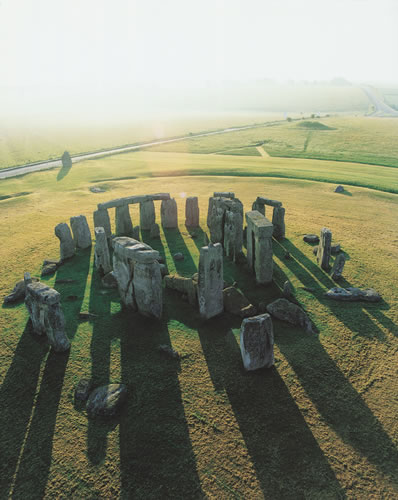
Stonehenge is a circle that shapes a landscape. The hills and valleys around it seem to radiate from it. Shaped and mounted between 3,000 and 2,500BC in a powerful architecture of pillar and lintel, its stones define geometry, mathematics, the power of the mind. It has haunted the British imagination. The medieval chronicler Geoffrey of Monmouth claimed Merlin brought the stones from Ireland; the romantic artists Blake and Constable powerfully pictured this mystic place

Photographer: Patrick Eden /Alamy
Source Link: http://www.guardian.co.uk/artanddesign/picture/2012/jul/16/stonehenge-shapes-landscape-british-art

Sponsored by ‘The Stonehenge Tour Company’ www.StonehengeTours.com 

Merlin @ Stonehenge