The Henge Hopper

3 04 2011

The Wiltshire Heritage Museum is planning to launch a bus service to link Stonehenge and Avebury. At the moment, it is extremely difficult to travel between the two, and the Museum hopes to be able to boost tourism in the Vale of Pewsey and the Avon Valley. They hope to launch a service in due course.

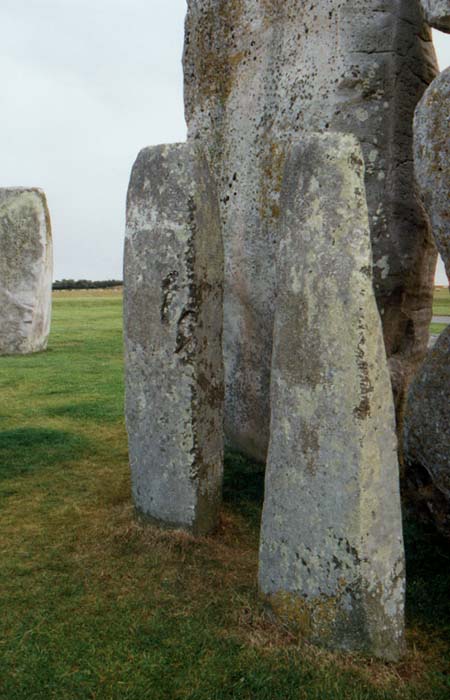
Stonehenge

Stonehenge

The Community Bus Service will be operated by minibuses, and the route would take in a range of archaeological sites and monuments in the Stonehenge and Avebury World Heritage Site, including Silbury Hill, West Kennet Long Barrow and Woodhenge.

The ‘hop on, hop off’ service would include free entry to the Wiltshire Heritage Museum in Devizes, encouraging people to discover the collections excavated from the World Heritage Site.

The Henge Hopper enables you to visit:

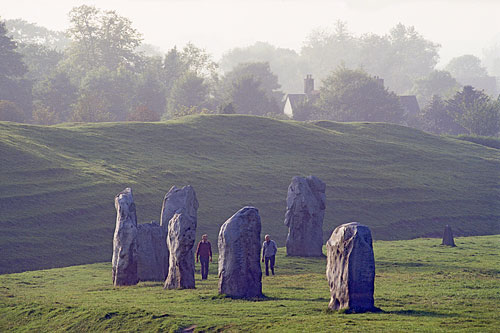
Avebury
Britain’s largest stone circle, at the centre of a remarkable complex of monuments, including stone circles, burial mounds, two stone-lined avenues and Silbury Hill.

Alexander Keiler Museum, Avebury Manor
Explore the world famous stone circle. The bus starts from just outside the Museum, which features fascinating finds from Alexander Keiler’s excavations at Avebury, and, in the barn, interactive displays bring the Avebury landscape to life. Explore also Avebury Manor and its wonderful garden. Cafe, toilets and shop.

Silbury Hill
The largest man-made mound in Europe, mysterious Silbury Hill compares in height and volume to the roughly contemporary Egyptian pyramids.

West Kennet Long Barrow
One of the largest, most impressive and most accessible Neolithic chambered tombs in Britain. Built in around 3650 BC, it was used for a short time as a burial chamber, nearly 50 people being buried here before the chambers were blocked.

Wansdyke / White Horse Trail
Massive Saxon defensive ditch and bank running along the top of the North Wessex Downs. Walk along the Wansdyke, following the White Horse Trail, with stunning views over the Vale of Pewsey.

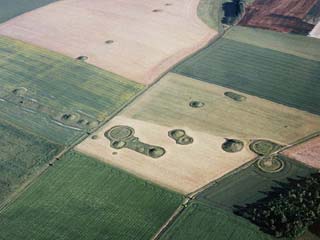
Marden Henge
Britain’s largest henge, Excavations in 2010 have revealed much about its fascinating story.

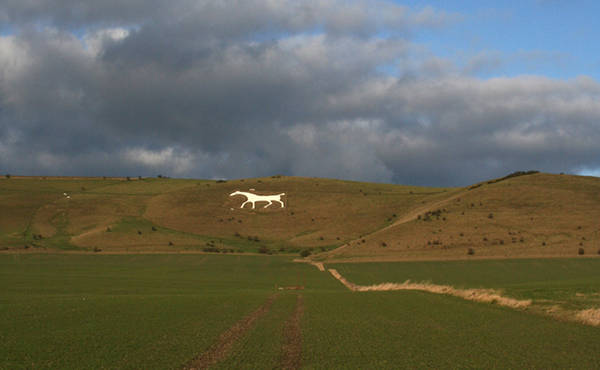
Alton Barnes White Horse
Dominates the landscape of the Vale of Pewsey.

Adam’s Grave / Wansdyke
Neolithic chambered tomb on the summit of the Downs. Walk along the Wansdyke, following the White Horse Trail.

Stonehenge

The most sophisticated stone circle in the world, at the centre of a remarkable sacred landscape. Includes the cursus, a 3km long earthwork and the Avenue, leading from the River Avon.

Winterbourne Stoke

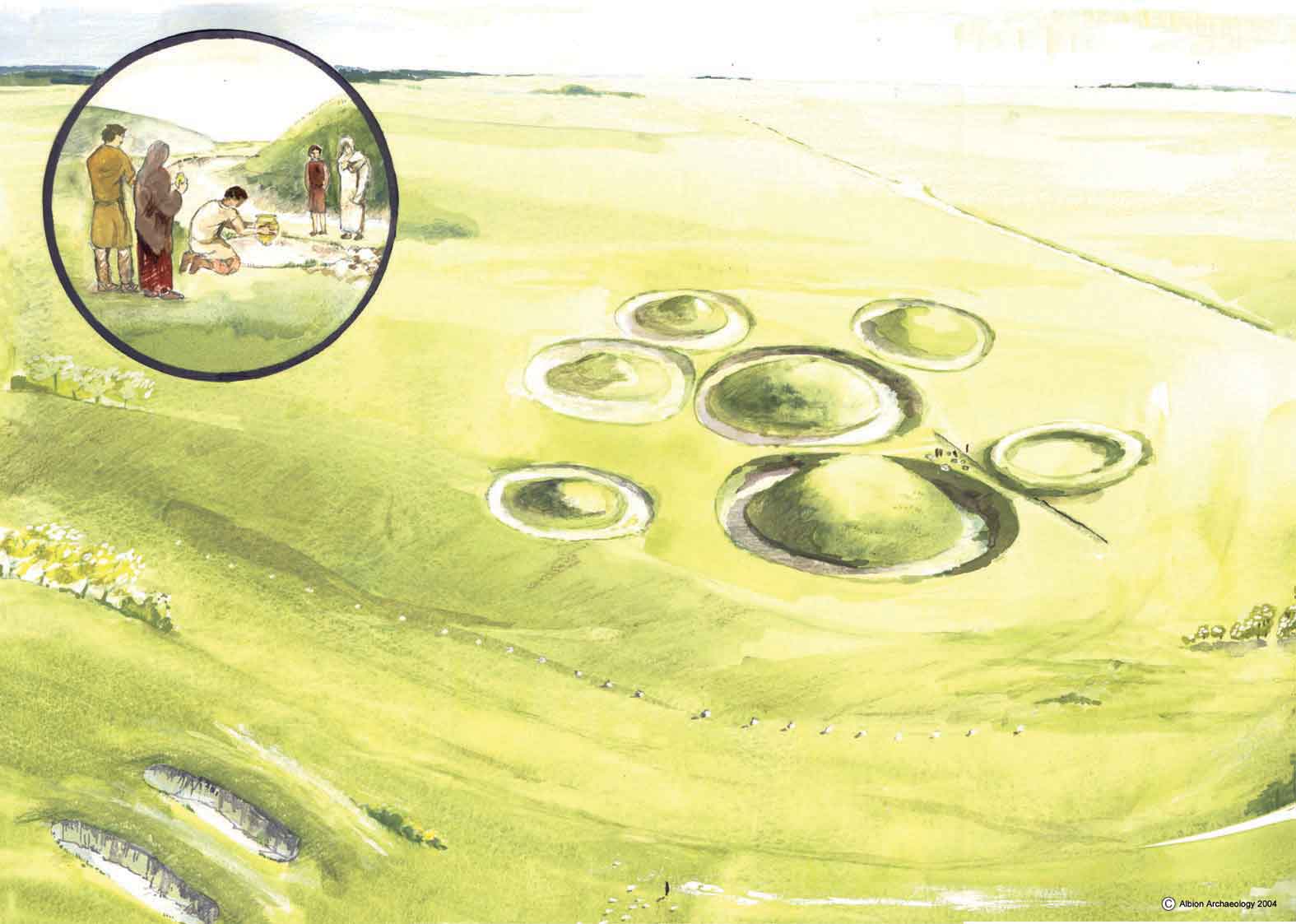
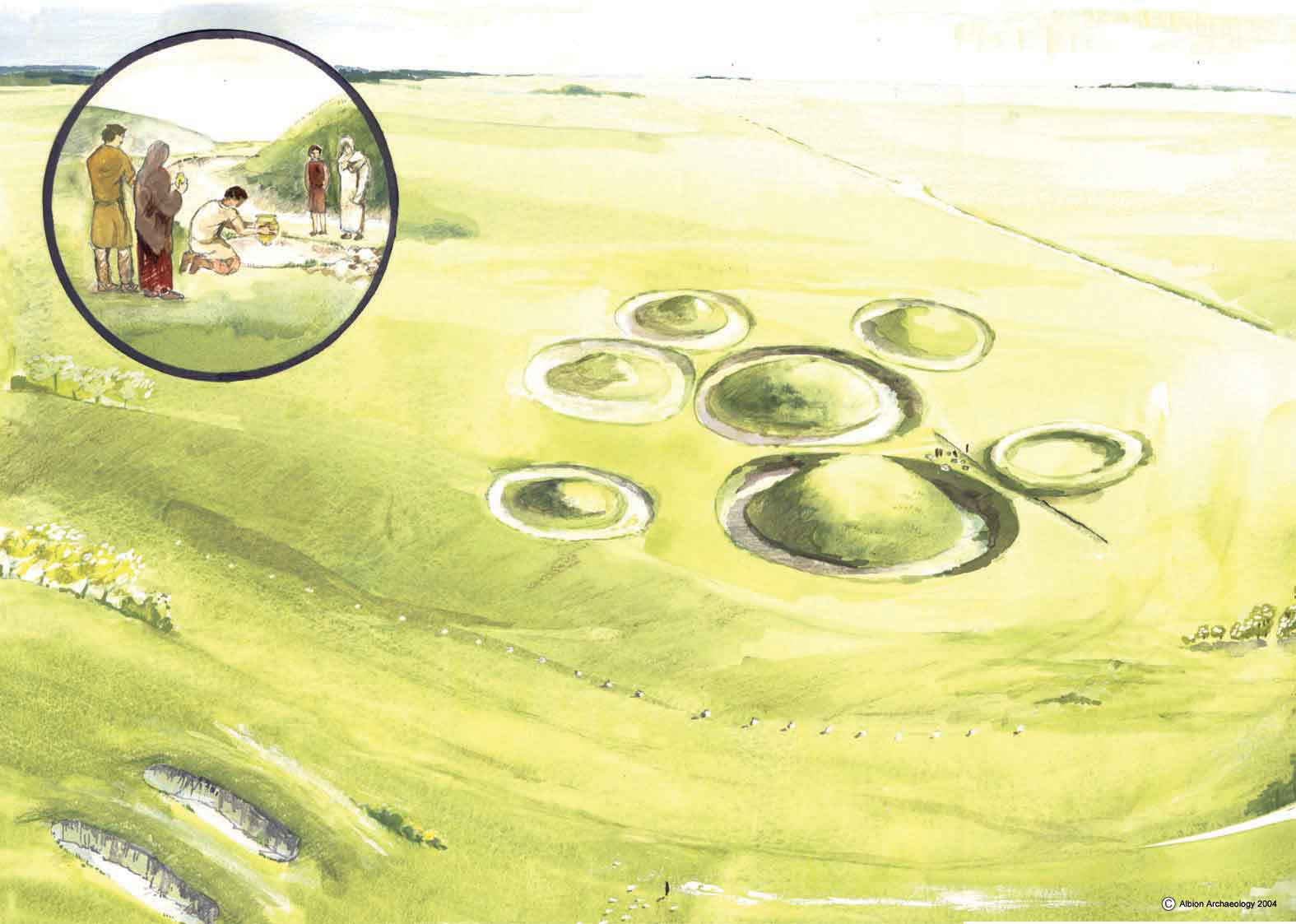
The most impressive barrow cemetery – a Neolithic long barrow and a line of Bronze Age burial mounds.

Normanton Down
Cemetery of over 50 round barrows, including the famous Bush Barrow.

Amesbury

Amesbury is an attractive small town embraced by a loop of the River Avon as it cuts through the high plateau of Salisbury Plain. The town has served the needs of travellers for centuries. Highlights include the Amesbury is the closest settlement to Stonehenge.

Durrington Walls / Woodhenge
Durrington Walls is a massive henge, the site of the recent discovery of Neolithic houses, where the people who used Stonehenge may have lived. Nearby is Woodhenge, where excavations showed a series of concentric circles of wooden posts, enclosed by a bank and ditch.

Where to Stay
Local accomodation listed by VisitWiltshire.

Alternatvley you could join a guided sightseeing coach tour with ‘The Stonehenge Tour Company’ or a privat tour with ‘Histouries UK’ or ‘SalisburyGuidedTours‘ based is Salisbury

The Henge Hopper – http://www.stonehenge-avebury-bus.org.uk/
Stonehehenge Tour Companies – http://www.stonehenge-stone-circle.co.uk/stonehenge-tours.htm

However you get there, get there…………………….

Merlin @ Stonehenge
The Stonehenge Stone Circle Website


Britain may pull out of UNESCO

1 03 2011

Britain is threatening to withdraw its support for the United Nations agency

Avebury Stone Circle

Avebury Stone Circle

Unesco has designated more than 900 cultural and natural world heritage sites and 28 are in the UK including the City of Bath, Stonehenge, Avebury and Dorset and east Devon’s coastline.

Andrew Mitchell, the international development secretary, is expected to reveal tomorrow that aid to about 16 countries will end and that more than half a dozen UN agencies will either lose British help completely, or be warned they face losing it unless they reform.

UNESCO – United Nations Educational Scientific and Cultural Organization: an agency of the United Nations that promotes education and communication and the arts

http://whc.unesco.org/
http://www.thisissomerset.co.uk/news/UK-pull-funding-heritage-sites/article-3274100-detail/article.html
Sponsors: The Stonehenge Tour Company

Merlin @ Stonehenge  and Avebury
The Stonehenge Website


Scientists ‘step closer’ to solving Stonehenge mystery

23 02 2011

IT is a mystery that has baffled geologists and historians for centuries… how were the Stonehenge rocks transported from Wales’ Preseli mountains to their resting place 120 miles away.

Scientists are today one step closer to solving the 4,000-year- old mystery after making their most significant discovery in 15 years.

Of the six to eight different bluestone types found in the inner circle of rocks on Salisbury Plain, only one, the so- called “spotted dolerite”, was convincingly traced to the Mynydd Preseli area in north Pembrokeshire in the early 1920s.

But modern technology has now assisted geologists at Amgueddfa Cymru – National Museum Wales – in creating a “fingerprint” for one of the other rock types found in Wiltshire.

And that “fingerprint” has been identically matched to stones found in an area north of the Mynydd Preseli range, in the vicinity of Pont Saeson.

The discovery means archaeologists are now a step closer to retracing the footsteps of Neolithic engineers who moved the stones in the first place.

Dr Richard Bevins, Keeper of Geology at Amgueddfa Cymru, said: “The outer circle of Stonehenge is made up from stones sourced locally in Salisbury Plain but it is the mismatch of rocks found in the inner circle that have caused so much mystery.

“We have known for some time that spotted dolerite came from Preseli but of those remaining stones we think that six to eight more may have come from Pembrokeshire, until now though we haven’t been able to be sure because the stones are very fragile and we didn’t previously have the technology to extract their DNA.”

Dr Bevins added: “Theoretically if we could trace the source of the other rhyolites (rock types) we could create a map with six or more locations pinpointing where each stone was sourced.

“Archeologists could then essentially see the route that was taken by these people, they could re-trace those steps, set up archaeological digs and make who knows how many new discoveries.

“In terms of looking at where the stones came from this is the most important discovery we’ve made regarding Stonehenge in 10 or 15 years.”

Dr Bevins, in partnership with Dr Rob Ixer at the University of Leicester and Dr Nick Pearce of Aberystwyth University, made the discovery by analysing microscopic crystals found in the rock, vaporising them and analysing the gases found as a result.

The composite of gases makes up the rock’s DNA which can then be matched to other rock forms.

Sourcing the rhyolites also provides the opportunity for new thoughts on how the stones might have been transported to the Stonehenge area.

Much of the archaeology in recent years has been based on the assumption that Neolithic Age man had a reason to transport bluestones all the way from West Wales to Stonehenge and the technical capacity to do it.

Dr Bevins said: “It has been argued that humans transported the spotted dolerites from the high ground of Mynydd Preseli down to the coast at Milford Haven and then rafted them up the Bristol Channel and River Avon to the Stonehenge area.

“However, the outcome of our research questions that route, as it is unlikely that they would have transported the Pont Saeson stones up slopes and over Mynydd Preseli to Milford Haven, we would assume that they would not carry the rocks up and over a steep mountain range.

“If humans were responsible then an alternative route might need to be considered.”

Some believe that the stones were transported by the actions of glacier sheets during the last glaciation and so the Pont Season discovery will need appraising in the context of this hypothesis.

Mike Parker Pearson, Professor of Archaeology at Sheffield University, added: “This is a hugely significant discovery which will fascinate everyone interested in Stonehenge.

“It forces us to re-think the route taken by the bluestones to Stonehenge and opens up the possibility of finding many of the quarries from which they came.

“It’s a further step towards revealing why these mysterious stones were so special to the people of the Neolithic.”

Read More http://www.walesonline.co.uk/news/wales-news/2011/02/23/scientists-step-closer-to-solving-stonehenge-mystery-91466-28216698/#ixzz1ElvHUPjT

Merlin @ Stonehenge


The Amesbury Archer. The King of Stonehenge

14 02 2011
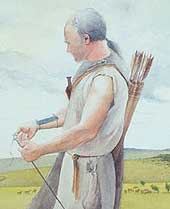
The Amesbury Archer

I ofter talk about the ‘Amesury Archer’ on my Stonehenge tours and wanted to put some facts into my blog for those visitors who keep asking for more information.  
An excavation in Wiltshire some years ago revealed the grave of a Bronze Age archer, buried with a rich array of precious metal goods and a quiver of arrows. Was this the King of Stonehenge?

An Early Bronze Age grave

In the spring of 2002 what started as a routine excavation was undertaken in advance of the building of a new school at Amesbury in Wiltshire. By the end of the excavation the richest Bronze Age burial yet found in Britain had been discovered. The Bronze Age man discovered there had been buried not far from the great temple of Stonehenge. He was a man who owned and could work the new and magical metals of gold and copper. And he had come from what is now central Europe, perhaps around the Alps. Was he a king of Stonehenge?

Early Bronze Age pottery showed that they were over 2,500 years older than the Roman graves.

On the site of the proposed new school there was a small Roman cemetery but, it seemed, little else. In the far corner of the site, though, there were two features that looked different. Had they been caused by trees being blown over? Or were they something else? They certainly did not look like Roman graves.

Excavation work started on a Friday morning, and the reason for the difference between the Roman graves and the two other features rapidly became clear. The features were indeed graves, but the Early Bronze Age pottery in one of them showed that they were over 2,500 years older than the Roman graves. And the grave with the pottery was unusually large.

The Amesbury Archer

Golden artefacts - either earrings or hair tresses These golden artefacts may have been earrings or hair tresses . One of the next finds revealed something unusual – a gold ‘earring’. This type of jewellery may be the oldest type of gold object made in Britain. These objects are very rare, and they usually occur in pairs, and as it was the Friday of the May Bank Holiday weekend it was decided that the excavation of the grave should be completed that day. This might involve staying on a little bit late on a Friday afternoon, but not, it was thought, very late.

What no one knew then was that the grave, the burial of the Amesbury Archer as he has come to be known, was to be the most well-furnished Early Bronze Age burial ever seen in Britain. The graves could not be left unprotected, so a ‘little bit’ late turned into ‘very, very’ late, as it became clear that this was a very important find.

The excavation showed that there was probably a timber mortuary building in the larger grave. Because of this not all the earth had been put back into the grave at the time of the burial, so it seems likely that a small burial mound or barrow surmounted the grave.

What no one knew then was that the grave, the burial of the Amesbury Archer as he has come to be known, was to be the most well-furnished Early Bronze Age burial ever seen in Britain. The graves could not be left unprotected, so a ‘little bit’ late turned into ‘very, very’ late, as it became clear that this was a very important find.

The excavation showed that there was probably a timber mortuary building in the larger grave. Because of this not all the earth had been put back into the grave at the time of the burial, so it seems likely that a small burial mound or barrow surmounted the grave.

King of Stonehenge?

The stones of Stonehenge seen at sunrise

The stones of Stonehenge seen at sunrise

The site of Stonehenge at sunrise. The radiocarbon dates show that the Archer lived between 2,400 and 2,200 years BC. The burial lies about 5km (2 miles) south-east of Stonehenge and it was at about this time that the massive stone circles, and the avenue leading to the River Avon from the site, were built. The great temples of Woodhenge and Durrington Walls, both a similar distance away, continued to be used and modified throughout this time.In the past, burials of this date were considered rich if they contained more than a handful of objects, especially if one of the objects was of copper or bronze, or even gold. Although the finds buried with the Archer are all of well known types (within the Beaker cultural package that is found across much of central and western Europe at this time), the number of objects found with him, almost 100, is without compare.

Had these two men been part of a ruling élite?

The burial is also one of the earliest of its type in Britain, some of the finds are of the highest quality, and the gold is the earliest yet found in Britain. Furthermore the copper knives came from Spain and western France – an indication of the wide contacts of their owner. Above all, though, the associations between these finds are of particular importance.

Can it be a coincidence that the richest Early Bronze Age burial in Britain, and its companion, should be so close to the great temples of Durrington Walls? Had these two men been part of a ruling elite? Had one of them been a king?

A European élite

Copper knives from the Amesbury Archer's grave

Copper knives from the Amesbury Archer's grave

The Archer’s copper knives  As the archaeologists discussed these questions, further surprising facts became clear. Some archaeologists have argued that, for the period in question, there is no certain evidence for the sort of social differences that might suggest a ranked society. The discovery of the burial of the Amesbury Archer and his companion, however, showed for the first time that at this date there were individuals – and perhaps even families – of greater wealth and status than others. That this elite had ties across Europe is shown by the sensational discovery that the Archer comes from central Europe.The enamel on our teeth stores a chemical record of the environment where we have grown up. It is possible by using Oxygen Isotope Analysis to measure this record. The Archer’s teeth show that as a child he lived in a colder climate than that of Britain today, in central Europe, and perhaps close to the Alps.

He was raised in central Europe but he died near to one of the greatest temples in Europe.

Much work remains to be done. At the moment we do not know why the Amesbury Archer came to live, and perhaps raise a family, near Stonehenge. Was he brought up in the family of distant allies? Did he arrive in order to seal an alliance by taking a partner? Was he a settler or a pilgrim? Or was he an outsider with the magical skills of alchemy?

We will never know all the answers, but we can say this. He was a strong man, who overcame pain and handicap. He could work new and exotic metals. His mourners gave him the richest burial of his time. He was raised in central Europe but he died near to one of the greatest temples in Europe. We may not know if he was a king, but it is still an astonishing story. It is a Bronze Age biography.

If you are visiting Stonehenge or on a Stonehenge tour take the time to visit the Salisbury and South Wiltshire Museum –
http://www.salisburymuseum.org.uk/collections/stonehenge-prehistory/amesbury-archer.html

Books

Bronze Age Britain Mike Parker Pearson (Batsford/English Heritage 1993)

Hengeworld by Mike Pitts (Century, 2000)

The Stonehenge People: Life and Death at the World’s Greatest Stone Circle by Aubrey Burl (Barrie Jenkins, 1989)

Stonehenge by Julian Richards (Batsford/English Heritage, 1991)

Merlin @ Stonhenge
The Stonehenge Stone Circle Website


Barrows of the Bronze Age – Stonehenge Landscape Tour

11 02 2011

Explore the Bronze Age monuments of the Stonehenge landscape with Sonia Heywood ‘ you’ll soon discover that they’re much more than simple burial mounds. Investigated by curious antiquarians in the last 300 years, they have a 4,000 year history that tells us much about our past. On our four mile walk we’ll be visiting the Cursus Barrows, Winterbourne Stoke Barrows and the Monarch of the Plain. We’ll also have fine views of the King Barrows and Normanton Down Barrows.

26th February 2011

  • Please wrap up warm and bring stout footwear. The open landscape of the downs can be very exposed. You may like to bring a hot drink and a snack.
  • Meeting at the Stonehenge car park (not NT) by the bright green National Trust information panel.More Information: Lucy Evershed, 01980 664780, stonehenge@nationaltrust.org.uk
    http://www.Nationaltrust.org.ukHighly recommended!
    Merli @ Stonehenge Stone Circle


  • A new henge discovered at Stonehenge

    5 02 2011

    An archaeology team led by the University of Birmingham and the Ludwig Boltzmann Institute for Archaeological Prospection and Virtual Archaeology in Austria discovered a major ceremonial monument less than one kilometre away from the iconic Stonehenge.

    History is set to be rewritten after an archaeology team led by the University of Birmingham and the Ludwig Boltzmann Institute for Archaeological Prospection and Virtual Archaeology in Austria discovered a major ceremonial monument less than one kilometer away from the iconic .

    The incredible find has been hailed by Professor Vince Gaffney, from the University’s IBM Visual and Spatial Technology Centre, as one of the most significant yet for those researching the UK’s most important prehistoric structure.

    Professor Gaffney says: “This finding is remarkable. It will completely change the way we think about the landscape around Stonehenge. “People have tended to think that as Stonehenge reached its peak it was the paramount monument, existing in splendid isolation. This discovery is completely new and extremely important in how we understand Stonehenge and its landscape.”

    The new “henge-like” Late Neolithic monument is believed to be contemporaneous to Stonehenge and appears to be on the same orientation as the World Heritage Site monument. It comprises a segmented ditch with opposed north-east/south-west entrances that are associated with internal pits that are up to one metre in diameter and could have held a free-standing, timber structure.

    The project, which is supported by the landowner, the National Trust, and facilitated by English Heritage, has brought together the most sophisticated geophysics team ever to be engaged in a single archaeological project in Britain.

    Provided by University of Birmingham.  Find out more about the latest discoveries, join a guided tour of Stonehenge – book through ”The Stonehenge Tour Company

    Merlin @ Stonehenge
    THe Stonehenge Stone Circle Website


    Stonehenge, mystery shopping and an over-excited lemur

    31 01 2011

    There’s an old gag that goes like this….

    An American tourist arrives with his family at Stonehenge and asks one of the junior staff how old the monument is. “That’s easy” replies the young man, “Five thousand years, four months and three weeks.” “That’s amazing” says the American, “How the heck can you be so precise?” “Well” he proudly declares, “next week I’ll have been working here for five months, and I remember them telling me on my first day that it was 5,000 years old, so….”

    Now, before the estimable Simon Thurley gets on the phone to assure me that such a thing could never have happened, what with English Heritage’s superb staff training programmes for new staff, I must stress that it’s a joke about the uncertainty of prehistoric dating, not a critique of EH’s induction procedures. I am also, of course, not in any way disparaging American tourists. Perhaps I should have simply said ‘A tourist arrives etc’ with nationality unspecified. Hard to say, to be honest. Levity’s a tricky thing, as I discovered when The Daily Telegraph’s Mandrake column cast its rheumy eye over one of my earlier efforts.

    And some fell on stony ground, as they say…

    Ancient standing stones of Stonehenge, near Salisbury in Wilthsire, England UK. © Britainonview / Martin Brent

    ‘Toy town with dinky electric vehicles’?


    Anyway, the good news about Stonehenge is that the Heritage Lottery Fund have agreed to put forward £10 million, and the prospects of getting to some kind of resolution for the issue of how to present the stones to the public becomes significantly brighter. For some, though, the glass remains very much half empty. Indeed for Marcus Binney (writing in The Times at the weekend), the glass should have been left in the kitchen cabinet and the liquid used for something else altogether. I’d pop a link in at this point but, as you probably know, that paper operates what’s called a ‘pay-wall’ so you’ll have to make your own arrangements if you want to call up the article.

    The gist of his argument, however, runs like this. The proposed visitor centre, he believes, will ‘turn Stonehenge into a toy-town with visitors approaching in dinky electric vehicles’. And in any event, he continues, they’ve chosen the wrong site for it. They should, in fact, focus all their resources on repairs and restoration rather than interpretation (by which he means visitor centres, and so on) or, better still, be stripped of their grant-giving powers and pass all the Lottery money to the National Heritage Memorial Fund, and other bodies that will spend it on ‘front-line rescue of natural and man-made heritage, and not on frills and embellishments.’

    Ouch.

    The point here surely is that, yes, there will always be a long line of hard cases, where buildings and monuments – each with their own wonderful story, and each with a really strong case for support – are overlooked; while other things – less deserving in the eyes of the chap making the case – get the nod. That’s the nature of democracy and professional judgement. For my part, I believe that our heritage buck must go on more than simply renovation, important though that is, because history is a narrative (to use, without apology, a word that has become almost meaningless through over-use in public life recently) as well as a selection of beautifully preserved artefacts and buildings. English Heritage understands this, and they put it into practice with enormous skill and imagination. Audio tours, computer visualisations, historic re-enactments and all the other things they do are, largely thanks to the calibre of the people they employ, so much more than ‘frills and embellishments’.

    Personally I’m absolutely delighted that the HLF have stepped in and I believe that grants like this are exactly what Lottery players would want the good cause money to go towards. And, if Marcus Binney slips a quid across the counter of his local news agent every Wednesday and Saturday for a crafty Lucky Dip, then I can only remind him that, as I said last week, rather more of his good cause contribution will very shortly be going towards heritage projects, and that can’t be bad, can it?

    John Penrose blog:
    http://blogs.culture.gov.uk/main/2010/11/stonehenge_mystery_shopping_an_1.html

    Merlin @ Stonehenge
    The Stonehenge Stone Circle Website


    Background to the Stonehenge Solstice Celebrations…

    8 01 2011

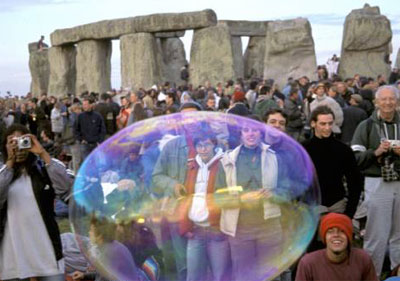
    Crowds of people gathering to celebrate the modern day summer solstice at Stonehenge has developed from a grass-roots level and this is something we are not used to in our fast-paced consumer driven society. The notion of people gathering together under their own terms is in some ways a lost art in Britain outside the confines of major sporting occasions, concerts, weekend shopping trips and nights out on the town. Major royal and civic events could also be added to this list. The festival scene however, has given more alternative gathering a real boost. The nature of celebration is to have a joyous time and it is interesting to note that the United Kingdom has amongst the least number of public holidays in Europe. We work increasingly long hours and stresses of modern living can take a toll on the body, as well as the mind. There is certainly a market for a successful summer solstice celebration at Stonehenge for people intending to free their spirits in a communal gathering at an age-old and identifiable site.
    So, who actually attends the modern celebrations?

    The answer is many different groups of people – Druids, pagans, wiccans, witches, tourists, locals, revellers, hippies, night-clubbers, bikers, students, curious on-lookers, spiritualists, historians, political activists, anarchists, eccentrics, environmentalists, travellers and astronomers. Some adherents to eastern religions such as Hare Krishna devotees and some practitioners of Buddhist meditation may also attend, as well as many people from abroad.

    The fact is, that this is now an occasion open to anyone who wants to come; gone are the days of exclusion.

    The first sizeable groups to visit the stones in modern times, other than passing travellers and nearby townsfolk were 19th century day trippers; often using the railway to Salisbury as a connecting point. At the turn of the 20th century ownership was transferred from private hands to the nation. Modern day Druids started to hold ceremonies with groups of onlookers. This soon developed into a larger gathering or open fair by the 1920’s, with music and crowds ranging from a few hundred to a few thousand. Later by the 1960’s the site became a focus for counter-culture and a large annual ‘free festival’ started to emerge from 1974 onwards. Several leading figures including Phil Russell, alias ‘Wally Hope’ dedicated the stones as a people’s temple open to all and the developing free festival became the embodiment of these ideals.

    In 1985 the growing festival and its associated peace convoy of travellers was brutally ambushed by the police in the infamous ‘Battle of the Beanfield’. In this year the festival was smashed before it even began. An antagonistic exclusion zone was then set up around the stones for what eventually amounted to the next fourteen years. People however, still yearned to gather at this special place and after several years of negotiation, arrangements were finally granted for a few hours of access at midsummer 2000.

    The issue of the festival is still a contentious issue. There are those who argue for the right to gather at the stones for a few days and party. The National Trust, who are the major landowners around the site, the police, local residents and English Heritage all continue to express the concern that the original free festival was unsustainable. It had grown out of all proportion to the site and threatened the surrounding landscape.  They believe the same would happen again if another free festival emerged and that the best way forward is through the structure of Managed Open Access (MOA).

    However, there continues to be an open debate about what the nature of the occasion is all about.

    In my mind some people still attend the summer solstice celebrations hoping to find a ‘rock’ festival with bands, DJ’s, dance tents and headline acts taking centre stage. When, in fact today they actually get a ‘rock’ festival with ‘rocks’ of the stone variety. This can result in a number of people wandering around not being exactly sure what to do with themselves in the absence of ‘amplified’ music. It is possible that a supporting festival could be provided at an alternative location to cater for those with music on their minds. This happened in part with the 2006 Somerset based ‘Sunrise Festival’ and subsequently attendance at the celebrations was lower than usual. Andy Worthington notes this distinction as follows;

    ‘Even during the festival years, the number of people actually visiting the stones on the solstice was rarely more than a few thousand, a situation that concerned Bev Richardson, who noted that, as the festival grew, the spiritual significance of the temple dwindled, so that two thirds of those attending the festival in 1977 visited the stones at the solstice, but only a thousand out of 40,000 did so in 1984’. (1)

    Crowd numbers are another major factor concerning the modern celebrations. This happened in 2003 when the MOA fell on a weekend for the first time and 30,000 people turned up. The management of such large numbers is a real concern for English Heritage. It is possible that attendance might increase again, but since the high point of 2003 numbers have generally levelled out at about 21,000. This proves that the appeal of the gathering does indeed have its limitations, especially when other factors such as the weather, a midweek solstice and even *England international football matches are taken into consideration.

    Entering the solstice space of MOA the central horseshoe of the main circle is filled to capacity with revellers cheering to an undulating beat of drums. The majority of the crowd, however, sit and stand outside waiting for the sun to arrive under the ambient glow of mobile flood light units. A simple sheet of rules known as the ‘Terms and Conditions of Entry’ is provided to all attendees. Apart from the time of sunrise and the preceding sunset, there is a distinct lack of information about the main torch-lit parade and Druid ceremony. Yet, even with this lack of knowledge about things to do, the celebrations are a major draw. The lack of any structure is there to allow the occasion to develop from the ground up rather than be imposed from the top down. Revelry and drunkenness is a common feature of the solstice and many do go there to get high. However, if the event is to move forward the provision of more information with the emphasis on the positive would be a good idea. For most, having a drink at the solstice is no more than a social lubricant, but unfortunately for a small minority the drunkenness can take on a slightly anti-social element with sometimes misplaced exuberance around others, especially those with young children.

    Whilst drunkenness will always be a feature of the summer solstice celebrations, the anti-social aspect to the revelry can often be quite shocking for those expecting a more sedate occasion and whilst Stonehenge can enthral an audience, it can also greatly disappoint. The lack of respect for the site created by the debris of the all-night party scene has led some people to ask themselves the question – would they really want to go again?

    The very nature of Stonehenge is that it is all things to all people and thankfully, there are many who do treat the site with respect, and take a positive view of the place. A small band of volunteer ‘Peace Stewards’ help with general advice and aim to defuse tensions with the unruly few.

    Personally, I am attracted to the solstice because it represents a free-space where ideas can germinate. It is a place where a connection can be made with a primeval urge to follow in the footsteps of the ancestors and mark out a sustainable path for the future. Without the vision of the original festival organisers and the campaign for access after the Beanfield none of this would have happened. This included those who kept turning up at the stones attempting to celebrate the solstice during the years of exclusion.

    Many archaeologists and historians also agree that psychedelics were used at ancient solstice celebrations through the use of naturally available fungi, plant extracts and dried herbs. This would have been a way of communing with nature and contacting the spirit world in shamanic type rituals. In the book ‘Hengeworld’ Mike Pitts notes that;

    ‘It’s not a joke: some of them it seems really were stoned.’

    ‘An early idea in recent discussions of altered states by archaeologists concerned Beaker pots. You will remember that these pots were once equated with invading peoples, but that this interpretation gave way to less sweeping links with peculiar social sects or fashions, or perhaps beer drinking cults. ….Maybe there was a cult, involving not beer but plant hallucinogens.’ (2)

    Perhaps the emphasis on excessive hedonism is a continuing part of an ancient tradition and a ritual for some in its own right? The recent discovery and excavation of the temple’s original associated village at the nearby Durrington Walls confirmed that the place also had associations of being where people ‘went to party’ (3) in the distant past, albeit with reference to the winter solstice, rather than the summer one. In reality drunkenness at the stones today only mirrors issues of ‘binge-drinking’ in wider British society. What you see at the summer solstice celebrations is no different to what goes on during most weekends in any major UK town or city centre.

    Public safety however, is paramount in the minds of the authorities and memories of the football disasters of the 1980’s combined with the current climate for ‘compensation culture’ has lead to a cautious approach. Local authorities and governmental agencies tend to like events which they conceive and manage themselves, rather than ones which grow out of the public imagination, which they then have to manage afterwards. The current MOA arrangement at Stonehenge is just this type of situation and is a good example of one big compromise between a whole-range of interested parties.

    Anyone who has followed the story of solstice access over the last few years will have no doubt realised that excluding people just does not work. Stonehenge is a temple open to everyone. Everyone, really meaning everyone and the saying, ‘bring what you expect to find’ could not be truer.

    Aricle with thanks to Jim Rayner (Re: The forthcoming book ‘A Pilgrim’s Guide to Stonehenge’)

    (1) WORTHINGTON, Andy. 2004 ‘Stonehenge Celebration and Subversion’ Alternative Albion, page 240
    (2) PITTS, Mike 2000 ‘Hengeworld’ Century Press, page 232
    (3) PARKER PEARSON, Mike. 2007 online at; http://news.bbc.co.uk/1/hi/sci/tech/6311939.stm
    http://www.stonehengecelebrations.co.uk/
    http://www.stonehengetours.com/html/summer-solstice-tour.htm
    http://www.efestivals.co.uk/festivals/stonehenge/

    The Stonehenge News Blog
    Follow us on Twitter and Facebook for all the latest Stonehenge Summer Solstice News
    http://www.Stonehenge.News

    [tweetmeme]


    Neolithic New Year walk – Stonehenge Landscape

    30 12 2010

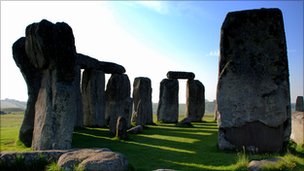
    Welcome in 2011 by discovering the astonishing Stone Age on a walk around the ancient monuments of the Stonehenge landscape. Why did people start to build massive monuments 6,000 years ago? Discover the astonishing Stone Age on a relaxed ramble around Stonehenge Down. Our six mile route will take us to Neolithic enigmas including Durrington Walls and the Stonehenge Cursus.

  • Wrap up warm against the January weather – we recommend plenty of layers and stout footwear. Bring a packed lunch and a hot drink.
  • Meet at the Stonehenge car park (not NT) by the bright green National Trust information panel on the grassy area of the main car park.
  • Dogs on leads welcome
  • Accompanied children welcome, free.
  • Light refreshments provided.
  • Access is by pedestrian and farm gates; the terrain is grassland and trackways, often uneven underfoot. Cattle and sheep graze the gently sloping downs.
  • More Information: Lucy Evershed, 01980 664780, stonehenge@nationaltrust.org.uk

    Walk in the steps of our ancestors at one of the world’s best-preserved prehistoric sites
     
    Don’t miss
    • Great views of the famous Stonehenge circle
    • Mysterious ceremonial landscape of ancient burial mounds, processional walkways and enclosures
    • Haven for wildlife, from brown hare and butterflies, to birds such as the skylark
    • Colourful displays of downland wildflowers in June and July
    Or do it yourself any day of the year……………
    Stonehenge Down
    The long grassland shrouded in mist at Stonehenge Down. © NT / Margriet van Vianen
    Home to skylark and brown hare, Stonehenge Down is a wide open landscape with fine views of the famous stone circle. From here you can also explore Bronze Age barrow cemeteries and prehistoric monuments, such as the Stonehenge Avenue and the mysterious Cursus. SU125425
     
    King Barrow Ridge
    Here Bronze Age burial mounds stand among impressive beech trees, with views of Stonehenge and the downs. The hazel coppice provides shelter for wildlife along the ridge, while in summer, chalk downland flora attracts butterflies such as the marbled white. SU134423
    King Barrow Ridge on a beautiful summer's day. © NT / Lucy Evershed
     
    Normanton Down
    Normanton Down on a bright summer's day, showing a field of daisies in the foreground. © NT / Margriet van Vianen
    Normanton Down offers one of the best approaches to the stone circle. The round barrow cemetery dates from around 2600 to 1600BC and is one of the most remarkable groups of burial mounds in the Stonehenge landscape. The downland and arable fields here are home to a variety of farmland birds such as corn bunting and stonechat. SU117415
     
    Durrington Walls
    In 2005 Durrington Walls was revealed to be the site of a rare Neolithic village, with evidence of shrines and feasting. You can still see some of the banks of this circular earthwork, the largest complete ‘henge’ in Europe. Post holes show that there were large timber structures here, like those at nearby Woodhenge. SU150437
    The red and gold hues of autumn at Durrington Walls. © NT / Stephen Fisher
     
    Winterbourne Stoke Barrows
    The Chalkhill Blue, common to chalk grassland, can be seen in the summer months. © NT / Margriet van Vianen
    Another fascinating example of a prehistoric cemetery. The wide range of barrow shapes found here show that this site was used over a long period of time for burials of people of high status. Newly sown chalk downland flora covers the landscape – look out for brown hares too. SU101417

    External link: http://www.nationaltrust.org.uk/event-search/events/show?id=2108044944

    Happy New Year!
    Merlin @ Stonehenge
    The Stonehenge Stone Circle Website


    The Great Stones Way – Britain’s newest long-distance walking trail opens in March 2011

    8 12 2010

    The Great Stones Way, a superb new 30 mile walking trail between the World Heritage Sites at Avebury and Stonehenge, will become one of Britain’s best loved and most used walking routes. 

    Passing through the landscapes of the Wiltshire Downs, the Vale of Pewsey, Salisbury Plain and the Avon Valley, The Great Stones Way will be a great walk in itself. The combination of immense vistas and magnificent archaeology along the route will be irresistible – no other walking route has so much ancient heritage packed into such an attractive 30 miles.

    Alton Barnes Chalk Hill Figure
    Alton Barnes Chalk Hill Figure

    The Great Stones Way is being developed by The Friends of The Ridgeway using existing footpaths and rights of way. Ian Ritchie, Chairman of The Friends of The Ridgeway says: “The Great Stones Way is a vital part of our ambition to open up the whole 360 miles of the Great Ridgeway from the south coast to East Anglia.  The section between Avebury and Stonehenge is currently a big gap in that route, and The Great Stones Way will fill it brilliantly.”

    The Great Stones Way will be launched on Saturday 26 March 2011 with a series of walks along the trail.  Ian Ritchie explains: “Ambitious and experienced walkers will want to do the whole 30 miles in one day, and there will be an alternative 13 mile route from Casterley Camp on Salisbury Plain to Stonehenge.  A gentle four miles from Durrington to Stonehenge will suit people who want to walk a shorter distance.”

    In addition to the two great stone circles at the World Heritage Sites of Avebury and Stonehenge, The Great Stones Way passes Silbury Hill, West Kennet Long Barrow, The Sanctuary, the Wansdyke, Adam’s Grave, Marden Henge, Broadbury Banks, Durrington Walls and Woodhenge. 

    “Because The Great Stones Way could take some people up to three days to walk its entire length, we are creating a series of shorter circular trails of varying lengths and challenges to suit walkers of all abilities,” says Ian Ritchie. The whole experience will be enhanced by a dedicated local bus service, the Henge Hopper, which will enable walkers to minimise the use of their cars and to plan their own walks along The Great Stones Way

    The Friends of The Ridgeway commissioned a professional feasibility study which estimated that opening up The Great Stones Way will bring more than 250,000 visitors to the area and over £6million into the local rural economy each year.  This will benefit accommodation providers in nearby towns and villages as well as several pubs and village shops along the trail.

    Claire Perry, Devizes MP supports the new walking trail: “I believe that The Great Stones Way will be a vital link at the heart of the Ridgeway.  It will take walkers over some of the most ancient and important paths in our great country and link two extraordinary World Heritage Sites.  To be able to walk along a well signposted and well surfaced path will be a pleasure for both British and overseas walkers and will bring important benefits to our local economy.”

    The Friends of The Ridgeway group has already held several public meetings with parish councils and communities along the route, and more are planned.  The group is fund-raising to improve signage, install disability access gates, repair the path surface in places, and to produce The Great Stones Way guidebook. 

    Details of the inaugural walk will be published on The Great Stones Way website www.greatstonesway.org.uk (currently under construction). Anyone who would like to take part or contribute to fund-raising can visit the website for more information or contact The Friends of the Ridgeway via www.ridgewayfriends.org.uk

    If you have not got the tme or the energy there are a few tour companies offering guided tours using cars or mini coaches.  You could try the Stonehenge Tour Company based in London, the excellent Histouries UK private guided tours from Bath or London or Salisbury Guided Tours.  We also have several discounted tours available on our website – click here

    Merlin @ Stonehenge
    The Stonehenge Stone Circle Website