£5.5million announced for Stonehenge project

5 04 2011

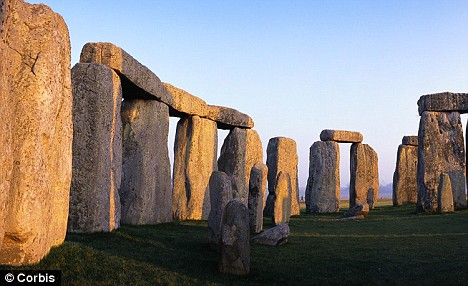
AN extra £5.5million to help transform the Stonehenge landscape was announced this morning.  Should be enough to install a new coffee machine.

On a visit to the monument, Roads Minister Mike Penning said the government has agreed to give £3.5million to close the A344 junction with the A303 and improve the Long Barrow roundabout to cope with extra traffic.

The work will include resurfacing a mile-long stretch of the A303 with a ‘low noise’ road surface so visitors to the stones should not be able to hear the passing traffic.

Tourism and Heritage Minister John Penrose said English Heritage will be allowed to take £2million from its reserves to put towards the £27.5million it needs to move the visitor centre to Airman’s Corner and install a road train system to take visitors to the stones.

Chief executive Simon Thurley said the organisation is now just £3million short of its target and hopes to raise this from private sources such as trusts and charitable funds.

A public inquiry will be needed to authorise the permanent road closure.

But Dr Thurley said: “I am confident that we will be able to start work next year.”

If all goes well, English Heritage says the entire project could be completed by spring 2014.

Link: http://www.salisburyjournal.co.uk

Is it enough ?

Merlin @ Stonehenge
The Stonehenge Stone Circle Website


The Henge Hopper

3 04 2011

The Wiltshire Heritage Museum is planning to launch a bus service to link Stonehenge and Avebury. At the moment, it is extremely difficult to travel between the two, and the Museum hopes to be able to boost tourism in the Vale of Pewsey and the Avon Valley. They hope to launch a service in due course.

Stonehenge

Stonehenge

The Community Bus Service will be operated by minibuses, and the route would take in a range of archaeological sites and monuments in the Stonehenge and Avebury World Heritage Site, including Silbury Hill, West Kennet Long Barrow and Woodhenge.

The ‘hop on, hop off’ service would include free entry to the Wiltshire Heritage Museum in Devizes, encouraging people to discover the collections excavated from the World Heritage Site.

The Henge Hopper enables you to visit:

Avebury
Britain’s largest stone circle, at the centre of a remarkable complex of monuments, including stone circles, burial mounds, two stone-lined avenues and Silbury Hill.

Alexander Keiler Museum, Avebury Manor
Explore the world famous stone circle. The bus starts from just outside the Museum, which features fascinating finds from Alexander Keiler’s excavations at Avebury, and, in the barn, interactive displays bring the Avebury landscape to life. Explore also Avebury Manor and its wonderful garden. Cafe, toilets and shop.

Silbury Hill
The largest man-made mound in Europe, mysterious Silbury Hill compares in height and volume to the roughly contemporary Egyptian pyramids.

West Kennet Long Barrow
One of the largest, most impressive and most accessible Neolithic chambered tombs in Britain. Built in around 3650 BC, it was used for a short time as a burial chamber, nearly 50 people being buried here before the chambers were blocked.

Wansdyke / White Horse Trail
Massive Saxon defensive ditch and bank running along the top of the North Wessex Downs. Walk along the Wansdyke, following the White Horse Trail, with stunning views over the Vale of Pewsey.

Marden Henge
Britain’s largest henge, Excavations in 2010 have revealed much about its fascinating story.

Alton Barnes White Horse
Dominates the landscape of the Vale of Pewsey.

Adam’s Grave / Wansdyke
Neolithic chambered tomb on the summit of the Downs. Walk along the Wansdyke, following the White Horse Trail.

Stonehenge

The most sophisticated stone circle in the world, at the centre of a remarkable sacred landscape. Includes the cursus, a 3km long earthwork and the Avenue, leading from the River Avon.

Winterbourne Stoke

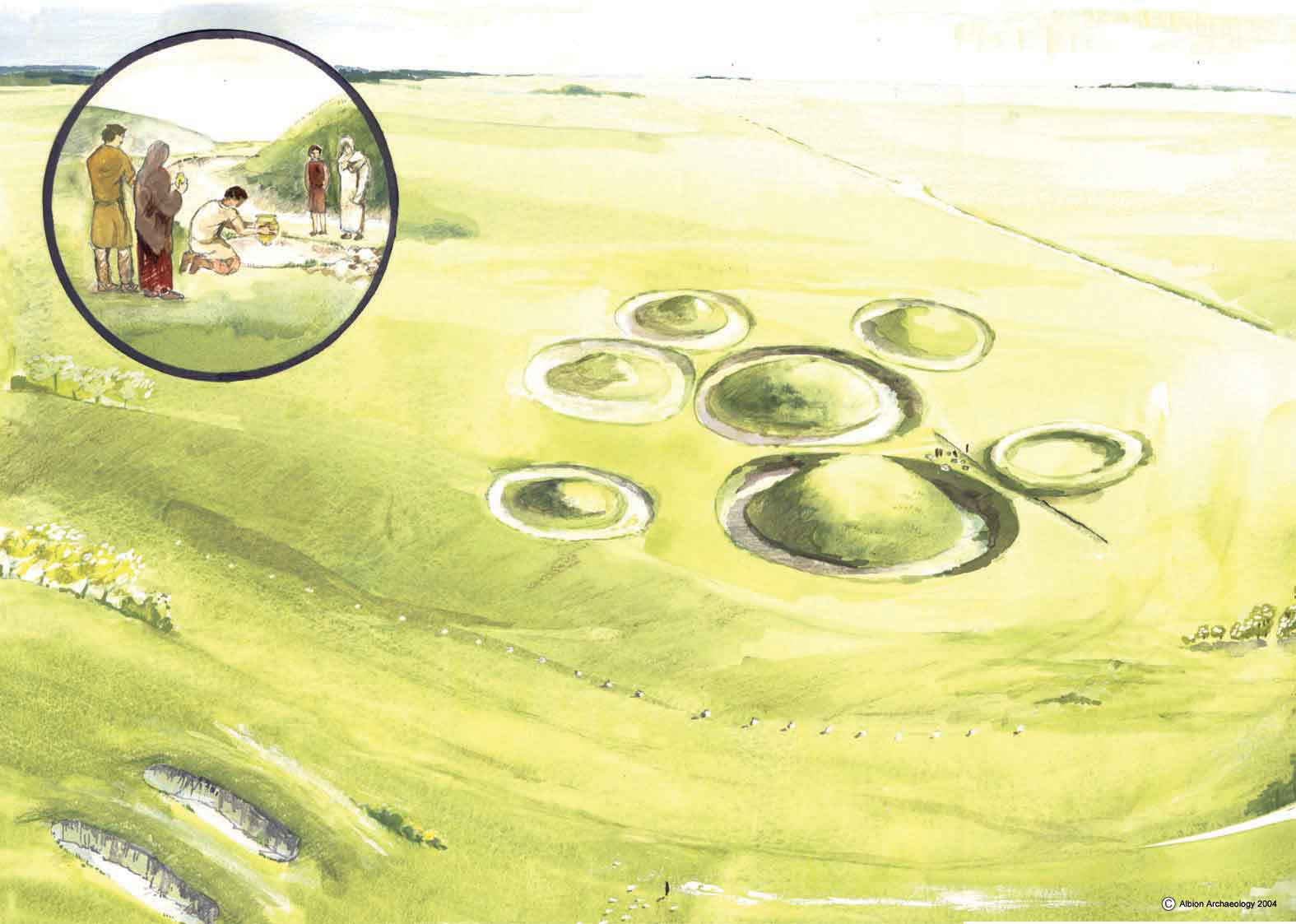
The most impressive barrow cemetery – a Neolithic long barrow and a line of Bronze Age burial mounds.

Normanton Down
Cemetery of over 50 round barrows, including the famous Bush Barrow.

Amesbury

Amesbury is an attractive small town embraced by a loop of the River Avon as it cuts through the high plateau of Salisbury Plain. The town has served the needs of travellers for centuries. Highlights include the Amesbury is the closest settlement to Stonehenge.

Durrington Walls / Woodhenge
Durrington Walls is a massive henge, the site of the recent discovery of Neolithic houses, where the people who used Stonehenge may have lived. Nearby is Woodhenge, where excavations showed a series of concentric circles of wooden posts, enclosed by a bank and ditch.

Where to Stay
Local accomodation listed by VisitWiltshire.

Alternatvley you could join a guided sightseeing coach tour with ‘The Stonehenge Tour Company’ or a privat tour with ‘Histouries UK’ or ‘SalisburyGuidedTours‘ based is Salisbury

The Henge Hopper – http://www.stonehenge-avebury-bus.org.uk/
Stonehehenge Tour Companies – http://www.stonehenge-stone-circle.co.uk/stonehenge-tours.htm

However you get there, get there…………………….

Merlin @ Stonehenge
The Stonehenge Stone Circle Website


Super moon spectacle will light up skies tonight at Stonehenge (but there’s no need to worry about a rise in lunacy)

19 03 2011

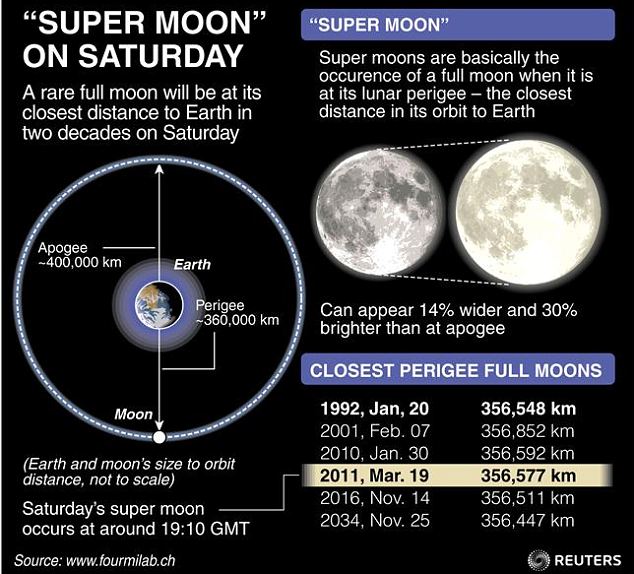
Tonight’s event will be the closest full moon in almost 20 years

Keep your fingers crossed for clear skies tonight – a full moon of rare size and beauty will rise in the east at sunset.

The natural phenomenon happens when the full Moon coincides with when it travels closest to Earth on its orbit.

‘The last full Moon so big and close to Earth occurred in March of 1993,’ said Geoff Chester of the US Naval Observatory in Washington DC.

Full Moons vary in size because of the elliptical (or oval) shape of the Moon’s orbit. At its furthest point (the apogee) it is around 252,731miles away from us, but it is only around 226,426miles at its closest point (the perigee).

So nearby perigee moons, like the one we will see tonight, is around 14 per cent bigger and 30 per cent brighter than lesser moons that occur on the apogee side of the moon’s orbit.

However, it will be difficult to detect the change once the moon is high in the sky as the human eye is unble to put it in context without any nearby objects to compare it to.

Therefore the most impressive view of the moon will be seen when it is close to the horizon due to the ‘moon illusion’. It appears larger as you will automatically compare it to the hills and houses nearby.

‘I’d say it’s worth a look and so close to the Spring Equinox

Lnks: http://www.dailymail.co.uk/sciencetech/article-1367474/Super-moon-spectacle-light-skies-tomorrow-night-theres-need-worry-lunacy.html#ixzz1H1i0CPkD
Sponsors:  The Stonehenge Tour Company

Merlin @ Stonehenge (Happy Equinox)

The Stonehenge Stone Circle Website


Wessex Audio Tour – Ancient Britain

3 03 2011

Start: Avebury |Finish: Old Sarum
Distance: Approximately 42 miles

Wiltshire is a county of history and mystery set in a dramatic landscape. The combination of heritage and scenery provides a truly memorable day out. So come with us on a journey through the countryside and across the ages as we go back to the time of our prehistoric ancestors. Hundreds of thousands of years may have passed but all over the county there’s evidence of human activity from the end of the Ice Age through the Stone, Bronze and Iron Ages right up to the invasion of the Romans in AD43.

Click here for audio / visual tour

This driving tour will take you through the heart of Wiltshire. En route you’ll discover more about how our enigmatic and mysterious ancestors lived, worked, fought and died.

This tour can be undertaken in a variety of ways; as a day-long journey, in short sections or you can use the information as a guide to individual visits.

You might also consider embarking on the tour using public transport but keeping up to date with bus service and timetable changes will require plenty of preparation.

Before you set off make sure that you’re properly equipped. Nothing beats a really good Ordnance Survey map, marked with contours and ancient monuments. A compass and a torch would also be useful. Some of these historical gems are in fields and away from roads or footpaths, so good walking boots are a must. Some sites have few or no facilities and it’s also worth noting that mobile phone coverage can’t be guaranteed in parts of rural Wiltshire. For news of road works or route closures, check BBC Local Radio and bbc.co.uk/travelnews

This guide has been produced with the generous assistance of Phil Harding, Wessex Archaeology, English Heritage, Wiltshire Council Archaeology Service, Bob Clarke, Martin Kellett, David Dawson and the Wiltshire Heritage Museum in Devizes.
Sponsors:  The Stonehenge Tour Company

Merlin @ Stonehenge
The Stonehenge Stone Circle Website


How Stone Age man kept his pores clean… in the SAUNA

28 02 2011

The remains of a 4,500-year-old sauna have been discovered by archaeologists excavating a Stone Age temple.
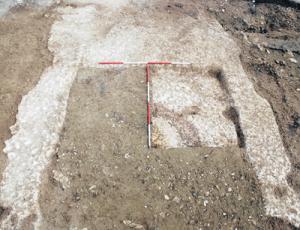
They unearthed the foundations of the building at Marden Henge, near Devizes in Wiltshire. Located close to the River Avon, the neolithic ‘sauna’ was in a key position overlooking a ceremonial area at the site.

English Heritage’s Jim Leary said: ‘The building brings to mind the sweat lodges of the native North Americans and the reason for that sauna or sweat lodge interpretation is that the floor plan was utterly dominated by a large hearth – so large in fact there does not appear to be any space for living, cooking or doing anything much at all.

‘It is also located very close to the River Avon and would have had a ready source of water, which is a necessary criteria for a sweat lodge. ‘If it was a sweat lodge then perhaps one could envisage it being used for purification ceremonies within the henge.

‘Unfortunately we’ll never know exactly what it was for – that’s the nature of archaeology.’

Marden Henge, which has no standing stones, is located on a line which connects stone circles at Stonehenge and Avebury but remains a mystery for archaeologists. Some believe the huge Stonehenge megaliths were stored there after being dragged from Avebury.

Mr Leary said: ‘The relationship between the three monuments is interesting. They are broadly contemporary and one wonders what the interaction between them must have been – were they competing with one another or were they used by the same communities but for different occasions and ceremonies? ‘We don’t know the answer yet

Merlin @ Stonehenge


The heat was on at Marden Henge

14 02 2011
Marden henge’s chalk foundations contained a sunken hearth which could have been used for purification ceremonies

Marden henge’s chalk foundations contained a sunken hearth which could have been used for purification ceremonies

A building whose foundations were unearthed during an excavation at Marden Henge near Devizes last summer could have been a Neolithic sauna.

Archaeologist Jim Leary told his audience at Devizes town hall on Saturday that the chalk foundations contained a sunken hearth that would have given out intense heat.

“It brings to mind the sweat lodges found in North America,” he said. “It could have been used as part of a purification ceremony.”

Also found was a midden or rubbish heap with dozens of pig bones, some still attached, likely to be the remains of a huge feast that took place 5,000 years ago.

Mr Leary was supposed to give his talk at the museum, but such was the interest in his subject that it was transferred to the town hall. All 150 tickets were sold and people queued for returns.

Mr Leary said Marden Henge is the biggest henge in England but because it did not have a stone circle associated with it, tended to be overlooked. Before Professor Geoffrey Wainwright examined its northern sector in 1969, it had not been investigated since the early 19th century.

A huge mound, like a smaller version of Silbury Hill, named Hatfield Barrow, once existed there, but it collapsed after a shaft was dug through its centre and was levelled shortly afterwards.

The English Heritage team investigated that area as well as two sites further south, and it was at the area known as the Southern Circle that they made their most exciting discoveries.

It was in the bank of this henge within a henge that they found the chalk floor. Mr Leary described the dig as a work in progress. He said: “We are at a very early stage and there is a lot more to be found. But our fate is in the hands of the government cuts.

“Clearly there is more work to be done, at least another season, but we need funding to do any further investigation.”

Merlin @ Stonehenge
The Stonehenge Website


The Amesbury Archer. The King of Stonehenge

14 02 2011
The Amesbury Archer

I ofter talk about the ‘Amesury Archer’ on my Stonehenge tours and wanted to put some facts into my blog for those visitors who keep asking for more information.  
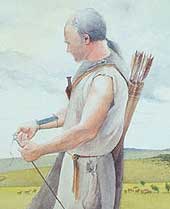
An excavation in Wiltshire some years ago revealed the grave of a Bronze Age archer, buried with a rich array of precious metal goods and a quiver of arrows. Was this the King of Stonehenge?

An Early Bronze Age grave

In the spring of 2002 what started as a routine excavation was undertaken in advance of the building of a new school at Amesbury in Wiltshire. By the end of the excavation the richest Bronze Age burial yet found in Britain had been discovered. The Bronze Age man discovered there had been buried not far from the great temple of Stonehenge. He was a man who owned and could work the new and magical metals of gold and copper. And he had come from what is now central Europe, perhaps around the Alps. Was he a king of Stonehenge?

Early Bronze Age pottery showed that they were over 2,500 years older than the Roman graves.

On the site of the proposed new school there was a small Roman cemetery but, it seemed, little else. In the far corner of the site, though, there were two features that looked different. Had they been caused by trees being blown over? Or were they something else? They certainly did not look like Roman graves.

Excavation work started on a Friday morning, and the reason for the difference between the Roman graves and the two other features rapidly became clear. The features were indeed graves, but the Early Bronze Age pottery in one of them showed that they were over 2,500 years older than the Roman graves. And the grave with the pottery was unusually large.

The Amesbury Archer

Golden artefacts - either earrings or hair tresses These golden artefacts may have been earrings or hair tresses . One of the next finds revealed something unusual – a gold ‘earring’. This type of jewellery may be the oldest type of gold object made in Britain. These objects are very rare, and they usually occur in pairs, and as it was the Friday of the May Bank Holiday weekend it was decided that the excavation of the grave should be completed that day. This might involve staying on a little bit late on a Friday afternoon, but not, it was thought, very late.

What no one knew then was that the grave, the burial of the Amesbury Archer as he has come to be known, was to be the most well-furnished Early Bronze Age burial ever seen in Britain. The graves could not be left unprotected, so a ‘little bit’ late turned into ‘very, very’ late, as it became clear that this was a very important find.

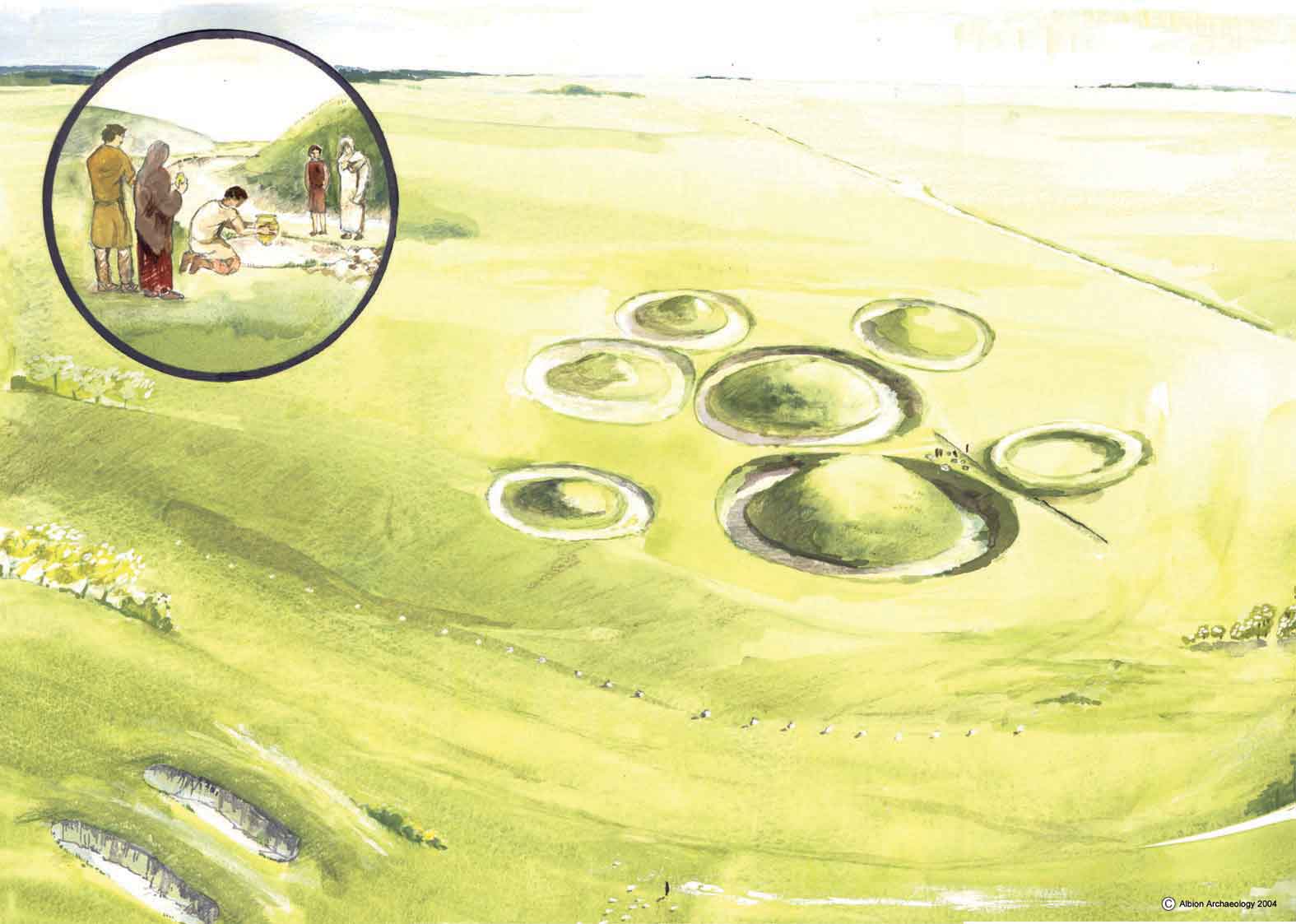
The excavation showed that there was probably a timber mortuary building in the larger grave. Because of this not all the earth had been put back into the grave at the time of the burial, so it seems likely that a small burial mound or barrow surmounted the grave.

What no one knew then was that the grave, the burial of the Amesbury Archer as he has come to be known, was to be the most well-furnished Early Bronze Age burial ever seen in Britain. The graves could not be left unprotected, so a ‘little bit’ late turned into ‘very, very’ late, as it became clear that this was a very important find.

The excavation showed that there was probably a timber mortuary building in the larger grave. Because of this not all the earth had been put back into the grave at the time of the burial, so it seems likely that a small burial mound or barrow surmounted the grave.

King of Stonehenge?

The stones of Stonehenge seen at sunrise

The stones of Stonehenge seen at sunrise

The site of Stonehenge at sunrise. The radiocarbon dates show that the Archer lived between 2,400 and 2,200 years BC. The burial lies about 5km (2 miles) south-east of Stonehenge and it was at about this time that the massive stone circles, and the avenue leading to the River Avon from the site, were built. The great temples of Woodhenge and Durrington Walls, both a similar distance away, continued to be used and modified throughout this time.In the past, burials of this date were considered rich if they contained more than a handful of objects, especially if one of the objects was of copper or bronze, or even gold. Although the finds buried with the Archer are all of well known types (within the Beaker cultural package that is found across much of central and western Europe at this time), the number of objects found with him, almost 100, is without compare.

Had these two men been part of a ruling élite?

The burial is also one of the earliest of its type in Britain, some of the finds are of the highest quality, and the gold is the earliest yet found in Britain. Furthermore the copper knives came from Spain and western France – an indication of the wide contacts of their owner. Above all, though, the associations between these finds are of particular importance.

Can it be a coincidence that the richest Early Bronze Age burial in Britain, and its companion, should be so close to the great temples of Durrington Walls? Had these two men been part of a ruling elite? Had one of them been a king?

A European élite

Copper knives from the Amesbury Archer's grave

Copper knives from the Amesbury Archer's grave

The Archer’s copper knives  As the archaeologists discussed these questions, further surprising facts became clear. Some archaeologists have argued that, for the period in question, there is no certain evidence for the sort of social differences that might suggest a ranked society. The discovery of the burial of the Amesbury Archer and his companion, however, showed for the first time that at this date there were individuals – and perhaps even families – of greater wealth and status than others. That this elite had ties across Europe is shown by the sensational discovery that the Archer comes from central Europe.The enamel on our teeth stores a chemical record of the environment where we have grown up. It is possible by using Oxygen Isotope Analysis to measure this record. The Archer’s teeth show that as a child he lived in a colder climate than that of Britain today, in central Europe, and perhaps close to the Alps.

He was raised in central Europe but he died near to one of the greatest temples in Europe.

Much work remains to be done. At the moment we do not know why the Amesbury Archer came to live, and perhaps raise a family, near Stonehenge. Was he brought up in the family of distant allies? Did he arrive in order to seal an alliance by taking a partner? Was he a settler or a pilgrim? Or was he an outsider with the magical skills of alchemy?

We will never know all the answers, but we can say this. He was a strong man, who overcame pain and handicap. He could work new and exotic metals. His mourners gave him the richest burial of his time. He was raised in central Europe but he died near to one of the greatest temples in Europe. We may not know if he was a king, but it is still an astonishing story. It is a Bronze Age biography.

If you are visiting Stonehenge or on a Stonehenge tour take the time to visit the Salisbury and South Wiltshire Museum –
http://www.salisburymuseum.org.uk/collections/stonehenge-prehistory/amesbury-archer.html

Books

Bronze Age Britain Mike Parker Pearson (Batsford/English Heritage 1993)

Hengeworld by Mike Pitts (Century, 2000)

The Stonehenge People: Life and Death at the World’s Greatest Stone Circle by Aubrey Burl (Barrie Jenkins, 1989)

Stonehenge by Julian Richards (Batsford/English Heritage, 1991)

Merlin @ Stonhenge
The Stonehenge Stone Circle Website
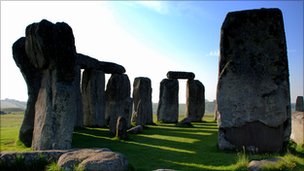


Put those bones back! Future of archaeology threatened by law forcing scientists to rebury ancient remains

12 02 2011

A controversial law that requires all human remains unearthed at ancient settlements to be reburied within two years threatens the future of archaeology, it is claimed today.

Under legislation introduced in 2008, bones and skulls found at sites in England and Wales, such as Stonehenge, have to be put back where they were found after 24 months.

A group of leading archaeologists has writt

en to Justice Secretary Ken Clarke to protest that this will vastly diminish their ability to research the history of humans in Britain.

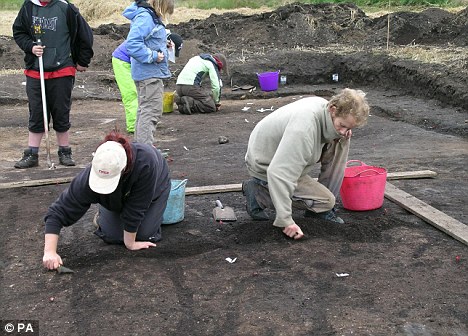
Scientists search an area at Starr Carr, North Yorkshire, last year after locating Britain's earliest house. Leading archaeologists today protested a law that requires all human remains unearthed at ancient settlements to be reburied

Scientists search an area at Starr Carr, North Yorkshire, last year after locating Britain's earliest house. Leading archaeologists today protested a law that requires all human remains unearthed at ancient settlements to be reburied

Forty archaeology professors wrote to express their ‘deep and widespread concern’ in a letter published in today’s Guardian newspaper.

‘The current licence conditions are impeding scientific research, preventing new discoveries from entering museums, and are not in the public interest,’ their letter states

‘Your current requirement that all archaeologically excavated human remains should be reburied, whether after a standard period of two years or a further special extension, is contrary to fundamental principles of archaeological and scientific research and of museum practice.’

The 2008 legislation applies to any piece of bone of historical interest found at around 400 archaeological sites across England and Wales; the 1857 Burial Act applies to more recent remains.

‘The current licence conditions are impeding scientific research, preventing new discoveries from entering museums, and are not in the public interest’

Scientists working at Stonehenge who discovered 60 bodies in 2008 have been granted an extension before they have to return the remains to the ground.

Their colleagues at the Happisburgh site in Norfolk are currently digging after finding the oldest stone age tools that date back 950,000 years.

Mike Pitts, editor of British Archaeology who signed the letter, said: ‘If human remains were found at Happisburgh they would be the oldest human fossils in northern Europe and the first indication of what this species was.

‘Under the current practice of the law those remains would have to be reburied and effectively destroyed.

‘This applies to everything. If we were to find a Neanderthal fossil or a Roman skeleton, it would all have to be reburied.’

Among the high-profile signatories are Barry Cunliffe, from University of Oxford; Chris Stringer, from the Natural History Museum; Graeme Barker, from University of Cambridge; and Stephen Shennan, director

Merlin @ Stonehenge
The Stonehenge Stone Circle Website


Barrows of the Bronze Age – Stonehenge Landscape Tour

11 02 2011

Explore the Bronze Age monuments of the Stonehenge landscape with Sonia Heywood ‘ you’ll soon discover that they’re much more than simple burial mounds. Investigated by curious antiquarians in the last 300 years, they have a 4,000 year history that tells us much about our past. On our four mile walk we’ll be visiting the Cursus Barrows, Winterbourne Stoke Barrows and the Monarch of the Plain. We’ll also have fine views of the King Barrows and Normanton Down Barrows.

26th February 2011

  • Please wrap up warm and bring stout footwear. The open landscape of the downs can be very exposed. You may like to bring a hot drink and a snack.
  • Meeting at the Stonehenge car park (not NT) by the bright green National Trust information panel.More Information: Lucy Evershed, 01980 664780, stonehenge@nationaltrust.org.uk
    http://www.Nationaltrust.org.ukHighly recommended!
    Merli @ Stonehenge Stone Circle


  • Stonehenge Druids – The mysterious guardians of the ancient Celtic knowledge.

    7 02 2011
    Druids_celebrating_at_Stonehenge

    Druids_celebrating_at_Stonehenge

    The Druids were the priests of the Celtic religion during the Iron Age

    The Druids were the priests of the Celtic religion during the Iron Age which was before the Romans invaded Britain.

    The Druids has been popularly associated with Stonehenge ever since an earlier researcher John Aubrey said in 1666 that stone circles were built and used by Druids as places where they conducted their rituals.

    Today we know that this ancient Druid connection to Stonehenge is not true.

    Druids and most of what we know of them today have been written about by Julius Ceasar and Pliny during the Gaelic wars.

    According to Ceasar Druids chose to conduct their rituals in densely wooded areas and did not built special places to perform their ceremonies. Druid comes from the Celtic word for “knowing the oak tree

    Pliny writes mostly about the Druids practicing medicine and sorcery.

    According to him the Druids held the mistletoe plant in the highest veneration. Groves of oak were their chosen retreat. Mistletoe grows on the oak trees and a priest dressed in a white robe would cut it with a golden knife. It was the custom that two white bulls were to be sacrificed on the spot.

    Druidic lore consisted of a large number of verses to be learned by heart and a novice would apparently train for up to 20 years to prepare for his duties as a guardian of the sacred knowledge.

    It is interesting that many Druids were women. Celtic woman enjoyed more freedom and rights than women in any other contemporary society. They had the right to enter a battle and even divorce their husbands.

    The modern version of the Druids is known as The Ancient Order of Druids and was formed in 1781. Neo Druidism is apparently based on Freemasonry.

    The Ancient Order of Druids was not able to hold a ceremony at Stonehenge until 1905 and at this occasion 650 of them arrived for a mass initiation.

    They erected their own marquee and were well stocked with food and drink.

    Druids Autumb Equinox

    Druids Autumb Equinox

    Apparently they used a secret password to keep outsiders outside. Sir Edmund Antrobus the then owner of Stonehenge was also one of the 258 novices present to be initiated.

    After the feasting the initiates were blindfolded and led into the stone circle while an anthem which was especially composed for the event was played.

    The ceremony was lead by GA Lardner, Most Noble Grand Arch Brother of the Order who waved his battleaxe over a so called sacred fire. After he recited the sacred oath the blindfolds were removed and everyone apparently had a hearty singsong of the anthem.

    Over the years a number of famous names have had involvement with the Druids.

    Here are some of their members;

    Winston Churchill – Prime Minister

    Ludwig van Beethoven – Composer.

    Benjamin Franklin – Politician and American President.

    Salvador Dali –Artist.

    More recently Rowan Williams, the Archbishop of Canterbury who is the head of the Anglican Church was initiated as a member.

    Today Druids mostly gather at Stonehenge during the summer and winter solstice days.

    which was before the Romans invaded Britain. The Druids has been popularly associated with Stonehenge ever since an earlier researcher John Aubrey said in 1666 that stone circles were built and used by Druids as places where they conducted their rituals. Today we know that this ancient Druid connection to Stonehenge is not true. Druids and most of what we know of them today have been written about by Julius Ceasar and Pliny during the Gaelic wars. According to Ceasar Druids chose to conduct their rituals in densely wooded areas and did not built special places to perform their ceremonies. Druid comes from the Celtic word for “knowing the oak tree” Pliny writes mostly about the Druids practicing medicine and sorcery. According to him the Druids held the mistletoe plant in the highest veneration. Groves of oak were their chosen retreat. Mistletoe grows on the oak trees and a priest dressed in a white robe would cut it with a golden knife. It was the custom that two white bulls were to be sacrificed on the spot. Druidic lore consisted of a large number of verses to be learned by heart and a novice would apparently train for up to 20 years to prepare for his duties as a guardian of the sacred knowledge. It is interesting that many Druids were women. Celtic woman enjoyed more freedom and rights than women in any other contemporary society. They had the right to enter a battle and even divorce their husbands. The modern version of the Druids is known as The Ancient Order of Druids and was formed in 1781. Neo Druidism is apparently based on Freemasonry. The Ancient Order of Druids was not able to hold a ceremony at Stonehenge until 1905 and at this occasion 650 of them arrived for a mass initiation. They erected their own marquee and were well stocked with food and drink. Apparently they used a secret password to keep outsiders outside. Sir Edmund Antrobus the then owner of Stonehenge was also one of the 258 novices present to be initiated. Image Credit After the feasting the initiates were blindfolded and led into the stone circle while an anthem which was especially composed for the event was played. The ceremony was lead by GA Lardner, Most Noble Grand Arch Brother of the Order who waved his battleaxe over a so called sacred fire. After he recited the sacred oath the blindfolds were removed and everyone apparently had a hearty singsong of the anthem. Over the years a number of famous names have had involvement with the Druids. Here are some of their members; Winston Churchill – Prime Minister Ludwig van Beethoven – Composer. Benjamin Franklin – Politician and American President. Salvador Dali –Artist. More recently Rowan Williams, the Archbishop of Canterbury who is the head of the Anglican Church was initiated as a member. Today Druids mostly gather at Stonehenge during the summer and winter solstice days.

    External links:
    The British Druid Order – http://www.druidry.co.uk/
    The Council of Druid Orders – http://www.cobdo.org.uk/
    The Druid Network – druidnetwork.org
    Stonehenge Guide – stonehengeguide.com
    Stonehenge Tours – StonehengeTours.com

    Merlin @ Stonehenge
    The Stonehenge Stone circle Website