Did Stonehenge’s Builders Use Ball Bearings?

24 11 2010

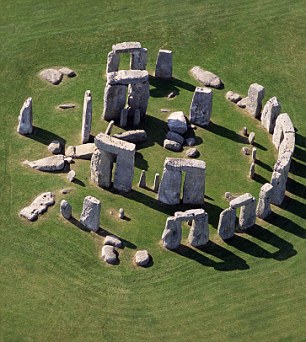
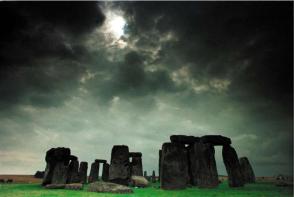
When it comes to mystical places on Earth, few can rival Stonehenge — the enigmatic stone monument sitting on the Salisbury Plain of southern England. And now comes a new theory that suggests the Neolithic builders who erected Stonehenge may have used ball bearings to move the giant stones into place.

Aligned in a circle and made up of 30 vertical standing stones — called megaliths — over 10 feet tall and weighing many tons, Stonehenge is believed to be somewhere between 3,000 and 5,000 years old.

An archaeological study, the Stonehenge Riverside Project, suggested in 2008 that the original purpose of Stonehenge was as a burial ground.

Stonehenge

 
Researchers say the massive stones of Stonehenge could have been moved 10 miles a day using ball bearings.

But other questions raised about the structure have led scientists to wonder whether there wasn’t a more mystical or scientific reason for its existence, including the speculation that Stonehenge was built as a sophisticated astronomical observatory. Researchers have thought that the Stonehenge stones were aligned in such a way to accurately observe the heavens.

One of the lingering questions about Stonehenge is how the ancient builders were able to transport the huge stone slabs a distance of 150 miles from their quarry to the Salisbury Plain.

Now, scientists believe they’ve solved that mystery, the Daily Mail reports. In ongoing experiments, researchers from the University of Exeter have used wooden ball bearings placed in long grooves dug from wood planks.

When they put heavy concrete slabs onto a platform — resting above the balls — they found it was easier to move them.

Archaeologist Andrew Young added his own weight to the experiment by sitting on top of the slabs.

“The true test was when a colleague used his index finger to move me forward. A mere push and the slabs and I shot forward,” Young said. “This proved the balls could move large heavy objects and could be a viable explanation of how giant stones were moved.”

The researchers believe that, using this ball bearing technique along with several oxen, Stonehenge’s builders could have transported the massive stones 10 miles a day, or approximately two weeks from the quarry to their final destination.

All that’s known for certain is that the builders of Stonehenge left no explanation of how they did it or why.

An upcoming National Geographic special, “Stonehenge Decoded,” will consider the various theories to explain the purpose of Stonehenge: prehistoric computer, celestial observatory, place of worship, burial ground and, even, extraterrestrial origin.

Read more at the Daily Mail and National Geographic.

Merlin @ Stonehenge
The Stonehenge Stone Circle Website



£10m investment from the Heritage Lottery Fund for Stonehenge

19 11 2010

Today, the Heritage Lottery Fund (HLF) has announced confirmed funding¹ of £10m for Stonehenge in Wiltshire. 

Heritage Lottery Fund (HLF)

Heritage Lottery Fund (HLF)


Dame Jenny Abramsky, Chair of the Heritage Lottery Fund, said:

“Stonehenge is one of the archaeological wonders of the world. It demonstrates the vital role heritage plays within the UK’s tourism industry as well as being a great example of our fascinating history. This Heritage Lottery Fund investment will help transform this site and give people a much greater understanding of why it is so significant.”

Stonehenge, described as ‘the most architecturally sophisticated pre-historic stone circle in the world’², was constructed and in use between 3,000BC to 1,600BC. It is thought to have been used for a variety of religious ceremonies and the surrounding landscape – a World Heritage Site -contains over 700 known archaeological features. Stonehenge attracts 900,000 visitors every year from across the globe.

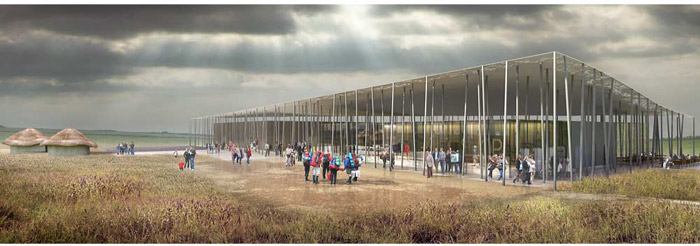
Stonehenge visitor centre

New Stonehenge visitor centre design

Neil Oliver, archaeologist, historian and broadcaster, said:

“Stonehenge is one of the most famous and important archaeological sites in the world – right up there with the Pyramids of Egypt and the Colosseum in Rome.  Just the sound of the word makes us wonder about our ancient past and our ancestors.” 

“It’s therefore fantastic news that thanks to this grant from the Heritage Lottery Fund, visitors will have an even better experience than before.  Perhaps more importantly, the money will help ensure the magic of that special place will be retained, and looked after into the future.  Stonehenge has always been a mind- blowing experience.  With this kind of support, it hopefully always will be.”

Dr Simon Thurley, Chief Executive of English Heritage, said,

”We are tremendously grateful for this generous grant. Not only does it help to narrow the funding gap for the project considerably, it also sends out a message of confidence about the transformational benefits that the project will bring – to tourism,  local economy, and the conservation and public enjoyment of Stonehenge and its landscape. “

HLF’s grant will support work to remove the existing visitor facilities allowing the experience of the stones to be more naturally integrated with its ancient processional approach and the surrounding landscape. These much-needed wider improvements will give people the chance to explore what the site would have been like thousands of years ago. The project aims to improve the visitor experience, including the creation of a new carefully designed visitor centre which will include education and exhibition spaces to help people learn more about Stonehenge’s history. The project will also support training opportunities and a new volunteering programme.

-Ends-

Notes to Editors

  • ¹ A confirmed award means that money had already been earmarked by HLF for the project in question and that the full amount has now been secured. 
  • ²The World Heritage Committee described Stonehenge as ‘the most architecturally sophisticated pre-historic stone circle in the world.’
  • Using money raised through the National Lottery, the Heritage Lottery Fund (HLF) sustains and transforms a wide range of heritage for present and future generations to take part in, learn from and enjoy. From museums, parks and historic places to archaeology, natural environment and cultural traditions, we invest in every part of our diverse heritage.  HLF has supported 33,900 projects, allocating £4.4billion across the UK. 

    Website:
    www.hlf.org.uk 
    www.English-Heritage.org.uk

    Progress, at last……………………… £10 million should do the job nicely!

    Merlin @ Stonehenge
    The Stonehenge Stone Circle Website


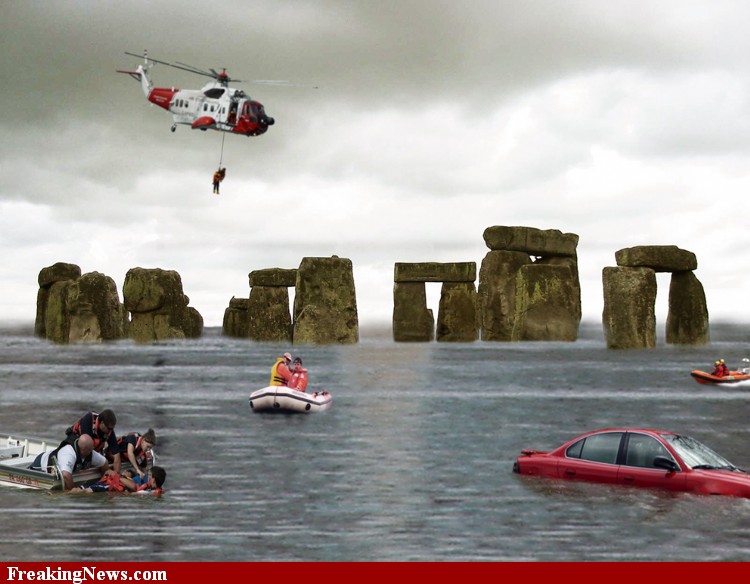
Heavy rain has caused severe flooding at Stonehenge

18 11 2010

• Heavy rain has caused severe flooding on Salisbury Plain
• Scores of residents have been rescued in nearby Amesbury
• Landslides have blocked train routes and the A303
• English Heritage cant open the shop

Stonehenge underwater

Stonehenge underwater

Stonehenge rescue efforts hampered by more rain…………………..

It cant all be serious……… and I did promise a few laughs.

Merlin @ Stonehenge


Canadian Archeologists given access to Bluehenge

12 11 2010

 Eerie, foreboding, mysterious and yet utterly familiar, the stone monuments at Stonehenge are part of the popular consciousness, and yet not much is known about them except that they predate recorded history.

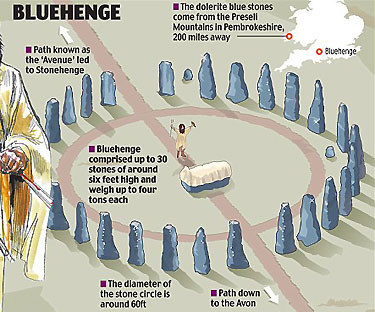
Bluehenge

Bluehenge

Until now, that is.

An archeological research team from PBS’s science program Nova was recently granted unique access to a stone-circle monument little more than a mile from the famous site in Wiltshire, England.

This new site, discovered just over two years ago and dubbed Bluestonehenge – or just plain Bluehenge – has prompted a renewed wave of speculation and investigation, using the latest in high-tech gadgetry and breakthroughs in carbon-dating techniques.

Armchair archeologists will get a kick out of Nova’s findings, which are even more compelling, because they’re presented as dry, scientific history, with none of the hype, loud music or tacky dramatized recreations of most docureality TV shows.

The big questions – who built Stonehenge, why, and how on earth did they manage without engineering blueprints, heavy machinery and construction unions – remain elusive, but it’s hard not to share the researchers’ excitement and enthusiasm as they seem to draw ever closer to the answers. The discovery of traces of charcoal, for example, suggests that some kind of ritual fire or ceremonial burnings happened there – shades of The Wicker Man – and it’s fun to let one’s imagination wander, in the best tradition of folk tales.

Archeologists have since hypothesized that stones may have been removed from Bluehenge around 2500 BC and used to shore up Stonehenge itself, which is known to have undergone major restoration around that time. One theory holds that Bluehenge was a place of life, where the living gathered, and Stonehenge was the “domain of the dead,” and ancient Britain’s first known cemetery.

Whether Stonehenge was created by the ancient Celts or by the magician Merlin, or by space aliens of the Erich von Daniken variety, the ruins’ origin and purpose remain one of the most enduring mysteries facing humankind today.

More than a million people make a pilgrimage to Salisbury Plain every year, and hardly any of them know why. Perhaps it was the site of the original Burning Man.  (what ?)

External links:
http://www.megalithic.co.uk/article.php?sid=23928
http://news.bbc.co.uk/1/hi/england/wiltshire/8288567.stm
http://blog.histouries.co.uk/2010/02/28/bluehenge-unearthed-prehistoric-site-that-could-be-famous-stone-circles-little-sister/
blog: http://www.canada.com/tv guy

Merlin @ Stonehenge
The Stonehenge Stone Circle Website


‘The Computer at Stonehenge’ Poem of the week

9 11 2010

THE COMPUTER AT STONEHENGE

Strange things are done to be number one
In selling the computer
IBM has their stratagem
Which steadily grows acuter,
And Honeywell competes like Hell,
But the story’s missing link
Is the system old at Stonehenge sold
By the firm of Druids, Inc.

The Druids were entrepreneurs,
And they built a granite box
It tracked the moon, warned of monsoons,
And forecast the equinox
Their price was right, their future bright,
The prototype was sold;
From Stonehenge site their bits and byte
Would ship for Celtic gold.

The movers came to crate the frame;
It weighed a million ton!
The traffic folk thought it a joke
(the wagon wheels just spun);
“They’ll nay sell that,” the foreman spat,
“Just leave the wild weeds grow;
It’s Druid-kind, over-designed,
And belly up they’ll go.”

The man spoke true, and thus to you
A warning from the ages;
Your stock will slip if you can’t ship
What’s in your brochure’s pages.
See if it sells without the bells
And strings that ring and quiver;
Druid repute went down the chute
Because they couldn’t deliver.

On a more serious note. Stonehenge: Eclipse Computer?
Every year on the first day of summer, the Sun rises at a point that is farther north than on any other day of the year. At the ruins of Stonehenge in England, this solstice sunrise appears on the horizon in direct alignment with the massive heel stone. This is the most outstanding feature of this ancient monument, built during the same era as the Great Pyramid of Egypt. There is little doubt that the builders of Stonehenge used it to mark this special day as the beginning of each year. By counting the number of days between these annual alignments, they could determine the length of the year. This could serve as a practical calendar to mark holidays and seasonal festivals and to ensure the timely planting and harvesting of crops.

But to predict eclipses, knowledge of two other cycles is required. One of these — the length of the lunar month — is easily determined. It is simply the number of days between one full Moon and the next. This cycle of 29-1/2 days is marked at Stonehenge by two rings of 29 and 30 holes, which together average 29-1/2. The other cycle, however, is of an altogether different character: it is a cycle of rotation of two invisible points in space. The evidence shows that the builders of Stonehenge probably discovered this cycle and could have used it to predict eclipses.

These two invisible points in space are called the lunar nodes (from the Latin for “knot”). They are the points where the Moon’s orbit, which is tilted at a slight angle, intersects the plane of the Earth’s orbit. It would have taken many decades of watching countless risings and settings of the Moon to figure out the cycle of the lunar nodes. This information — which must have been passed on from generation to generation — is preserved at Stonehenge. All the Moon alignments necessary for determining this cycle are marked by massive stones.

Who were these people who observed this subtle cycle even before the first metal tools were used by humankind? Some have suggested that Stonehenge was built by Druids, but we don’t really know much about the builders. We do know that the actual motions of the Sun and the Moon are reflected in the structure of Stonehenge, and we can reason how it may have been used to keep track of these cycles. The number of stones or holes in the ground in the various rings around Stonehenge each represents a certain number of days or years in the cycles. By moving markers (such as stones) around a ring in time with the cycles, the positions of the Sun and Moon — and the two invisible points — can be tracked. (The details of this method are explained in Chapter 2 of the book ECLIPSE, by Bryan Brewer.)

An eclipse can occur only when the Sun is close to being aligned with a node. By using Stonehenge to keep track of the position of the Sun and the nodes, these “danger periods” for eclipses can be predicted. A new (or full) Moon appearing during one of these periods would call for a special vigil to see if the solar (or lunar) eclipse would be visible from Stonehenge. A total solar eclipse would be a rarity. But the law of averages confirms that either a partial solar eclipse or a lunar eclipse can be seen (weather permitting) from the same point on the Earth about once every year.

Why would eclipses have been so important to the ancient people of Stonehenge? Perhaps they considered the darkening of the Sun or the Moon a fearsome event — a celestial omen of doom or disaster. Many cultures have interpreted eclipses this way. But the sophistication of the astronomy of Stonehenge suggests that the builders had something different in mind. Their understanding of the solar and lunar cycles must have led to a high regard for the cosmic order. Eclipses may have been seen as affirmations of the regularity of these cycles. Or perhaps the unseen lunar nodes formed an element of their religion as invisible gods capable of eclipsing the brightest objects in the heavens.

The idea that Stonehenge may have been a center for some kind of worship has occurred to many. It is not hard to imagine Stone Age people gathering at a “sacred place” at “sacred times” (such as solstices, equinoxes, and eclipses) to reaffirm their religious beliefs through ritual practices. British antiquarian Dr. William Stukeley, who in 1740 was the first to note the summer solstice alignment at Stonehenge, advanced the notion that the monument was built by Druids to worship the serpent. He claimed that Stonehenge and similar stone circles had been serpent temples, which he called “Dracontia.” Could this serpent symbolism be related to eclipses? Recall that the key to eclipses is the position of the lunar nodes. The length of time for the Moon to return to a node (about 27.2 days) astronomers call the draconic month. (Draco is the Latin word for “serpent” or “dragon.) Perhaps the mythical serpents of Stonehenge and the legendary dragon that eats the Sun are symbols of the same thing: the invisible presence in time and space that eclipses the Sun and the Moon.

Merlin @ Stonehenge
The Stonehenge Stone Circle Website


Stonehenge builders had geometry skills to rival Pythagoras

8 11 2010

Stone Age Britons had a sophisticated knowledge of geometry to rival

The Stone Age Britons who built Stonehenge had a knowledge of advanced geometry, 2,000 years before Pythagoras

The Stone Age Britons who built Stonehenge had a knowledge of advanced geometry, 2,000 years before Pythagoras

Pythagoras – 2,000 years before the Greek “father of numbers” was born, according to a new study of Stonehenge. Five years of detailed research, carried out by the Oxford University landscape archaeologist Anthony Johnson, claims that Stonehenge was designed and built using advanced geometry.

The discovery has immense implications for understanding the monument – and the people who built it. It also suggests it is more rooted in the study of geometry than early astronomy – as is often speculated. Mr Johnson believes the geometrical knowledge eventually used to plan, pre-fabricate and erect Stonehenge was learnt empirically hundreds of years earlier through the construction of much simpler monuments. He also argues that this knowledge was regarded as a form of arcane wisdom or magic that conferred a privileged status on the elite who possessed it, as it also featured on gold artefacts found in prehistoric graves.

The most complex geometrical achievement at Stonehenge is an 87-metre diameter circle of chalk-cut pits which mark the points of a 56-sided polygon, created immediately within themonument’s perimeter earthwork. Mr Johnson used computer analysis and experimental archaeology to demonstrate that this outer polygon was laid out using square and circle geometry. He believes the surveyors started by using a rope to create a circle, then laid out the four corners of a square on its circumference, before laying out a second similar square, thus creating an inner octagon. The points of the octagon were then utilised as anchors for a surveyor’s rope which was used to “draw” arcs which intersected the circumference so as to progressively create the sides of a vast polygon. Indeed, his work has demonstrated that a 56-sided polygon is the most complex that can easily be created purely through square and circle geometry using a single piece of rope.

The Stonehenge Tour Company

The Stonehenge Tour Company

It is likely that this basic limitation determined the number of sides of Stonehenge’s outer polygon – and may also have led to the 56-sided polygon concept becoming important within wider European religious belief. Ancient Greek classical mythology associated just such a 56-sided polygon with Zeus’s great rival for divine supremacy, the weather god Typhon. Johnson’s research, published as a book this week, shows that Stonehenge derived its design from geometrical knowledge and features no less than six concentric polygons – a 56-sided outer one built around 2950BC; a regular octagon built around 2500BC) inside that; two concentric (though partly inaccurate) 30-sided polygons built around 1650BC, which were based on a series of hexagons; a 30-sided inner polygon (the sarsen stone ring which was built around 2500BC) also based on hexagonal geometry; and two probable 40-sided concentric polygons (probable former blue stone positions built around 2600BC) that were later modified to 30-sided ones.

They also created the famous central stone “horseshoe” utilising the survey markers used to create the thirty-sided sarsen polygon. The experimental archaeology demonstrates that most of the monument was pre-planned and that the great stones were pre-fabricated off-site and then installed by surveyor-engineers. “For years people have speculated that Stonehenge was built as a complex astronomical observatory. My research suggests that, apart from mid-summer and mid-winter solar alignments, this was not the case,” said Mr Johnson. “It strongly suggests that it was the knowledge of geometry and symmetry which was an important component of the Neolithic belief system.” “It shows the builders of Stonehenge had a sophisticated yet empirically derived knowledge of Pythagorean geometry 2000 years before Pythagoras,” he said.

A leading British prehistorian, Sir Barry Cunliffe, from Oxford University, believes that Anthony Johnson’s research is “a major step forward in solving the puzzle of Stonehenge”.  Details of Anthony Johnson’s research can be found in his book ‘Solving Stonehenge’ published by Thames and Hudson. Further information can be found at solvingstonehenge.co.uk/

Merlin @ Stonehenge
The Stonehenge Stone Circle Website


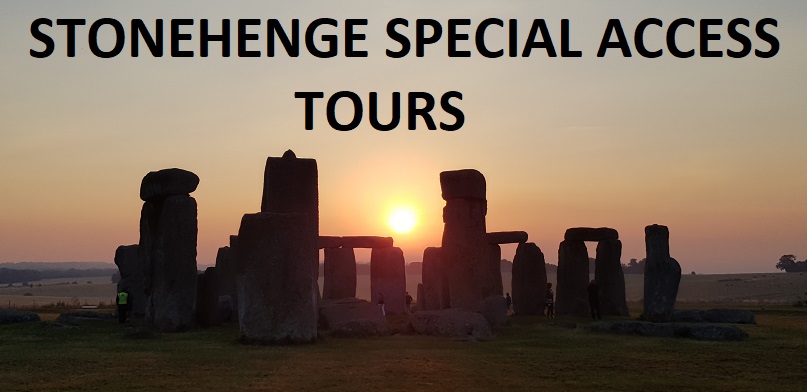
Stonehenge Private Access tours 2011 – Go beyond the fences!

4 11 2010

Hot off the press – Stonehenge Access Dates!
I have just been sent 2011 dates for Stonehenge ‘private access’ tours (see below)  If you are planning on visiting Stonehenge in the next 12 months then I highly recommend joing one of these trips.

Stonehenge Inner Circle Tours - Go beyond the fences

Stonehenge Inner Circle Tours – Go beyond the fences

For those of you who have not visited this sacred site, I should mention that the complex is roped off. Visitors observe the stones from a distance and are not permitted within the temple complex……….Stonehenge special access tours allow you to be amongst the stones and to experience the magic.

There are a few sightseeing tour operators who offer this service and I have just been advised of the 2011 dates.  There are limited spaces and I highly recommend booking sooner rather than later – this is a very popular tour.  A fantastic photograph opportunity!

  • Stonehenge Special Access dates 2011
    January 2011 – 2nd, 14th, 21st, 24th, 31st
    February 2011 – 4th, 7th, 18th, 28th
    March 2011 – 7th, 14th, 25th, 28th
    April 2011 – 3rd, 6th, ,7th, 10th, 11th, 14th, 17th, 20th, 21st, 24th, 25th, 28th
    May 2011 – 1st, 4th, 5th, 8th, 9th, 12th, 15th, 18th, 22nd, 23rd, 26th, 29th
    June 2011 – 1st, 2nd, 5th, 6th, 9th, 12th, 15th, 21st
    July 2011 – 3rd, 6th, 7th, 11th, 10th, 14th, 17th, 18th, 21st, 24th, 28th, 31st
    August 2011 – 4th, 7th, 8th, 10th, 11th, 14th, 17th, 18th, 21st, 22nd, 25th, 28th
    September 2011 – 1st, 5th, 8th, 11th, 15th, 18th, 29th

Private tours can often be arranged for alternative other dates for families and small groups  but need to be booked well  in advance

These Stonehenge access tours can be booked through the excellent  ‘Stonehenge Tour Company’  website.  For a selection of other Stonehenge Tours from London that can also include:  Bath, Lacock Village, Salisbury Cathedral, Windsor Castle, Avebury Stone Circle, The Cotswolds, Oxford etc click here

The Stonehenge Tour Company

The Stonehenge Tour Company

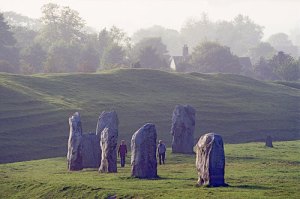
Avebury Stone Circle

One or two operators offer tours that include Stonehenge and Avebury plus nearby Silbury Hill, West Kennet Long Barrow, Chalk hill figures and even crop circles (April – September) Try The Stonehenge Tour CompanyHistouries UK and Salisbury Guided ToursShould you need any unbias advice on organising a tour to Stonehenge please do email me – tours@stonehenge-stone-circle.co.uk

Merlin @ Stonehenge
The Stonehenge Stone Circle Website


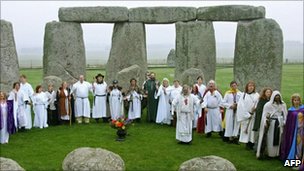
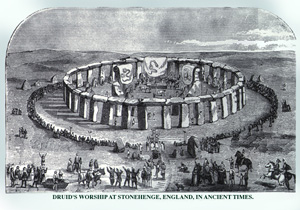
Druids mark festival after becoming official religion

1 11 2010

Druids are celebrating their first major festival since their beliefs were granted official status as a religion.

Samhain

Sanhain

For them and other pagans, 31 October is not Halloween, but Samhain, and marks the turning of the year from light into dark.

Earlier this month, the Charities Commission ruled that the Druid Network should have the same status as other faiths such as Christianity and Islam.

Pagans do not worship one single god, but look for the spiritual in nature.

The number of pagans, including druids, witches and wiccans, has grown in recent years.

Many believe that the absence of rules, the focus on the environment and particular regard for the female have a strong resonance in contemporary society.

Druids worship the spirits they believe inhabit the earth. Among them are those embodied in forces of nature, such as thunder, and places, like mountains and rivers.

Their rituals, including Samhain, are focused particularly on the turning of the seasons.

After a four-year inquiry, the Charity Commission decided that druidry offered coherent practices for the worship of a supreme being, and provided a beneficial moral framework.

Earlier this month the Charities Commission gave the Druid Network the status of a religion.

Happy New Year Pagans!
Merlin @ Stonehenge
The Stonehenge Stone Circle Website



Stonehenge expert awarded OBE

29 10 2010

ONE of the world’s leading experts on Stonehenge discovered his passion for archaeology as a child in his Cheltenham back garden.
Professor Timothy Darvill has been awarded an OBE, in this year’s Queen’s Birthday Honours List, for services to archaeology. He is a leading expert on prehistoric Britain.

He said it was a “great privilege” to receive the honour from the Queen earlier this month at Windsor Castle and thanked his colleagues, friends and family.

“I have always been passionate about archaeology and feel fortunate to have contributed to so many amazing projects that have revealed such a great deal about our nation’s history and heritage,” he said.

Born and bred in Cheltenham, Prof Darvill has been passionate about archaeology since he was a child, according to his mother Win Darvill.

“He has always been interested from when he was a small boy. He used to dig holes in the garden all the time,” she said.

“His father, who was a civil engineer, was interested in fossils and passed it all on to Timothy and it went from there.”

The family lived in the Battledown area and Mrs Darvill now lives in Pittville.

Timothy Darvill is now a professor at Bournemouth University.

Mrs Darvill said: “When he was in his teens he was always either involved in archaeology in Cirencester or on field walks. It has always been his passion. I could not believe it when he was awarded the OBE but I am so proud.”

She said her son grew up in the right area to find all kinds of interesting landscapes.

But he developed an interest in Stonehenge from a young age too.

“He has done a lot of work on it and written many books about it. I read them but I wouldn’t like to write an essay on them,” she said.

The author of more than 20 books and 200 papers and articles, Mr Darvill famously co-directed the first excavations within the stone circle at Stonehenge for more than 40 years in April 2008.

His work featured in a BBC Timewatch programme, which examined the theory that Stonehenge was a prehistoric centre of healing.

After completing a PhD at Southampton University on the Neolithic of Wales and the west of England, he worked with the Western Archaeological Trust and the Council for British Archaeology before establishing a private practice offering consultancy services in the field of archaeological resource management.

In October 1991, he was appointed to the chair of archaeology in the newly-established archaeology group at Bournemouth University and led the Monuments at Risk survey commissioned by English Heritage in the mid 1990s and has worked in Russia, Malta, Greece, and Germany. He is chairman of the board of directors of Cotswold Archaeology, one of the top archaeological companies in the UK, and vice-president of the Society of Antiquaries of London.

Merlin @ Stonehenge
The Stonehenge Stone Circle Website


Silbury Hill – David Attenborough’s big dig

26 10 2010

Silbury Hill is as ancient and enigmatic as Stonehenge. David Attenborough tells us why he set out to crack it

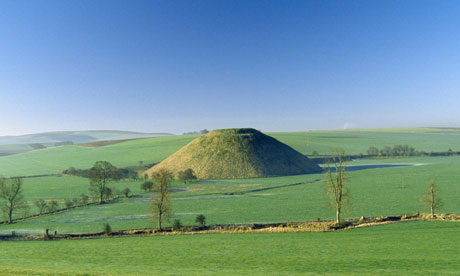
Tomb or temple? ... Silbury Hill, Wiltshire.

Tomb or temple? ... Silbury Hill, Wiltshire.


The past,” says David Attenborough, “is a haunting and fascinating place.” The great naturalist is revealing a little-known side of himself: his love of archaeology – and his fascination with Silbury Hill in Wiltshire. The tallest prehistoric man-made mound in Europe, Silbury Hill rises to a height of 37 metres, making it comparable with the Egyptian pyramids and the ziggurats of Mesopotamia.

In a new English Heritage book about the hill, Attenborough tells how, in 1968 as controller of BBC2, he commissioned a programme that involved tunnelling into its depths to discover why it was there. At the time, the programme was judged a flop, since it found no treasure, no tomb, no real answers at all.

The-Story-of-Silbury-Hill

The-Story-of-Silbury-Hill

Attenborough is now seeking to set the record straight. He argues that, far from failing, TV’s first live dig triggered an unlikely chain of events that recently led to the tunnel being reopened and re-examined, using modern techniques. “They did not unearth any material treasure either,” he writes, but instead “added more details to our knowledge and understanding.” And this, you could say, is the true purpose of archaeology. In fact, the reopening of the tunnel vindicated the project Attenborough is so proud of: it revealed perhaps as much as will ever be known about this most mysterious of ancient monuments.

Silbury Hill is near Avebury, a quaint English village set inside a prehistoric stone circle. The village is part of a world heritage site that takes in Stonehenge and Silbury Hill. Raised in the same era as the mighty Stonehenge, and just as much of an enigma, the hill boasts chalk sides covered with grass. Construction of the vast, flat-topped cone would have required hundreds of workers and taken an age, but the people who built it left no records as to why.

BBC2 was a new channel in the 60s, with a brief to experiment. “We were going to do new television,” says Attenborough. “Everything we did would be in some way identifiable as new. With archaeology we thought, ‘Why can’t we do a live excavation?’ We would have cameras there so, if necessary, we could interrupt other programmes.”

The plan was to dig a tunnel into the heart of the hill. Professor Richard Atkinson, who led the dig, had interesting ideas about what might be in there. “Richard was the first to notice Mycenean daggers on Stonehenge,” says Attenborough. These made Atkinson believe Stonehenge was built by a culture in contact with ancient Greece, whose chief wanted a dramatic tomb.

This was TV as real adventure, and it captured the public imagination. Some saw it as a treasure hunt; others as a mix of horror and science-fiction. “Atkinson,” says Attenborough, “didn’t necessarily think there was going to be a burial [site]. The press said, ‘This is a treasure hunt, isn’t it?’ I said, ‘No, it’s about little bits of mud.'”

As the tunnel took shape, with news reported continually, nothing much emerged. “People kept saying, ‘It’s a failure,'” says Attenborough. “But we did discover how it was made.” Some people maintained the dig was actually harmful. “Since then, if there have been slumps in the top, people have said, ‘Ah ha, it’s the BBC’s tunnel.’ ”

In 2000, not just a slump but a hole appeared. Was the tunnel collapsing? No: this was caused by an 18th-century shaft, but archaeologists were still worried. They decided to reopen the BBC tunnel, deploying the latest tools and tests, and then seal it forever.

The new dig suggested that the hill was not a tomb, but a temple – perhaps the greatest in Europe 4,000 years ago. It also showed the hill started as a sacred site, where people came bearing stones; they may have believed they possessed healing powers. Certainly, stones are embedded in the structure and are thought to be highly meaningful by archaeologists. It is like Britain’s later cathedrals, which rose up over shrines. Sun worship flourished in prehistoric Britain, so perhaps this was – like those ancient ziggurats – a stairway to heaven to let priests get closer to the sun.

Atkinson’s tunnel is now sealed, but its creation marked a time when TV set out to bring drama and glamour to archaeology. As Attenborough says: “Anybody would be thrilled to find a Roman coin in their garden. I know I would.”

Visit Silbury Hill, Stonehenge and Avebury in a small group day tour – The Stonehenge Tour Company are the only operators who offer such a trip.  Histouries UK based in nearby Salisbury and Bath also bespoke private guided tours of the region.  You can look at more discounted tour operators here

Merlin @ Stonehenge
The Stonehenge Stone Circle Website