Neolithic New Year walk – Stonehenge Landscape

30 12 2010

Welcome in 2011 by discovering the astonishing Stone Age on a walk around the ancient monuments of the Stonehenge landscape. Why did people start to build massive monuments 6,000 years ago? Discover the astonishing Stone Age on a relaxed ramble around Stonehenge Down. Our six mile route will take us to Neolithic enigmas including Durrington Walls and the Stonehenge Cursus.

  • Wrap up warm against the January weather – we recommend plenty of layers and stout footwear. Bring a packed lunch and a hot drink.
  • Meet at the Stonehenge car park (not NT) by the bright green National Trust information panel on the grassy area of the main car park.
  • Dogs on leads welcome
  • Accompanied children welcome, free.
  • Light refreshments provided.
  • Access is by pedestrian and farm gates; the terrain is grassland and trackways, often uneven underfoot. Cattle and sheep graze the gently sloping downs.
  • More Information: Lucy Evershed, 01980 664780, stonehenge@nationaltrust.org.uk

    Walk in the steps of our ancestors at one of the world’s best-preserved prehistoric sites
     
    Don’t miss
    • Great views of the famous Stonehenge circle
    • Mysterious ceremonial landscape of ancient burial mounds, processional walkways and enclosures
    • Haven for wildlife, from brown hare and butterflies, to birds such as the skylark
    • Colourful displays of downland wildflowers in June and July
    Or do it yourself any day of the year……………
    Stonehenge Down
    The long grassland shrouded in mist at Stonehenge Down. © NT / Margriet van Vianen
    Home to skylark and brown hare, Stonehenge Down is a wide open landscape with fine views of the famous stone circle. From here you can also explore Bronze Age barrow cemeteries and prehistoric monuments, such as the Stonehenge Avenue and the mysterious Cursus. SU125425
     
    King Barrow Ridge
    Here Bronze Age burial mounds stand among impressive beech trees, with views of Stonehenge and the downs. The hazel coppice provides shelter for wildlife along the ridge, while in summer, chalk downland flora attracts butterflies such as the marbled white. SU134423
    King Barrow Ridge on a beautiful summer's day. © NT / Lucy Evershed
     
    Normanton Down
    Normanton Down on a bright summer's day, showing a field of daisies in the foreground. © NT / Margriet van Vianen
    Normanton Down offers one of the best approaches to the stone circle. The round barrow cemetery dates from around 2600 to 1600BC and is one of the most remarkable groups of burial mounds in the Stonehenge landscape. The downland and arable fields here are home to a variety of farmland birds such as corn bunting and stonechat. SU117415
     
    Durrington Walls
    In 2005 Durrington Walls was revealed to be the site of a rare Neolithic village, with evidence of shrines and feasting. You can still see some of the banks of this circular earthwork, the largest complete ‘henge’ in Europe. Post holes show that there were large timber structures here, like those at nearby Woodhenge. SU150437
    The red and gold hues of autumn at Durrington Walls. © NT / Stephen Fisher
     
    Winterbourne Stoke Barrows
    The Chalkhill Blue, common to chalk grassland, can be seen in the summer months. © NT / Margriet van Vianen
    Another fascinating example of a prehistoric cemetery. The wide range of barrow shapes found here show that this site was used over a long period of time for burials of people of high status. Newly sown chalk downland flora covers the landscape – look out for brown hares too. SU101417

    External link: http://www.nationaltrust.org.uk/event-search/events/show?id=2108044944

    Happy New Year!
    Merlin @ Stonehenge
    The Stonehenge Stone Circle Website


    Stonehenge Winter Solstice 2010

    23 12 2010

    Snow and ice failed to stop people visiting Stonehenge to watch the

    Stonehenge Solstice

    Stonehenge Solstice

    sunrise on the winter solstice, 22nd December 2010

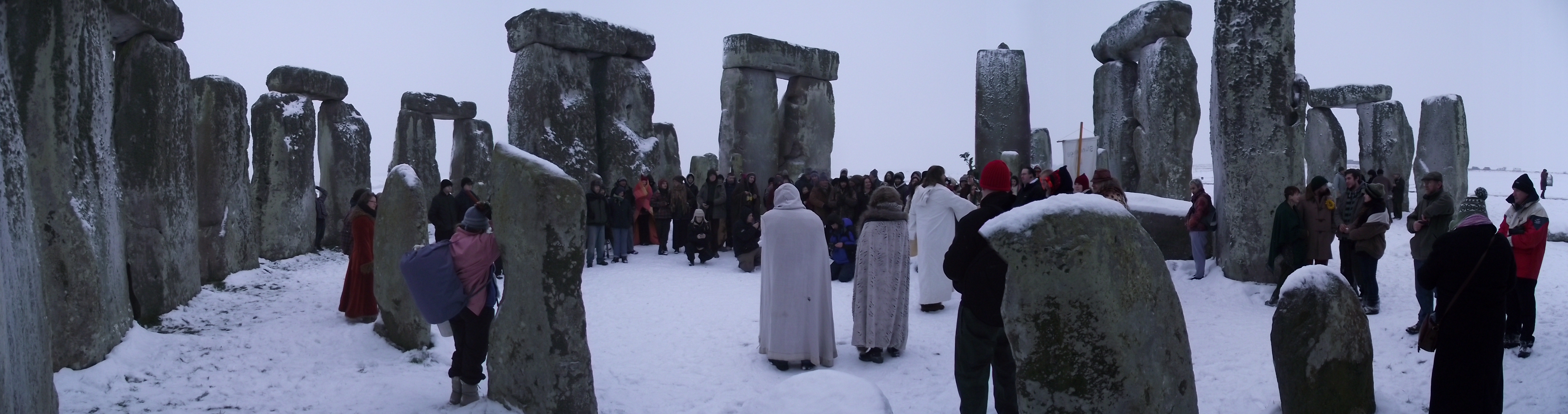
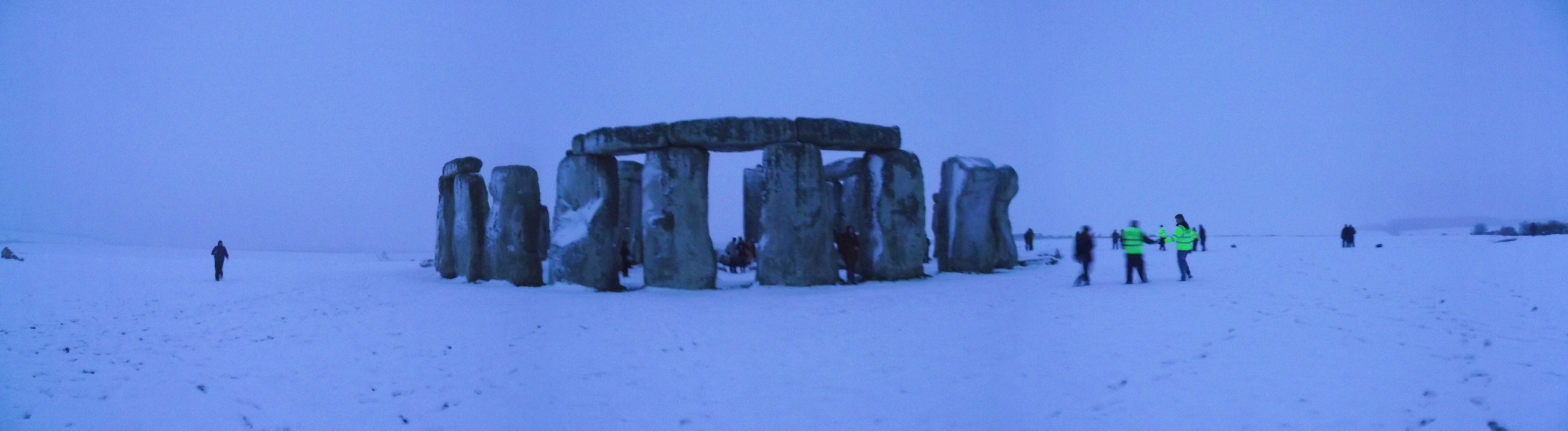
    Almost 2,000 people gathered at the stones which were surrounded by a thick blanket of snow.

    As well as the traditional druid and pagan ceremonies, a spontaneous snowball fight erupted as people enjoyed the cold weather.  A good time was had by all.

    I will be uploading photos and videos later today – can you see yourself? 

    Many thanks for all the helpful tweets over the solstice – http://twitter.com/ST0NEHENGE

    Merlin @ Stonehenge
    The Stonehenge Stone Circle Website

    http://www.bbc.co.uk/news/uk-england-wiltshire-12061134
    http://www.stonehengetours.com (sponsor)
    http://www.HisTOURies.co.uk (sponsor)


    Stonehenge Winter Solstice Panoramic pictures

    21 12 2010

    Stonehenge Winter Solstice 2010 Panoramic

    Stonehenge Winter Solstice Panoramic

    Stonehenge Winter Solstice Panoramic (Copyright)

    Stonehenge Winter Solstice Panoramic

    Stonehenge Winter Solstice Panoramic

    Stonehenge Winter Solstice Panoramic (Copyright)

    Images are subject to Copyright.  Full Terms and Conditions of Submission and Use of Pictures can be requested.

    All rights reserved. All images included herein this  Internet Web Site publication are the copyright and property of the photographer and the text/design/html files are the property of The Stonehenge News Blog. All images and text are copyright in accordance  with the terms of the United Kingdom’s Copyright, Designs and Patent Act 1988, and  are protected under the United Kingdom and international copyright laws and  treaties which provide substantial penalties for infringement.
    The use of any images or other materials included herein, in whole or in part,  for any purpose other than for the private purpose of the user, including,  but not limited to, copying, reproduction, publication (including on Internet Web  Site), storage in a retrieval system (other than internet browser), manipulation (digital or otherwise),  or transmitted in any form or by any means, electronic, mechanical, photocopying,  recording or otherwise, is expressly prohibited without the written permission of  The Stonehenge News blog or and the photographer 

    What is © Copyright?

    The images on this website are known as “intellectual property”.  In law, they are hardly different from other forms of property (such as  your computer), as the creation of images also requires personal skill,  equipment, time and money. To take and distribute images without consent  is a form of theft and is therefore illegal. The images on this  Internet web site publication are not royalty free and a fee is required  for each specific usage. All of the images have been visibly and invisibly watermarked so that  they can be identified if used without permission, whether whole or in part. International  law now permits substantial penalty charges for infringement of copyright.

    Other Web Pages

    Unfortunately you may not use any of the images in your web pages without express written  permission as this constitutes publishing  the images and could conflict with the interests of our many clients. If, for instance, a  corporation buys a picture for a specific purpose which conflicts with  your website, then the corporation could take legal action against you.  We have to say “no” in order to protect you and our clients.

    More Stonehenge Winter Solstice 2010 images – click here
    Merlin @ Stonehenge


    Stonehenge Winter Solstice 21stDecember 2010

    21 12 2010

    I went to Stonehenge this morning hoping to witness the Lunar eclipse between 7.30am and 8am.  Sadly there was freezing fog and a snowy sky?  It was a pleasant surprise to find that English Heritage decided to grant access into Stonehenge today as well as tomorrow (22nd)  There were a few hundred ‘happy’ people, a pagan wedding and a small Druid ceremony.  It was extremely cold but well worth it. 
    I have uploaded these photos for your perusal – hot off the press!  They anticipate 2-3000 people for tomorrows Solstice celebrations – See you there!

    This slideshow requires JavaScript.


    Happy Solstice
    Merlin @ Stonehenge
    The Stonehenge Stone Circle Website


    Geminid meteor shower set for clear skies

    13 12 2010

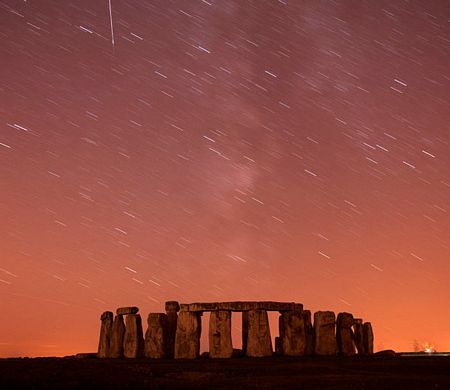
    With cloudless skies possible over Stonehenge and many parts of Britain, this year’s shooting stars could be particularly memorable

    Lovers of the night sky could be in for a treat tonight as clear conditions are predicted for one of the best astronomical shows of the year.

    Some experts believe the annual Geminid meteor shower is becoming more spectacular – though if it is, nobody is sure why – and with cloudless skies possible in many parts of the country, this year’s event could be a particularly memorable one.

    At its peak and in a clear, dark sky, up to 100 meteors – or shooting stars – may be seen every hour. The best time to see it is expected to be late on Monday night and in the early hours of Tuesday after the moon has set.

    In comparison with other showers, Geminid meteors travel fairly slowly, at about 22 miles per second. They are bright and have a yellowish hue, making them distinct and easy to spot.

    Meteors are the result of small particles entering Earth’s atmosphere at high speed, burning up and super-heating the air around them, which shines as a characteristic short-lived streak of light. In the case of the Geminids, the debris is associated with the asteroidal object 3200 Phaethon, which many astronomers believe to be an extinct comet.

    National Trust list of the best places to watch the shower

    • Stonehenge area in Wiltshire – chalk downland and crystal clear skies.

     Teign Valley in Devon, within Dartmoor national park.

    • Penbryn Beach, on the Ceredigion coast in west Wales.

    • Wicken Fen nature reserve in Cambridgeshire – dark skies and nocturnal wildlife.

    • Mam Tor in Derbyshire, an escape from the bright lights of cities such as Sheffield.

    • Friar’s Crag in Cumbria, jutting out into Derwentwater.

    See you at Stonehenge tonight

    Merlin @ Stonehenge
    The Stonehenge Stone Circle website


    Woodhenge: Is this one of the greatest discoveries of archaeology…or a simple farmer’s fence?

    12 12 2010

    The discovery of a wooden version of Stonehenge – a few hundred yards from the famous monument – was hailed as one of the most important archaeological finds for decades.

    But now experts are at loggerheads after claims that what was thought to be a Neolithic temple was a rather more humble affair – in fact the remains of a wooden fence.

    One leading expert on Stonehenge criticised the announcement of the ‘remarkable’ find in July as ‘hasty’ and warned it could become a ‘PR embarrassment’.

    The site, ringed, in a Seventies chart, which experts say shows a fenceMapped: The site, ringed, in a Seventies chart, which experts say shows a fence


    The radar image said to reveal the post holes of a Neolithic temple‘Evidence’: The radar image said to reveal the post holes of a Neolithic temple

    The discovery of what appeared to be a previously unknown ‘henge’, or earthwork, by a team of archaeologists conducting a multi-million-pound study of Salisbury Plain was widely reported amid great excitement.

    The team said they had found evidence of a ring of 24 3ft-wide pits that could have supported timber posts up to 12ft tall, surrounded by an 80ft-wide ditch and bank.

    They explained that, just like Stonehenge, the entrances to the site were aligned so that on the summer solstice the sun’s rays would enter the centre of the ring. Holes where the wooden posts once stood were identified below the ground using the latest high-resolution geophysical radar-imaging equipment.

    An artist's impression of how Woodhenge may have been 5,000 years agoCircle of confusion: An artist’s impression of how Woodhenge may have been 5,000 years ago

    Team leader Professor Vince Gaffney of Birmingham University said the ritual monument had been built about 5,000 years ago, making it roughly the same age as its stone counterpart 980 yards away, and it could have been used for Stone Age feasts or elaborate funerals.

    He said the find showed Stonehenge had not existed in ‘splendid isolation’ and he predicted further discoveries during the three-year survey of five square miles of countryside around Stonehenge.

    But sceptics have now suggested that the evidence is far from conclusive, especially as it appears from images of the plot produced by the Birmingham team that the ring of post holes was not arranged in a circle but was angular and more like a hexagon.

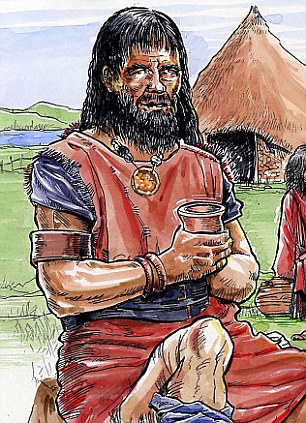
    How a Neolithic visitor may have lookedHow a Neolithic visitor may have looked

    Mike Pitts, editor of the magazine British Archaeology and an acknowledged expert on Stonehenge, said he had been prompted to study maps of the area after receiving a letter from an American reader.

    In the spot where Prof Gaffney had claimed to have uncovered his post holes, Mr Pitts said he and
    colleagues examined a Seventies Ordnance Survey map – and saw a fence marked out.

    He thought it probably was an early 20th Century construction, erected by the then Government’s Office of Works or a local farmer to protect what was thought to have been the most important site in a cluster of burial mounds that were ancient but later than Stonehenge.

    Mr Pitts said: ‘Vince Gaffney says his discovery encircles a burial mound within its circumference, but unless he has some unpublished material to substantiate his discovery, I am in no doubt that this was a modern fence line.

    ‘If I’m right then the post holes contained modern fencing stakes and they are actually in a hexagonal shape, not a circle.’

    He added: ‘I think that perhaps what has happened is that the professor’s field workers have presented him with the wrong picture and he’s shot from the hip and made an over-hasty announcement. He’s generally known for the high quality of his work and his enthusiasm which, on this occasion, may have let him down.

    ‘The full publication of his results and small-scale excavations of the site would clinch the matter.’

    But Prof Gaffney said: ‘We have mapped numerous fences and we know what they look like. The features appear to be 3ft across and as deep as 3ft. I have never seen a fence line that required holes that are 3ft across and 3ft deep.’

    He said that in the fuzzy, black-and-white radar image the post holes appeared angular but that was partly due to the poor resolution of the picture and because such monuments were not perfect circles.

    He went on: ‘The poles that would have stood in them would have been more like telegraph poles. You would not use them to build a fence.’

    Prof Gaffney added that no metal such as old nails had been found in the holes, which would have
    been expected.

    ‘On balance, we would still suggest this is a ritual monument of the late Neolithic period.’

     I love it when the ‘experts’ use the term ‘ritual‘ – in other words they do not know!
    Related artile: New Woodhenge found

    Read more: http://www.dailymail.co.uk/sciencetech/article-1337890/Woodhenge-Is-greatest-discoveries-archaeology–simple-farmers-fence.html#ixzz1Dj4rwwBM

    Merlin @ Stonehenge
    The Stonehenge Stone Circle Website


    Yule – Winter Solstice

    9 12 2010
    21st/22nd December
    Yule or the Midwinter Solstice is the time of year when we experience our shortest day and longest night – the sun is at its lowest point in the sky at noon. Yule meaning ‘wheel’ is one of the oldest winter celebrations in the world.
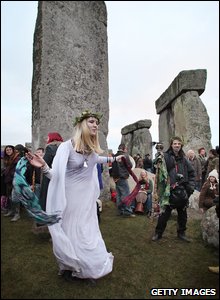
    Stonehenge Winter Solstice celebrations

    Stonehenge Winter Solstice celebrations

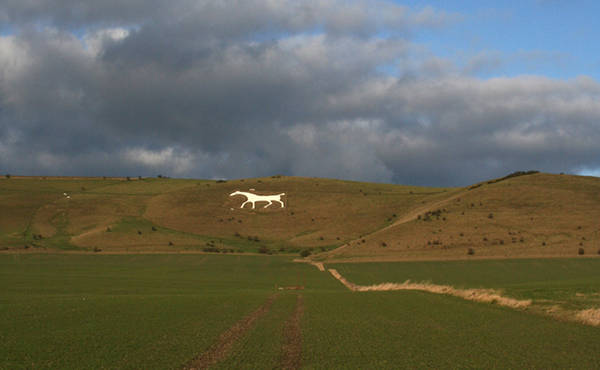
    In Wiltshire the winter solstice is still celebrated by the lighting up of the white horse at Alton Barnes. Tea lights in jars are placed on the chalk, so that the horse glows with candlelight.

    Wassailing
    New Year’s Eve was the traditional time that this ceremony took place, and was originally held around the oldest tree in the apple orchard. The first cider crop was poured on the roots of the apple tree to thank the tree spirits for the crop of apples, and to ensure a good harvest next year.

    Drumming and bamging sticks would beat away any bad spirits, and the wassail cup would be passed around. Toast dipped in cider would then be hung on the oldest tree, as an offering to the tree dryads.
    ‘Wassail’ was Saxon for ‘good health’.

    In the eleventh-century, the Danish rule over England brought the Scandinavian term for Christmas – Yule. Christmastide was the time to bring out the wassail bowl or cup. The leader of the celebrations would call ‘Wassail’, which was Old English for ‘your health’, and the answer was ‘Drinkhail’, at which the bowl was passed round so everyone took took a drink and handed it on with a kiss

    Symbolism of Yule:

    Rebirth of the Sun, The longest night of the year, The Winter Solstice, Introspect, Planning for the Future.

    Symbols of Yule:
    Yule log, or small Yule log with 3 candles, evergreen boughs or wreaths, holly, mistletoe hung in doorways, gold pillar candles, baskets of clove studded fruit, a simmering pot of wassail, poinsettias, christmas cactus.

    Herbs of Yule:
    Bayberry, blessed thistle, evergreen, frankincense holly, laurel, mistletoe, oak, pine, sage, yellow cedar.

    Foods of Yule:
    Cookies and caraway cakes soaked in cider, fruits, nuts, pork dishes, turkey, eggnog, ginger tea, spiced cider, wassail, or lamb’s wool (ale, sugar, nutmeg, roasted apples).

    Incense of Yule:
    Pine, cedar, bayberry, cinnamon.

    Colors of Yule:
    Red, green, gold, white, silver, yellow, orange.

    Stones of Yule:
    Rubies, bloodstones, garnets, emeralds, diamonds.

    Activities of Yule:
    Caroling, wassailing the trees, burning the Yule log, decorating the Yule tree, exchanging of presents, kissing under the mistletoe, honoring Kriss Kringle the Germanic Pagan God of Yule

    Spellworkings of Yule:
    Peace, harmony, love, and increased happiness.

    Deities of Yule:
    Goddesses-Brighid, Isis, Demeter, Gaea, Diana, The Great Mother. Gods-Apollo, Ra, Odin, Lugh, The Oak King, The Horned One, The Green Man, The Divine Child, Mabon.

    Symbolism of Yule:

    Rebirth of the Sun, The longest night of the year, The Winter Solstice, Introspect, Planning for the Future.

    Symbols of Yule:
    Yule log, or small Yule log with 3 candles, evergreen boughs or wreaths, holly, mistletoe hung in doorways, gold pillar candles, baskets of clove studded fruit, a simmering pot of wassail, poinsettias, christmas cactus.

    Herbs of Yule:
    Bayberry, blessed thistle, evergreen, frankincense holly, laurel, mistletoe, oak, pine, sage, yellow cedar.

    Foods of Yule:
    Cookies and caraway cakes soaked in cider, fruits, nuts, pork dishes, turkey, eggnog, ginger tea, spiced cider, wassail, or lamb’s wool (ale, sugar, nutmeg, roasted apples).

    Incense of Yule:
    Pine, cedar, bayberry, cinnamon.

    Colors of Yule:
    Red, green, gold, white, silver, yellow, orange.

    Stones of Yule:
    Rubies, bloodstones, garnets, emeralds, diamonds.

    Activities of Yule:
    Caroling, wassailing the trees, burning the Yule log, decorating the Yule tree, exchanging of presents, kissing under the mistletoe, honoring Kriss Kringle the Germanic Pagan God of Yule

    Spellworkings of Yule:
    Peace, harmony, love, and increased happiness.

    Deities of Yule:
    Goddesses-Brighid, Isis, Demeter, Gaea, Diana, The Great Mother. Gods-Apollo, Ra, Odin, Lugh, The Oak King, The Horned One, The Green Man, The Divine Child, Mabon.

    Merlin @ Stonehenge
    The Stonehenge Stone Circle Website

    Our ancestors celebrated the rebirth of the Sun god at Yule, and the expulsion of the evil winter spirits. The winter solstice was considered a mysterious and powerful time, for it is at this point the sun begins to make the return journey across our skies. After the longest night of the year the sun is seen as growing stronger and the return of the warmer season is welcomed – the concept of rebirth became strongly associated with the Winter Solstice.

    Three days after Yule many people exchange gifts and celebrate Christmas – the birth of Jesus, as our ancestors celebrated the return of light and the sun growing in strength. The well-known figure of Father Christmas may have derived from the Pagan god, Herne the Hunter.
    Yule was celebrated with bonfires to stimulate the ascent of the sun, and lamps illuminated houses decorated with evergreens to simulate summer.

    It is a time to look on the past year’s achievements. The days will now grow longer up to the mid summer solstice.

    Yule Traditions

    The Yule Log – during medieval times, the decorated log was ceremoniously carried into the home on Christmas Eve, and placed in the fireplace. Traditionally the Yule log was lit with the saved stump of last year’s log, and then it was burnt over the twelve days of the winter celebration, and its ashes and stump were kept until the following year to sprinkle on the new log, so that the fortune would be passed on from year to year.
    In France and Germany ashes from the Yule log were mixed with the cattle feed to ensure their health and in other regions the ash was sprinkled around fruit trees to increase their yield of fruit.

    Yule wreaths
    were traditionally made of evergreens and holly and ivy. Holly represents the female and ivy the male and the wreath’s circle symbolizes the wheel of the year. Both holly and ivy were used as protection in the home against bad spirits making a Yuletide wreath
    solstice wreath making


    The Great Stones Way – Britain’s newest long-distance walking trail opens in March 2011

    8 12 2010

    The Great Stones Way, a superb new 30 mile walking trail between the World Heritage Sites at Avebury and Stonehenge, will become one of Britain’s best loved and most used walking routes. 

    Passing through the landscapes of the Wiltshire Downs, the Vale of Pewsey, Salisbury Plain and the Avon Valley, The Great Stones Way will be a great walk in itself. The combination of immense vistas and magnificent archaeology along the route will be irresistible – no other walking route has so much ancient heritage packed into such an attractive 30 miles.

    Alton Barnes Chalk Hill Figure
    Alton Barnes Chalk Hill Figure

    The Great Stones Way is being developed by The Friends of The Ridgeway using existing footpaths and rights of way. Ian Ritchie, Chairman of The Friends of The Ridgeway says: “The Great Stones Way is a vital part of our ambition to open up the whole 360 miles of the Great Ridgeway from the south coast to East Anglia.  The section between Avebury and Stonehenge is currently a big gap in that route, and The Great Stones Way will fill it brilliantly.”

    The Great Stones Way will be launched on Saturday 26 March 2011 with a series of walks along the trail.  Ian Ritchie explains: “Ambitious and experienced walkers will want to do the whole 30 miles in one day, and there will be an alternative 13 mile route from Casterley Camp on Salisbury Plain to Stonehenge.  A gentle four miles from Durrington to Stonehenge will suit people who want to walk a shorter distance.”

    In addition to the two great stone circles at the World Heritage Sites of Avebury and Stonehenge, The Great Stones Way passes Silbury Hill, West Kennet Long Barrow, The Sanctuary, the Wansdyke, Adam’s Grave, Marden Henge, Broadbury Banks, Durrington Walls and Woodhenge. 

    “Because The Great Stones Way could take some people up to three days to walk its entire length, we are creating a series of shorter circular trails of varying lengths and challenges to suit walkers of all abilities,” says Ian Ritchie. The whole experience will be enhanced by a dedicated local bus service, the Henge Hopper, which will enable walkers to minimise the use of their cars and to plan their own walks along The Great Stones Way

    The Friends of The Ridgeway commissioned a professional feasibility study which estimated that opening up The Great Stones Way will bring more than 250,000 visitors to the area and over £6million into the local rural economy each year.  This will benefit accommodation providers in nearby towns and villages as well as several pubs and village shops along the trail.

    Claire Perry, Devizes MP supports the new walking trail: “I believe that The Great Stones Way will be a vital link at the heart of the Ridgeway.  It will take walkers over some of the most ancient and important paths in our great country and link two extraordinary World Heritage Sites.  To be able to walk along a well signposted and well surfaced path will be a pleasure for both British and overseas walkers and will bring important benefits to our local economy.”

    The Friends of The Ridgeway group has already held several public meetings with parish councils and communities along the route, and more are planned.  The group is fund-raising to improve signage, install disability access gates, repair the path surface in places, and to produce The Great Stones Way guidebook. 

    Details of the inaugural walk will be published on The Great Stones Way website www.greatstonesway.org.uk (currently under construction). Anyone who would like to take part or contribute to fund-raising can visit the website for more information or contact The Friends of the Ridgeway via www.ridgewayfriends.org.uk

    If you have not got the tme or the energy there are a few tour companies offering guided tours using cars or mini coaches.  You could try the Stonehenge Tour Company based in London, the excellent Histouries UK private guided tours from Bath or London or Salisbury Guided Tours.  We also have several discounted tours available on our website – click here

    Merlin @ Stonehenge
    The Stonehenge Stone Circle Website


    Full Moon this Winter Solstice 2010

    7 12 2010

    The exact time for the Winter Solstice is December 21st, 11.39pm (UK time). The sunset on the 21st is at 3.53pm and the sunrise on the 22nd of December at 8.04am. Exceptionally, we can also expect a full moon on December 21st

    Since 1793, when The Old Farmer’s Almanac began tracking heavenly events and seasonal changes, the Moon has been full on the first day of winter just nine times. The next occurrence will be in this coming Winter Solstice


    Full moon at Stonehenge this Winter Solstice

    Full moon at Stonehenge this Winter Solstice


    The rarity of a solstitial full Moon—the average interval is about 19 years—reinforces the Moon’s role as a beacon playing on human history. Although our research could not find a correlation between these lunar events and significant historical happenings on similar dates in the past*, the combination of astronomical forces certainly affect the tides.

    As astronomer Bob Berman explains, during this time of proxigean tides [unusually high tides due to the Moon’s phase and proximity to Earth], coastal flooding could occur if there is one more little extra effect, such as a storm at sea, on-shore winds, or low barometric pressure.

    If the solstice night is calm and cloudless, with the full Moon beaming down on a blanket of snow, it will be irresistibly attractive, and electrical illumination—even your car’s headlights—may seem superfluous.

    Full moon - Winter Solstice

    Full moon - Winter Solstice

    2010
    Spring equinox – Mar 20 at 5.35pm
    Summer solstice – Jun 21
    at 11.30am
    Autumn equinox – Sep 23
    at 3.10am
    Winter solstice – Dec 21

    Merlin @ Stonehenge
    The Stonehenge Stone Circle Website


    Stonehenge was ‘part of crazy golf course for race of giant humans’ claims archaeologist

    26 11 2010

    The ancient mystery of the Bronze Age monument known as Stonehenge was finally unlocked this week, after Britain’s most eminent archaeologist announced that his exhaustive twelve-year study conclusively proved that the monument was part of an ancient crazy-golf course that covered much of Wiltshire and was used by holidaying giant humans ‘who were taller than a really big tree’.

    Professor Arnold Cockburn of Cambridge University, has devoted much of his life to this study of Europe’s greatest Bronze Age monument, and several colleagues looked a little uneasy as he made the announcement at a press conference for the science journal Nature.

    ‘Look at the shaft of this massive nine-iron golf club, that at the time was dismissed as section of old gas pipe.’ He said. ‘It proves that our ancestors were about a hundred feet high and built Stonehenge as the final hole in a novelty mini-golf range that stretched from Salisbury Plain to Maiden Castle’ he declared.

    At this point his former colleague Sir Bryan Peterson interjected to say ‘Arnold has worked very hard on this research project, and I think the strain of it all may have clouded his usually razor-sharp mind. Especially with Deirdre leaving him like that. Arnold, why don’t we go and have a drink, I could help you redraft the research project?’

    But Professor Cockburn was undaunted by the discomfort of the attendant journalists, adding that the hundred foot hunter-gatherers were also into Swingball, ping-pong and bike polo. ‘Although they were very tall, they had really small heads, and spoke with a marked Scandinavian accent, like that chef on the Muppets’ continued Britain’s leading academic on ancient European anthropology.

    Chalk hill figureProfessor Arnold was recently arrested for trying to run over his wife’s lesbian lover while under the influence of alcohol and was offered paid leave by Cambridge University on condition that he sought medical help. But he claimed that his studies were the only thing that were keeping him sane, and resolved to see the project through to the end.

    ‘Arnold has had a pretty rough time of recently’ said another Cambridge don ‘and has clearly gone off his mind with this ‘crazy golf for giants’ theory. You only have to look at Stonehenge to realize that the giants obviously built it for croquet.’

    History can’t always be serious, hope you liked this Stoonehenge spoof…….

    Merlin @ Stonehenge
    The Stonehenge Stone Circle Website