Pagan Mistletoe Symbolism and Legend

4 12 2010

Mistletoe and Christmas After Celtic Pagans were converted to
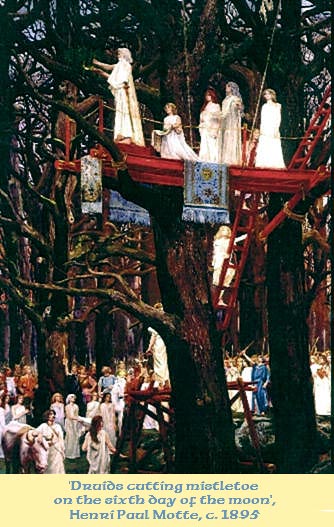
Druids cutting Mistletoe

Druids cutting Mistletoe

Christianity, Catholic bishops, with one exception, didn’t allow the mistletoe to be used in churches because it was one of the major symbols of Paganism. Before the Reformation, a priest at the Cathedral of York brought a bundle of mistletoe into the sanctuary each year during Christmastide and put it on the altar as symbolic of Jesus being the Divine Healer of nations.

‘Mistletoe, one of the most magickal and sacred plants of Paganism, symbolizes life and fertility and protects against poison. It was considered an aphrodisiac. ‘

The English used mistletoe as a Christmas decoration for their homes. In Medieval times, branches of mistletoe were hung from ceilings and put over houses and barn doors to repel evil spirits. People believed the plant could extinguish flames. Although much of the Pagan symbolism was forgotten, the plant represented good will, happiness, good fortune and friendship.

‘The sacred mistletoe is a hemiparasite, partial parasite that grows on branches or trunks of trees and has roots that penetrate into the tree for food. The American plant grows on trees while the European mistletoe can also be a green shrub with small yellow flowers and white berries. The plant contains toxins that can cause physical reactions including gastrointestinal disturbances and a slowed heartbeat.’

Mistletoe Sacred to Celtic Druids

The plant has qualities including the power of healing, rendering poisons harmless, good luck, great blessings, bestowing fertility on humans and animals, protection from witchcraft and banishing evil spirits. Enemies who met Druids under the forest mistletoe laid down their weapons, exchanged friendly greetings and kept a truce until the next day. The Celts suspended mistletoe over doorways or in rooms as a symbol of good will and peace to all who visited.

‘Mistletoe was revered by the ancient Druids both magically and medicinally. It’s possible that modern mistletoe traditions have their roots in ancient beliefs.’

Druid Mistletoe Ceremony

The plant is a fertility symbol and the soul of the oak tree. Belief was that the mistletoe could come to the oak tree during a lightning flash. Mistletoe was gathered at mid-summer and winter solstices. The plant, when it grew on the venerated oak tree, was especially sacred to the Celts. On the sixth night of the full moon after Yule, white-robed Druid priests gathered oak mistletoe by cutting the plant with golden sickles. Two white bulls were sacrificed with prayers that the recipients of mistletoe would prosper.

Mistletoe and the Ancient Druids

Pliny the Elder, a Roman historian interested primarily in natural history, recorded valuable information about the Druids and their religious and healing practices. These ancient priests of Celtic lands revered mistletoe as sacred. Pliny stated in Natural History, XVI, 95 that, “The Druids — that is what they call their magicians — hold nothing more sacred than mistletoe and a tree on which it is growing…Mistletoe is rare, and when found, it is gathered with great ceremony, and particularly on the sixth day of the moon.”

In the scene quoted above, the Druids are preparing for a ritual sacrifice which involves a white-robed priest carrying a golden scythe while climbing an oak tree to ritually cut the mistletoe. According to Pliny, it was the Valonia oak the Druid’s believed was the most sacred tree to gather mistletoe from and that it would heal poison and encourage fertility.

Mistletoe in Celtic Art

Celtic art is resplendent with what are believed to be mistletoe motifs. Some artifacts have been found that resemble human male heads adorned with a crown of comma-shaped leaves that resemble mistletoe. Historians believe these finds may be representations of crowned Druid priests.

External links:
http://www.mistletoe.org.uk/ A survey of Mistletoe use in Britain
http://www.mistletoes-r-us.co.uk/  Mistletoe matters
http://www.archaeology.co.uk/books/blood-and-mistletoe-the-history-of-the-druids-in-britain.htm The History of Druids – Blood and Mistletoe

 Next blog will be about -‘Yule’

Merlin @ Stonehenge
The Stonehenge Stone Circle Website
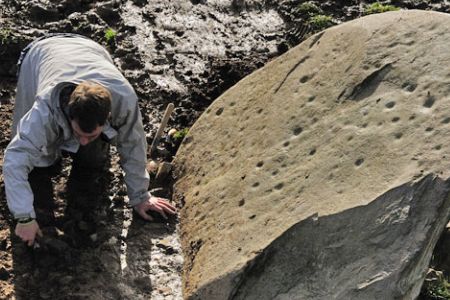


Ancient UK standing stone guided people through sacred landscape

29 11 2010

Archeologists say Trefael, a standing stone near Newport south-west Wales, was used as a ritual marker to guide communities through a scared landscape.

Studies showed that the cupmarks gouged onto the solitary stone represent a section of the night sky that includes the star constellations of Cassiopeia, Orion, Sirius and the North Star.

There are more than 75 cupmarks on the stone, which were revealed through complete exposure of the stone during recent excavations, Archeo News reported.

Until 40 years ago archaeologists assumed that the stone was part of a capstone covering a small burial chamber.

Later geophysical surveys unveiled the remains of a kidney-shaped anomaly, looking like remnants of the cairn that once surrounded the chamber, with an entrance to the east.

Excavations confirmed the site to be a portal dolmen, also exposing a cairn deposit within the eastern and northern sections of the trench.

A clear vertical cut was also found in section, which was parallel with the dip of the former capstone. This showed that the cairn had been excavated into and the capstone set and packed within the existing cairn, probably used as a standing stone during the Early Bronze Age when new burial-ritual monuments were introduced in Western Britain.

Archeologists found medieval and post-medieval pottery shards and two Mesolithic shale beads. They are planning to conduct further excavations in the area to assess the later prehistoric landscape setting and a contour survey of the monument.

Merlin @ Stonehenge
The Stonehenge Stone Circle Website
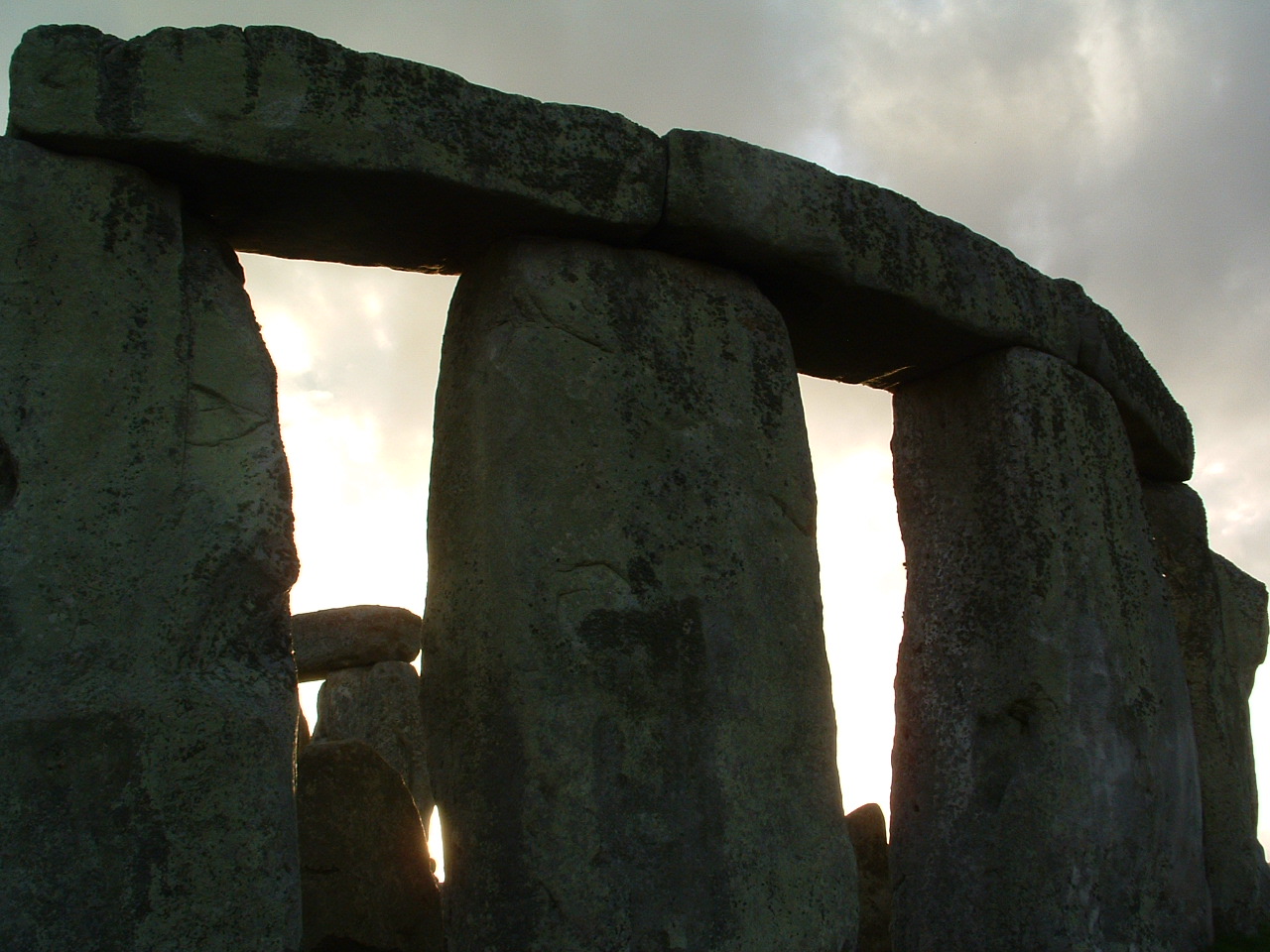


University student sparks new Stonehenge theory

29 11 2010

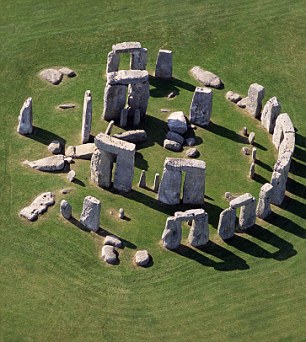
Stonehenge

A REVOLUTIONARY new idea on the movement of big monument stones like those at Stonehenge has been put forward by an archaeology student at the University of Exeter.

While an undergraduate, Andrew Young saw a correlation between standing stone circles in Aberdeenshire, Scotland and a concentration of carved stone balls, which may have been used to help transport the big stones by functioning like ball bearings.

Young discovered that many of the late Neolithic stone balls had a diameter within a millimetre of each other, which he felt indicated they would have been used together in some way rather than individually.

By plotting on a map where the carved balls were found, he realised they were all within the vicinity of Neolithic monuments known as recumbent stone circles.

These stone circle monuments in Aberdeenshire share an equivalent form to Stonehenge, yet with some much larger stones.

To test his theory Young built a model using small wooden balls which were placed in a grooved pieces of wood moulding, similar to a railway track but with a groove rather than a rail.

The balls were spread apart and a mirror image of the track was placed on top supporting a wood platform.

He then placed concrete slabs on the tracks, to replicate a heavy weight.

Young said: “I then sat on top of the slabs to add extra weight. The true test was when a colleague used his index finger to move me forward, a mere push and the slabs and I shot forward with great ease.

“This proved the balls could move large heavy objects and could be a viable explanation of how giant stones were moved, especially in relation to where the stone balls were originally found.”

A further experiment on a much larger scale was arranged with the financial assistance of Gemini Productions and WGBH, Boston for NOVA, an American documentary TV programme.

They were focusing on Stonehenge and wanted to see if a team of archaeology students directed by Professor Bruce Bradley, a lead archaeologist at the University of Exeter could build and test a life size model using wood that might reflect how massive stones could have been moved across the landscape.

Previous experiments, which others have carried out to move large stones had not been particularly effective.

The building of a hardened surface to roll logs on and the trench experiments only moved the stone with great effort and if they had been moved in this way the hardened surface or trench would show up in the archaeological record, however these have not been found.

In the large scale experiment, green wood was used for cost purposes. Neolithic people would have had access to much better materials, such as cured oak, which is extremely tough and was in abundance due to the great forests at the time.

They also had the technical ability to cut long timber planks, known through archaeological evidence of planks used as a way of creating tracks for people to walk on through bogs.

The experiment used hand shaped granite spheres as well as wooden spheres.

Professor Bradley said: “Our experiment had to go for the much cheaper option of green wood, which is relatively soft, however, we successfully moved extremely heavy weights at a pace.

“The demonstration indicated that big stones could have been moved using this ball bearing system with roughly ten oxen and may have been able to transport stones up to ten miles per day.

“This method also has no lasting impact on the landscape, as the tracks with the ball bearings are moved along leap-frogging each other as the tracks get moved up the line.”

He added: “It demonstrates that the concept works. It does not prove that Neolithic people used this method, but it was and is possible.

“This is a radical new departure, because previous ideas were not particularly effective in transporting large stones and left unanswered questions about the archaeological record they would have left behind.”

The next stage in the project is to collaborate with the engineering experts at the University who can calculate the loads which could be transported using various combinations of variables such as hard wood and U-shaped grooves.

This will provide the mathematical evidence to see how much force would be needed to get the stone moving and to keep it moving.

This will enable the project team to gain an even greater understanding of how stones may have been transported across huge distances and even up hills.

The ultimate goal is for a full-scale experiment in Aberdeenshire using more authentic materials, stone balls and a team of oxen.

Merlin @ Stonehenge
The Stonehenge Stone Circle Website
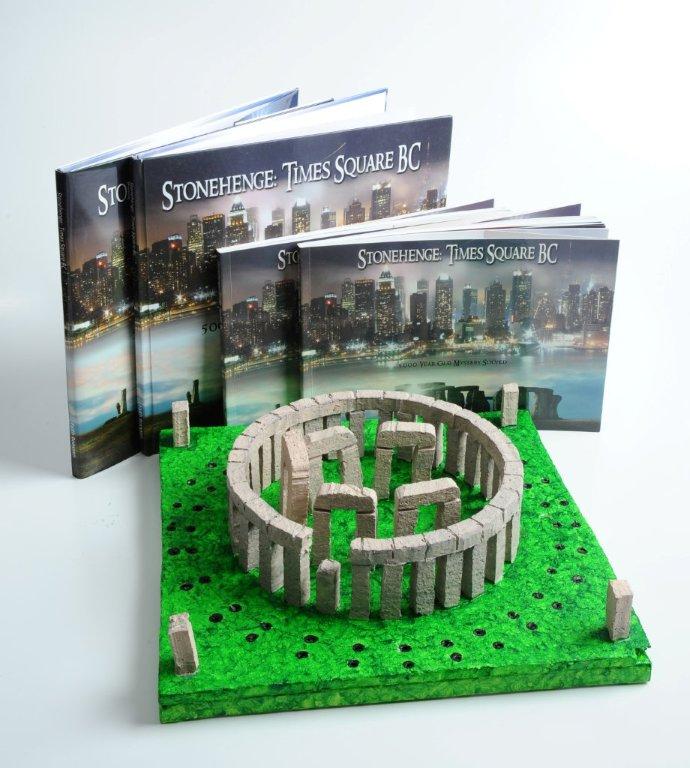


New Stonehenge book launched – Stonehenge Times Square BC

26 11 2010

New Stonehenge book

New Stonehenge book

Discover the Ultimate Function and Purpose of Stonehenge
Where would you be without your diary to check your appointments for the week, or your calendar to work out dates?

We are all ruled by hours, days, weeks and months – from getting up in the morning, to working out schedules, to planning holidays and important functions. In addition to this, most of us have heard of the mysterious, starkly beautiful monument, Stonehenge, and have wondered as to its construction. Be this as it may, how often have we given any thought as to how (and why) this Heritage Site was originated? Are we at all aware of the key role it has played in the concept of ‘time’ and in our New Year celebrations?

Once you have an understanding of the four ancient calendars, revealed and explained in this fascinating window to the past, you will realise that Stonehenge was a site of enormous importance and significance to the ancients. The monument was in fact a device or tool, for revealing the exact date of the year.

More importantly, we are given a glimpse of how the ancients discovered and designed their calendars with little more than sticks and stones to work with. Discover too, the accuracy of their calendars, which were accurate to within a day. Their solar calendar consisted of 365 days had 52 weeks, with 3 seasons of 91 days and 1 season of 92 days. Discover how 12, 30 day months were introduced around 3600 years ago with 5 tagged on days at the end of the year. This last calendar is known to have been used by both the Babylonians and Egyptians.

About the BookThe key points in any solar calendar are alignments with both midsummer and midwinter. Very early on, an important discovery made at Stonehenge was that certain of the megaliths would have aligned perfectly with the midsummer and midwinter solstices approximately 5000 years ago, when the monument was built.

Stonehenge, as it is seen today, is impressive and has fostered many theories as to its original function and purpose. However, this megalithic monument, impressive as it is, is not the full story. Archaeologists have discovered that before the Megaliths (Sarsen stones) were erected, there were earlier structures dating back to as far as 5000 years ago. The area at Stonehenge was in use long before the Sarsen megaliths were erected.

The author of Stonehenge: Times Square BC, Faith Booysen, realized that although some theories held for certain of the structures, taken as a whole, most theories did not explain the older structures.

Working on the assumption that these structures were calendars, her calculations proved that this was, indeed, so.

Her book, Stonehenge: Times Square BC sets out in detail the remarkable calculations and details of four calendars at Stonehenge. The brilliance of the ancient designers and builders are reflected in these calendars. With little more than primitive tools, they designed and built calendars that lasted for hundreds, if not thousands of years. The calendars formed the basis of the calendar we use to this day. Discover how the calendars evolved over a period of 1650 years from a circle of 56 wooden posts to the massive monument we see today.

Extract from the BookWe might never truly know whether the designers were local or foreign to Britain. What we do know is that designing and building calendars with primitive tools, required genius. Civilisation, it can be said, is built upon such genius, dedication and persistence.

These stone structures were built to last and because of this, crucial knowledge was passed down to future generations. Everything from a simple coffee in the morning to space exploration, testifies to this. Sadly, with the advent of written language, these structures fell into disuse and disrepair. Even so, after 5000 years and with little more than holes in the ground, scattered stones and a few remaining megaliths, we are able to reconstruct and understand their calendars.” Extract from Stonehenge: Times Square BC

About the AuthorThe author, Faith Booysen, has always had an overwhelming interest in the stone structures of the ancient world. Stonehenge in particular, held a strong fascination and in 2006, while watching a TV program on “Foamhenge” (a precise model of Stonehenge in polystyrene), she realized that the monument was only part of an equation and that the ancients would have used either loose stones or logs to mark their calendars daily.

It soon became obvious that the ruin of the Stonehenge monument seen today was preceded by other calendars. Stonehenge: Times Square BC is the result. Once the author had resolved the oldest calendar (the Aubrey Posts), she studied the remaining structures at Stonehenge and Woodhenge and these were revealed to be precise solar calendars. Mount Pleasant, a Neolithic henge in Dorset that supported wooden posts, proved to be a precise solar calendar as well.

Merlins CommentIt is obvious that the author knows and loves her subject and she has done some meticulous research to compile this fascinating account of the origins of our modern-day calendars and traditions behind our New Year celebrations.

Even those who are not ruled by the clock, or who are science buffs, will find that this absorbing account of the early designers who built one of the most fascinating monuments known to man and who made time and motion as we know it today all possible, makes you forget all about the time.

Link to TimeHenge book – http://www.timehenge.com/Link to Stonehenge Book Shop

Merlin @ Stonehenge
The Stonehenge Stone Circle Website


New Stone Circle Discovered ? 1000’s years older than Stonehenge.

10 11 2010

A stone circle located high in the highlands of Southern Armenia may in fact be the oldest stone observatory in the world, predating England’s Stonehenge. According to newly started excavations, the Armenian Stonehenge (Karahunj) has a history of 7500 years. It’s discovery has sparked a scientific debate in astronomical and astrological circles. Yerkir Media’s Gayane Avetisyan reports on the story for CNN World View.

7,500-YEAR-OLD STONE CIRCLE IN ARMENIA ALIGNED TO CYGNUS’S BRIGHTEST STAR
A Report by Andrew Collins

A new study into Armenia’s Carahunge stone circle complex, has shown that it is arguably one of the oldest known megalithic sites outside of Turkey, dating to around 5500 BC. Moreover, investigations by Russian prehistorian Professor Paris Herouni indicate that Carahunge (car means “stone” in Armenian, and hunge means “voice” or “sound”), located some 200km from the Armenian capital Yerevan, not far from the town of Sisian, was created as an astronomical observatory marking the movement not only of the sun and moon, but also the stars.

Indeed, Herouni’s work at Carahunge was impressive enough to draw in the expertise of the late Professor Gerald Hawkins, who was impressed by the thoroughness of the survey undertaken by his Russian colleague.

Key hole to Cygnus
More significant is that Carahunge’s principal stellar alignment is towards Deneb, the bright star in the constellation of Cygnus the swan.

One of the holed stones at Carahunge aligned to celestial events and key starsA number of the standing stones bear smooth angled spy holes that are 4 to 5cm in diameter, each one being angled towards different points on the horizon or ancient targets in the heavens.

A key stone had a hole that was focused due north towards the meridian. This suggested that it targeted a bright star at its culmination – i.e. the highest or lowest point it reaches as it revolves around the north celestial pole.

One of the holed stones at Carahunge aligned to celestial events and key stars.
Herouni ran the angle of the stone through various astronomical programmes and found that it was aligned to Deneb at a date of around 5,500 BC, suggesting that this was the time frame in which Carahunge was in use by an advanced society of astronomer priests. It was this alignment that provided the key to finally dating the site, which was expected to have been constructed during this distant epoch.

It is even now being claimed by Professor Herouni that Carahunge is the oldest stone obervatory in the world, although surely the stone setting at Nabta Playa in Egypt’s Libyan desert is at least as old as Carahunge, and arguably older. Plus there are my own findings with respect to the orientations of various Pre-Pottery Neolithic (PPN) sites in southeast Turkey, including the 12,000 year old Gobekli Tepe. In The Cygnus Mystery (2006) I demonstrated that, like Carahunge, they seemed to be orientated towards Cygnus’s brightest star, Deneb.

The importance of Professor Herouni’s findings regarding Carahunge is that in a time frame little different to the Neolithic city of Catal Huyuk in neighbouring Turkey, there was an astronomical observatory in Armenia not just aligned to the sun and moon, but also to the stars, and Cygnus in particular. I suspect that the interest in this star group goes back beyond the PPN sites of southeast Turkey to the Palaeolithic age, and the peoples who created the amazing cave art in Western Europe. Representations of Cygnus certainly exist in the Lascaux cave in the Dordogne region of southern France, and I suspect it is present in various other painted caves as well.

So why was Cygnus important?
Primarily it is because of its use as a time marker, its stars being so close to the north celestial pole they move very little across hundreds of years. Then there is its position on the Milky Way, exactly where this starry stream bifurcates to form what is known as the Cygnus Rift or Dark Rift. Universally, this area of the sky has been seen as the point of access into the sky-world, as well as a place of cosmic birth and death. It was also the place where the souls of the dead travelled in the afterlife, very often accompanied by, or in the form of, a bird, seen as a psychopomp, a soul carrier. Very often the identity of these birds corresponded with how the stars of Cygnus were represented in regional mythologies – a falcon in Egypt, a vulture on the Euphrates and a swan in Hellenic Greece and Turkey.

I am not surprised that Carahunge is aligned to Cygnus, although it is always pleasing when one’s theories are shown to be real. I think that in years to come we shall find a lot more about the cult of the swan, and its relationship to the earliest sky-religions of the ancient world. I also think there is much more to learn about the prehistoric beliefs of the proto Armenians, and how they held true age old beliefs that went back all the way to Palaeolithic times.

Professor Herouni has published a book of his findings with respect to Carahunge. Entitled ARMENIANS AND OLD ARMENIA “, it provides compelling evidence that this impressive megalithic site of over 200 standing stones spread out across 7 hectacres, was constructed and used by an advanced civilization. The book provides a detailed explanation of how the stone monument works as an astronomical observatory, and explains its context as the foundation point of Armenia and Armenian history.

Merlin @ Stonehenge
The Stonehenge Stone Circle Website


Stonehenge Private Access tours 2011 – Go beyond the fences!

4 11 2010

Hot off the press – Stonehenge Access Dates!
I have just been sent 2011 dates for Stonehenge ‘private access’ tours (see below)  If you are planning on visiting Stonehenge in the next 12 months then I highly recommend joing one of these trips.

Stonehenge Inner Circle Tours - Go beyond the fences

Stonehenge Inner Circle Tours – Go beyond the fences

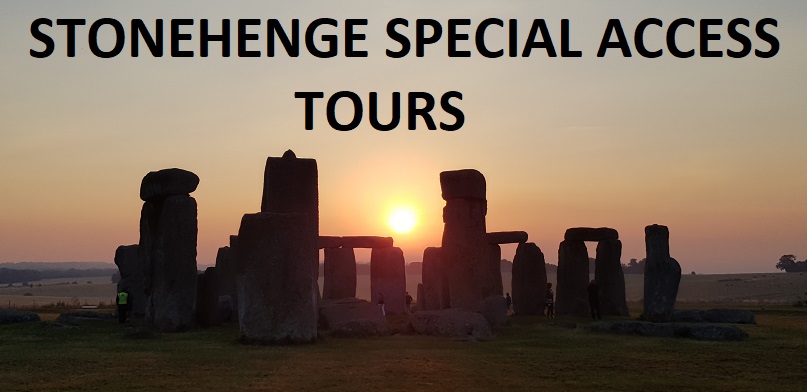
For those of you who have not visited this sacred site, I should mention that the complex is roped off. Visitors observe the stones from a distance and are not permitted within the temple complex……….Stonehenge special access tours allow you to be amongst the stones and to experience the magic.

There are a few sightseeing tour operators who offer this service and I have just been advised of the 2011 dates.  There are limited spaces and I highly recommend booking sooner rather than later – this is a very popular tour.  A fantastic photograph opportunity!

  • Stonehenge Special Access dates 2011
    January 2011 – 2nd, 14th, 21st, 24th, 31st
    February 2011 – 4th, 7th, 18th, 28th
    March 2011 – 7th, 14th, 25th, 28th
    April 2011 – 3rd, 6th, ,7th, 10th, 11th, 14th, 17th, 20th, 21st, 24th, 25th, 28th
    May 2011 – 1st, 4th, 5th, 8th, 9th, 12th, 15th, 18th, 22nd, 23rd, 26th, 29th
    June 2011 – 1st, 2nd, 5th, 6th, 9th, 12th, 15th, 21st
    July 2011 – 3rd, 6th, 7th, 11th, 10th, 14th, 17th, 18th, 21st, 24th, 28th, 31st
    August 2011 – 4th, 7th, 8th, 10th, 11th, 14th, 17th, 18th, 21st, 22nd, 25th, 28th
    September 2011 – 1st, 5th, 8th, 11th, 15th, 18th, 29th

Private tours can often be arranged for alternative other dates for families and small groups  but need to be booked well  in advance

These Stonehenge access tours can be booked through the excellent  ‘Stonehenge Tour Company’  website.  For a selection of other Stonehenge Tours from London that can also include:  Bath, Lacock Village, Salisbury Cathedral, Windsor Castle, Avebury Stone Circle, The Cotswolds, Oxford etc click here

The Stonehenge Tour Company

The Stonehenge Tour Company

Avebury Stone Circle

One or two operators offer tours that include Stonehenge and Avebury plus nearby Silbury Hill, West Kennet Long Barrow, Chalk hill figures and even crop circles (April – September) Try The Stonehenge Tour CompanyHistouries UK and Salisbury Guided ToursShould you need any unbias advice on organising a tour to Stonehenge please do email me – tours@stonehenge-stone-circle.co.uk

Merlin @ Stonehenge
The Stonehenge Stone Circle Website


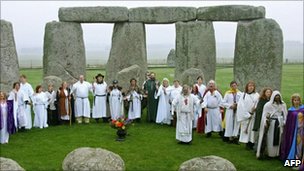
Druids mark festival after becoming official religion

1 11 2010

Druids are celebrating their first major festival since their beliefs were granted official status as a religion.

Samhain

Sanhain

For them and other pagans, 31 October is not Halloween, but Samhain, and marks the turning of the year from light into dark.

Earlier this month, the Charities Commission ruled that the Druid Network should have the same status as other faiths such as Christianity and Islam.

Pagans do not worship one single god, but look for the spiritual in nature.

The number of pagans, including druids, witches and wiccans, has grown in recent years.

Many believe that the absence of rules, the focus on the environment and particular regard for the female have a strong resonance in contemporary society.

Druids worship the spirits they believe inhabit the earth. Among them are those embodied in forces of nature, such as thunder, and places, like mountains and rivers.

Their rituals, including Samhain, are focused particularly on the turning of the seasons.

After a four-year inquiry, the Charity Commission decided that druidry offered coherent practices for the worship of a supreme being, and provided a beneficial moral framework.

Earlier this month the Charities Commission gave the Druid Network the status of a religion.

Happy New Year Pagans!
Merlin @ Stonehenge
The Stonehenge Stone Circle Website


Stonehenge expert awarded OBE

29 10 2010

ONE of the world’s leading experts on Stonehenge discovered his passion for archaeology as a child in his Cheltenham back garden.
Professor Timothy Darvill has been awarded an OBE, in this year’s Queen’s Birthday Honours List, for services to archaeology. He is a leading expert on prehistoric Britain.

He said it was a “great privilege” to receive the honour from the Queen earlier this month at Windsor Castle and thanked his colleagues, friends and family.

“I have always been passionate about archaeology and feel fortunate to have contributed to so many amazing projects that have revealed such a great deal about our nation’s history and heritage,” he said.

Born and bred in Cheltenham, Prof Darvill has been passionate about archaeology since he was a child, according to his mother Win Darvill.

“He has always been interested from when he was a small boy. He used to dig holes in the garden all the time,” she said.

“His father, who was a civil engineer, was interested in fossils and passed it all on to Timothy and it went from there.”

The family lived in the Battledown area and Mrs Darvill now lives in Pittville.

Timothy Darvill is now a professor at Bournemouth University.

Mrs Darvill said: “When he was in his teens he was always either involved in archaeology in Cirencester or on field walks. It has always been his passion. I could not believe it when he was awarded the OBE but I am so proud.”

She said her son grew up in the right area to find all kinds of interesting landscapes.

But he developed an interest in Stonehenge from a young age too.

“He has done a lot of work on it and written many books about it. I read them but I wouldn’t like to write an essay on them,” she said.

The author of more than 20 books and 200 papers and articles, Mr Darvill famously co-directed the first excavations within the stone circle at Stonehenge for more than 40 years in April 2008.

His work featured in a BBC Timewatch programme, which examined the theory that Stonehenge was a prehistoric centre of healing.

After completing a PhD at Southampton University on the Neolithic of Wales and the west of England, he worked with the Western Archaeological Trust and the Council for British Archaeology before establishing a private practice offering consultancy services in the field of archaeological resource management.

In October 1991, he was appointed to the chair of archaeology in the newly-established archaeology group at Bournemouth University and led the Monuments at Risk survey commissioned by English Heritage in the mid 1990s and has worked in Russia, Malta, Greece, and Germany. He is chairman of the board of directors of Cotswold Archaeology, one of the top archaeological companies in the UK, and vice-president of the Society of Antiquaries of London.

Merlin @ Stonehenge
The Stonehenge Stone Circle Website


Silbury Hill – David Attenborough’s big dig

26 10 2010

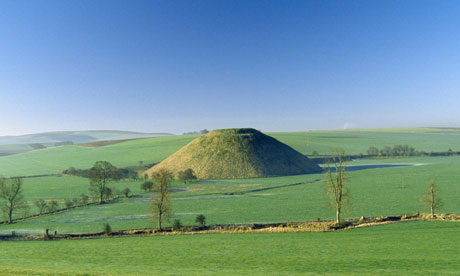
Silbury Hill is as ancient and enigmatic as Stonehenge. David Attenborough tells us why he set out to crack it

Tomb or temple? ... Silbury Hill, Wiltshire.

Tomb or temple? ... Silbury Hill, Wiltshire.


The past,” says David Attenborough, “is a haunting and fascinating place.” The great naturalist is revealing a little-known side of himself: his love of archaeology – and his fascination with Silbury Hill in Wiltshire. The tallest prehistoric man-made mound in Europe, Silbury Hill rises to a height of 37 metres, making it comparable with the Egyptian pyramids and the ziggurats of Mesopotamia.

In a new English Heritage book about the hill, Attenborough tells how, in 1968 as controller of BBC2, he commissioned a programme that involved tunnelling into its depths to discover why it was there. At the time, the programme was judged a flop, since it found no treasure, no tomb, no real answers at all.

The-Story-of-Silbury-Hill

The-Story-of-Silbury-Hill

Attenborough is now seeking to set the record straight. He argues that, far from failing, TV’s first live dig triggered an unlikely chain of events that recently led to the tunnel being reopened and re-examined, using modern techniques. “They did not unearth any material treasure either,” he writes, but instead “added more details to our knowledge and understanding.” And this, you could say, is the true purpose of archaeology. In fact, the reopening of the tunnel vindicated the project Attenborough is so proud of: it revealed perhaps as much as will ever be known about this most mysterious of ancient monuments.

Silbury Hill is near Avebury, a quaint English village set inside a prehistoric stone circle. The village is part of a world heritage site that takes in Stonehenge and Silbury Hill. Raised in the same era as the mighty Stonehenge, and just as much of an enigma, the hill boasts chalk sides covered with grass. Construction of the vast, flat-topped cone would have required hundreds of workers and taken an age, but the people who built it left no records as to why.

BBC2 was a new channel in the 60s, with a brief to experiment. “We were going to do new television,” says Attenborough. “Everything we did would be in some way identifiable as new. With archaeology we thought, ‘Why can’t we do a live excavation?’ We would have cameras there so, if necessary, we could interrupt other programmes.”

The plan was to dig a tunnel into the heart of the hill. Professor Richard Atkinson, who led the dig, had interesting ideas about what might be in there. “Richard was the first to notice Mycenean daggers on Stonehenge,” says Attenborough. These made Atkinson believe Stonehenge was built by a culture in contact with ancient Greece, whose chief wanted a dramatic tomb.

This was TV as real adventure, and it captured the public imagination. Some saw it as a treasure hunt; others as a mix of horror and science-fiction. “Atkinson,” says Attenborough, “didn’t necessarily think there was going to be a burial [site]. The press said, ‘This is a treasure hunt, isn’t it?’ I said, ‘No, it’s about little bits of mud.'”

As the tunnel took shape, with news reported continually, nothing much emerged. “People kept saying, ‘It’s a failure,'” says Attenborough. “But we did discover how it was made.” Some people maintained the dig was actually harmful. “Since then, if there have been slumps in the top, people have said, ‘Ah ha, it’s the BBC’s tunnel.’ ”

In 2000, not just a slump but a hole appeared. Was the tunnel collapsing? No: this was caused by an 18th-century shaft, but archaeologists were still worried. They decided to reopen the BBC tunnel, deploying the latest tools and tests, and then seal it forever.

The new dig suggested that the hill was not a tomb, but a temple – perhaps the greatest in Europe 4,000 years ago. It also showed the hill started as a sacred site, where people came bearing stones; they may have believed they possessed healing powers. Certainly, stones are embedded in the structure and are thought to be highly meaningful by archaeologists. It is like Britain’s later cathedrals, which rose up over shrines. Sun worship flourished in prehistoric Britain, so perhaps this was – like those ancient ziggurats – a stairway to heaven to let priests get closer to the sun.

Atkinson’s tunnel is now sealed, but its creation marked a time when TV set out to bring drama and glamour to archaeology. As Attenborough says: “Anybody would be thrilled to find a Roman coin in their garden. I know I would.”

Visit Silbury Hill, Stonehenge and Avebury in a small group day tour – The Stonehenge Tour Company are the only operators who offer such a trip.  Histouries UK based in nearby Salisbury and Bath also bespoke private guided tours of the region.  You can look at more discounted tour operators here

Merlin @ Stonehenge
The Stonehenge Stone Circle Website


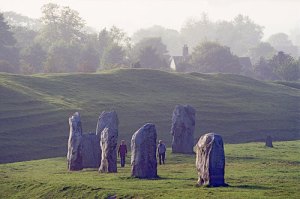
Delight for Druids says Avebury priest

18 10 2010

It has taken more than 11,000 years but finally the Druids, who lead the seasonal celebrations at Avebury and Stonehenge, can say they belong to an officially recognised religion.

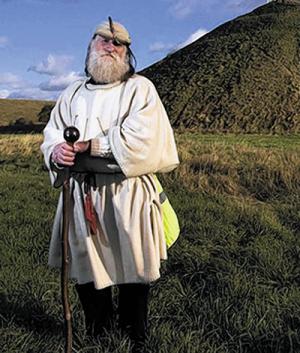
No one is more delighted at this recognition than Druid priest Terry Dobney, who lives at West Kennett, and styles himself as the Archdruid of Avebury and Keeper of the Stones.

Every Midsummer’s Day Mr Dobney, 62, can be seen wearing his ceremonial robe, carrying his staff and with a pheasant feather in his flat cap leading the Summer Solstice celebrations in the stone circle at Avebury.

This week the Charity Commissioners revealed they were granting the Druid Network, the umbrella organisation for Druid groups across the UK, charitable status for the first time.

That decision establishes Druidry as a recognised religion under UK charity law for the first time giving it the same status as Christianity, Islam and Hinduism.

The ruling recognised that the Druid Network served “to advance religion for the public benefit” although in practice, said Phil Ryder, chairman of the Druid Network trustees, it means very little financial benefit for the Druids but established an important principle giving them official recognition.

Mr Ryder said: “It has been a long and frustrating process, exacerbated by the fact that the Charity Commissioners had no understanding of our beliefs and practices and examined us on every aspect of them.”

As well as regulating secular charities the Charity Commissioners decide what qualifies as a legitimate and genuine faith.

Mr Dobney, a practising Druid for more than 40 years, said: “It is high time that the Druids were recognised not only as a religion but as being one of the oldest religions in the world.

“Druidism dates back to more than 11,500 years ago and pre-dates Judaism.

“The early Druids were the priestly cast who ran societies and provided the leaders.”

To become a recognised Druid, he said, entrants had to serve an apprenticeship for seven years under a senior Druid and could not call themselves a Druid until completing 21 years of training.

As well as leading the summer solstice and other seasonal celebrations at Avebury, Mr Dobney also conducts Druid handfastings (marriages) and other religious ceremonies throughout the year.

Merlin @ Stonehenge
The Stonehenge Stone Circle Website