All aboard the ‘Stonehenge Express’

7 12 2010

Two crucial aspects of the Stonehenge proposals have yet to be clarified…

 1. The transit system.

Will it be like one of the two examples shown here ? Not one like the Eden Project, please! That one is called “Percy”. Very tasteful! So more like the Dover Castle one? It may be, if this video is a true representation. But the video one pulls four carriages, not two. Is the vehicle up to it? And what about the livery? Can we be solemnly promised it will never ever carry advertising? And what’s wrong with buses? And what about talk in The Times letters column of Lord Lansdowne saying Stonehenge would be turned into a toytown with visitors approaching in dinky electric vehicles? Isn’t anything that prompts thoughts of Noddyland (which it’s hard not to think of when watching the video) to be absolutely avoided at our national icon? 

http://www.english-heritage.org.uk/daysout/properties/stonehenge/our-plans/our-proposals/

 2. The fences 

Will the fences be removed? Surely it has been decided upon? After all, if the detailed design of the new Visitor Centre and the colour of the transit system coaches have been decided then surely it is inconceivable that the matter of access to the stones (in other words the fences) hasn’t been been decided as well? English Heritage as good as says it has : “The need to care for Stonehenge properly has been recognised for many years. Improvement to its landscape setting and presentation to visitors are identified as priorities in the WHS Management Plan ……… The proposals to address this need have been agreed by a group of key stakeholders led by English Heritage

So what HAS been decided about the fences? The reason the question needs to be asked is because the video appears to show that there will be no fences – and although that would be very nice we have concerns that behind the scenes a different view might have been taken. The practicalities suggest that having no fences at all would prove impossible. Security is one problem. And erosion is another. But the video seems to suggests that nearly a million people a year will be free to walk amongst the stones, not held back by fences, ropes or rules. It seems unlikely.

A lot of people hold the “no fences and free access to the stones” concept very dear. If it is not going to happen then it would be better if people were told, not given a contrary impression by a video. Indeed, the public has the right to know does it not? Open access to the stones may or may not be impractical but open access to information about this matter certainly isn’t!

Exteran Links: http://heritageaction.wordpress.com/

Merlin @ Stonehenge
The Stonehenge Stone Circle Website


English Heritage Gift of Membership makes the ideal Christmas present

24 11 2010

Gift of Membership
For the person who has everything.  Why not buy them an English Heritage membership
English Heritage Membership
English Heritage Gift of Membership makes the ideal Christmas present – free entry to over 400 English Heritage properties for a whole year! The gift of membership comes as a beautifully branded card, plus we offer felixible delivery options. 

Your Gift of Membership also includes:

  • exclusive members’ magazine Heritage Today
  • free English Heritage Handbook worth £8.95
  • free entry for up to six accompanying children (under 19 – within the family group)
  • free or reduced price entry to 100s of special events
  • free or reduced price entry to over 100 associated attractions

Please bear in mind that the last order dates for Christmas delivery are: delivery to UK: Friday 17th December, delivery to Western Europe: Thursday 9th December, delivery to Rest of World: Thursday 2nd December.

External Link: http://www.stonehenge-stone-circle.co.uk/overseas-visitor-pass.htm

Thats my Mum and Dad sorted!

Merlin @ Stonehenge
The Stonehenge Stone Circle Website


£10m investment from the Heritage Lottery Fund for Stonehenge

19 11 2010

Today, the Heritage Lottery Fund (HLF) has announced confirmed funding¹ of £10m for Stonehenge in Wiltshire. 

Heritage Lottery Fund (HLF)

Heritage Lottery Fund (HLF)


Dame Jenny Abramsky, Chair of the Heritage Lottery Fund, said:

“Stonehenge is one of the archaeological wonders of the world. It demonstrates the vital role heritage plays within the UK’s tourism industry as well as being a great example of our fascinating history. This Heritage Lottery Fund investment will help transform this site and give people a much greater understanding of why it is so significant.”

Stonehenge, described as ‘the most architecturally sophisticated pre-historic stone circle in the world’², was constructed and in use between 3,000BC to 1,600BC. It is thought to have been used for a variety of religious ceremonies and the surrounding landscape – a World Heritage Site -contains over 700 known archaeological features. Stonehenge attracts 900,000 visitors every year from across the globe.

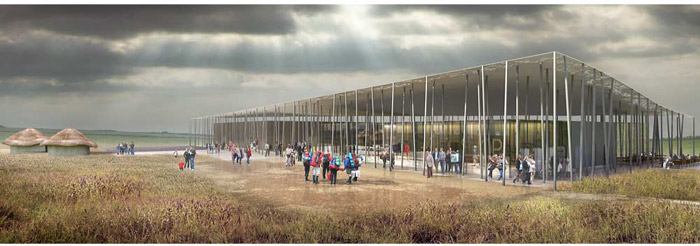
Stonehenge visitor centre

New Stonehenge visitor centre design

Neil Oliver, archaeologist, historian and broadcaster, said:

“Stonehenge is one of the most famous and important archaeological sites in the world – right up there with the Pyramids of Egypt and the Colosseum in Rome.  Just the sound of the word makes us wonder about our ancient past and our ancestors.” 

“It’s therefore fantastic news that thanks to this grant from the Heritage Lottery Fund, visitors will have an even better experience than before.  Perhaps more importantly, the money will help ensure the magic of that special place will be retained, and looked after into the future.  Stonehenge has always been a mind- blowing experience.  With this kind of support, it hopefully always will be.”

Dr Simon Thurley, Chief Executive of English Heritage, said,

”We are tremendously grateful for this generous grant. Not only does it help to narrow the funding gap for the project considerably, it also sends out a message of confidence about the transformational benefits that the project will bring – to tourism,  local economy, and the conservation and public enjoyment of Stonehenge and its landscape. “

HLF’s grant will support work to remove the existing visitor facilities allowing the experience of the stones to be more naturally integrated with its ancient processional approach and the surrounding landscape. These much-needed wider improvements will give people the chance to explore what the site would have been like thousands of years ago. The project aims to improve the visitor experience, including the creation of a new carefully designed visitor centre which will include education and exhibition spaces to help people learn more about Stonehenge’s history. The project will also support training opportunities and a new volunteering programme.

-Ends-

Notes to Editors

  • ¹ A confirmed award means that money had already been earmarked by HLF for the project in question and that the full amount has now been secured. 
  • ²The World Heritage Committee described Stonehenge as ‘the most architecturally sophisticated pre-historic stone circle in the world.’
  • Using money raised through the National Lottery, the Heritage Lottery Fund (HLF) sustains and transforms a wide range of heritage for present and future generations to take part in, learn from and enjoy. From museums, parks and historic places to archaeology, natural environment and cultural traditions, we invest in every part of our diverse heritage.  HLF has supported 33,900 projects, allocating £4.4billion across the UK. 

    Website:
    www.hlf.org.uk 
    www.English-Heritage.org.uk

    Progress, at last……………………… £10 million should do the job nicely!

    Merlin @ Stonehenge
    The Stonehenge Stone Circle Website


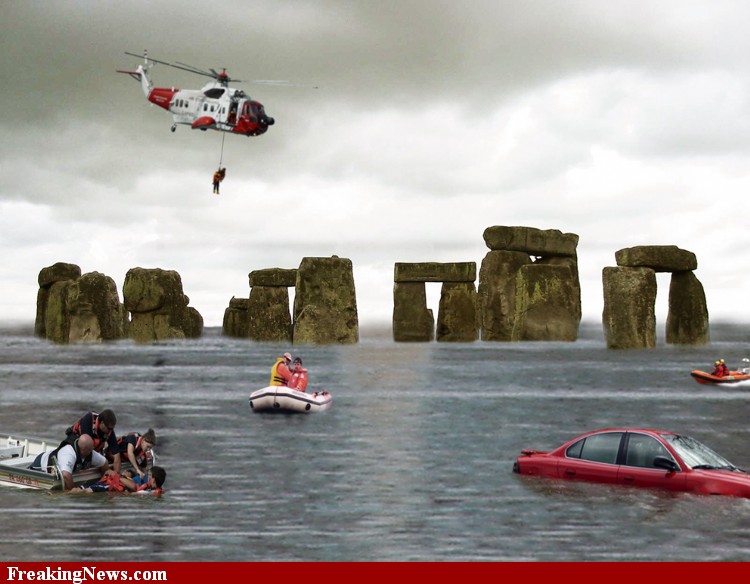
Heavy rain has caused severe flooding at Stonehenge

18 11 2010

• Heavy rain has caused severe flooding on Salisbury Plain
• Scores of residents have been rescued in nearby Amesbury
• Landslides have blocked train routes and the A303
• English Heritage cant open the shop

Stonehenge underwater

Stonehenge underwater

Stonehenge rescue efforts hampered by more rain…………………..

It cant all be serious……… and I did promise a few laughs.

Merlin @ Stonehenge


Proposals for the new Stonehenge Visitor Centre

16 11 2010

English Heritage’s plans are the culmination of months of working closely with a range of stakeholders and engaging with local residents.

Well worth a look!
Click here for the new English Heritage Stonehenge Proposal Video

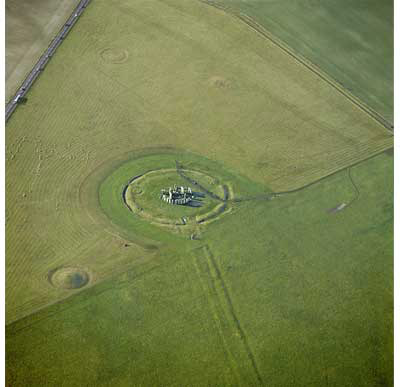
future-aerial-view_new

Wot no roads ? Future aerial view of Stonehenge

The scheme fulfils a long standing ambition to improve the facilities on offer to the many hundreds of thousands who visit each year and to restore a sense of dignity to the setting of one of the world’s most loved ancient monuments. It includes:

  • a new environmentally sensitive visitor centre 1.5miles away at Airman’s Corner with high quality exhibition and education facilities;
  • a low-key visitor transit system that will transport visitors from the visitor centre to a drop-off point close to the Stones;
  • removal of the current car park and facilities at the Stones. The area will be returned to grass, leaving only a minimal operations/security base and emergency toilets;
  • closure of the A344. Wiltshire Council will apply to restrict motorised vehicles on the A344 from the Stones to Airman’s Corner (with exemptions) and also on byways within the World Heritage Site; and
  • an upgrade of the Airman’s Corner road junction to a roundabout. The Highways Agency will also make improvements at Longbarrow Crossroads to mitigate the effects of the A344 closure.

Comments and links from the Heritage Journal

Forget the new Visitor Centre (who knows if it will be like that or built there or built at all this side of the Olympics in Rio de Janeiro) but look at the rest! It certainly looks excellent. 

We do have a few concerns – the land train for one. It looks a lot better and less intrusive than we feared it might – or still could but it would be nice to know it will look like that and there’s no question of it doing other than going from A to B and back and that having it buzzing all over the WHS won’t be considered.

We also wonder if this seductive vision of no fences, no ropes and apparently full access to the stones, that we’d all like, can actually prove viable? What about erosion? And security? How are they going to be dealt with?

But most of all we wonder about the fact the government has said all the good stuff like closing part of the road can’t happen unless the new Visitor Centre gets built! The latter doesn’t seem exactly a definite which means the good stuff might not happen either.

We’re certainly not alone in seeing the road closure as terribly important in it’s own right. Rescue and the Stonehenge Alliance for two! Surely, after all these years, a way can be found to treat the closure and grassing over of the road adjacent to the stones as THE UK heritage priority?

And just DOING it?

(And if money’s a problem, just run a public appeal. It would probably be one of the best supported ones in history!)

Progress at last…………..

Merlin @ Stonehenge
The Stonehenge Stone Circle Website


STONEHENGE AND PHOTOGRAPHY – ENGLISH HERITAGE RESPONSE

22 10 2010

English Heritage looks after Stonehenge on behalf of the nation. But we do not control the copyright of all images of Stonehenge. And we have never tried to do so.

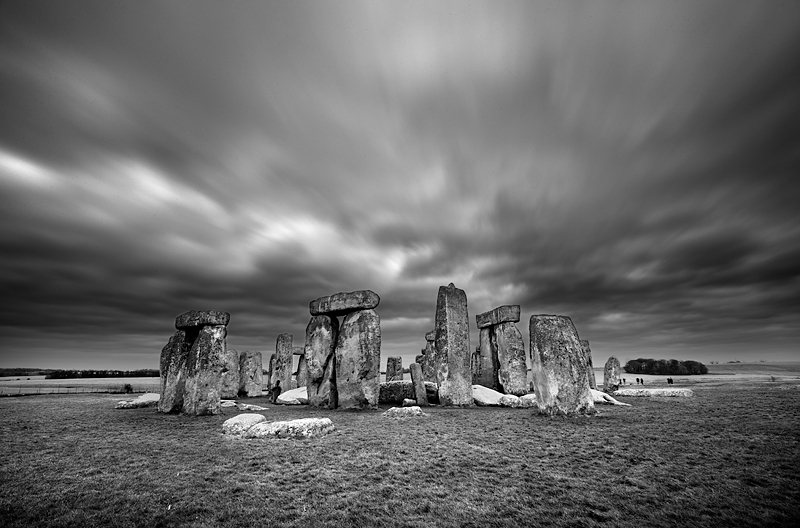
Stonehenge image

We have no problem with photographers sharing images of Stonehenge on Flickr and similar not-for-profit image websites. We encourage visitors to the monument to take their own photographs. If a commercial photographer enters the land within our care with the intention of taking a photograph of the monument for financial gain, we ask that they pay a fee and abide by certain conditions. English Heritage is a non-profit making organisation and this fee helps preserve and protect Stonehenge for the benefit of future generations. The majority of commercial photographers respect this position and normally request permission in advance of visiting. We regret the confusion caused by a recent email sent to a picture library.

Merlin @ Stonehenge
The Stonehenge Stone Circle Website


The man who bought Stonehenge

22 10 2010

It was 95 years ago, this week, that a man walked into a property auction in Salisbury and came out £6,600 poorer and the owner of Stonehenge.
Stonehenge had never been put up for auction before and never would again.
Sir Cecil Chubb, a wealthy Shrewton resident, was the new owner of Stonehenge.  He was also the last man to own it.

Bought ‘on a whim’

Stonehenge had been in private hands since the middle ages and been in the Antrobus family since the early 1800s.

But when the heir to the Antrobus baronetcy was killed in the Great War the estate was put up for sale.

Restoration of Stonehenge in 1950

Stonehenge undergoes restoration work in 1950

In the hands of Messrs Knight, Franck and Rutley, on the 21st September 1915, the historic site went under the hammer.

And Lot 15: Stonehenge with 30 acres of adjoining down land was sold at the Palace Theatre in Salisbury to the highest bidder.

Sir Cecil Chubb, who’d had no intention of bidding at the sale, bought it ‘on a whim’ as a gift for his wife who, it’s claimed, was none too pleased.

For the price of £6,600, the equivalent of £392,00 in today’s money, Sir Cecil Chubb’s intention that a “Salisbury man ought to buy it” was realised.

Stonehenge worth £51m

Just 95 years on and, according to a survey of 500 estate agents invited to put a price on national monuments across the UK, Stonehenge is now worth a monumental £51m.

Whilst the recommended estate agent’s blurb, suggested in the same survey carried out by findaproperty.com, could read:

Stonehenge “Airy property with bags of potential. Comes with land but needs serious renovation, including new roof and double-glazing.”

We would still advise our client to sell it at auction
Andrew Rome, Knight and Franck

But how would Messrs Knight, Franck and Rutley, the estate agents who originally handled the sale, sell Stonehenge today?

“We would still advise our client to sell it at auction,” says Andrew Rome from Knight and Franck.

“And to sell it as a going concern as a business based on the income it generates.”

With Stonehenge attracting around 900,000 visitors a year, paying an average of £5 per head, a £51m valuation starts to sound like a good investment.

Free admission

For Sir Cecil, however, Stonehenge belonged to the nation, and in 1918 after owning it for just three years he formerly handed it over to the country with a number of conditions.

His conditions were that the entrance fee should never be more then a shilling (5p) and that local residents should have free access.

“The 1918 deed of gift didn’t actually specify free access for local residents,” says Joy Kaarnijoki at English Heritage, “it was an agreement with the Parish Council.

“The road passed very close to the stones. The Council agreed that the rights of way could be diverted further from the stone circle on condition that local residents would be granted free access.”

Whether it was stipulated by Sir Cecil Chubb himself, or not, it’s an agreement that has continued to the present day.

According to English Heritage, the 30,000 local residents living in and around Stonehenge can still take up the offer of free access to one of England’s most famous monuments

Merlin @ Stonehenge
The Stonehenge Stone Circle Website

In 1915 Stonehenge was bought for just £6,600, its current valuation is estimated at £51m

In 1915 Stonehenge was bought for just £6,600, its current valuation is estimated at £51m


Stonehenge and Avebury World Heritage Site- Defining its Outstanding Universal Value

12 10 2010

Stonehenge and Avebury World Heritage Site is one of Wiltshire and the UK’s greatest assets. It is internationally recognised as one of the top ranking places in the world alongside cultural marvels such as the Pyramids and natural wonders like the Great Barrier Reef.
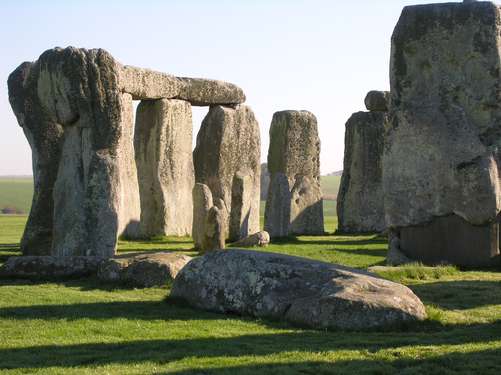
 World Heritage Sites need very careful management and protection. A new consultation has just been launched on a document that should help us to provide this.

The consultation gives the public a chance to comment on a document that summarises exactly what it is that makes Stonehenge and Avebury internationally important. The document will provide a crucial reference for those making decisions on how best to manage the World Heritage Site and look after the very special features which qualify it to appear on the World Heritage List. A clear definition in one document should help us protect the World Heritage Site for this and future generations.

Since 2007 UNESCO has asked new World Heritage Sites to provide a Statement of Outstanding Universal Value as part of the nomination process. Stonehenge and Avebury became a World Heritage Site back in 1986 and along with a large number of other sites across the world we now need to produce a Statement of Outstanding Universal Value.

 Stonehenge and Avebury are important to very many people for a wide range of different reasons that are taken into account in their respective Management Plans. The Statement of Outstanding Universal Value sets out to define only the values related to its impressive prehistoric monuments which got Stonehenge and Avebury onto the World Heritage Site list in 1986. If you would like to be part of the process of protecting the World Heritage Site you can look at the draft Statement of Outstanding Universal Value on line and leave your comments. The consultation is open until the end of October. You can find it by visiting the Wiltshire Council website.
The consultation closes on 31 October 2010.

For further information please contact: Sarah Simmonds, Avebury World Heritage Site Officer
Email: sarah.simmonds@wiltshire.gov.uk
Tel: 01225  718470
Mobile: 07966 900324

Statement of Significance

The Stonehenge, Avebury, and Associated Sites World Heritage property is internationally important for its complexes of outstanding prehistoric monuments.

It comprises two areas of chalkland in Southern Britain within which complexes of Neolithic and Bronze Age ceremonial and funerary monuments and associated sites were built. Each area contains a focal stone circle and henge and many other major monuments. At Stonehenge these include the Avenue, the Cursuses, Durrington Walls, Woodhenge, and the densest concentration of burial mounds in Britain. At Avebury, they include Windmill Hill, the West Kennet Long Barrow, the Sanctuary, Silbury Hill, the West Kennet and Beckhampton Avenues, the West Kennet Palisaded Enclosures, and important barrows.

The World Heritage property is of Outstanding Universal Value for the following qualities:

Stonehenge is one of the most impressive prehistoric megalithic monuments in the world on account of the sheer size of its megaliths, the sophistication of its concentric plan and architectural design, the shaping of the stones, uniquely using both Wiltshire Sarsen sandstone and Pembroke Bluestone, and the precision with which it was built.

At Avebury, the massive Henge, containing the largest prehistoric stone circle in the world, and Silbury Hill, the largest prehistoric mound in Europe, demonstrate the outstanding engineering skills which were used to create masterpieces of earthen and megalithic architecture.

There is an exceptional survival of prehistoric monuments and sites within the World Heritage site including settlements, burial grounds, and large constructions of earth and stone. Today, together with their settings, they form landscapes without parallel. These complexes would have been of major significance to those who created them, as is apparent by the huge investment of time and effort they represent. They provide an insight into the mortuary and ceremonial practices of the period, and are evidence of prehistoric technology, architecture, and astronomy. The careful siting of monuments in relation to the landscape helps us to further understand the Neolithic and Bronze Age.

Criterion (i): The monuments of the Stonehenge, Avebury, and Associated Sites World Heritage Site demonstrate outstanding creative and technological achievements in prehistoric times.

Stonehenge is the most architecturally sophisticated prehistoric stone circle in the world. It is unrivalled in its design and unique engineering, featuring huge horizontal stone lintels capping the outer circle and the trilithons, locked together by carefully shaped joints. It is distinguished by the unique use of two different kinds of stones (Bluestones and Sarsens), their size (the largest weighing over 40t), and the distance they were transported (up to 240km). The sheer scale of some of the surrounding monuments is also remarkable: the Stonehenge Cursus and the Avenue are both about 3km long, while Durrington Walls is the largest known henge in Britain, around 500m in diameter, demonstrating the ability of prehistoric peoples to conceive, design and construct features of great size and complexity.

Avebury prehistoric stone circle is the largest in the world. The encircling henge consists of a huge bank and ditch 1.3km in circumference, within which 180 local, unshaped standing stones formed the large outer and two smaller inner circles. Leading from two of its four entrances, the West Kennet and Beckhampton Avenues of parallel standing stones still connect it with other monuments in the landscape. Another outstanding monument, Silbury Hill, is the largest prehistoric mound in Europe. Built around 2400 BC, it stands 39.5m high and comprises half a million tonnes of chalk. The purpose of this imposing, skilfully engineered monument remains obscure.

Criterion (ii): The World Heritage Site provides an outstanding illustration of the evolution of monument construction and of the continual use and shaping of the landscape over more than 2000 years, from the early Neolithic to the Bronze Age. The monuments and landscape have had an unwavering influence on architects, artists, historians, and archaeologists, and still retain a huge potential for future research.

The megalithic and earthen monuments of the World Heritage Site demonstrate the shaping of the landscape through monument building for around 2000 years from c 3700 BC, reflecting the importance and wide influence of both areas.

Since the 12th century when Stonehenge was considered one of the wonders of the world by the chroniclers Henry de Huntington and Geoffrey de Monmouth, the Stonehenge and Avebury sites have excited curiosity and been the subject of study and speculation. Since early investigations by John Aubrey, Inigo Jones, and William Stukeley, they have had an unwavering influence on architects, archaeologists, artists, and historians. The two parts of the World Heritage Site provide an excellent opportunity for further research.

Today, the Site has spiritual associations for some.

Criterion (iii): The complexes of monuments at Stonehenge and Avebury provide an exceptional insight into the funerary and ceremonial practices in Britain in the Neolithic and Bronze Age. Together with their settings and associated sites, they form landscapes without parallel.

The design, position, and inter-relationship of the monuments and sites are evidence of a wealthy and highly organised prehistoric society able to impose its concepts on the environment. An outstanding example is the alignment of the Stonehenge Avenue (probably a processional route) and Stonehenge stone circle on the axis of the midsummer sunrise and midwinter sunset, indicating their ceremonial and astronomical character. At Avebury the length and size of some of the features such as the West Kennet Avenue, which connects the Henge to the Sanctuary over 2km away, are further evidence of this.

A profound insight into the changing mortuary culture of the periods is provided by the use of Stonehenge as a cremation cemetery, by the West Kennet Long Barrow, the largest known Neolithic stone-chambered collective tomb in southern England, and by the hundreds of other burial sites illustrating evolving funerary rites.

The State Party also proposes the revision of the brief description as follows:

The Stonehenge, Avebury, and Associated Sites World Heritage Site is internationally important for its complexes of outstanding prehistoric monuments. Stonehenge is the most architecturally sophisticated prehistoric stone circle in the world, while Avebury is the largest in the world. Together with inter-related monuments and their associated landscapes, they help us to understand Neolithic and Bronze Age ceremonial and mortuary practices. They demonstrate around 2000 years of continuous use and monument building between c. 3700 and 1600 BC. As such they represent a unique embodiment of our collective heritage.

Merlin @ Stonehenge
The Stonehenge Stone Circle Website


Archaeologists debate Stonehenge future

5 10 2010

LEADING archaeologists got together at Salisbury & South Wiltshire Museum on Saturday for a Solve Stonehenge debate.

Professor Tim Darvill, Professor Mike Parker Pearson, Mike Pitts and Julian Richards, who have all directed work within the Stonehenge landscape over the last 30 years, were kept in order by Andrew Lawson as they shared their expertise, discussing such questions as Did Stonehenge have a roof?, Which is more important, Durrington Walls or Stonehenge? and Who built Stonehenge?.

The debate was part of a weekend conference to celebrate the museum’s 150th anniversary.

Merlin @ Stonehenge
The Stonehenge Stone Circle Website


Historic sites consultation – Stonehenge, Avebury and Associated Sites World Heritage Property

1 10 2010

A consultation has been launched to find out what people think about a document which will help manage and protect the Stonehenge and Avebury World Heritage Site.

Stonehenge, Avebury and Associated Sites World Heritage Property Consultation Draft

Stonehenge, Avebury and Associated Sites World Heritage Property Statement of Outstanding Universal Value

This consultation is being hosted on behalf of the Stonehenge and Avebury Steering Committees of which Wiltshire Council is a member.

The Stonehenge, Avebury and Associated Sites World Heritage Property is one of Wiltshire’s greatest assets.  This consultation provides an opportunity for local people, community groups and other organisations to comment on its Statement of Outstanding Universal Value.  This Statement sets out formally why Stonehenge and Avebury are internationally important and what qualifies them to appear on the World Heritage List.  It also sets out how requirements for management and protection of these qualities are being met. 

This document is important for the protection of what makes Stonehenge and Avebury internationally significant.  It defines the World Heritage Site’s Outstanding Universal Value (OUV).  The United Kingdom signed up to protect the OUV of its World Heritage Sites when it ratified the United Nations Educational, Scientific and Cultural Organisation (UNESCO) Convention Concerning the Protection of the World Cultural and Natural Heritage (1972). 

The planning system has a very important role in this protection.  Planning Circular 07/2009 states clearly the need to protect the Outstanding Universal Value of World Heritage Sites, while the guidance accompanying the new Planning Policy 5 on the Protection of the Historic Environment (2010) identifies the Statement of OUV as a critical resource for local planning authorities in plan-making and reaching decisions relating to the significance of World Heritage Sites.  The document will also inform all management decisions which should prioritise the protection OUV as defined in the Statement.  Your comments on the Statement of OUV could therefore contribute to protecting the very special qualities of Stonehenge and Avebury for this and future generations. 

Since 2007 UNESCO has required a Statement OUV for all new World Heritage Properties.  Stonehenge and Avebury were inscribed in 1986.  All sites inscribed prior to 2007 are now required to submit retrospectively a Statement of OUV. This must be based on the original reasons for inscription set out in evaluation and decision documents from 1986.  The process of producing the Statement of OUV is not an opportunity to change or add to the reasons for inscription but a chance to distil them into a single document which will be key the World Heritage Property’s protection. It is however possible to reflect challenges which have emerged over the last 25 years as well as changes in the management and protection context. 

The original documents submitted to UNESCO during the nomination of the Stonehenge, Avebury and Associated Sites World Heritage Property in 1986 can be accessed via this link to the UNESCO website: http://whc.unesco.org/en/list/373/documents/ 

The Statement of OUV consists of four sections:The first section, the Statement of Significance, was agreed by UNESCO’s World Heritage Committee in 2008 after a period of consultation and sign off by the Stonehenge and Avebury Steering Groups representing key local and national stakeholders. 

We are now due to submit the final three sections:

2. Statement of Integrity

3. Statement of Authenticity

4. Requirements for  Management and Protection

We would appreciate your comments to assist us in shaping a robust and comprehensive document.  

Please note comments are sought only on the last three sections: integrity, authenticity and management and protection.  The first section, the Statement of Significance, has already been agreed by UNESCO’s World Heritage Committee.

Guidance on the UNESCO definitions of authenticity and integrity can be found the World Heritage Operational Guidelines (paras 79 – 89 and Annex 4) which can be found at http://whc.unesco.org/en/guidelines/ Further background information can be found in the management plans for the two halves of the World Heritage Site.  They include sections summarising integrity and authenticity as well as the provisions for management and protection

You can access the Stonehenge Management Plan on the English Heritage website via this link http://www.english-heritage.org.uk/daysout/properties/stonehenge/world-heritage-sites/stonehenge-management-plan/

You can access the Avebury Management Plan on the Wiltshire Council website via this link http://www.wiltshire.gov.uk/leisureandculture/museumhistoryheritage/worldheritagesite/aveburyworldheritagesitemanagementplan.htm

Merlin @ Stonehenge
The Stonehenge Stone Circle Website