A visit to Stonehenge is bound to make you ask: who built it?

16 05 2013

Who built Stonehenge?
A visit to Stonehenge is bound to make you ask: who built it?  It is a question nearly as old as the stones themselves.  And what do we know about the people who achieved this prehistoric marvel? Words Susan Greaney

Wizard Ideas 

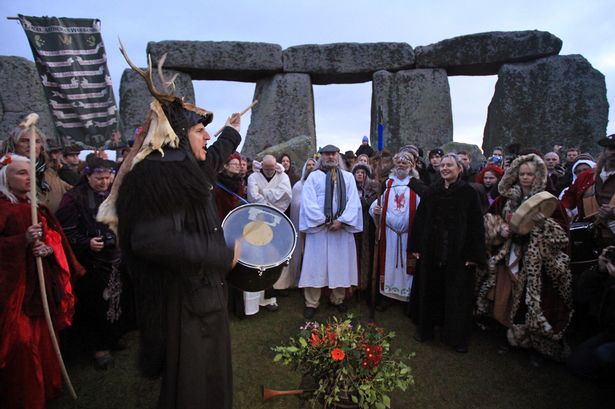
In the early medieval period, writers thought they knew who had built Stonehenge—Merlin. But by the early 17th century, scholars were looking for a more plausible answer. In 1620, architect Inigo Jones thought it was based on classical geometry and constructed by the Romans. Antiquary John Aubrey thought that the native Britons, in particular the Druids, were the builders of Stonehenge. Antiquary William Stukeley’s 1740 book firmly established the idea that it was a Druid temple.

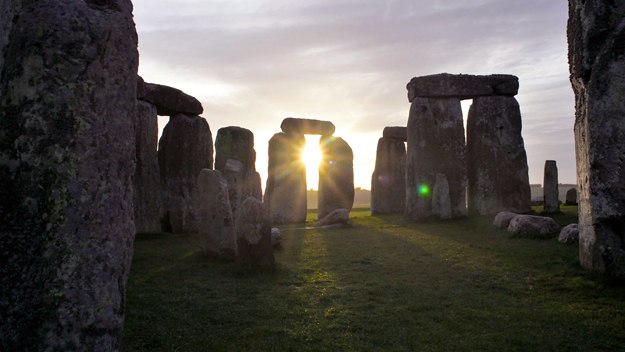
Towards the end of the 19th century, archaeologists began to realise that Stonehenge could be much older, linking finds to the Bronze Age. William Gowland’s excavations in 1901 showed that Stonehenge was built in Neolithic or early Bronze Age. Today, we think the stones were raised about 2,500 BC by the native inhabitants of late Neolithic Britain.

The Early Theories…

stonehenge_1

stonehenge-port-JOHN_AUBREYJohn Aubrey Proposed that Stonehenge was a temple built by the Druids, the priests of the pagan Celts, who came to England in the centuries immediately prior to the Christian era.


stonehenge-port-WILLIAM_STUKELEYWilliam Stukeley The first person to recognise the alignment of Stonehenge on the solstices. Like John Aubrey, however, he mistakenly attributed their construction to the Druids.


stonehenge-port-INIGO_JONESInigo Jones Believed the stones were a Roman temple of the Tuscan order built to the sky god Coelus. Later disproved by evidence establishing the period in which the stones were first laid.

Past Lives

Stonehenge was built before metal began to be used in Britain. The most common finds from this period are flint tools required for everyday activities such as hunting, making leather and preparing food. We know from animal bones that the people who constructed Stonehenge had livestock and probably also grew small quantities of crops, but still gathered wild plants and hunted wild animals.

stonehenge_3

Whether visiting in 1958 or today, children have always been fascinated by Stonehenge.
At the time that Stonehenge was built, people across Britain were using a type of flat-based decorated pottery called Grooved Ware, often found at late Neolithic monuments across Britain. Many of these prehistoric finds can be seen at Wiltshire Museum, Devizes, at Salisbury and South Wiltshire Museum and at the new Stonehenge visitor centre later this year.

Neolithic Puzzles

Until a few years ago, experts thought late Neolithic people were largely mobile, moving between seasonal temporary camps. But in 2006, a team led by Professor Mike Parker Pearson, part of the Stonehenge Riverside Project, discovered several small buildings at Durrington, just over two miles north-east of Stonehenge. These houses appear to have been inhabited on a temporary, seasonal basis about 2,500 BC, the time that Stonehenge was built. Was this where its builders lived?

Among the excavated houses were mounds of rubbish, including cow and pig bones and broken Grooved Ware pottery, showing that large midwinter feasts were held here. Nearby were complex timber monuments, buildings set within special enclosures and other strange wooden structures. This was a place of ritual, probably connected to the ceremonies at Stonehenge.

stonehenge_4

Stone arrowheads and grooved pottery have helped our understanding of the Neolithic period
After the settlement was abandoned, an enormous henge called Durrington Walls was built, which is still visible today. Part of Durrington Walls and nearby Woodhenge are English Heritage properties you can explore. You can walk from Stonehenge across the fields to Durrington Walls, perhaps the route that its builders took. You’ll see other fragments from the past—the enormous Cursus monument, which pre-dates Stonehenge, and many of the early Bronze Age round barrows that scatter this area.

People Power

There are further clues in the monument itself. Transporting the stones, shaping them and fitting them together took great organisation and hundreds of people in what was a sophisticated and organised society. You can find out more at Stonehenge’s new visitor centre later this year.

Neolithic Life: Round the Houses

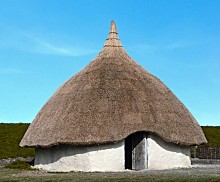
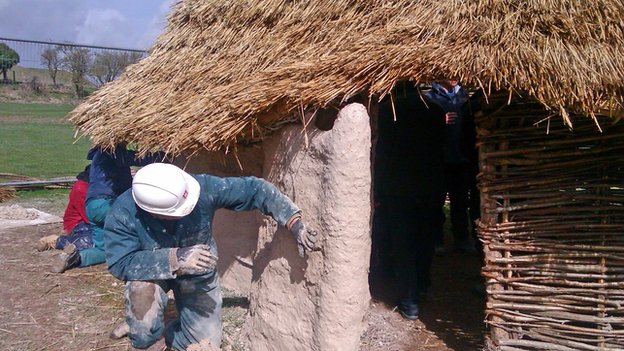
stonehenge_2Outside the new Stonehenge visitor centre will be an external gallery, where we’ll be recreating three of the late Neolithic houses excavated at Durrington Walls. Here you’ll be able to see what life was like at the time Stonehenge was built. And at Old Sarum, Wiltshire, volunteers are building some prototype houses to test different ideas about the methods and materials used.

You can follow the progress of our project on our blog at www.neolithichouses.wordpress.com and our Twitter account @NeolithicHouses. If you’d like to get involved with building the houses at the visitor centre next year, or working in the external gallery, keep an eye on our website for volunteering opportunities.

We’ll be holding tours and open days at the Old Sarum houses so you can come and learn more about prehistoric life and experimental archaeology:

All details and booking information can be found on our What’s On page

English Heritage website: http://www.english-heritage.org.uk/

Merlin @ Stonehenge
The Stonehenge News Blog
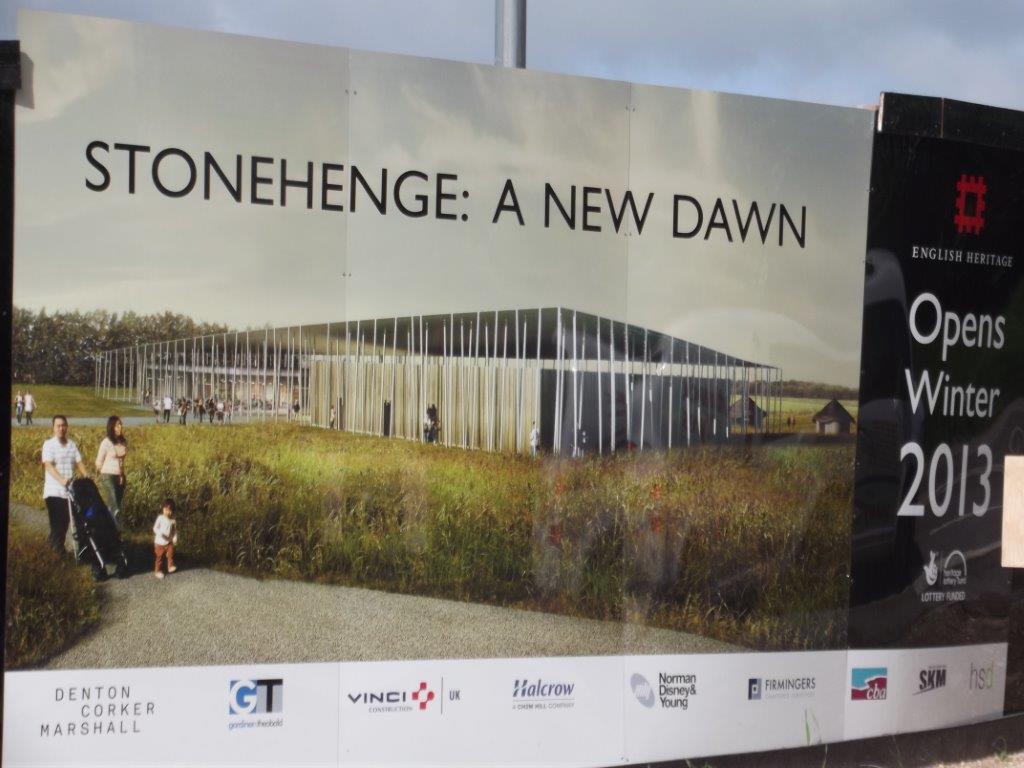


Stonehenge Visitor Centre and Galleries Preview Tour.

11 05 2013

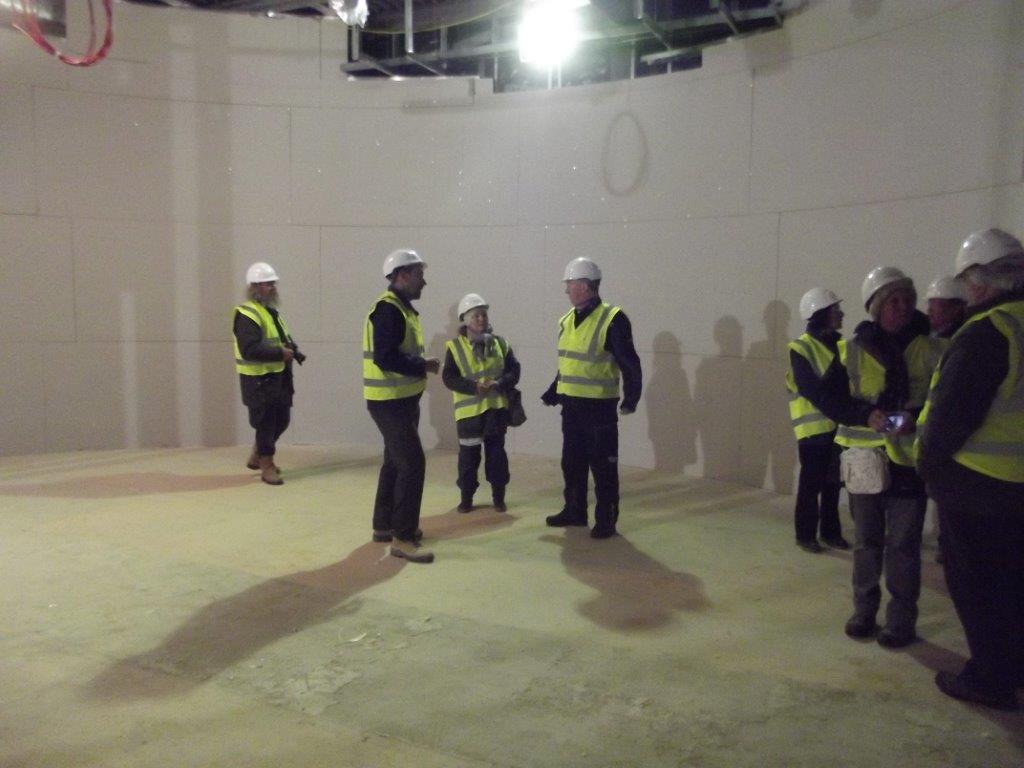
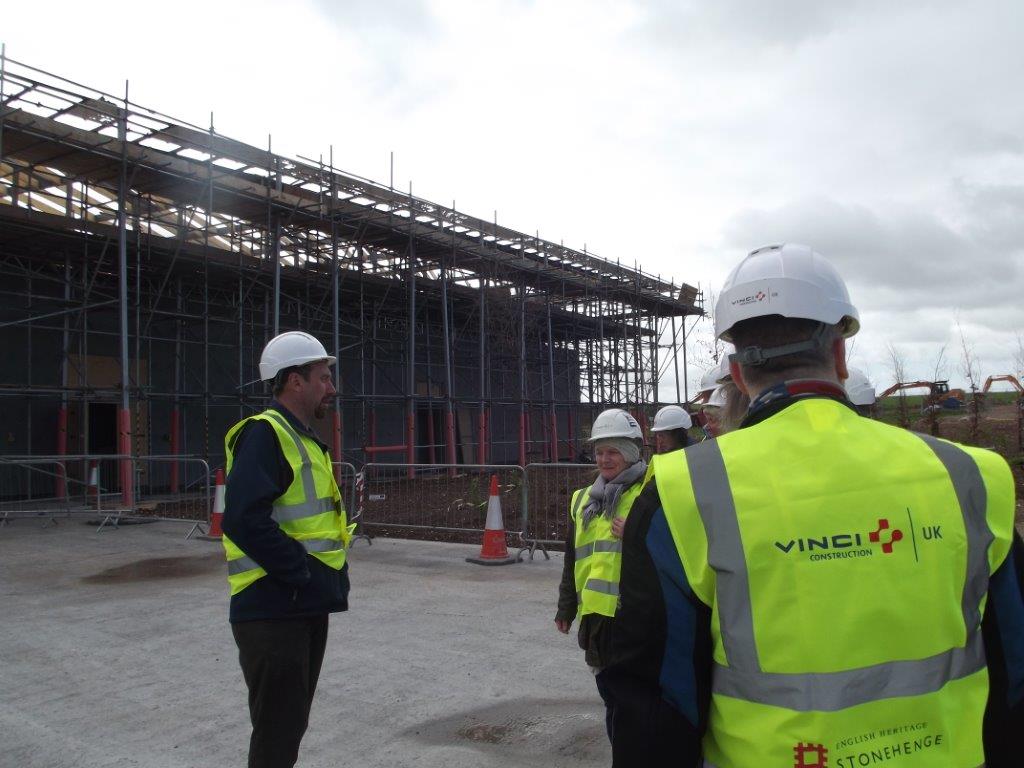
What happened on the visit ? We met English Heritage; Loranie Knowles (Stonehenge Project Director), Richard Williams (Stonehenge Project Manager) and Lisa Holmes (Stonehenge Community Projects Manager) together with staff from Vinci Construction.

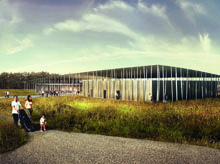
Stonehenge Visitor Centre

Collectively they shared their experience behind the scenes of how the fantastic new facility is being made possible.  We got a tour around the site and also a chance to ask questions.

We also had an opportunity to make comments after the tour and shared our thoughts about the build, along with ideas and ways we would like to see the centre used by local community in the future

The open day has been organised and hosted by English Heritage with thanks to Vinci Construction and to Heritage Lottery funding which supports local community involvement in the Stonehenge Environmental Improvement programme.

Stonehenge Visitor Centre

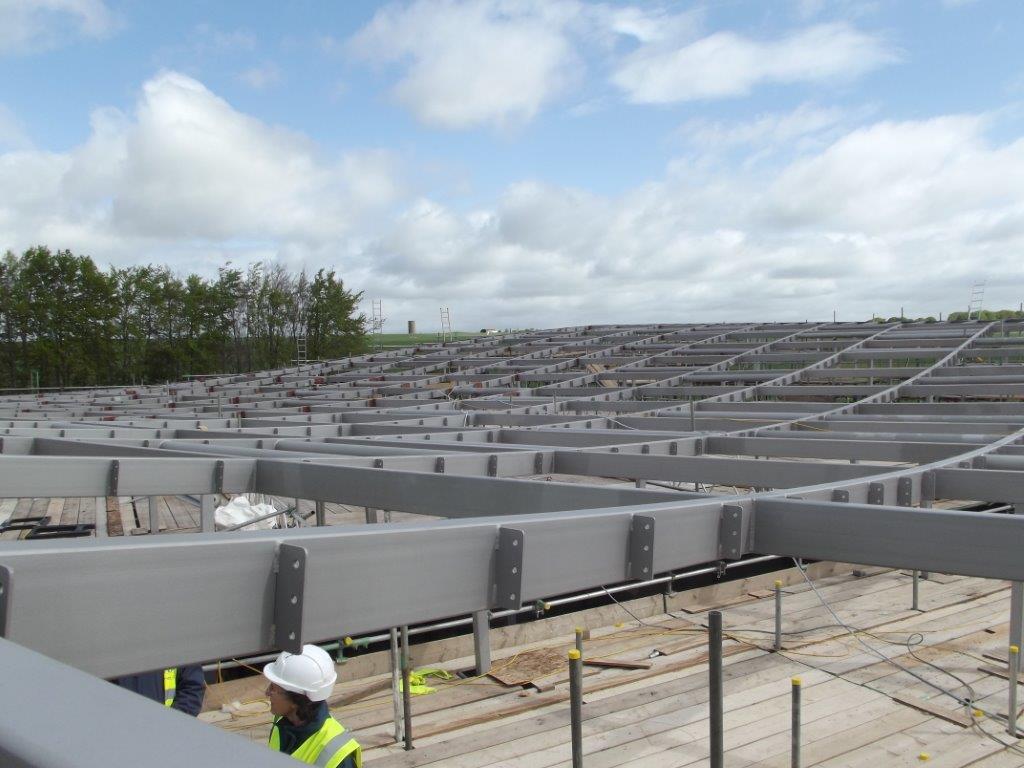
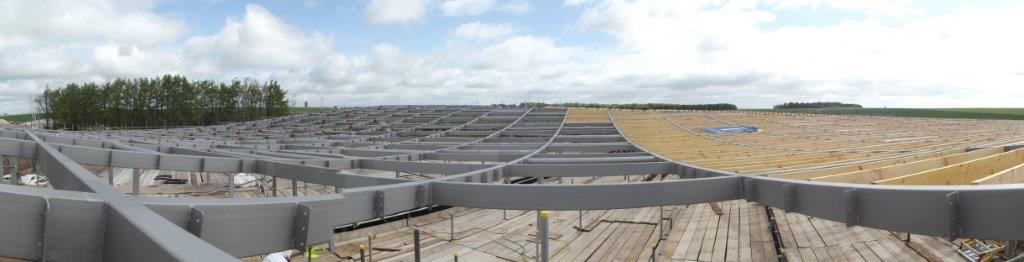
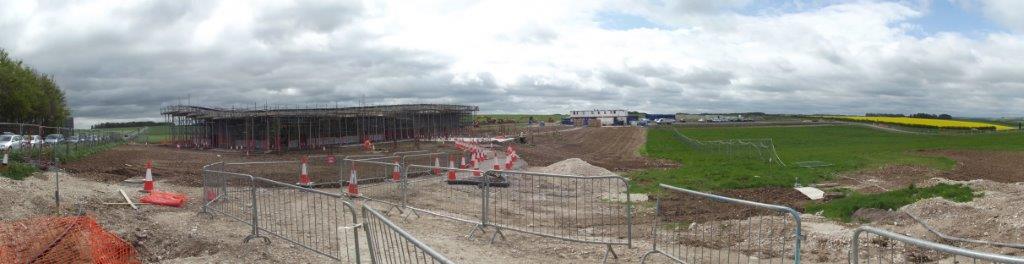
Panoramic view of Stonehenge Visitor Centre Roof

Stonehenge Visitor Centre

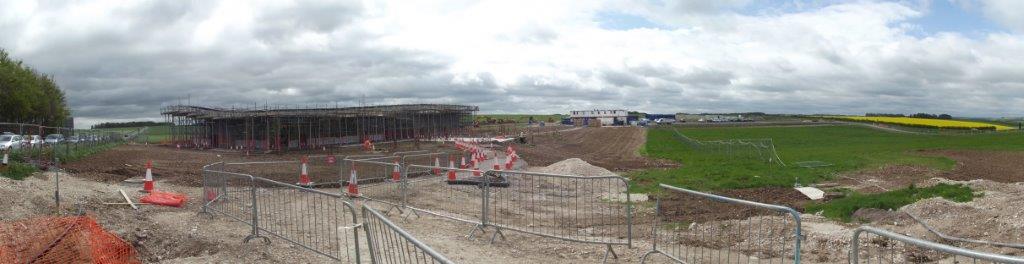
Panoramic view of Stonehenge Visitor Centre from the new coach park

Stonehenge Visitor Centre

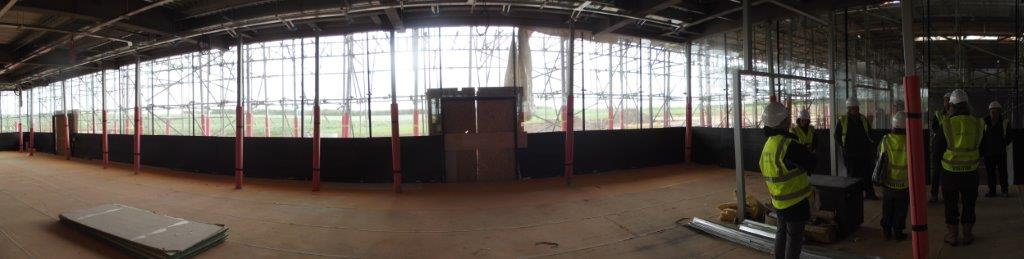
Panoramic view from the Stonehenge Visitor Centre Souvenir Shop

Stonehenge Visitor Centre

Panoramic view of the Stonehenge Visitor Centre from the West

More images of the exterior and interior:

The Stonehenge 360 Cinema

The Stonehenge 360 Cinema

Stonehenge Visitor Centre.  Roof top view

Stonehenge Visitor Centre. Roof top view

Stonehenge Visitor Centre.  Main entrance.

Stonehenge Visitor Centre. Main entrance.

Loraine Knowles, Stonehenge director for English Heritage, said: “It is fantastic to see the building taking shape and to see how well it sits in the landscape. “Progress with the creation of the interior spaces for the museum galleries, education area, shop and cafe is equally exciting because it is now possible to see on the ground how these great new facilities will be experienced by our visitors.

English Heritage’s £27million project to transform the visitor facilities at Stonehenge will see the new centre open in December, with the existing facilities to be demolished and grassed over by next June.

Merlin @ Stonehenge
The Stonehenge News Blog


Druid calls for fake human remains to be displayed at Stonehenge

8 05 2013

A druid leader is calling for fake, rather than real, human remains to be put on display at Stonehenge.

English Heritage plans to display the remains at the new Stonehenge visitor centre

English Heritage plans to display the remains at the new Stonehenge visitor centre

In an open letter, King Arthur Pendragon has criticised English Heritage for the “macabre manner” it plans to display “ancestral remains”.

In 2011 he lost a High Court bid to have bones, found in 2008, reburied.

English Heritage said the remains are not from the 2008 excavation and their “presentation, treatment and storage” will follow strict UK guidelines.

The cremated remains of more than 40 bodies, thought to be at least 5,000 years old, were removed from a burial site at the ancient stone circle five years ago.

According to Mr Pendragon, the bones were the remains of members of the “royal line” or “priest caste” who could have been the “founding fathers of this great nation”.

“There are cremated remains and a full skeleton from one of the barrows, which they’re planning to put on display,” he said.

“This is not only out of step with the feelings of many of the peoples and groups that I represent but is surely against the driving cultural principles of a Unesco World Heritage Site.”

The £27m scheme to build a new visitor centre and close the road alongside the ancient monument, is due to be completed by the end of the year.

Mr Pendragon said visitors would be “appalled” and unless “models and replicas” were used he could “not rule out non-violent direct action against the proposals”.

‘Visitors expect remains’

But a spokeswoman for English Heritage said visitor research showed the “vast majority of museum visitors are comfortable with, and often expect to see, human remains”.

“The remains of three human burials found in the landscape will be displayed with ample explanation along with archaeological objects, providing visitors with a direct connection to the people who lived and worked there,” she said.

“As such, we believe they have a rightful place in the exhibition and their presentation, treatment and storage will follow strict guidelines set out by the UK government’s Department of Culture, Media and Sport.”

Article source: http://www.bbc.co.uk/news/uk-england-wiltshire-22438232

Merlin at Stonehenge
The Stonehenge News Blog


Neolithic Houses at Old Sarum: Behind-the-Scenes May 4th 2013

4 05 2013

Go behind-the-scenes and enjoy an exclusive talk and ‘first-look’ tour of the Neolithic House project, under construction, at Old Sarum. Watch the construction work as it happens and learn about the building techniques used by the volunteers leading the project.

178_neo-houseTime: Tours at 10am, 11.30am, 1pm, 2.30pm, 4pm (May 4th 2013)

How to Book

Purchase your tickets today using our online system below or by calling our dedicated Ticket Sales Team on 0870 333 1183 (Mon – Fri 8.30am – 5.30 Sat 9am – 5pm).  Please note: Booking tickets for this event is essential as places are limited

Neolithic Houses Project

One of the most exciting features of the new visitor centre at Stonehenge will be an external gallery, which will include three reconstructed Neolithic houses. Using archaeological evidence and authentic materials, these buildings will provide a real and tangible link for visitors to the distant past. People will be able to walk into these houses and see how people may have lived 4,500 years ago.

Link: http://www.english-heritage.org.uk/daysout/events/neolithic-houses-at-old-sarum-behind-the-scenes-os-4-may/

Merlin at Stonehenge
The Stonehenge News Blog


Stonehenge project compares Neolithic building methods

17 04 2013

An experiment is under way here in Wiltshire to find out more about Neolithic building methods.

Using archaeological evidence unearthed from nearby Durrington Walls, three structures are being built at Old Sarum Castle, near Salisbury.

The project aims to recreate the buildings which may have existed in Neolithic times

The project aims to recreate the buildings which may have existed in Neolithic times

The English Heritage project aims to discover what was the most efficient way of building with locally-sourced materials.

The final reconstructions will be built at Stonehenge later this year.

They will be put up outside the new visitor centre.

The experiment is part of a £27m English Heritage scheme looking at how the setting of the ancient monument can be improved.

The recreated Neolithic buildings will form part of an “interactive and experiential” external exhibition at the 3,500-year-old World Heritage site.

The Dorset-based Ancient Technology Centre has been commissioned to construct the three prototype homes.

Luke Winter from the centre said the project aimed to look at what type of buildings may have been around at the time.

“The evidence from Durrington Walls several years ago brought to light the remains of several different types of building,” he said.

“We’re trying to reconstruct what they looked like above ground.

“On each of the three buildings we are trying different materials and methods and at the end we can say which is most likely to have been used

Link source: http://www.bbc.co.uk/news/uk-england-wiltshire-22168354

Merlin @ Stonehenge
The Stonehenge News Blog


Druids and Pagans to get time off to visit Stonehenge under new EU work rules

8 04 2013

New guidance advises bosses to respect atheists and to “consider seriously” adapting work duties on faith grounds

Pagans, vegetarians and ecologists should have their beliefs respected at  work along with mainstream faiths, according to European advice to bosses.

Druids and Pagans @atStonehenge

Getty Images

It means druids will be able to take leave to observe rituals and make  pilgrimages to mystical sites such as Stonehenge.

Christian nurses will be allowed to pray for patients, Muslims to take leave  to visit Mecca, vegetarians can refuse to handle meat and sit on leather chairs  and ecologists refuse to fly.

The new guidance also advises bosses to respect atheists and to “consider  seriously” adapting work duties on faith grounds.

But the Equality and Human Rights Commission guidelines, drafted after  several rulings in the European Court of Human Rights, were slammed  yesterday.

Andrew Copson, chief executive of the British Humanist Society, said: “It is  right to accommodate people’s needs in a civilised society but we have to make  sure we draw the right line. It’s not fair to accommodate an employee if others  have to take extra shifts or if their workplace becomes uncomfortable through  others pushing their religion.

“The right to manifest beliefs can’t trump the rights of others.”

The guidance comes after the court in ­Strasbourg, France, ruled in  January the UK was wrong to stop ­Christian BA check-in clerk Nadia Eweida,  61, wearing a cross at work.

The commission’s chief executive Mark Hammond said: “It provides advice and  clarification to help employers avoid costly and ­divisive legal  action.”

Lnk Source: http://www.mirror.co.uk/news/weird-news/druids-time-visit-stonehenge-under-1817343

Merlin @ Stonehenge
The Stonehenge News Blog


Wiltshire: Land of mystery and home to Stonehenge

1 04 2013

Home to Stonehenge and packed with active opportunities for all ages, Wiltshire is a beautiful county

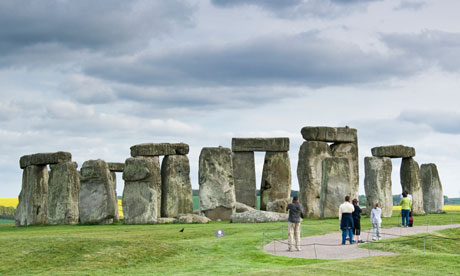
The Unesco world heritage site of Stonehenge was erected more than 4,000 years ago and is open to the public Photograph: Frank Lukasseck

The Unesco world heritage site of Stonehenge was erected more than 4,000 years ago and is open to the public Photograph: Frank Lukasseck

Best known for its myths and legends, Wiltshire offers the setting for a perfect break – a mixture of ancient history and outdoor pursuits. It is home to Stonehenge and Avebury, two breathtaking sites erected more than 4,000 years ago. But mysterious artefacts aside, you can also cycle, skydive, canoe, golf and horse-ride your way around this part of the world.

Speculation on the reason Stonehenge was built ranges from human sacrifice to astronomy, and the world heritage site is a must-see. Unless you visit on the summer or winter solstice there’s a charge to walk around the magnificent stones. However you can visit the world’s largest stone circle at Avebury for free. If you want to see Stonehenge from a unique vantage point, Heritage Cycle Tours’ accompanied ride from Salisbury arrives over the crest of a hill, for a stunning view of the stones, before passing through the iron age settlement of Old Sarum.

For an even bigger thrill, see Stonehenge from 3,500ft with Skydive Netheravon, located between Salisbury and Marlborough. Beginners can experience freefall in tandem, jump with an automatic parachute or take a learners’ skydive course.

You don’t have to head skywards to experience Wiltshire in a special way. Situated in an area of outstanding natural beauty, Pewsey Vale Riding Centre provides a horse ride to remember. And at Peddles and Paddles you can hire kayaks or Canadian canoes to travel down the canal to Devizes Wharf, where you’ll find the Kennet & Avon Canal Trust Museum.

Alternatively, experience this fine region at a slower pace. Climb the 332 steps to the base of Britain’s tallest spire at the gothic Salisbury Cathedral. You’ll be treated to views of the medieval scaffold of the spire and across the Wiltshire countryside. Don’t leave without visiting the cathedral’s Chapter House: it’s home to one of the four original Magna Cartas.

And if you judge an area by its golfing opportunities, Wiltshire may be your dream destination: Cumberwell Park Golf Club offers rolling countryside, lakes and woodland; North Wilts Golf Club encourages players of all abilities with no tee booking required; and Tidworth Garrison Golf Club, a tree-lined, downland course for private members, was described by golfing legend Peter Alliss as “a gem of a course on the edge of Salisbury Plain”.

So whether you spend your Wiltshire trip investigating the ancient past, or trying an exciting activity or two, a break in this outstanding part of the country will make an unforgettable impression.

Where to revive

Eat: The Harrow at Little Bedwyn boasts accolades including AA Restaurant of the Year (2011) and a Michelin star. The focus is on food from artisan growers, fishermen and farmers.

Drink: Savour a pint in atmospheric surroundings at the charming Cloisters, an “olde worlde” pub minutes from Salisbury Cathedral. Or, for a more rural experience, head to the village of Market Lavington for a real ale at the Green Dragon.

Sleep: Extend your Stonehenge experience by spending the night in a luxurious “glamping pod” at Stonehenge Campsite in Salisbury (and enjoy eight real ale and foodie pubs within a four mile radius), or chill out at Whatley Manor, a beautifully restored Cotswold manor house hotel and lavish spa.

visitwiltshire.co.uk

Full article and soure: guardian.co.uk


The Stonehenge Project – Phase 1

29 03 2013

An amazing opportunity to gain a rare and fascinating insight into the development of the famous World Heritage Site. The first in a series of exclusive Members’ Events to share with you the details of the high profile development of the new Visitors Centre, join Stonehenge Director Loraine Knowles and Programme Manager Richard Williams to discuss the project and gain insight at this early stage. With the help of a time lapse film you will see the stages of the construction process and discover the plans for the centre once completed.

Welcome refreshments are included. This event has been graded as Easy Access, as there are clear walkways and seating available.

event-stonehengeHow to Book

Ticket are available to book from 10am on Tuesday 26 March by calling our dedicated ticket sales team on 0870 333 1183. (Mon-Fri 8.30am – 5.30pm & Sat 9am – 5pm)

Prices

Welcome refreshments are included.

Members’ Only Event

    • Date: Mon 22 Apr 2013
    • Property:
      Watershed, Bristol
    • Children’s Event
      Time: 10am-12pm
    • Booking :
      Suitable for: Adults

Link: http://www.english-heritage.org.uk/daysout/events/the-stonehenge-project-phase-1-watershed-22-apr/

Merlin @ Stonehenge
The Stoneheng News Blog


Secrets of the Stonehenge Skeletons

8 03 2013

Ancient bodies lie buried beneath Stonehenge, but what can they tell us about Britain’s greatest prehistoric monument? One man has found vital clues to this ancient puzzle

c4-stonehengeStonehenge is Britain’s greatest prehistoric monument and, for many centuries, has also provided perhaps our greatest prehistoric mystery.

One man believes he has found the vital clues to solve this puzzle, and this programme follows him through a series of discoveries that rewrite the story of Stonehenge.

Buried beneath the stones are ancient bodies, and a research team led by world-renowned archaeologist Professor Mike Parker Pearson has been granted special permission to analyse them for the first time.

The results of that investigation overturn the accepted view on when Stonehenge was built and what it was built for, providing compelling evidence that it once united the people of Britain.

The programme proves that the monument we know today was not the original Stonehenge and answers the mystery of its sudden decline.

When? Next on Channel 4 Sun 10th March , 8PM

Watch a clip here

Link: http://www.channel4.com/programmes/secrets-of-the-stonehenge-skeletons

Links: http://www.broadcastnow.co.uk/techfacils/secrets-of-the-stonehenge-skeletons/5052681.article?blocktitle=LATEST-FEATURES&contentID=38754

Merlin @ Stonehenge
The Stonehenge News Blog


New Stonehenge visitor centre to be filled with never-before-seen artefacts

1 03 2013

Salisbury and South Wiltshire Museum will be lending around 250 objects to the new visitors centre at Stonehenge.

DSCF0076The facility will be home to a special exhibition area and is due to be completed before the end of the year.

The museum have all the finds from every 20th Century excavation.

Adrian Green is the Director of Salisbury and South Wiltshire, he says many have never been seen:

“We’ve got antler picks and bones and remains of people who were actually excavated at the monument it itself. These are things that people have never seen before and are thousands of years old, that’s what’s really going to blow people’s minds.”

The Museum’s collections span the history and archaeology of Salisbury and south Wiltshire, from prehistoric times to the present day. The Museum is Designated by the Arts Council as having archaeology collections of outstanding national importance

Salisbury and South Wiltshire Museum

Stonehenge & Prehistory
Stonehenge is a unique monument standing at the heart of an extensive archaeological landscape on Salisbury Plain. Finds from excavations at Stonehenge are held at the Museum, as well as important discoveries such as the Monkton Deverill Torc and the Amesbury Archer burial.

Art of Stonehenge
As well as collecting objects from Stonehenge, the Museum has an extensive range of paintings, prints and drawings of the monument. These include some of the earliest known depictions of the stone circle, as well as works by contemporary artists.

Link Article: http://www.spirefm.co.uk
Link: http://www.StonehenegTours.com
Link: http://www.salisburymuseum.org.uk/

Merlin at Stonehenge
The Stonehenge News Blog