Stonehenge rocks definitely came from Wales, but how?

23 02 2011

New research has cast fresh doubt on the journey which the Stonehenge Bluestones took from Pembrokeshire to the site of the pagan monument.

Since the 1920s, geologists have strongly suspected that the ‘spotted dolerite’ Bluestones, which form Stonehenge’s inner ring, originated from Mynydd Preseli in the north of the county.

However, whilst the new findings have also linked a second type of stone – rhyolites – to the area, they call into question how the stones arrived in Wiltshire.

Matching up the rock from Stonehenge with a rock outcrop in Pembrokeshire has been a bit like looking for a needle in a haystack”
Dr Richard Bevins National Museum Wales

Perceived wisdom had it that Stone Age man transported the giant slabs via raft, up the Bristol Channel and River Avon.

But as Pont Saeson, the location of the new match, is to the north of the Preselis, some believe its unlikely that they would have been able to navigate the terrain in order to get the enormous rocks to the coast.

An alternative theory was that nature drove the stone to Stonehenge, in the path of an Ice Age glacier, although the absence of any other Welsh rock in the region seemed to have ruled out the possibility.

Yet Dr Richard Bevins, a geology expert from the museum which collaborated in the research by Aberystwyth and Sheffield Universities, believes it may now be time to revisit the idea.

“If humans were responsible then an alternative route might need to be considered. However, if, as some believe, the stones were transported by the actions of glacier sheets during the last glaciation, the Pont Season discovery will need appraising in the context of this hypothesis.”

“It’s a further step towards revealing why these mysterious stones were so special to the people of the Neolithic”
 Prof Mike Parker Pearson Sheffield University

“Matching up the rock from Stonehenge with a rock outcrop in Pembrokeshire has been a bit like looking for a needle in a haystack, but I’ve looked at many if not most outcrops in the Mynydd Preseli area.

“We are however, confident that we have found the source of one of the rhyolites from Stonehenge because we’ve been able to make the match on a range of features not just a single characteristic. Now we are looking for the sources of the other Stonehenge volcanic and sandstone rocks”.

Dr Bevins’ team are able to say so categorically that they’ve discovered the source of the rhyolites, thanks to a range of laser mass spectrometry techniques, which analyse both the chemical composition of the rock and the micro-biology present when it was formed.

The combination of the two provides an almost unique signature for rocks only found in the Pont Saeson area.

But the new match does explain the absence of any other Welsh Bluestone in the Stonehenge area, if indeed glaciation was responsible for carrying them there.

Prof Mike Parker Pearson, from Sheffield University, called it a “a hugely significant discovery which will fascinate everyone interested in Stonehenge”.

“It forces us to re-think the route taken by the Bluestones to Stonehenge and opens up the possibility of finding many of the quarries from which they came.

“It’s a further step towards revealing why these mysterious stones were so special to the people of the Neolithic.”

Merlin @ Stonehenge
THe Stonehenge Stone Circle Website


Stonehenge replica envisioned for Thompson’s Field in Harwich

20 02 2011
HARWICH — (USA) Tom Leach wears many hats: Top cop for the town’s waterways as harbormaster; expert on all things wild as natural resources director; and in a hobbyist role, an avid astronomer.

But now, he’s found a new calling to build something unlike anything else in town.  A monument of sorts, made out of huge pieces of granite. Leach wants to construct a version of the world famous Stonehenge, right in Harwich.

Stonehenge, near Amesbury, England, is a famous circle of standing stones erected around 2,500 B.C. World renown, this ancient site is both intriguing and mysterious, especially since no one has ever really figured out why it was originally built. Was it a burial ground? A marketplace? A temple for druid practices?

Many have concluded that its main purpose was as a calendar of sorts, to track the sun, planets and stars.

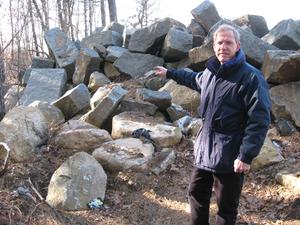
The idea of building a modern Stonehenge hit Leach as he sat in the back of a selectmen’s meeting a few years ago. The board was discussing whether to give the town of Wellfleet up to 90 large granite stones, some up to 9 feet tall and 3 feet wide, once used in a now-dismantled railroad bridge off Old Main Street.

The board knew the granite stones were valuable and decided against giving them away.

“Building our own Stonehenge would be absolutely unique,” Leach said. “Since we already have the stone and plenty of open space, we are part of the way there.”

“I think it would be a big draw for the town,” he added. “And I love the possibility of using Thompson’s Field as the setting.”

But the idea has not taken hold – yet. Leach knows the project requires a moderate sized group of volunteers and advocates. The layout and design must be drawn up and a proposal must be drafted for the conservation commission, which oversees the land on Thompson’s Field, to review.

Then comes the sheer logistics of moving the stones and positioning them at whatever site is chosen.

“This is such a mountain to climb and I can’t climb it by myself,” Leach admits. “You need dozens of volunteers and lots of heavy equipment.”

MichaelLach, executive director of Harwich Conservation Trust, agreed that the project would need “a real groundswell,” adding that, “It sounds interesting.”

Lach said that he needs to see a more refined plan before the trust takes a position.

He noted that a solar calendar on Wing Island in Brewster, built in the 1980s, has recently been maintained through a collaborative effort between the town and Cape Cod Museum of Natural History.

“That’s something to study as an example,” he added.

Highway department director Link Hooper noted that in 1999, the stones would have been buried as part of the landfill-capping project.

“I personally went and got the material and dug it up with heavy equipment before it was capped. It took a couple of days to put them off to the edge of the landfill,” said Hooper.

When asked about the idea of using the granite to build a small version of Stonehenge, Hooper didn’t want to take a position but said it was possible.

“The town could move it all – That’s no big problem. We’ve got front-end loaders and forks and flatbed trucks to do the job,” he said. “If the board of selectmen support it, I think this could move ahead.”

Selectman Ed McManus said that several of the stones have been used for markers across town.

“It’s an interesting idea,” he said of the Stonehenge concept. “But Thompson’s Field being conservation land, it would have to go in front of the conservation commission because they have the ultimate say on that land.”

For now, Leach is still hoping to pull together a bigger band of volunteers to help launch the project.

“I even bought a couple of books on Stonehenge to better understand the scope of the project,” he said. “It was done in stages over a thousand years, taking generations to complete the project.”

“We have the land, we have the material, we just need the manpower,” he said.

“We’re missing only that one element. With that, I know we can move ahead.”

http://threeharbors.com/stonehenge.html
http://www.wickedlocal.com

Merlin @ Stonehenge (UK)
The Stonehenge website


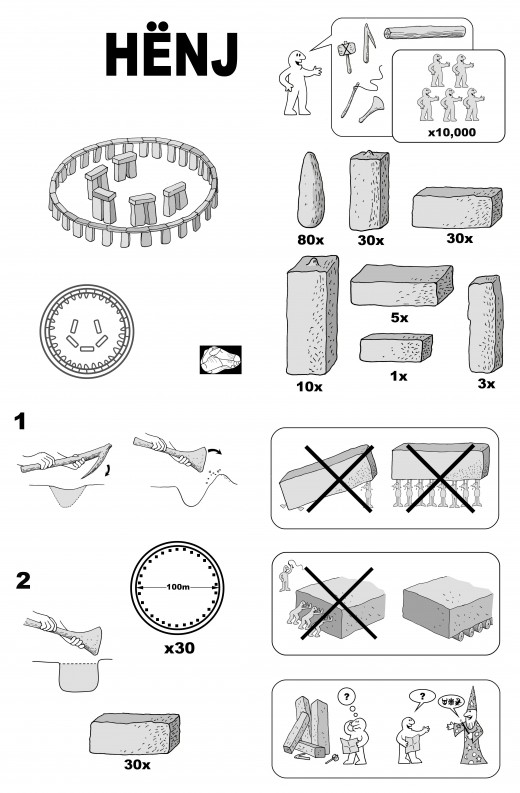
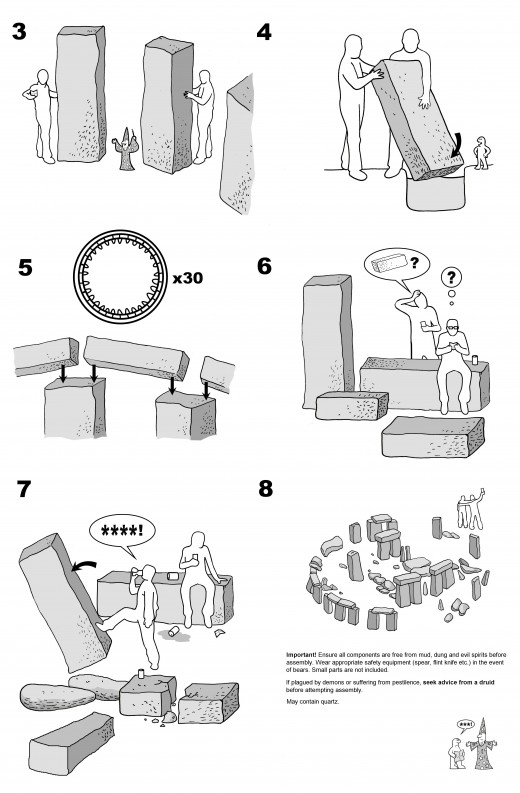
Ikea Stonehenge (HENJ) DIY flat-pack henge.

18 02 2011

Ikea Henge

Ikea Henge

Ikea Henge (Henj)

Ikea Henge (Henj)


Don’t forget “When all else fails, read the instructions”

Have a great weekend…………..
Merlin @ Stonehenge
The Stonehenge Website


The heat was on at Marden Henge

14 02 2011
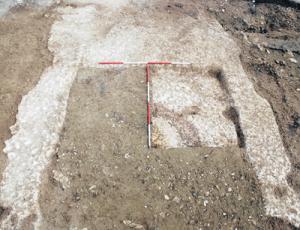
Marden henge’s chalk foundations contained a sunken hearth which could have been used for purification ceremonies

Marden henge’s chalk foundations contained a sunken hearth which could have been used for purification ceremonies

A building whose foundations were unearthed during an excavation at Marden Henge near Devizes last summer could have been a Neolithic sauna.

Archaeologist Jim Leary told his audience at Devizes town hall on Saturday that the chalk foundations contained a sunken hearth that would have given out intense heat.

“It brings to mind the sweat lodges found in North America,” he said. “It could have been used as part of a purification ceremony.”

Also found was a midden or rubbish heap with dozens of pig bones, some still attached, likely to be the remains of a huge feast that took place 5,000 years ago.

Mr Leary was supposed to give his talk at the museum, but such was the interest in his subject that it was transferred to the town hall. All 150 tickets were sold and people queued for returns.

Mr Leary said Marden Henge is the biggest henge in England but because it did not have a stone circle associated with it, tended to be overlooked. Before Professor Geoffrey Wainwright examined its northern sector in 1969, it had not been investigated since the early 19th century.

A huge mound, like a smaller version of Silbury Hill, named Hatfield Barrow, once existed there, but it collapsed after a shaft was dug through its centre and was levelled shortly afterwards.

The English Heritage team investigated that area as well as two sites further south, and it was at the area known as the Southern Circle that they made their most exciting discoveries.

It was in the bank of this henge within a henge that they found the chalk floor. Mr Leary described the dig as a work in progress. He said: “We are at a very early stage and there is a lot more to be found. But our fate is in the hands of the government cuts.

“Clearly there is more work to be done, at least another season, but we need funding to do any further investigation.”

Merlin @ Stonehenge
The Stonehenge Website


The Amesbury Archer. The King of Stonehenge

14 02 2011
The Amesbury Archer

I ofter talk about the ‘Amesury Archer’ on my Stonehenge tours and wanted to put some facts into my blog for those visitors who keep asking for more information.  
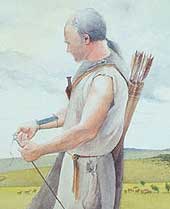
An excavation in Wiltshire some years ago revealed the grave of a Bronze Age archer, buried with a rich array of precious metal goods and a quiver of arrows. Was this the King of Stonehenge?

An Early Bronze Age grave

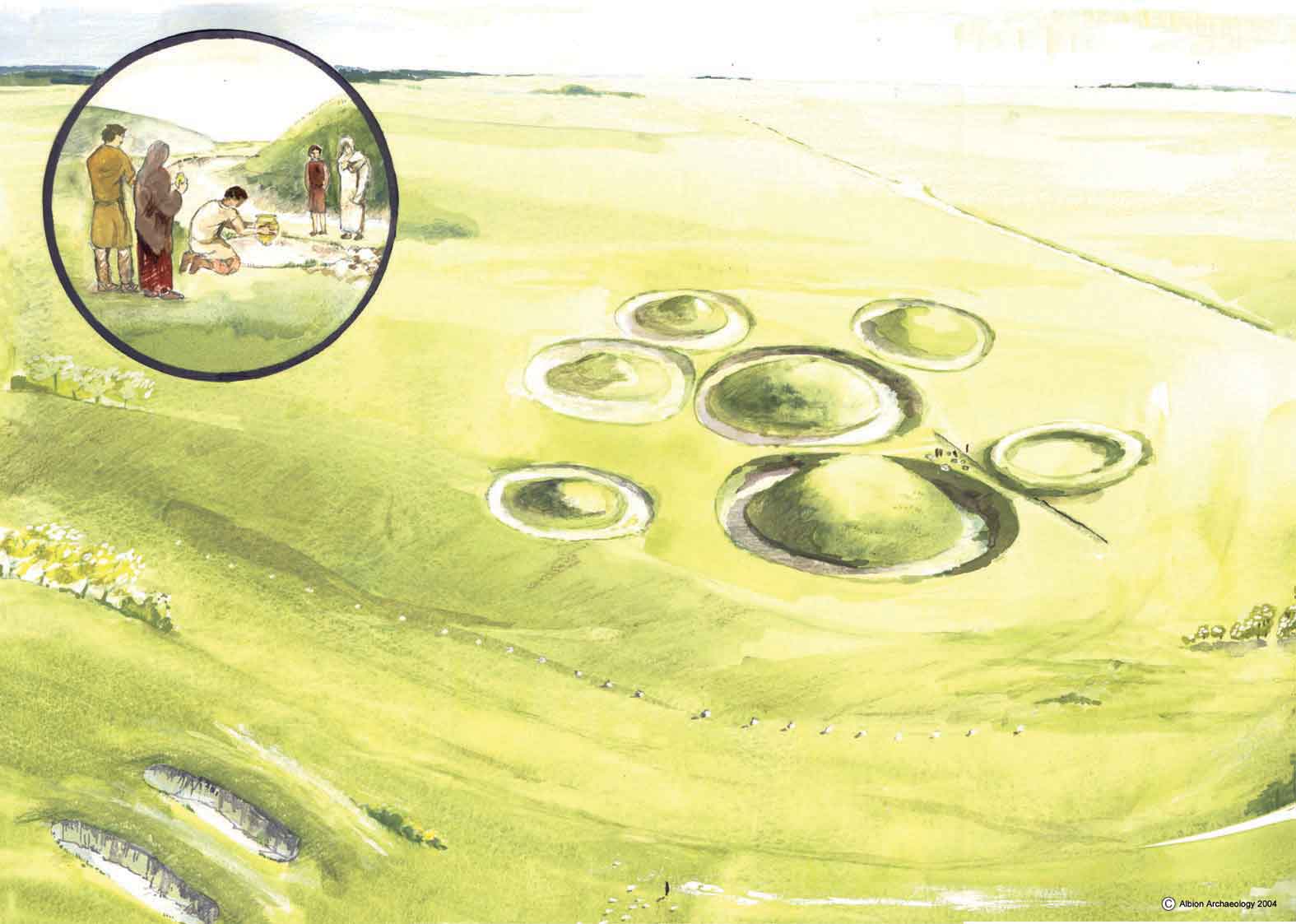
In the spring of 2002 what started as a routine excavation was undertaken in advance of the building of a new school at Amesbury in Wiltshire. By the end of the excavation the richest Bronze Age burial yet found in Britain had been discovered. The Bronze Age man discovered there had been buried not far from the great temple of Stonehenge. He was a man who owned and could work the new and magical metals of gold and copper. And he had come from what is now central Europe, perhaps around the Alps. Was he a king of Stonehenge?

Early Bronze Age pottery showed that they were over 2,500 years older than the Roman graves.

On the site of the proposed new school there was a small Roman cemetery but, it seemed, little else. In the far corner of the site, though, there were two features that looked different. Had they been caused by trees being blown over? Or were they something else? They certainly did not look like Roman graves.

Excavation work started on a Friday morning, and the reason for the difference between the Roman graves and the two other features rapidly became clear. The features were indeed graves, but the Early Bronze Age pottery in one of them showed that they were over 2,500 years older than the Roman graves. And the grave with the pottery was unusually large.

The Amesbury Archer

Golden artefacts - either earrings or hair tresses These golden artefacts may have been earrings or hair tresses . One of the next finds revealed something unusual – a gold ‘earring’. This type of jewellery may be the oldest type of gold object made in Britain. These objects are very rare, and they usually occur in pairs, and as it was the Friday of the May Bank Holiday weekend it was decided that the excavation of the grave should be completed that day. This might involve staying on a little bit late on a Friday afternoon, but not, it was thought, very late.

What no one knew then was that the grave, the burial of the Amesbury Archer as he has come to be known, was to be the most well-furnished Early Bronze Age burial ever seen in Britain. The graves could not be left unprotected, so a ‘little bit’ late turned into ‘very, very’ late, as it became clear that this was a very important find.

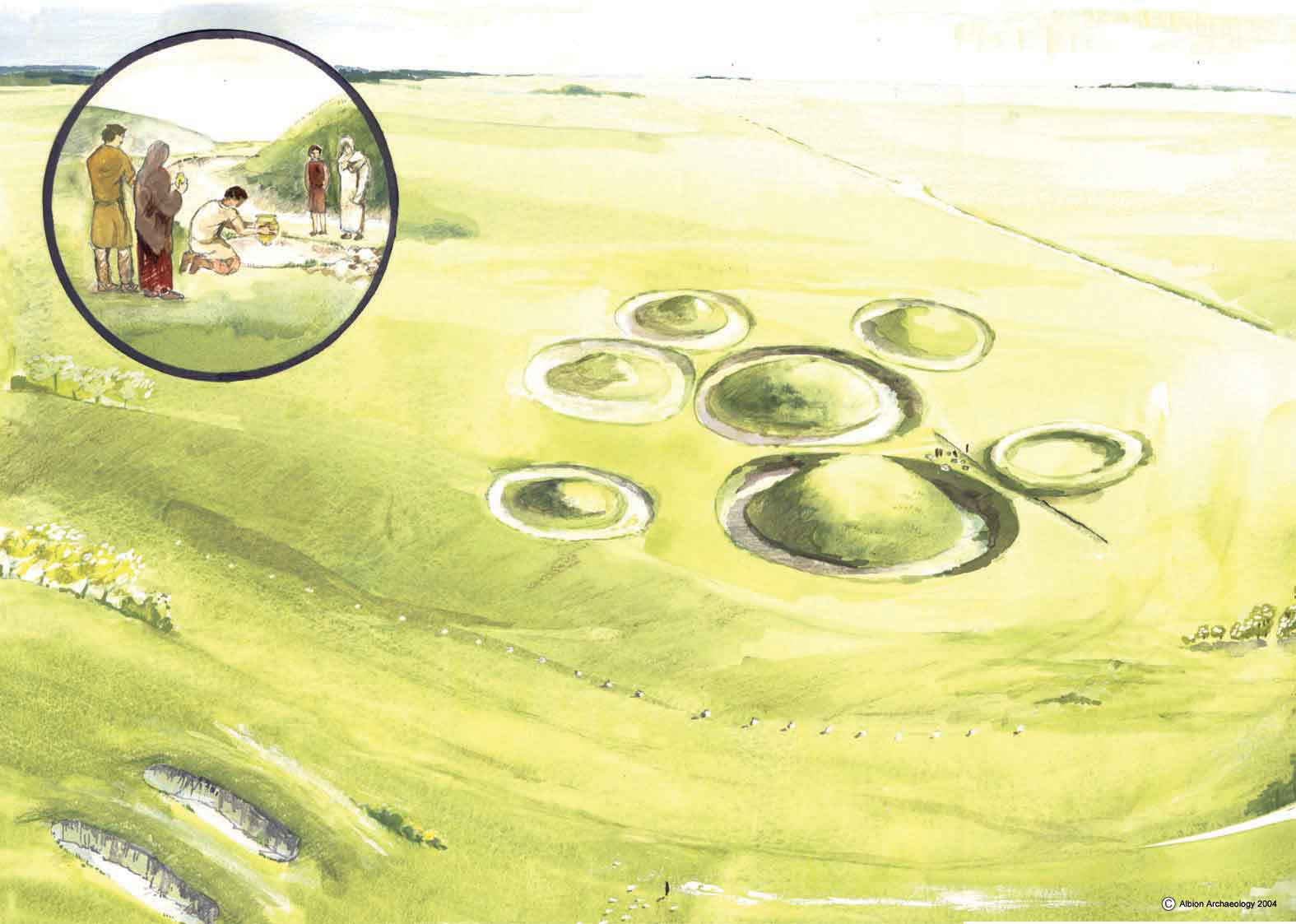
The excavation showed that there was probably a timber mortuary building in the larger grave. Because of this not all the earth had been put back into the grave at the time of the burial, so it seems likely that a small burial mound or barrow surmounted the grave.

What no one knew then was that the grave, the burial of the Amesbury Archer as he has come to be known, was to be the most well-furnished Early Bronze Age burial ever seen in Britain. The graves could not be left unprotected, so a ‘little bit’ late turned into ‘very, very’ late, as it became clear that this was a very important find.

The excavation showed that there was probably a timber mortuary building in the larger grave. Because of this not all the earth had been put back into the grave at the time of the burial, so it seems likely that a small burial mound or barrow surmounted the grave.

King of Stonehenge?

The stones of Stonehenge seen at sunrise

The stones of Stonehenge seen at sunrise

The site of Stonehenge at sunrise. The radiocarbon dates show that the Archer lived between 2,400 and 2,200 years BC. The burial lies about 5km (2 miles) south-east of Stonehenge and it was at about this time that the massive stone circles, and the avenue leading to the River Avon from the site, were built. The great temples of Woodhenge and Durrington Walls, both a similar distance away, continued to be used and modified throughout this time.In the past, burials of this date were considered rich if they contained more than a handful of objects, especially if one of the objects was of copper or bronze, or even gold. Although the finds buried with the Archer are all of well known types (within the Beaker cultural package that is found across much of central and western Europe at this time), the number of objects found with him, almost 100, is without compare.

Had these two men been part of a ruling élite?

The burial is also one of the earliest of its type in Britain, some of the finds are of the highest quality, and the gold is the earliest yet found in Britain. Furthermore the copper knives came from Spain and western France – an indication of the wide contacts of their owner. Above all, though, the associations between these finds are of particular importance.

Can it be a coincidence that the richest Early Bronze Age burial in Britain, and its companion, should be so close to the great temples of Durrington Walls? Had these two men been part of a ruling elite? Had one of them been a king?

A European élite

Copper knives from the Amesbury Archer's grave

Copper knives from the Amesbury Archer's grave

The Archer’s copper knives  As the archaeologists discussed these questions, further surprising facts became clear. Some archaeologists have argued that, for the period in question, there is no certain evidence for the sort of social differences that might suggest a ranked society. The discovery of the burial of the Amesbury Archer and his companion, however, showed for the first time that at this date there were individuals – and perhaps even families – of greater wealth and status than others. That this elite had ties across Europe is shown by the sensational discovery that the Archer comes from central Europe.The enamel on our teeth stores a chemical record of the environment where we have grown up. It is possible by using Oxygen Isotope Analysis to measure this record. The Archer’s teeth show that as a child he lived in a colder climate than that of Britain today, in central Europe, and perhaps close to the Alps.

He was raised in central Europe but he died near to one of the greatest temples in Europe.

Much work remains to be done. At the moment we do not know why the Amesbury Archer came to live, and perhaps raise a family, near Stonehenge. Was he brought up in the family of distant allies? Did he arrive in order to seal an alliance by taking a partner? Was he a settler or a pilgrim? Or was he an outsider with the magical skills of alchemy?

We will never know all the answers, but we can say this. He was a strong man, who overcame pain and handicap. He could work new and exotic metals. His mourners gave him the richest burial of his time. He was raised in central Europe but he died near to one of the greatest temples in Europe. We may not know if he was a king, but it is still an astonishing story. It is a Bronze Age biography.

If you are visiting Stonehenge or on a Stonehenge tour take the time to visit the Salisbury and South Wiltshire Museum –
http://www.salisburymuseum.org.uk/collections/stonehenge-prehistory/amesbury-archer.html

Books

Bronze Age Britain Mike Parker Pearson (Batsford/English Heritage 1993)

Hengeworld by Mike Pitts (Century, 2000)

The Stonehenge People: Life and Death at the World’s Greatest Stone Circle by Aubrey Burl (Barrie Jenkins, 1989)

Stonehenge by Julian Richards (Batsford/English Heritage, 1991)

Merlin @ Stonhenge
The Stonehenge Stone Circle Website


Put those bones back! Future of archaeology threatened by law forcing scientists to rebury ancient remains

12 02 2011

A controversial law that requires all human remains unearthed at ancient settlements to be reburied within two years threatens the future of archaeology, it is claimed today.

Under legislation introduced in 2008, bones and skulls found at sites in England and Wales, such as Stonehenge, have to be put back where they were found after 24 months.

A group of leading archaeologists has writt

en to Justice Secretary Ken Clarke to protest that this will vastly diminish their ability to research the history of humans in Britain.

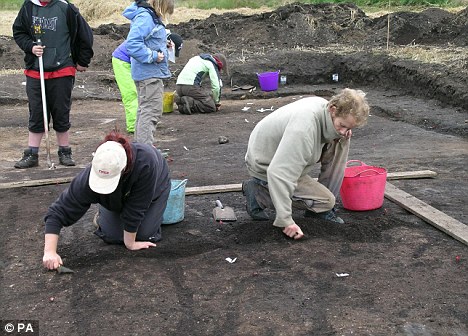
Scientists search an area at Starr Carr, North Yorkshire, last year after locating Britain's earliest house. Leading archaeologists today protested a law that requires all human remains unearthed at ancient settlements to be reburied

Scientists search an area at Starr Carr, North Yorkshire, last year after locating Britain's earliest house. Leading archaeologists today protested a law that requires all human remains unearthed at ancient settlements to be reburied

Forty archaeology professors wrote to express their ‘deep and widespread concern’ in a letter published in today’s Guardian newspaper.

‘The current licence conditions are impeding scientific research, preventing new discoveries from entering museums, and are not in the public interest,’ their letter states

‘Your current requirement that all archaeologically excavated human remains should be reburied, whether after a standard period of two years or a further special extension, is contrary to fundamental principles of archaeological and scientific research and of museum practice.’

The 2008 legislation applies to any piece of bone of historical interest found at around 400 archaeological sites across England and Wales; the 1857 Burial Act applies to more recent remains.

‘The current licence conditions are impeding scientific research, preventing new discoveries from entering museums, and are not in the public interest’

Scientists working at Stonehenge who discovered 60 bodies in 2008 have been granted an extension before they have to return the remains to the ground.

Their colleagues at the Happisburgh site in Norfolk are currently digging after finding the oldest stone age tools that date back 950,000 years.

Mike Pitts, editor of British Archaeology who signed the letter, said: ‘If human remains were found at Happisburgh they would be the oldest human fossils in northern Europe and the first indication of what this species was.

‘Under the current practice of the law those remains would have to be reburied and effectively destroyed.

‘This applies to everything. If we were to find a Neanderthal fossil or a Roman skeleton, it would all have to be reburied.’

Among the high-profile signatories are Barry Cunliffe, from University of Oxford; Chris Stringer, from the Natural History Museum; Graeme Barker, from University of Cambridge; and Stephen Shennan, director

Merlin @ Stonehenge
The Stonehenge Stone Circle Website


Barrows of the Bronze Age – Stonehenge Landscape Tour

11 02 2011

Explore the Bronze Age monuments of the Stonehenge landscape with Sonia Heywood ‘ you’ll soon discover that they’re much more than simple burial mounds. Investigated by curious antiquarians in the last 300 years, they have a 4,000 year history that tells us much about our past. On our four mile walk we’ll be visiting the Cursus Barrows, Winterbourne Stoke Barrows and the Monarch of the Plain. We’ll also have fine views of the King Barrows and Normanton Down Barrows.

26th February 2011

  • Please wrap up warm and bring stout footwear. The open landscape of the downs can be very exposed. You may like to bring a hot drink and a snack.
  • Meeting at the Stonehenge car park (not NT) by the bright green National Trust information panel.More Information: Lucy Evershed, 01980 664780, stonehenge@nationaltrust.org.uk
    http://www.Nationaltrust.org.ukHighly recommended!
    Merli @ Stonehenge Stone Circle


  • STONEHENGE MODEL IS TOURING THE UK!

    7 02 2011

    To celebrate the new BBC Two series on the Ancient Britons, a Stonehenge model is touring the UK. 

    English Heritage policy researchers, archaeological investigators, surveyors and historians have all been keen to join forces and investigate a variety of archived information, including 3D data from a previous survey of the monument in 1993, old plans and photos of the 1958 re-erection, in order to supply correct dimensions.

    Others have also helped to supply images, information and check details for a series of popular, jointly branded learning resources as part of an ongoing partnership between BBC Learning and English Heritage Education.

    Resources on the Normans went down well at English Heritage properties last year and prehistory timelines and group activity guides are currently being handed out free of charge to families and learning groups visiting Stonehenge.

    All these can also be downloaded from the BBC Hands on History website where teachers, parents and students can also find events, a map of sites to visit, animations featuring the Hands on History mini-time traveller, Eric and more.

    The Stonehenge road show will challenge families to help solve the mystery of how the stones were moved and also feature interpretation boards and an interactive mini drama led by historical interpreters. It is scheduled to visit shopping centres in five locations from 11.00am – 15.30pm:

    • Monday 21 February: Queen’s Arcade, Cardiff
    • Tuesday 22 February: thecentre:mk, Middleton Hall, Milton Keynes 
    • Wednesday 23 February: Swindon Designer Outlet
    • Thursday 24 February: Westfield Derby
    • Friday 25h February: MetroCentre, Gateshead

    Stonehenge model is touring the UK. 

    English Heritage experts are helping BBC Hands on History make the most of a new BBC Two TV series, ‘A History of Ancient Britain’, scheduled to start on 9 February. They are pulling out all the stops to get an inflatable scale model of one Stonehenge trilithon (two uprights and a lintel) as accurate as possible before it goes on a whistle-stop tour of five city centre shopping centres from 21-25 February

    English Heritage policy researchers, archaeological investigators, surveyors and historians have all been keen to join forces and investigate a variety of archived information, including 3D data from a previous survey of the monument in 1993, old plans and photos of the 1958 re-erection, in order to supply correct dimensions.

    Others have also helped to supply images, information and check details for a series of popular, jointly branded learning resources as part of an ongoing partnership between BBC Learning and English Heritage Education.

    Resources on the Normans went down well at English Heritage properties last year and prehistory timelines and group activity guides are currently being handed out free of charge to families and learning groups visiting Stonehenge.

    All these can also be downloaded from the BBC Hands on History website where teachers, parents and students can also find events, a map of sites to visit, animations featuring the Hands on History mini-time traveller, Eric and more.

    The Stonehenge road show will challenge families to help solve the mystery of how the stones were moved and also feature interpretation boards and an interactive mini drama led by historical interpreters. It is scheduled to visit shopping centres in five locations from 11.00am – 15.30pm:

    • Monday 21 February: Queen’s Arcade, Cardiff
    • Tuesday 22 February: thecentre:mk, Middleton Hall, Milton Keynes 
    • Wednesday 23 February: Swindon Designer Outlet
    • Thursday 24 February: Westfield Derby
    • Friday 25h February: MetroCentre, Gateshead

    English Heritage – http://www.english-heritage.org.uk/

    Has anyone got a photo of the model they can send me ?
    Merlin @ Stonehenge
    The Stonehenge Stone Circle Website


    Sarsen stones – Shaped like wood 42 centuries ago

    5 02 2011

    Sarsen stones are the very large stones that forms the outer circle at Stonehenge.

    These stones are a very hard type of sandstone. Now to give one a clear idea as to how hard this particular stone is we will take a look at the Mohs scale.

    The Mohs scale is simply a measurement used to measure the surface resistance to abrasion of any hard substance.

    That just means that if we take a hammer and bash the stone how much will it resist before we can knock a chunk off it.

    Sarsen stone measures a seven (7) on the Mohs scale.

    Now, if we compare the surface resistance of sarsen stone to that of steel we find that steel measures 6,7 on the same scale.

    So, we now know that sarsen stone is a very hard stone and we can appreciate how difficult it must have been to shape the stone with ancient tools.

    Sarsen stones were worked and dressed with other sarsen stone which were round balls of stone known as mauls. The mauls were of various sizes and can today be viewed at the Salisbury museum.

    From exploration at Stonehenge it would appear that there were 30 stones that were used as “uprights”.

    Of these “uprights” 29 of them were shaped to the same basic size.

    When the sarsen “uprights” were placed into position they were then capped with a line of sarsen stone lintels.

    The lintels weighs up to seven tons ( 7,000kg.) each.

    To fix the lintels securely in position thirteen feet or 4m. above the ground these lintels were locked together like pieces in a jigsaw.

    The lintels were held in place on the upright sarsen stones by mortice-and-tenon joints which was carved out of the solid stone.

    The lintels in the circle were then locked end-to-end by a method known as vertical tongue and groove joints.

    The vertical tongue and groove jointing techniqueThe jointing techniques used on the sarsen stones are all from the wood joiners craft.

    Another amazing feature is that the lintel circle of sarsen stones were shaped to follow the curve of the circle which is both a design and engineering feature.

    Merlin @ Stonehenge
    The Stonehenge Stone Circle Website


    A new henge discovered at Stonehenge

    5 02 2011

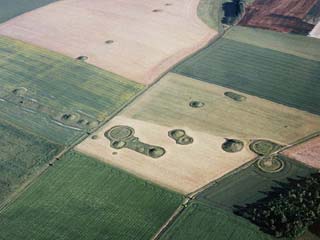
    An archaeology team led by the University of Birmingham and the Ludwig Boltzmann Institute for Archaeological Prospection and Virtual Archaeology in Austria discovered a major ceremonial monument less than one kilometre away from the iconic Stonehenge.

    History is set to be rewritten after an archaeology team led by the University of Birmingham and the Ludwig Boltzmann Institute for Archaeological Prospection and Virtual Archaeology in Austria discovered a major ceremonial monument less than one kilometer away from the iconic .

    The incredible find has been hailed by Professor Vince Gaffney, from the University’s IBM Visual and Spatial Technology Centre, as one of the most significant yet for those researching the UK’s most important prehistoric structure.

    Professor Gaffney says: “This finding is remarkable. It will completely change the way we think about the landscape around Stonehenge. “People have tended to think that as Stonehenge reached its peak it was the paramount monument, existing in splendid isolation. This discovery is completely new and extremely important in how we understand Stonehenge and its landscape.”

    The new “henge-like” Late Neolithic monument is believed to be contemporaneous to Stonehenge and appears to be on the same orientation as the World Heritage Site monument. It comprises a segmented ditch with opposed north-east/south-west entrances that are associated with internal pits that are up to one metre in diameter and could have held a free-standing, timber structure.

    The project, which is supported by the landowner, the National Trust, and facilitated by English Heritage, has brought together the most sophisticated geophysics team ever to be engaged in a single archaeological project in Britain.

    Provided by University of Birmingham.  Find out more about the latest discoveries, join a guided tour of Stonehenge – book through ”The Stonehenge Tour Company

    Merlin @ Stonehenge
    THe Stonehenge Stone Circle Website