Druids celebrate summer solstice at Stonehenge for first time as mainstream faith

17 06 2011

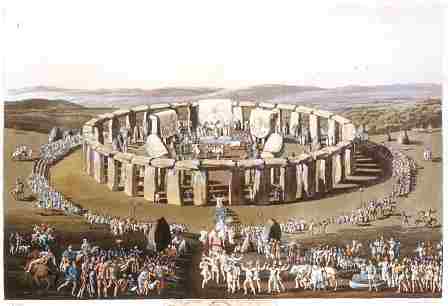
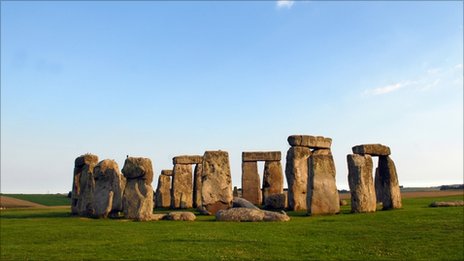
When robed Druids gather at Stonehenge for the summer solstice in next week, they will be worshipping at the prehistoric stone-circle monument for the first time as members of an established religion under British charity law. The classification means members of the ancient pagan tradition, which some see as a curiosity of Britain’s ancient past, have mainstream status equal to the Church of England. The change of status, which is controversial, gives them tax advantages.
Stonehenge Druid

Opponents of the change of status regard it as a mistake made for the sake of political correctness by a government agency, the Charity Commission. The see it as the first step to recognition of Scientology, sorcery, witchcraft or even the Jedi as religions eligible for tax-exempt status. The 2001 census recorded the country as having some 390,127 Jedi, the fictional Star Wars religion, in England and Wales.

After a four-year campaign by the Druids, the Charity Commission says it accepts that they worship nature and believe in the spirits of places such as mountains and rivers, as well as in divine guides.

Druids are best known for the gathering at Stonehenge each year on Jun 21 to greet the dawn, but they hold festivals eight times a year to mark stages in the solar and lunar cycles. Encyclopedia Britannica describes the ancient Druids as members of the learned class among the Celts. They do not worship a single god or creator, but seek to cultivate a sacred relationship with the natural world. The earliest known records of the Druids come from the 3rd Century BC. 

RELATED READING:

Druids: Worshippers of nature who were said to sacrifice humans (Telegraph 2 Oct 2010)
http://www.telegraph.co.uk/news/newstopics/religion/8037258/Druids-Worshippers-of-nature-who-were-said-to-sacrifice-humans.html

MELANIE PHILIPS: Druids as an official religion? Stones of Praise here we come (Daily Mail 4 Oct 2010)
http://www.dailymail.co.uk/debate/article-1317490/Druids-official-religion-Stones-Praise-come.html?ito=feeds-newsxml

Stonehenge preperations
THOUSANDS of revellers are expected to descend upon Stonehenge for this year’s Summer Solstice.
Sunrise will occur at about 4.45am on June 21, which is the longest day of the year.
English Heritage is opening Stonehenge to the public from 7pm on Monday, June 20, to 8am the following day.
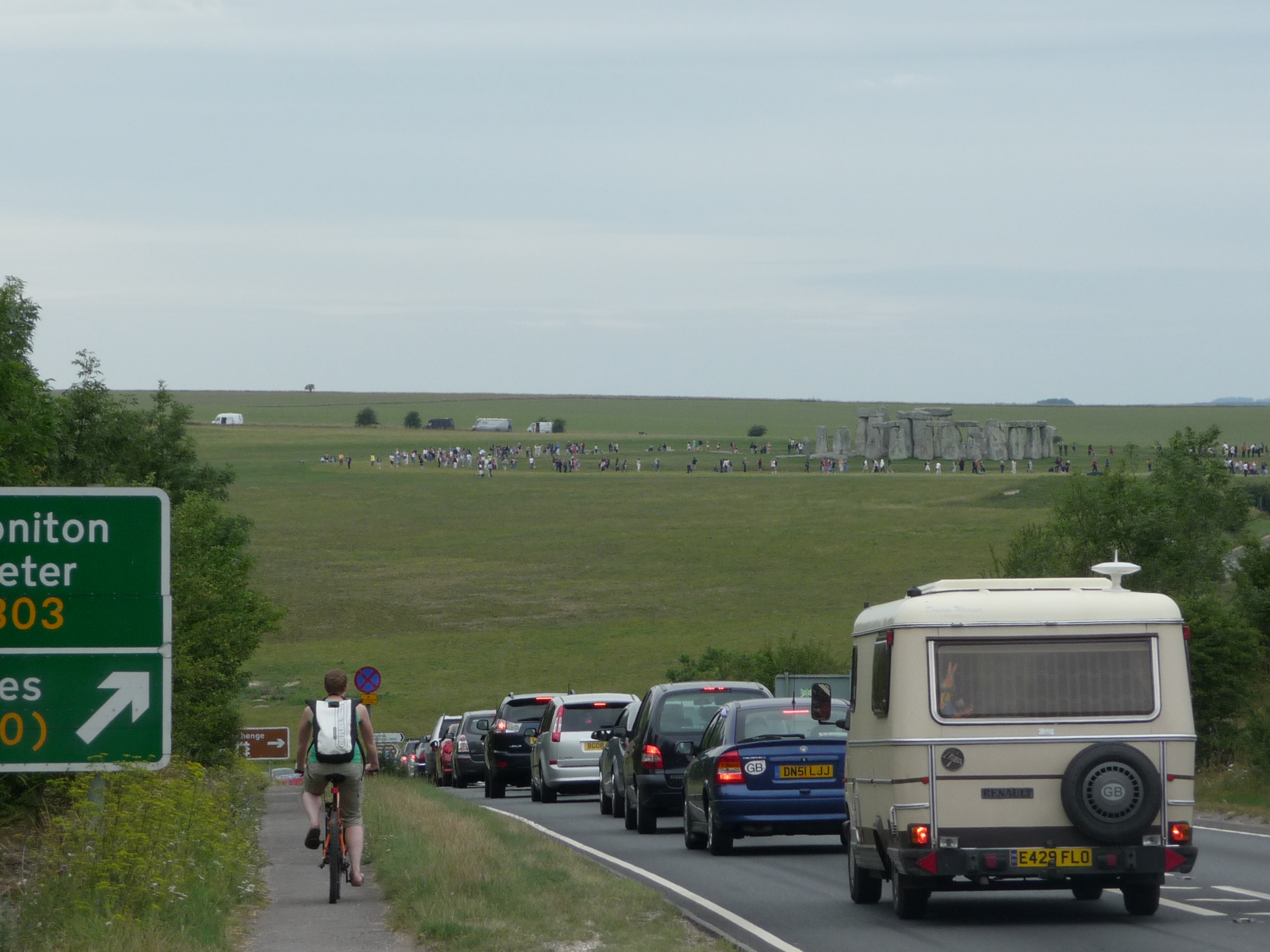
The Solstice car park, just off the A303, will open from 7pm on Monday, June 20, with last admission at 6am on Tuesday, June 21. Access to the stones and car park will be free of charge but organisers have advised people to use public transport where possible.
Wilts and Dorset bus company will be running a regular service from Salisbury railway station, via the bus station, from 6.30pm on the Monday evening through to 1.15am on Tuesday. A return service will operate frequently from 4am to 9.45am on Tuesday – with buses stopping at any recognised bus stop along the Amesbury route

Sponsored by ‘The Stonehenge Tour Company’  www.StonehengeTours.com

Merlin at Stonehenge
The Stonehenge Stone Circle website


Stonehenge Summer Solstice advice for drivers – 2011

15 06 2011

Traffic on the A303 at Stonehenge is expected to be very busy on Monday 20th and Tuesday 21st June during the summer solstice celebrations.
A303 Stonehenge trafficPeople travelling to Stonehenge are advised to use public transport where possible. People arriving by car and through traffic on the A303 are advised to allow longer for their journeys.

Motorists can get up-to-the-minute advice about roadworks and travelling conditions by visiting the Highways Agency website www.highways.gov.uk, or telephone the Highways Agency Information Line on 0300 123 5000 at any time. Calls from landlines to 0300 and 08700 numbers can cost up to 8p per minute but are free from some landline providers: calls from mobiles usually cost more.

Before using any mobile, find a safe place to park. Never stop on the hard shoulder of a motorway except in an emergency. Make sure it’s safe and legal before you call.

http://www.hgvuk.com/06/15/stonehenge-summer-solstice-advice-for-drivers/

Follow Stonehenge on twitter for all the latest news and updates during the solstice celebrations:  http:www.TWITTER.COM/ST0NEHENGE.COM

Merlin @ Stonehenge
The Stonehenge Stone Circle Website


Total Lunar Eclipse visible at Stonehenge tonight

15 06 2011

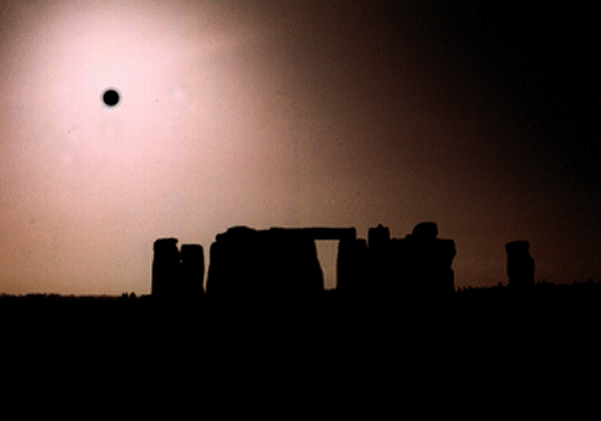
Todays’s total eclipse of the Moon may be the most striking for years but observers at Stonehenge must be content with a view of only the closing act of the drama.
Lunar Eclipse Stonehenge
The Moon stands over the southern Indian Ocean as it passes through the central dark umbra of the Earth’s shadow, plunging deeper into the shadow than during any eclipse since 2000. This may well result in an unusually dark eclipse, with the Moon’s disc turning a deep reddish-brown as all direct sunlight is blocked.

In fact, the umbra is never black. A little light must reach the Moon from the parts of the Sun’s outer atmosphere, the corona, that are not hidden by the Earth. But more sunlight is refracted and scattered around the edge of the Earth by our planet’s atmosphere. Just as sunsets and sunrises appear orange or red, so this light is predominantly red.

The umbra is not illuminated evenly, though, since less of this indirect light penetrates to its core and the amount reaching different zones of the umbra is affected by varying atmospheric conditions. In particular, dust thrown up by major volcanic eruptions can render the atmosphere less transparent and the eclipsed Moon so dark that it practically disappears.

Our image shows the previous total lunar eclipse as viewed from Florida last December. On that occasion, the Moon traversed the northern part of the umbra and its southern regions, which just missed the shadow’s core, are relatively dark. This week, the Moon passes about a half Moon’s-breadth farther southwards with respect to the shadow, so it will be interesting to discover just how dark and colourful it appears.

Wednesday’s eclipse begins when the Moon’s eastern limb begins to enter the penumbra of the Earth’s shadow at 18:25 BST. While within the penumbra, some direct sunlight falls on the Moon but little darkening of the disc will be noticed until a few minutes before the Moon begins to enter the umbra at 19:23. Totality, with the Moon entirely within the umbra, lasts from 20:22 until 22:03 with mid eclipse at 21:13. The Moon’s W limb has withdrawn from the umbra by 23:02 and finally exits the penumbra at 00:01.

For Britain, other than the far NW, the Moon rises in the SE during the latter half of totality. Observers in SE England may just glimpse the end of totality, but most of us may see nothing until it begins to emerge from the umbra. From London and Manchester, for example, the Moon stands less than 5° and 3° high respectively at 22:03 BST, with the Sun only a little way below the NW horizon and the sky brightly twilit. The Moon should be more obvious another 5° higher in a darker sky by 23:02.

Sponsored by ‘The Stonehenge Tour Company’ www.StonehengeTours.com

Merlin @ Stonehenge
The Stonehenge Stone Circle Website


World Heritage Site Landscape Project: Stonehenge, Amesbury, Wiltshire

10 06 2011

Summary of an English Heritage Report on Stonehenge by David Field and Trevor Pearson:

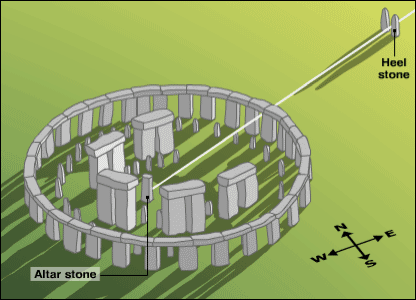
Analytical survey of the ground surface at Stonehenge revealed the presence of a number of interesting earthworks that have a bearing on interpretation and the development of the monument. Chief among these is a low mound that was revealed within the stone settings. Its location focuses attention on that part of the arrangement which is ruinous and supplements former reservations as to whether the monument was ever complete. Survey also revealed that the Y and Z holes are visible asStonehenge plan earthworks and that each circuit has a shallow bank within it. The feature known as the North ‘Barrow’ may have preceded the enclosure and therefore be one of the earliest elements at the site. The South ‘Barrow’ by contrast is, at least in one of its phases, a later feature. These are clearly not barrows and the more neutral term ‘circles’ is therefore preferred. An outer bank to the enclosure has been largely truncated by cultivation, while a mis-match of the Avenue at the enclosure entrance indicates that the two may have been mutually exclusive entities. The eastern ditch and bank of the Avenue is revealed to have changed course, perhaps in an attempt to avoid the pre-existing ditch around the Heel Stone.

http://services.english-heritage.org.uk/ResearchReportsPdfs/109_2010WEB.pdf
http://heritageaction.wordpress.com

Sponsored by ‘The Stonehenge Tour Company’ www.StonehengeTours.com

Merlin @ Stonehenge
The Stonehenge Stone Circle Website


Druids celebrate summer solstice for first time as mainstream faith

8 06 2011

When robed Druids gather at Stonehenge for the summer solstice in 2011, they will be worshipping at the prehistoric stone-circle monument for the first time as members of an established religion under British charity law. The classification means members of the ancient pagan tradition, which some see as a curiosity of Britain’s ancient past, have mainstream status equal to the Church of England. The change of status, which is controversial, gives them tax advantages.
Stonehenge solstice druids

Opponents of the change of status regard it as a mistake made for the sake of political correctness by a government agency, the Charity Commission. The see it as the first step to recognition of Scientology, sorcery, witchcraft or even the Jedi as religions eligible for tax-exempt status. The 2001 census recorded the country as having some 390,127 Jedi, the fictional Star Wars religion, in England and Wales.

After a four-year campaign by the Druids, the Charity Commission says it accepts that they worship nature and believe in the spirits of places such as mountains and rivers, as well as in divine guides.

Druids are best known for the gathering at Stonehenge each year on Jun 21 to greet the dawn, but they hold festivals eight times a year to mark stages in the solar and lunar cycles. Encyclopedia Britannica describes the ancient Druids as members of the learned class among the Celts. They do not worship a single god or creator, but seek to cultivate a sacred relationship with the natural world. The earliest known records of the Druids come from the 3rd Century BC. 

RELATED READING:
Druids: Worshippers of nature who were said to sacrifice humans (Telegraph 2 Oct 2010)
http://www.telegraph.co.uk/news/newstopics/religion/8037258/Druids-Worshippers-of-nature-who-were-said-to-sacrifice-humans.html

MELANIE PHILIPS: Druids as an official religion? Stones of Praise here we come (Daily Mail 4 Oct 2010)
http://www.dailymail.co.uk/debate/article-1317490/Druids-official-religion-Stones-Praise-come.html?ito=feeds-newsxml

Sponsored by ‘The Stonehenge Tour Company’ www.StonehengeTours.com

Merlin @ Stonehenge
The Stonehenge Stone Circle Website
Follow me on twitter for all the Solsice news: http:/www.TWITTER.COM/ST0NEHENGE


John Aubrey (12 March 1626 – 7 June 1697)

7 06 2011

John Aubrey died today 1697

John Aubrey

John Aubrey

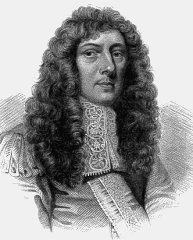
John Aubrey was an English antiquary and miscellaneous writer. He was born in Kingston, Wiltshire, and educated at Trinity College, Oxford. His most famous work is “Lives of Eminent Men”, which was not published, however, until 1823. He also wrote “Miscellanies” (1696), a collection of stories and folklore, the “Natural History of Wiltshire” (edited by John Britton, 1847), and a “Perambulation of Surrey”. His most important contribution to the study of British antiquities, the lengthy and discursive “Monumenta Britannica”, remains in manuscript. A scheme was afoot in 1692 to publish the manuscript and a prospectus and a specimen page were issued in 1693, but nothing more came of the project. It contains the results of Aubry’s field-work at Avebury and Stonehenge and notes on many other ancient sites, including Wayland’s Smithy. Apparently the original title of the manuscript was to be “Templa Druidum”.

It was Aubrey who, in 1648, at the age of 22, while out hunting with some friends near Avebury in Wiltshire, recognized in the earthworks and great stones placed about the landscape in and about the village a great prehistoric temple. In the following century, William Stukeley was to develop the claim that Avebury was as an ancient cult centre of the Druids.

In addition to his ‘discovery’ of the Avebury complex, Aubrey is also remembered for his inclusion in a plan of Stonehenge in his “Monumenta Britannica” of a series of slight depressions immediately inside the enclosing earthwork. Curiously, Stukeley does not record them in his painstaking examination of the site, and it was not until excavations undertaken in 1921-25 by the Society of Antiquaries that they were found to be holes cut in the chalk to hold timber uprights. A total of 56 holes were discovered and named the Aubrey holes in honour of John Aubrey’s observation. These holes are now recognized as belonging to the first phase of the monument’s construction.

What a guy…………………….

Sponsored by ‘The Stonehenge Tour Company’ www.StonehengeTours.com

Merlin at Stonehenge
The Stonehenge Stone Circle Website


A Stonehenge found in America. Is it bigger and better ? Probably…..

28 05 2011

A Stonehenge under Lake Michigan
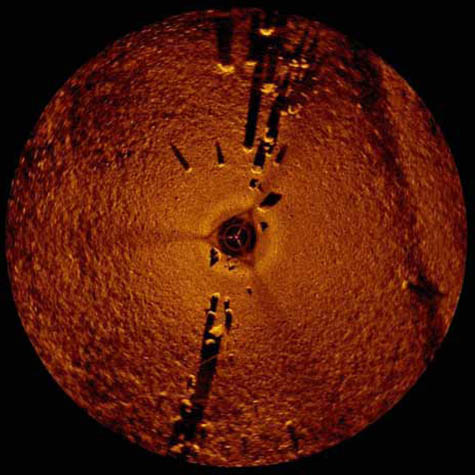
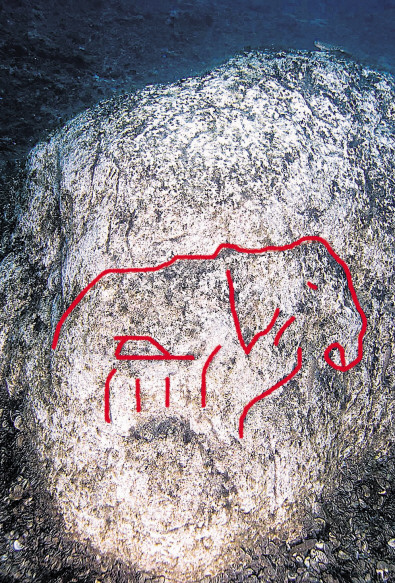
While scanning underneath the waters of Lake Michigan for shipwrecks, archeologists found something a lot more interesting than they bargained for, as they discovered a boulder with a prehistoric carving of a mastodon, as well as a series of stones arranged in a Stonehenge-like manner.

Stonehenge found under Lake Michigan

Stonehenge found under Lake Michigan

At a depth of about 40 feet into Lake Michigan’s Grand Traverse Bay, using sonar techniques to look for shipwrecks, archeologists discovered sunken boats and cars and even a Civil War-era pier, but among all these they found this prehistoric surprise, which a trained eye can guess by looking at the sonar scans photos in this article.

“When you see it in the water, you’re tempted to say this is absolutely real,” said Mark Holley, a professor of underwater archaeology at Northwestern Michigan University College who made the discovery, during a news conference with photos of the boulder on display in 2007. “But that’s what we need the experts to come in and verify.

The boulder with the markings is 3.5 to 4 feet high and about 5 feet long. Photos show a surface with numerous fissures. Some may be natural while others appear of human origin, but those forming what could be the petroglyph stood out, Holley said.

Viewed together, they suggest the outlines of a mastodon-like back, hump, head, trunk, tusk, triangular shaped ear and parts of legs, he said.

“We couldn’t believe what we were looking at,” said Greg MacMaster, president of the underwater preserve council.

Specialists shown pictures of the boulder holding the mastodon markings have asked for more evidence before confirming the markings are an ancient petroglyph, said Holley.

“They want to actually see it,” he said. Unfortunately, he added, “Experts in petroglyphs generally don’t dive, so we’re running into a little bit of a stumbling block there.”

If found to be true, the wannabe petroglyph could be as much as 10,000 years old – coincident with the post-Ice Age presence of both humans and mastodons in the upper midwest. The formation, if authenticated, wouldn’t be completely out of place. Stone circles and other petroglyph sites are located in the area.

The discovery was made back a few years ago, and surprisingly enough the find hasn’t been popularized at all, with little to no information available online, but I’ll be sure to update this post as soon as I can get ahold of more info. So, who’s from Michigan?

Sponsored by the ‘Stonehenge Tour Company’ – www.StonehengeTours.com

Come and visit Stonehenge in England – you went get wet at this one!

Merlin @ Stonehenge
The Stonehenge Stone Circle website

Follow me on twitter for all the latest Stonehenge (U.K) news:
http://www.twitter.com/ST0NEHENGE


Archaeostrononomer Gerald Hawkins died today 2003

26 05 2011

Gerald Stanley Hawkins

Gerald Hawkins

Gerald Hawkins

Astronomer who claimed Stonehenge was a computer

· Gerald Stanley Hawkins, archaeoastronomer and author, born April 20 1928; died May 26 2003.

(1928–2003) was an English astronomer and author most famous for his work in the field of archaeoastronomy. A professor and chair of the astronomy department at Boston University in the United States. In 1965 he published an analysis of Stonehenge in which he was the first to propose its purpose as an ancient astronomical observatory used to predict movements of sun and stars. Archeologists and other scholars have since demonstrated such sophisticated, complex planning and construction at other prehistoric earthwork sites, such as Cahokia in the United States.

Gerald Hawkins’ work
Gerald Hawkins’ work on Stonehenge was first published in Nature in 1963 following analyses he had carried out using the Harvard-Smithsonian IBM computer. Hawkins found not one or two alignments but dozens. He had studied 165 significant features at the monument and used the computer to check every alignment between them against every rising and setting point for the sun, moon, planets, and bright stars in the positions they would have been in 1500 BC. Thirteen solar and eleven lunar correlations were very precise against the early features at the site with precision falling during the megalithic stages. Hawkins also proposed a method for using the Aubrey holes to predict lunar eclipses by moving markers from hole to hole. In 1965 Hawkins wrote (with J. B. White) Stonehenge Decoded, which detailed his findings and proposed that the monument was a ‘Neolithic computer’.

Atkinson replied with his article “Moonshine on Stonehenge” in Antiquity in 1966, pointing out that some of the pits which Hawkins had used for his sight lines were more likely to have been natural depressions, and that he had allowed a margin of error of up to 2 degrees in his alignments. Atkinson found that the probability of so many alignments being visible from 165 points to be close to 0.5 (or rather 50:50) rather that the “one in a million” possibility which Hawkins had claimed. That the Station Stones stood on top of the earlier Aubrey Holes meant that many of Hawkins’ alignments between the two features were illusory. The same article by Atkinson contains further criticisms of the interpretation of Aubrey Holes as astronomical markers, and of Fred Hoyle’s work.

A question exists over whether the English climate would have permitted accurate observation of astronomical events. Modern researchers were looking for alignments with phenomena they already knew existed; the prehistoric users of the site did not have this advantage.

Later Stonehenge theories

Although Stonehenge has become an increasingly popular destination during the summer solstice, with 26,000 people visiting in 2010, scholars have developed growing evidence that indicates prehistoric people visited the site only during the winter solstice. The only megalithic monuments in the British Isles to contain a clear, compelling solar alignment are Newgrange and Maeshowe, which both famously face the winter solstice sunrise.

The most recent such evidence supporting the theory of winter visits includes bones and teeth from pigs which were slaughtered at nearby Durrington Walls. Their age at death indicating that they were slaughtered either in December or January every year. Mike Parker Pearson of the University of Sheffield has said, “We have no evidence that anyone was in the landscape in summer.”

From the Guardian 2003

In 1961, Gerald Hawkins, who has died of a heart attack aged 75, was professor of physics and astronomy at Boston University in Massachusetts. It was then that he returned to Salisbury Plain to film the sun rise over the marker Heelstone at Stonehenge. Assistants meanwhile plotted every stone and pit, punched coordinates on to cards and fed them, and astronomical data, into an IBM 704.This was at a time when computers were rare and glamorous. Asking that age’s technological wonder to decipher the ancient world’s icon was a gesture of timely genius. The journal Nature published Hawkins’s first results in 1963. Two years later Stonehenge Decoded, written by Hawkins with John B White, was published in the US.The IBM machines, Hawkins argued, showed Stonehenge to be a neolithic computer-observatory for predicting eclipses of the sun and moon. From New York to Iraq, newspapers praised the professor and his computer for rewriting prehistory. Stone-age savages were revealed as skilled scientists.

Archaeologists were less happy. They sniffed at his “overconfident style”, resented his publicity and questioned his results. Hawkins’s statistics were shown to be dodgy; he had contrived a computer from a monument believed to have developed piecemeal over centuries.

Stonehenge excavator Richard Atkinson described Hawkins’s book as: “tendentious, arrogant, slipshod, and unconvincing” – for him the builders of Stonehenge were “howling barbarians”.

The popular archaeologist Jacquetta Hawkes, meanwhile, observed that “every age has the Stonehenge it deserves – or desires”.

Hawkins claimed surprise at the response. That contribution to Nature was his 61st scientific paper and many of his others, on subjects such as tektites, meteors and steady-state universe theory seemed to him more exciting. But none of his other dozen books was as successful.

Hawkins had changed the way we think about Stonehenge, and inspired the science of archaeo-astronomy. Repeated studies have failed to do more than support a few solar, and perhaps lunar alignments, and deny a computational function. Yet in the public mind, Stonehenge is now fixed as an observatory and computer. Stonehenge Decoded initiated a debate still alive, and inspired the first generation of archaeo-astronomers.

Hawkins also analysed the Nazca lines in Peru and the temple of Amun at Karnak, Egypt. He recently developed a crop circles theory based on Euclidean geometry and musical intervals. He first saw Stonehenge in 1953, when working at nearby Larkhill camp. He read that the monument was aligned on midsummer sunrise, a fact first noted by William Stukeley in the 18th century, and made much of by Sir Norman Lockyer in 1906.

Hawkins’s hometown was Great Yarmouth. He obtained his first degree at Nottingham University in 1949 in physics, with pure maths subsidiary, and a PhD in radio astronomy under Sir Bernard Lovell at Manchester University in 1952.

Manchester awarded him a DSc in 1963 for astronomical research at the Harvard-Smithsonian Observatories. He was professor of astronomy and chairman of the department at Boston University (1957-69), and dean of the liberal arts Dickinson College in Carlisle, Pennsylvania (1969-71).

Boston presented him with the Shell award for distinguished writing in 1965. Other awards came from the Smithsonian Institution and the National Academy of Sciences, and he was a proud member of the prestigious intellectual Cosmos Club, Washington DC. He was a science advisor to the US Information Agency.

Hawkins was dedicated to his research, and enthusiastic and generous with those ready to listen. He was due to address an Oxford conference with a new Stonehenge study and, to the surprise of some British academics, he continued to see himself as an Englishman. He leaves his second wife, Julia Dobson.

Links: http://www.megalithic.co.uk/article.php?sid=2146410963
Sponsors: The Stonehenge Tour Company, www.StonehengeTours.com

Respect!

Merlin @ Stonehenge
The Stonehenge Stone Circle Website


Stonehenge Winter Solstice 2012 – The end of the world is nigh, or is it ?

18 05 2011

 Stonehenge Stone Circle and 2012

I am surprised at the number of people asking questions and talking about the Stonehenge winter solstice next year.  Many connections are being made to the Mayan calander and ‘the end of the world’   Will we see a record number of people turning up for ‘open access’  from around the world on the December 21st 2012 ?

Stonehenge dates back to being built around 3100 BC. This is in collaboration with creation of the Mayan calendar and the invention of the Sumerian language. On analyzing the Stonehenge several historians have suggested the possibility of the Stonehenge giving clues to the end of time in the same way the Mayan calendar does; thus showing a link between the two.
Stonehenge 2012

It was believed that the Stonehenge was used to tell time using the Sun’s solstice. With the rising and setting of the sun, one can observe time. During one day of summer the sun is set as far in the sky as possible. At this time the sun rises in direct alignment to a section of the Stonehenge known as the “heal stone”. This stone serves the same purpose as the hands of a clock as it casts a shadow over the Stonehenge sector. Coincidentally, this clock goes backward and acts as a countdown to the end of time – on December 21st 2012! On this day due to the wobble of the Earth on its axis and several other alignments, the heal stone will cease to cast a shadow indicating that time has run out.

Moreover, archaeologists have found various carvings in the stone. Using carbon dating archaeologists some of these carvings include Sumerian numbers and writings. The numbers “33” and “32” is significantly engraved on the stones. Interestingly enough, with the Sumerian sexagesimal system, the number 33 is multiplied by 60 and then added to 32 giving 2012 ironically.

End of the world 2012Stonehenge and the Mayan Calendar

The writings of the Mayans and the Sumerians have suggested the world might come to end on December 21st 2012. Furthermore, the Mayan Long Count calendar ends on this particular date. These ancient civilizations lived in close proximity to each other; thus, had a lot of influence from each other to similarly predict the future. Yet, there are other objects that have marked the same date – Stonehenge! Could one of the “Seven Wonders of the World” really foretell the fate of our future?

It was believed that the Stonehenge was used to tell time using the Sun’s solstice. With the rising and setting of the sun, one can observe time. During one day of summer the sun is set as far in the sky as possible. At this time the sun rises in direct alignment to a section of the Stonehenge known as the “heal stone”. This stone serves the same purpose as the hands of a clock as it casts a shadow over the Stonehenge sector. Coincidentally, this clock goes backward and acts as a countdown to the end of time – on December 21st 2012! On this day due to the wobble of the Earth on its axis and several other alignments, the heal stone will cease to cast a shadow indicating that time has run out.

Moreover, archaeologists have found various carvings in the stone. Using carbon dating archaeologists some of these carvings include Sumerian numbers and writings. The numbers “33” and “32” is significantly engraved on the stones. Interestingly enough, with the Sumerian sexagesimal system, the number 33 is multiplied by 60 and then added to 32 giving 2012 ironically.

Stonehenge holds many secrets that mankind has yet to discover. It is possible that something will happen on December 21st 2012, as it is not only limited to one side of the world since the Mayans and Sumerians lived in Meso-America; 2012 is also a big part of history in other countries. As time passes, we might be able to discover more. Hopefully all this information should give us a better insight of what is to come.

What will happen after December 21st 2012 ?  hopefully December 22nd 2012 because I will be there trying to enjoy the sunrise and celebrations.

Links:
http://www.the2012discovery.com/2012-videos/2012-mayan-calendar-doomsday-stonehenge-link-video/
http://www.2012hoax.org/stonehenge
http://www.stonehengetours.com/html/stonehenge-winter-solstice-tour.htm

Sponsored by ‘The Stonehenge Tour Company’

Merlin @ Stonehenge
The Stonehenge Stone Circle Website
P.S My opinion – Stonehenge isn’t a doomsday clock!


Magic circles: walking from Avebury to Stonehenge

14 05 2011

A new walking path links Britain’s two greatest prehistoric sites, Avebury and Stonehenge, and is as epic as the Inca Trail

The Great Stones Way is one of those ideas so obvious it seems amazing that no one has thought of it before: a 38-mile walking trail to link England’s two greatest prehistoric sites, Avebury and Stonehenge, crossing a landscape covered with Neolithic monuments.

But like any project involving the English countryside, it’s not as straightforward as it might seem. The steering group has had to secure permission from landowners and the MoD, who use much of Salisbury Plain for training. They hope to have the whole trail open within a year, but for now are trialling a 14-mile southern stretch, having secured agreement from the MoD and parish councils. The “Plain & Avon” section leads from the iron age hill fort of Casterley Camp on Salisbury Plain down the Avon valley to Stonehenge. Walkers are being encouraged to test the route, and detailed directions can be found on the Friends of the Ridgeway website.

It’s an area all but the boldest have avoided: negotiating the MoD areas needed careful planning. Few walkers come here and not a single garage or shop along the Avon valley sells local maps. The Great Stones Way should change that.

What makes the prospect of the Great Stones Way so exciting is the sense that for more than a millennium, between around 3000 and 2000BC, the area it crosses was the scene of frenzied Neolithic building activity, with henges, burial barrows and processional avenues criss-crossing the route.

Stones mapAt Casterley Camp, high on Salisbury Plain, it takes me a while to realise what is strange about the landscape, as wild and empty as anywhere in southern England, and with a large burial mound directly ahead. Then it hits me: this is perfect high grazing country, but there’s not a single sheep. Maybe they have read the MoD notice which points out that “‘projectile’ means any shot or shell or other missile or any portion thereof”, and that over much of what you can see you’re liable to be hit by one. You can also be arrested without a warrant. But the trail cleverly and legally threads its way past the firing ranges towards a delightful and ancient droving road that plunges down between cow parsley to an old farm.

Five minutes in we are passed by a lone woman wearing Dolce & Gabbana sunglasses and heading determinedly towards the shooting area, where the red flags are up to signify that it’s a “live” day. In a Kensington and Chelsea accent, she tells us that she regularly drives down from London as it’s one of the few places “where you don’t run the risk of meeting anybody else”. I murmur that this might be because they know they’ll get shot at. “Oh, I love all that. It gets my endorphins going. I got back to the car once and found it ringed by military police. When I told them that I just enjoyed the walking, they didn’t believe me. They said, ‘How can you claim to enjoy walking when you don’t have a dog?'”

One animal practising its duck-and-cover technique here is the remarkable great bustard, recently reintroduced to the UK after its local extinction two centuries ago. At 40lbs, the male bird is one of the largest flying animals in the world, so it’s unmistakable even for the most hesitant birdwatcher. As we reach an isolated farm building, we pass a Land Rover full of enthusiasts heading off to track some down.

The trail curves below to cross and then follow the Avon, a river that loomed large in the affairs of Neolithic man. It was along the Avon that the bluestones of the Preseli hills in Wales are thought to have been transported by boat to Stonehenge, after being moved an almost unimaginable distance around both the Pembrokeshire and Cornish peninsulas to the river mouth at Christchurch.

There are some pretty villages along the upper Avon: Enfold, with its flint and stone church, and old funeral wagon in the nave; Longstreet, with the Swan pub appearing at the right moment for a lunchtime reappraisal of the route; Coombe and Fittleton, with their judas trees, mill ponds and dovecotes. At Figheldean (pronounced “file-dean”), an allotment holder tells me he doesn’t grow courgettes “because they’re foreign food”.

Woodhenge, WiltshireWoodhenge, Wiltshire. Photograph: AlamyIt’s a peaceful valley to stroll along, with some beautiful stretches under beech trees and past bluebell woods. Which is why it comes as a shock to have to stop for a couple of tanks to trundle past at Brigmerston ford. The route follows the tank tracks back across the river and out onto the plain, so the last stretch again has wide-open vistas of the prehistoric landscape. At Durrington Walls, the trail cuts through a huge enclosed area where the builders of Stonehenge may have lived – the site is aligned to face sunset on the summer solstice – and on past Woodhenge, with its concentric circles of wooden posts (marked now by concrete posts).

As the walk gets into its finishing stride, you pass the King Barrows still sleeping along their ridge, some of the few sites that remain unexcavated (the local farmer didn’t want the trees cut down), and the mysterious Cursus group of Bronze Age barrows, so named because 18th-century antiquarian William Stukeley thought it must have been built by the Romans for chariot races. Across a meadow land of dandelions and buttercups, the familiar silhouette of the stone and lintel circle finally appears, at the end of the processional avenue that once led there from the river. In the distance, the stones themselves are a flat grey. What gleams all around them, like fish circling, is the traffic on the A303.

I can’t help thinking how much better it is to arrive at Stonehenge on foot. The comparison that comes to mind, and which I know well, is the Inca Trail to Machu Picchu. The experience of trekking to both sites is immeasurably richer, not just because you’ve “earned it”, but because both sets of ruins are only properly understood in the context of the sacred landscape that surrounds them.

• For details of this 14-mile section of the walk, and accommodation and transport, see the Friends of the Ridgeway website: ridgewayfriends.org.uk/plainandavonwalk.html

Hugh Thomson’s The White Rock: An Exploration of the Inca Heartland (Phoenix, £10.99) has just been reissued to mark the centenary of the discovery of Machu Picchu. His most recent book is Tequila Oil(Phoenix, £8.99)

There are already ‘Crop Circles’ in Stonehenge and Avebury area well worth exploring.  If you do not have the time or require a guide try the excellent ‘Stonehenge Tour Company’
There is also a new ‘Henge Hopper service covering this area

Links:  http://www.guardian.co.uk
The Henge Hopper

Merlin @ Stonehenge
The Stonehenge Stone Circle Website