The Amesbury Archer. The King of Stonehenge

14 02 2011
The Amesbury Archer

I ofter talk about the ‘Amesury Archer’ on my Stonehenge tours and wanted to put some facts into my blog for those visitors who keep asking for more information.  
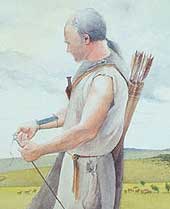
An excavation in Wiltshire some years ago revealed the grave of a Bronze Age archer, buried with a rich array of precious metal goods and a quiver of arrows. Was this the King of Stonehenge?

An Early Bronze Age grave

In the spring of 2002 what started as a routine excavation was undertaken in advance of the building of a new school at Amesbury in Wiltshire. By the end of the excavation the richest Bronze Age burial yet found in Britain had been discovered. The Bronze Age man discovered there had been buried not far from the great temple of Stonehenge. He was a man who owned and could work the new and magical metals of gold and copper. And he had come from what is now central Europe, perhaps around the Alps. Was he a king of Stonehenge?

Early Bronze Age pottery showed that they were over 2,500 years older than the Roman graves.

On the site of the proposed new school there was a small Roman cemetery but, it seemed, little else. In the far corner of the site, though, there were two features that looked different. Had they been caused by trees being blown over? Or were they something else? They certainly did not look like Roman graves.

Excavation work started on a Friday morning, and the reason for the difference between the Roman graves and the two other features rapidly became clear. The features were indeed graves, but the Early Bronze Age pottery in one of them showed that they were over 2,500 years older than the Roman graves. And the grave with the pottery was unusually large.

The Amesbury Archer

Golden artefacts - either earrings or hair tresses These golden artefacts may have been earrings or hair tresses . One of the next finds revealed something unusual – a gold ‘earring’. This type of jewellery may be the oldest type of gold object made in Britain. These objects are very rare, and they usually occur in pairs, and as it was the Friday of the May Bank Holiday weekend it was decided that the excavation of the grave should be completed that day. This might involve staying on a little bit late on a Friday afternoon, but not, it was thought, very late.

What no one knew then was that the grave, the burial of the Amesbury Archer as he has come to be known, was to be the most well-furnished Early Bronze Age burial ever seen in Britain. The graves could not be left unprotected, so a ‘little bit’ late turned into ‘very, very’ late, as it became clear that this was a very important find.

The excavation showed that there was probably a timber mortuary building in the larger grave. Because of this not all the earth had been put back into the grave at the time of the burial, so it seems likely that a small burial mound or barrow surmounted the grave.

What no one knew then was that the grave, the burial of the Amesbury Archer as he has come to be known, was to be the most well-furnished Early Bronze Age burial ever seen in Britain. The graves could not be left unprotected, so a ‘little bit’ late turned into ‘very, very’ late, as it became clear that this was a very important find.

The excavation showed that there was probably a timber mortuary building in the larger grave. Because of this not all the earth had been put back into the grave at the time of the burial, so it seems likely that a small burial mound or barrow surmounted the grave.

King of Stonehenge?

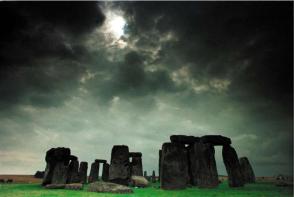
The stones of Stonehenge seen at sunrise

The stones of Stonehenge seen at sunrise

The site of Stonehenge at sunrise. The radiocarbon dates show that the Archer lived between 2,400 and 2,200 years BC. The burial lies about 5km (2 miles) south-east of Stonehenge and it was at about this time that the massive stone circles, and the avenue leading to the River Avon from the site, were built. The great temples of Woodhenge and Durrington Walls, both a similar distance away, continued to be used and modified throughout this time.In the past, burials of this date were considered rich if they contained more than a handful of objects, especially if one of the objects was of copper or bronze, or even gold. Although the finds buried with the Archer are all of well known types (within the Beaker cultural package that is found across much of central and western Europe at this time), the number of objects found with him, almost 100, is without compare.

Had these two men been part of a ruling élite?

The burial is also one of the earliest of its type in Britain, some of the finds are of the highest quality, and the gold is the earliest yet found in Britain. Furthermore the copper knives came from Spain and western France – an indication of the wide contacts of their owner. Above all, though, the associations between these finds are of particular importance.

Can it be a coincidence that the richest Early Bronze Age burial in Britain, and its companion, should be so close to the great temples of Durrington Walls? Had these two men been part of a ruling elite? Had one of them been a king?

A European élite

Copper knives from the Amesbury Archer's grave

Copper knives from the Amesbury Archer's grave

The Archer’s copper knives  As the archaeologists discussed these questions, further surprising facts became clear. Some archaeologists have argued that, for the period in question, there is no certain evidence for the sort of social differences that might suggest a ranked society. The discovery of the burial of the Amesbury Archer and his companion, however, showed for the first time that at this date there were individuals – and perhaps even families – of greater wealth and status than others. That this elite had ties across Europe is shown by the sensational discovery that the Archer comes from central Europe.The enamel on our teeth stores a chemical record of the environment where we have grown up. It is possible by using Oxygen Isotope Analysis to measure this record. The Archer’s teeth show that as a child he lived in a colder climate than that of Britain today, in central Europe, and perhaps close to the Alps.

He was raised in central Europe but he died near to one of the greatest temples in Europe.

Much work remains to be done. At the moment we do not know why the Amesbury Archer came to live, and perhaps raise a family, near Stonehenge. Was he brought up in the family of distant allies? Did he arrive in order to seal an alliance by taking a partner? Was he a settler or a pilgrim? Or was he an outsider with the magical skills of alchemy?

We will never know all the answers, but we can say this. He was a strong man, who overcame pain and handicap. He could work new and exotic metals. His mourners gave him the richest burial of his time. He was raised in central Europe but he died near to one of the greatest temples in Europe. We may not know if he was a king, but it is still an astonishing story. It is a Bronze Age biography.

If you are visiting Stonehenge or on a Stonehenge tour take the time to visit the Salisbury and South Wiltshire Museum –
http://www.salisburymuseum.org.uk/collections/stonehenge-prehistory/amesbury-archer.html

Books

Bronze Age Britain Mike Parker Pearson (Batsford/English Heritage 1993)

Hengeworld by Mike Pitts (Century, 2000)

The Stonehenge People: Life and Death at the World’s Greatest Stone Circle by Aubrey Burl (Barrie Jenkins, 1989)

Stonehenge by Julian Richards (Batsford/English Heritage, 1991)

Merlin @ Stonhenge
The Stonehenge Stone Circle Website


Stonehenge Spring Equinox 2011

5 01 2011

The exact time for the Spring (or Vernal) equinox at Stonehenge 2011 is;The sunset on the 20th is at 6.13pm and the sunrise on the 21th of March at 6.02am.

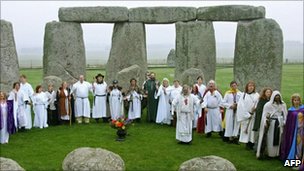
Druids - Stonehenge spring equinix

Druids - Stonehenge spring equinix

March 20th, 23.21 UCT.

 English Heritage did not confirm the date for Open Access for Stonehenge for the Spring Equinox 2011 yet, but most likely this will be dawn on the 21st of March.

Expect a short period of access, from approximately 5.45am to 8.00am.

This is the second of the four ‘sky points’ in our Wheel of the Year and it is when the sun does a perfect balancing act in the heavens.

At the Spring (or Vernal) Equinox the sun rises exactly in the east, travels through the sky for 12 hours and then sets exactly in the west. So all over the world, at this special moment, day and night are of equal length hence the word equinox which means ‘equal night’.

Of course, for those of us here in the northern hemisphere it is this equinox that brings us out of our winter.

For those in the southern hemisphere, this time is the autumnal equinox that is taking you in to your winter. And this is very much how I think of the equinoxes – as the ‘edges’ of winter. This is why they can be quite hard on our bodies as it is a major climatic shift, so it is a good time to give a boost to your immune system with natural remedies and cleansing foods.

Here in Wiltshire (as with the rest of rural Britain), it was traditional to drink dandelion and burdock cordials at this time as these herbs help to cleanse the blood and are a good tonic for the body after its winter hardships.

As the Vernal Equinox heralds the arrival of spring, it is a time of renewal in both nature and the home, so time for some spring-cleaning!

This is more than just a physical activity, it also helps to remove any old or negative energies accumulated over the dark, heavy winter months preparing the way for the positive growing energy of spring and summer.

As with all the other key festivals of the year, there are both Pagan and Christian associations with the Spring Equinox.To Pagans, this is the time of the ancient Saxon goddess, Eostre, who stands for new beginnings and fertility.

This is why she is symbolized by eggs (new life) and rabbits/hares (fertility).

Her name is also the root of the term we give to the female hormone, oestrogen.By now, you may be beginning to see the Christian celebration derived from this festival – Easter.

And this is the reason why the ‘Easter Bunny’ brings us coloured eggs (and if you’re lucky chocolate ones!) at this time of year.

So, as nature starts to sprout the seeds that have been gestating in her belly throughout the winter, maybe you can start to think about what you want to ‘sprout’ in your life now and start to take action.

Our sponsors ‘The Stonehenge Tour Company’ are offering transport from London. They have been offering ‘non obtrusive’ small group guided tours of the solstice and equinox events for many years and we welcome their approach and ‘thought provoking’ trips.  It works out much cheaper and possible at that time of the morning.  See you there…….

Merlin @ Stonehenge
The Stonehenge Stone Circle website


Stonehenge Winter Solstice 2010

23 12 2010

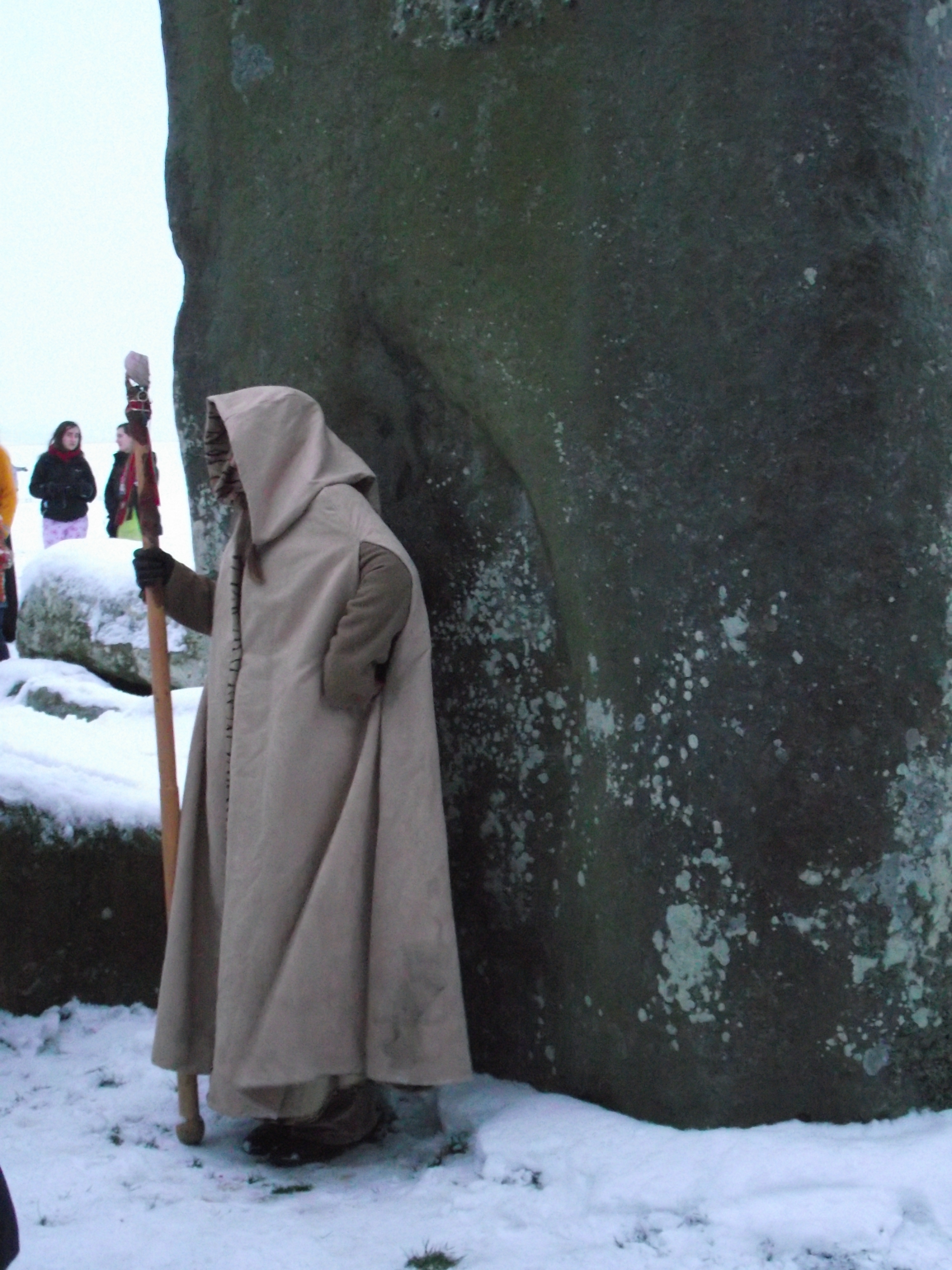
Snow and ice failed to stop people visiting Stonehenge to watch the

Stonehenge Solstice

Stonehenge Solstice

sunrise on the winter solstice, 22nd December 2010

Almost 2,000 people gathered at the stones which were surrounded by a thick blanket of snow.

As well as the traditional druid and pagan ceremonies, a spontaneous snowball fight erupted as people enjoyed the cold weather.  A good time was had by all.

I will be uploading photos and videos later today – can you see yourself? 

Many thanks for all the helpful tweets over the solstice – http://twitter.com/ST0NEHENGE

Merlin @ Stonehenge
The Stonehenge Stone Circle Website
http://www.bbc.co.uk/news/uk-england-wiltshire-12061134
http://www.stonehengetours.com (sponsor)
http://www.HisTOURies.co.uk (sponsor)


Winter Solstice Celebrations at Stonehenge

20 12 2010

THE winter solstice will be celebrated at Stonehenge on Wednesday. Sunrise is at 8.09am on December 22 and visitors will be able to access the monument as soon as it is light enough to do so safely.

Entrance is free and will be available from roughly 7.30am until 9am, when the site will close to visitors before re-opening as per usual at 9.30am.

This photo was emailed to me yesterday ?

Peter Carson from English Heritage said: “We are delighted to offer people a warm welcome to Stonehenge this Winter Solstice. Over the years, the event has grown from a handful of people to a celebration enjoyed by a couple of thousand of people. We work very closely with the Druid and Pagan community to ensure that the event is a success.”

A date for the diary, that is if you are prepared to face the winter snow, but perhaps in the circumstances it would be wiser to stay at home and celebrate the Winter Solstice safely there!

THE winter solstice will be celebrated at Stonehenge on Wednesday.

Sunrise is at 8.09am on December 22 and visitors will be able to access the monument as soon as it is light enough to do so safely.

Entrance is free and will be available from roughly 7.30am until 9am, when the site will close to visitors before re-opening as per usual at 9.30am…….

There is no public transport to Stonehenge at that time of the morning and parking is limited – you have been warned!  Avebury Stone Circle could be a safer alternative ?

Happy Solstice!
Merlin @ Stonehenge
I will upload images to this blog on the 22nd


The Great Stones Way – Britain’s newest long-distance walking trail opens in March 2011

8 12 2010

The Great Stones Way, a superb new 30 mile walking trail between the World Heritage Sites at Avebury and Stonehenge, will become one of Britain’s best loved and most used walking routes. 

Passing through the landscapes of the Wiltshire Downs, the Vale of Pewsey, Salisbury Plain and the Avon Valley, The Great Stones Way will be a great walk in itself. The combination of immense vistas and magnificent archaeology along the route will be irresistible – no other walking route has so much ancient heritage packed into such an attractive 30 miles.

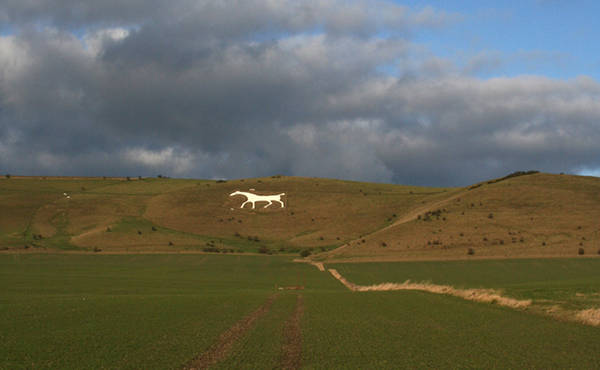
Alton Barnes Chalk Hill Figure

The Great Stones Way is being developed by The Friends of The Ridgeway using existing footpaths and rights of way. Ian Ritchie, Chairman of The Friends of The Ridgeway says: “The Great Stones Way is a vital part of our ambition to open up the whole 360 miles of the Great Ridgeway from the south coast to East Anglia.  The section between Avebury and Stonehenge is currently a big gap in that route, and The Great Stones Way will fill it brilliantly.”

The Great Stones Way will be launched on Saturday 26 March 2011 with a series of walks along the trail.  Ian Ritchie explains: “Ambitious and experienced walkers will want to do the whole 30 miles in one day, and there will be an alternative 13 mile route from Casterley Camp on Salisbury Plain to Stonehenge.  A gentle four miles from Durrington to Stonehenge will suit people who want to walk a shorter distance.”

In addition to the two great stone circles at the World Heritage Sites of Avebury and Stonehenge, The Great Stones Way passes Silbury Hill, West Kennet Long Barrow, The Sanctuary, the Wansdyke, Adam’s Grave, Marden Henge, Broadbury Banks, Durrington Walls and Woodhenge. 

“Because The Great Stones Way could take some people up to three days to walk its entire length, we are creating a series of shorter circular trails of varying lengths and challenges to suit walkers of all abilities,” says Ian Ritchie. The whole experience will be enhanced by a dedicated local bus service, the Henge Hopper, which will enable walkers to minimise the use of their cars and to plan their own walks along The Great Stones Way

The Friends of The Ridgeway commissioned a professional feasibility study which estimated that opening up The Great Stones Way will bring more than 250,000 visitors to the area and over £6million into the local rural economy each year.  This will benefit accommodation providers in nearby towns and villages as well as several pubs and village shops along the trail.

Claire Perry, Devizes MP supports the new walking trail: “I believe that The Great Stones Way will be a vital link at the heart of the Ridgeway.  It will take walkers over some of the most ancient and important paths in our great country and link two extraordinary World Heritage Sites.  To be able to walk along a well signposted and well surfaced path will be a pleasure for both British and overseas walkers and will bring important benefits to our local economy.”

The Friends of The Ridgeway group has already held several public meetings with parish councils and communities along the route, and more are planned.  The group is fund-raising to improve signage, install disability access gates, repair the path surface in places, and to produce The Great Stones Way guidebook. 

Details of the inaugural walk will be published on The Great Stones Way website www.greatstonesway.org.uk (currently under construction). Anyone who would like to take part or contribute to fund-raising can visit the website for more information or contact The Friends of the Ridgeway via www.ridgewayfriends.org.uk

If you have not got the tme or the energy there are a few tour companies offering guided tours using cars or mini coaches.  You could try the Stonehenge Tour Company based in London, the excellent Histouries UK private guided tours from Bath or London or Salisbury Guided Tours.  We also have several discounted tours available on our website – click here

Merlin @ Stonehenge
The Stonehenge Stone Circle Website


Canadian Archeologists given access to Bluehenge

12 11 2010

 Eerie, foreboding, mysterious and yet utterly familiar, the stone monuments at Stonehenge are part of the popular consciousness, and yet not much is known about them except that they predate recorded history.

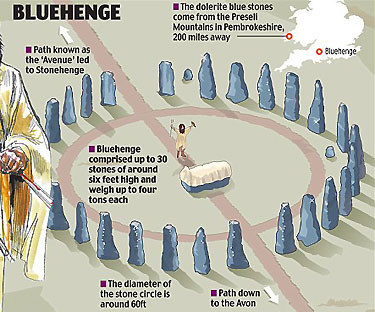
Bluehenge

Bluehenge

Until now, that is.

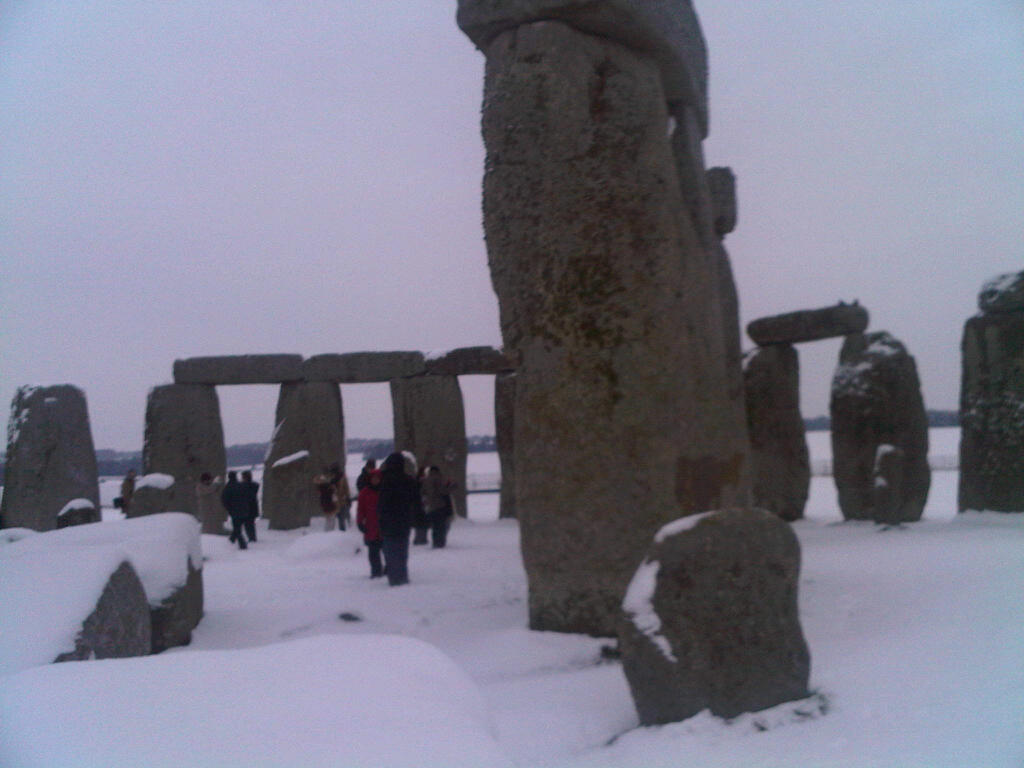
An archeological research team from PBS’s science program Nova was recently granted unique access to a stone-circle monument little more than a mile from the famous site in Wiltshire, England.

This new site, discovered just over two years ago and dubbed Bluestonehenge – or just plain Bluehenge – has prompted a renewed wave of speculation and investigation, using the latest in high-tech gadgetry and breakthroughs in carbon-dating techniques.

Armchair archeologists will get a kick out of Nova’s findings, which are even more compelling, because they’re presented as dry, scientific history, with none of the hype, loud music or tacky dramatized recreations of most docureality TV shows.

The big questions – who built Stonehenge, why, and how on earth did they manage without engineering blueprints, heavy machinery and construction unions – remain elusive, but it’s hard not to share the researchers’ excitement and enthusiasm as they seem to draw ever closer to the answers. The discovery of traces of charcoal, for example, suggests that some kind of ritual fire or ceremonial burnings happened there – shades of The Wicker Man – and it’s fun to let one’s imagination wander, in the best tradition of folk tales.

Archeologists have since hypothesized that stones may have been removed from Bluehenge around 2500 BC and used to shore up Stonehenge itself, which is known to have undergone major restoration around that time. One theory holds that Bluehenge was a place of life, where the living gathered, and Stonehenge was the “domain of the dead,” and ancient Britain’s first known cemetery.

Whether Stonehenge was created by the ancient Celts or by the magician Merlin, or by space aliens of the Erich von Daniken variety, the ruins’ origin and purpose remain one of the most enduring mysteries facing humankind today.

More than a million people make a pilgrimage to Salisbury Plain every year, and hardly any of them know why. Perhaps it was the site of the original Burning Man.  (what ?)

External links:
http://www.megalithic.co.uk/article.php?sid=23928
http://news.bbc.co.uk/1/hi/england/wiltshire/8288567.stm
http://blog.histouries.co.uk/2010/02/28/bluehenge-unearthed-prehistoric-site-that-could-be-famous-stone-circles-little-sister/
blog: http://www.canada.com/tv guy

Merlin @ Stonehenge
The Stonehenge Stone Circle Website


Stonehenge builders had geometry skills to rival Pythagoras

8 11 2010

Stone Age Britons had a sophisticated knowledge of geometry to rival

The Stone Age Britons who built Stonehenge had a knowledge of advanced geometry, 2,000 years before Pythagoras

The Stone Age Britons who built Stonehenge had a knowledge of advanced geometry, 2,000 years before Pythagoras

Pythagoras – 2,000 years before the Greek “father of numbers” was born, according to a new study of Stonehenge. Five years of detailed research, carried out by the Oxford University landscape archaeologist Anthony Johnson, claims that Stonehenge was designed and built using advanced geometry.

The discovery has immense implications for understanding the monument – and the people who built it. It also suggests it is more rooted in the study of geometry than early astronomy – as is often speculated. Mr Johnson believes the geometrical knowledge eventually used to plan, pre-fabricate and erect Stonehenge was learnt empirically hundreds of years earlier through the construction of much simpler monuments. He also argues that this knowledge was regarded as a form of arcane wisdom or magic that conferred a privileged status on the elite who possessed it, as it also featured on gold artefacts found in prehistoric graves.

The most complex geometrical achievement at Stonehenge is an 87-metre diameter circle of chalk-cut pits which mark the points of a 56-sided polygon, created immediately within themonument’s perimeter earthwork. Mr Johnson used computer analysis and experimental archaeology to demonstrate that this outer polygon was laid out using square and circle geometry. He believes the surveyors started by using a rope to create a circle, then laid out the four corners of a square on its circumference, before laying out a second similar square, thus creating an inner octagon. The points of the octagon were then utilised as anchors for a surveyor’s rope which was used to “draw” arcs which intersected the circumference so as to progressively create the sides of a vast polygon. Indeed, his work has demonstrated that a 56-sided polygon is the most complex that can easily be created purely through square and circle geometry using a single piece of rope.

The Stonehenge Tour Company

The Stonehenge Tour Company

It is likely that this basic limitation determined the number of sides of Stonehenge’s outer polygon – and may also have led to the 56-sided polygon concept becoming important within wider European religious belief. Ancient Greek classical mythology associated just such a 56-sided polygon with Zeus’s great rival for divine supremacy, the weather god Typhon. Johnson’s research, published as a book this week, shows that Stonehenge derived its design from geometrical knowledge and features no less than six concentric polygons – a 56-sided outer one built around 2950BC; a regular octagon built around 2500BC) inside that; two concentric (though partly inaccurate) 30-sided polygons built around 1650BC, which were based on a series of hexagons; a 30-sided inner polygon (the sarsen stone ring which was built around 2500BC) also based on hexagonal geometry; and two probable 40-sided concentric polygons (probable former blue stone positions built around 2600BC) that were later modified to 30-sided ones.

They also created the famous central stone “horseshoe” utilising the survey markers used to create the thirty-sided sarsen polygon. The experimental archaeology demonstrates that most of the monument was pre-planned and that the great stones were pre-fabricated off-site and then installed by surveyor-engineers. “For years people have speculated that Stonehenge was built as a complex astronomical observatory. My research suggests that, apart from mid-summer and mid-winter solar alignments, this was not the case,” said Mr Johnson. “It strongly suggests that it was the knowledge of geometry and symmetry which was an important component of the Neolithic belief system.” “It shows the builders of Stonehenge had a sophisticated yet empirically derived knowledge of Pythagorean geometry 2000 years before Pythagoras,” he said.

A leading British prehistorian, Sir Barry Cunliffe, from Oxford University, believes that Anthony Johnson’s research is “a major step forward in solving the puzzle of Stonehenge”.  Details of Anthony Johnson’s research can be found in his book ‘Solving Stonehenge’ published by Thames and Hudson. Further information can be found at solvingstonehenge.co.uk/

Merlin @ Stonehenge
The Stonehenge Stone Circle Website


Stonehenge Private Access tours 2011 – Go beyond the fences!

4 11 2010

Hot off the press – Stonehenge Access Dates!
I have just been sent 2011 dates for Stonehenge ‘private access’ tours (see below)  If you are planning on visiting Stonehenge in the next 12 months then I highly recommend joing one of these trips.

Stonehenge Inner Circle Tours - Go beyond the fences

Stonehenge Inner Circle Tours – Go beyond the fences

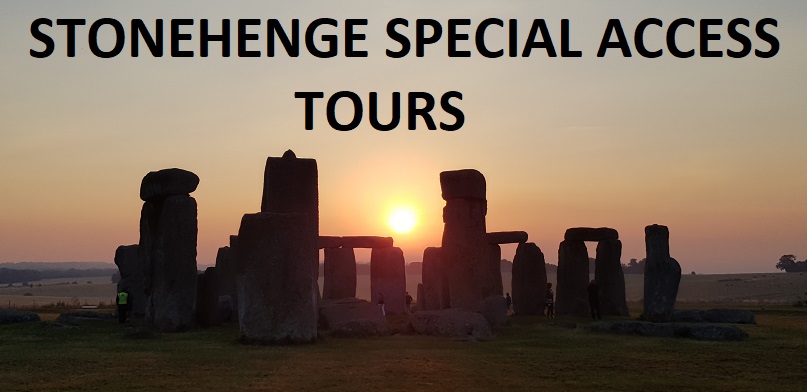
For those of you who have not visited this sacred site, I should mention that the complex is roped off. Visitors observe the stones from a distance and are not permitted within the temple complex……….Stonehenge special access tours allow you to be amongst the stones and to experience the magic.

There are a few sightseeing tour operators who offer this service and I have just been advised of the 2011 dates.  There are limited spaces and I highly recommend booking sooner rather than later – this is a very popular tour.  A fantastic photograph opportunity!

  • Stonehenge Special Access dates 2011
    January 2011 – 2nd, 14th, 21st, 24th, 31st
    February 2011 – 4th, 7th, 18th, 28th
    March 2011 – 7th, 14th, 25th, 28th
    April 2011 – 3rd, 6th, ,7th, 10th, 11th, 14th, 17th, 20th, 21st, 24th, 25th, 28th
    May 2011 – 1st, 4th, 5th, 8th, 9th, 12th, 15th, 18th, 22nd, 23rd, 26th, 29th
    June 2011 – 1st, 2nd, 5th, 6th, 9th, 12th, 15th, 21st
    July 2011 – 3rd, 6th, 7th, 11th, 10th, 14th, 17th, 18th, 21st, 24th, 28th, 31st
    August 2011 – 4th, 7th, 8th, 10th, 11th, 14th, 17th, 18th, 21st, 22nd, 25th, 28th
    September 2011 – 1st, 5th, 8th, 11th, 15th, 18th, 29th

Private tours can often be arranged for alternative other dates for families and small groups  but need to be booked well  in advance

These Stonehenge access tours can be booked through the excellent  ‘Stonehenge Tour Company’  website.  For a selection of other Stonehenge Tours from London that can also include:  Bath, Lacock Village, Salisbury Cathedral, Windsor Castle, Avebury Stone Circle, The Cotswolds, Oxford etc click here

The Stonehenge Tour Company

The Stonehenge Tour Company

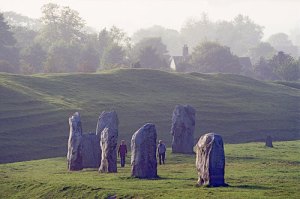
Avebury Stone Circle

One or two operators offer tours that include Stonehenge and Avebury plus nearby Silbury Hill, West Kennet Long Barrow, Chalk hill figures and even crop circles (April – September) Try The Stonehenge Tour CompanyHistouries UK and Salisbury Guided ToursShould you need any unbias advice on organising a tour to Stonehenge please do email me – tours@stonehenge-stone-circle.co.uk

Merlin @ Stonehenge
The Stonehenge Stone Circle Website


Druids mark festival after becoming official religion

1 11 2010

Druids are celebrating their first major festival since their beliefs were granted official status as a religion.

Samhain

Sanhain

For them and other pagans, 31 October is not Halloween, but Samhain, and marks the turning of the year from light into dark.

Earlier this month, the Charities Commission ruled that the Druid Network should have the same status as other faiths such as Christianity and Islam.

Pagans do not worship one single god, but look for the spiritual in nature.

The number of pagans, including druids, witches and wiccans, has grown in recent years.

Many believe that the absence of rules, the focus on the environment and particular regard for the female have a strong resonance in contemporary society.

Druids worship the spirits they believe inhabit the earth. Among them are those embodied in forces of nature, such as thunder, and places, like mountains and rivers.

Their rituals, including Samhain, are focused particularly on the turning of the seasons.

After a four-year inquiry, the Charity Commission decided that druidry offered coherent practices for the worship of a supreme being, and provided a beneficial moral framework.

Earlier this month the Charities Commission gave the Druid Network the status of a religion.

Happy New Year Pagans!
Merlin @ Stonehenge
The Stonehenge Stone Circle Website



Silbury Hill – David Attenborough’s big dig

26 10 2010

Silbury Hill is as ancient and enigmatic as Stonehenge. David Attenborough tells us why he set out to crack it

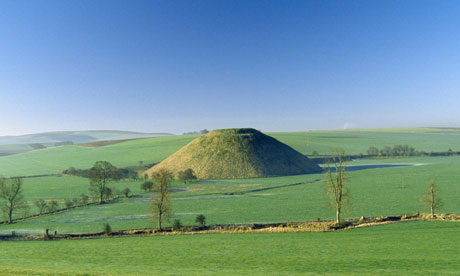
Tomb or temple? ... Silbury Hill, Wiltshire.

Tomb or temple? ... Silbury Hill, Wiltshire.


The past,” says David Attenborough, “is a haunting and fascinating place.” The great naturalist is revealing a little-known side of himself: his love of archaeology – and his fascination with Silbury Hill in Wiltshire. The tallest prehistoric man-made mound in Europe, Silbury Hill rises to a height of 37 metres, making it comparable with the Egyptian pyramids and the ziggurats of Mesopotamia.

In a new English Heritage book about the hill, Attenborough tells how, in 1968 as controller of BBC2, he commissioned a programme that involved tunnelling into its depths to discover why it was there. At the time, the programme was judged a flop, since it found no treasure, no tomb, no real answers at all.

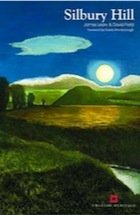
The-Story-of-Silbury-Hill

The-Story-of-Silbury-Hill

Attenborough is now seeking to set the record straight. He argues that, far from failing, TV’s first live dig triggered an unlikely chain of events that recently led to the tunnel being reopened and re-examined, using modern techniques. “They did not unearth any material treasure either,” he writes, but instead “added more details to our knowledge and understanding.” And this, you could say, is the true purpose of archaeology. In fact, the reopening of the tunnel vindicated the project Attenborough is so proud of: it revealed perhaps as much as will ever be known about this most mysterious of ancient monuments.

Silbury Hill is near Avebury, a quaint English village set inside a prehistoric stone circle. The village is part of a world heritage site that takes in Stonehenge and Silbury Hill. Raised in the same era as the mighty Stonehenge, and just as much of an enigma, the hill boasts chalk sides covered with grass. Construction of the vast, flat-topped cone would have required hundreds of workers and taken an age, but the people who built it left no records as to why.

BBC2 was a new channel in the 60s, with a brief to experiment. “We were going to do new television,” says Attenborough. “Everything we did would be in some way identifiable as new. With archaeology we thought, ‘Why can’t we do a live excavation?’ We would have cameras there so, if necessary, we could interrupt other programmes.”

The plan was to dig a tunnel into the heart of the hill. Professor Richard Atkinson, who led the dig, had interesting ideas about what might be in there. “Richard was the first to notice Mycenean daggers on Stonehenge,” says Attenborough. These made Atkinson believe Stonehenge was built by a culture in contact with ancient Greece, whose chief wanted a dramatic tomb.

This was TV as real adventure, and it captured the public imagination. Some saw it as a treasure hunt; others as a mix of horror and science-fiction. “Atkinson,” says Attenborough, “didn’t necessarily think there was going to be a burial [site]. The press said, ‘This is a treasure hunt, isn’t it?’ I said, ‘No, it’s about little bits of mud.'”

As the tunnel took shape, with news reported continually, nothing much emerged. “People kept saying, ‘It’s a failure,'” says Attenborough. “But we did discover how it was made.” Some people maintained the dig was actually harmful. “Since then, if there have been slumps in the top, people have said, ‘Ah ha, it’s the BBC’s tunnel.’ ”

In 2000, not just a slump but a hole appeared. Was the tunnel collapsing? No: this was caused by an 18th-century shaft, but archaeologists were still worried. They decided to reopen the BBC tunnel, deploying the latest tools and tests, and then seal it forever.

The new dig suggested that the hill was not a tomb, but a temple – perhaps the greatest in Europe 4,000 years ago. It also showed the hill started as a sacred site, where people came bearing stones; they may have believed they possessed healing powers. Certainly, stones are embedded in the structure and are thought to be highly meaningful by archaeologists. It is like Britain’s later cathedrals, which rose up over shrines. Sun worship flourished in prehistoric Britain, so perhaps this was – like those ancient ziggurats – a stairway to heaven to let priests get closer to the sun.

Atkinson’s tunnel is now sealed, but its creation marked a time when TV set out to bring drama and glamour to archaeology. As Attenborough says: “Anybody would be thrilled to find a Roman coin in their garden. I know I would.”

Visit Silbury Hill, Stonehenge and Avebury in a small group day tour – The Stonehenge Tour Company are the only operators who offer such a trip.  Histouries UK based in nearby Salisbury and Bath also bespoke private guided tours of the region.  You can look at more discounted tour operators here

Merlin @ Stonehenge
The Stonehenge Stone Circle Website