Moving the Stonehenge Bluestones: At last a successful method is demonstrated!

3 10 2012

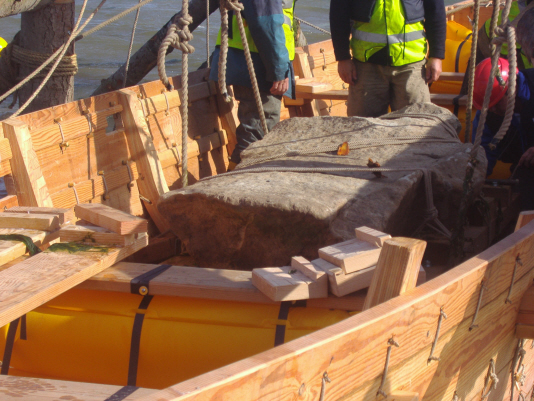
Without a single archaeologist in sight, a couple of boat builders and an inspired TV company show just how easy it can be to load a full-size bluestone onto a replica Bronze-Age boat. Robin Heath was there and took some photographs
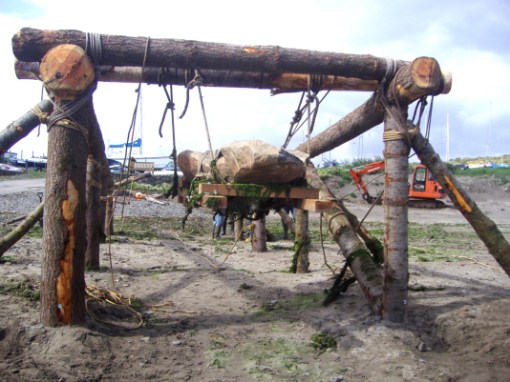
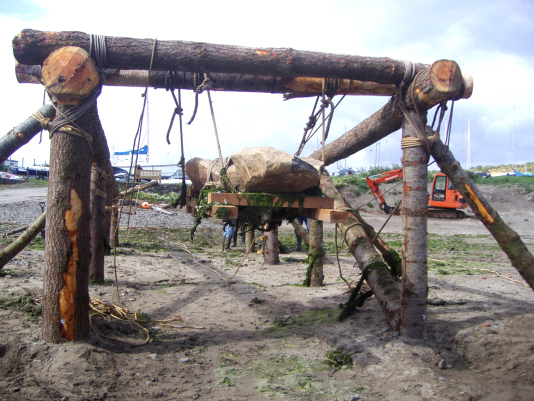
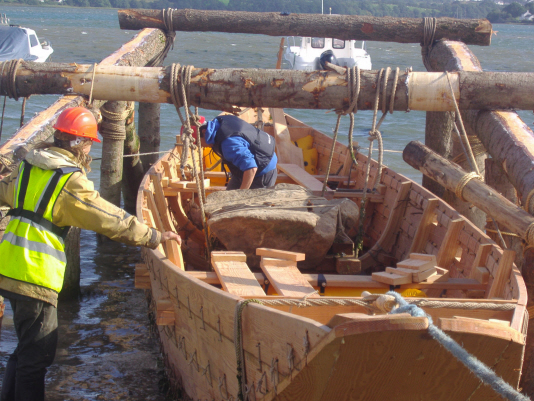
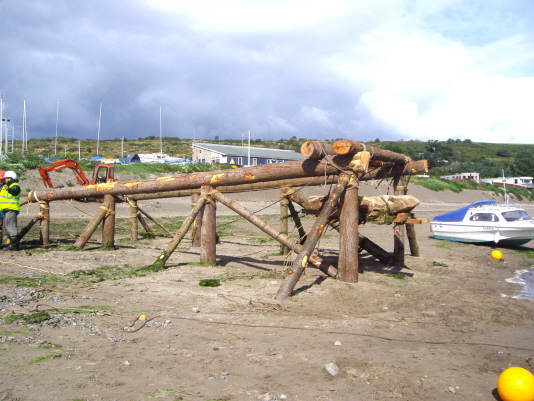
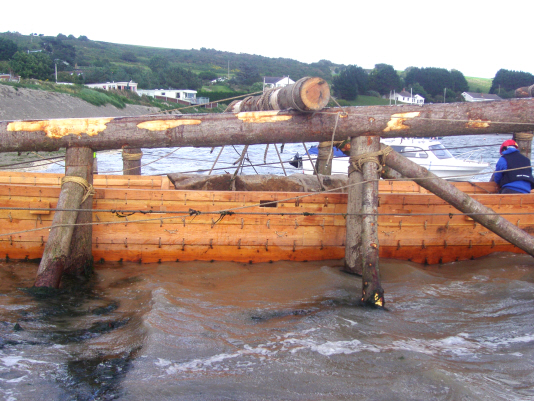
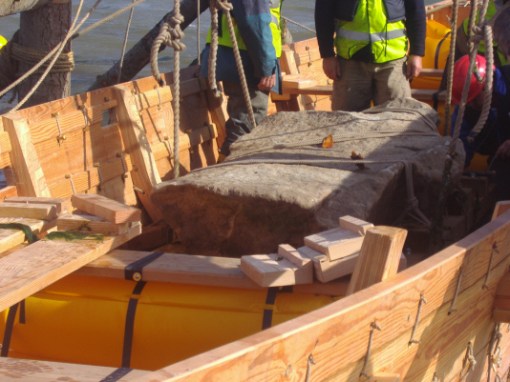
Stonehenge Bluestone experimentOn the 15th August, near Poppit Sands, in Cardigan, West Wales, several skilled artisans showed how they would load a boat with a multi-ton bluestone. They did this with a force 7 on-shore gale battering the shore-line. In the time it took for the tide to come in, a flawless lowering took place of a large bluestone onto a prepared cradle within a near-replica of the boat found at Ferriby during the early 70s.
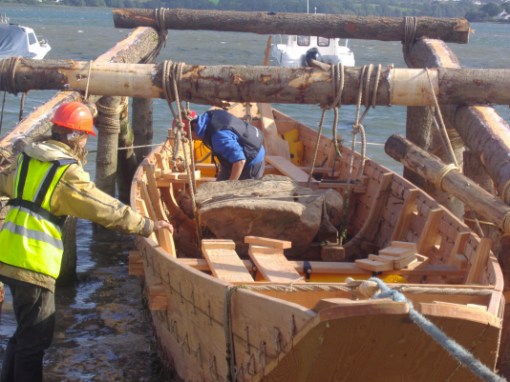
Moving the BluestonesThe Ferriby boat has been dated around 2000 BC, making it much too late for the period of bluestone moving (given at around 2700 – 2400 BC depending on which source one reads). But the boat is entirely believable as a design possible within the known technology of that period. Basically, if one can make Stonehenge, replete with mortice and tenon joints and tongue and grooving in stone, then one can make planks and joints in wood!. The remains of timber roundhouses reveal how timber was strung and stitched together.
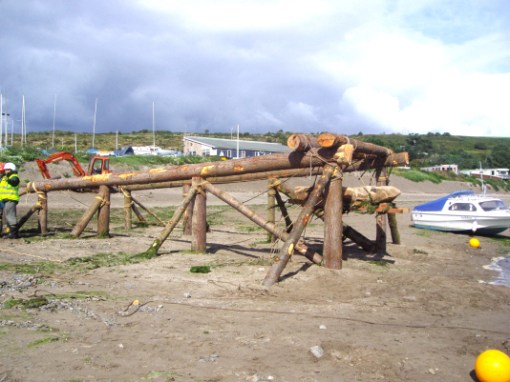
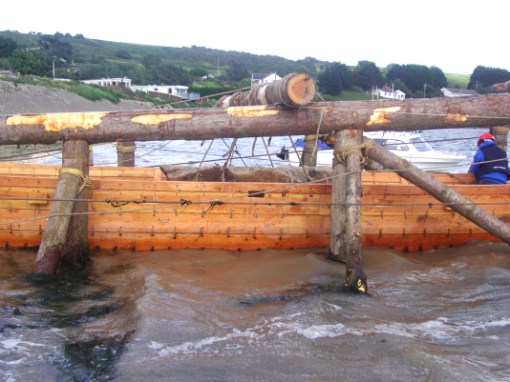
On the 15th August, near Poppit Sands, in Cardigan, West Wales, several skilled artisans showed how they would load a boat with a multi-ton bluestone. They did this with a force 7 on-shore gale battering the shore-line. In the time it took for the tide to come in, a flawless lowering took place of a large bluestone onto a prepared cradle within a near-replica of the boat found at Ferriby during the early 70s.

Under the direction of a film crew working for the state-side Discovery Channel, not a single multicoloured pullover bearded archaeologist was harmed during this risky undertaking, primarily because none were employed. Instead, the company wisely sought out highly skilled local craftpeople, Nick, Dougie and Paul, time-served in the construction and repair of wooden boats including one (www.Keewaydin.com) weighing in at over 100 tons, and having much experience of building large wooden structures for maneuvering seemingly unfeasibly heavy weights. They delivered the goods with utter confidence and without fuss. The spectacle was a joy to behold.

The history of replicating aspects of how the bluestones were moved from sites in the Preseli mountains of West Wales is colourful, to say the least.  In 1923, Dr H H Thomas, a petrologist, wrote a seemingly innocent paper indicating that most of the Stonehenge bluestones had originated from just a very few outcrops around Carn Meini, near the village of Mynachlog ddu in North Pembrokeshire. Ever since a series of vitriolic and quite emotional arguments have periodically flared up to either applaud Dr Thomas on finally nailing this vital question for Stonehenge researchers, or to completely rubbish his experimental methodology because the stones “must have got there by the action of glaciation.”
The question is an important one, because if moved by the hand of man, it poses some humdinger other questions about the capabilities and intentions of the Stonehenge builders. These are uncomfortable to mainstream archaeologists, many of whom lie awake at night racked with anxiety whenever the present rather cosy model of Neolithic life is threatened by increased reality.

This ‘bluestone argument’ has recently been reactivated through the work of a team of geologists and archaeologists whose most well-known spokesperson, the amiable Professor Mike Parker-Pearson (Sheffield), oversaw the excavation of a buried and large megalith from a lowland outcrop on the northern side of the Preselis near Pont Saeson, near Brynberian, in 2011.Although not a classic spotted bluestone, this beast’s geology exactly matched that of the nearby outcrop and also matched the chemistry of several others of the “non-bluestone bluestones” at Stonehenge. The theory is put forward that, based on the evidence so far, no ice-age could have moved this stone or other ones from this site over the Preselis to Stonehenge. That the outcrop lies adjacent to a tributary of the Nevern river also supports the theory of transport by river, then the sea, as per the now traditional theory first promoted in the 1950s by Professor Richard Atkinson (Cardiff) and described within his still remarkably comprehensive book Stonehenge (Unwin, 1956). A later edition of his book has a Byronic illustration ( by Alan Sorrell) of a raft holding a doomed bluestone and crewed by savages being lashed by a Pembrokeshire so’westerly.
Now Atkinson really was old school archaeologist. Never far from a cigarette holder and always sporting a bow-tie, ‘Dickie’ Atkinson produced a classic 1950s TV re-inactment of bluestone moving using ‘multiple punts’ and other supposedly neolithic craft on a stretch of the Bristol Avon, using public schoolboys as stone-age stone movers. It was all rather Enid Blyton and Eton mess.
This may appear laughably naïve to us today, yet later attempts have been far more dangerous to life and limb than this first filmed effort. Perhaps it was the lashings of ginger beer that fortified the crews on the Atkinson boats, or perhaps it was just that folk had far more common sense than today, for since then, two attempts have sent bluestones tumbling to the bottom of Milford Haven, or Neyland, and at least four people have been hospitalized with crushing and fracturing injuries as a result of attempting to lift or move these heavy monoliths.

During the heady days of the new millennium, a lottery funded attempt to take a bluestone from Carn Menyn to Stonehenge became part of local folklore, and is a story that will be told to grandchildren by their grandparents for a while yet, as it contains all the tragedy, farce and comedy of a good narrative. The fated single stone now languishes in 70 feet of water opposite Pembroke Dock, where it lends support to the dangerous theory that suggests, perhaps, we have actually devolved in our abilities as a species since the Stone Age.

Those who have taken the trouble to read my own contributions to the matter of Stonehenge (in books, presentations and via http://www.skyandlandscape.com) will appreciate that another question needs to be asked concerning the monument. Once they are seen to have been moved to Salisbury Plain by the hand of man, it goes beyond how the bluestones arrived there and becomes why they were so important in the monument? It is 135 miles (as the crow flies) from Preseli to Stonehenge, and these stones were not moved without some powerful driving motivation. What might that be, eh? If the glaciation theory is attenuated by this new evidence, then ipso facto the argument for the bluestones having been moved by human intent is fortified. And this then begs a really tricky ‘geomantic’ question: Might the location of the bluestones, rather than their geological composition, be a significant reason for their required presence at Stonehenge?

No one in academia presently wants to get anywhere near this question, yet today’s successful positing of a fat bluestone into the bowels of a believable neolithic boat scores an important point in supporting the theory that the moving of the bluestones occurred through human intent. That being the case, why the Neolithic culture should have been compelled to undertake such a task now surely commands our utmost attention.

Watch the increasing thrumming emanating from various blogs and websites manned 24/7 by researchers, zealots, seekers, bigots and unemployed folk sporting archaeology degrees. Finally, watch the documentary on the Discovery Channel when it comes out!

Written by
Source Link: http://www.matrixofcreation.co.uk/megalithic-sciences/item/93-moving-the-bluestones-at-last-a-successful-method-is-demonstrated

Blog sponsored by ‘Stonehenge Guided Tours’ www.StonehengeTours.com

Merlin says “The BIG  debate continues – Glacier V Bronze Age Boat”

 The Stonehenge News Blog


Stonehenge life-sized Neolithic homes to be built

2 10 2012

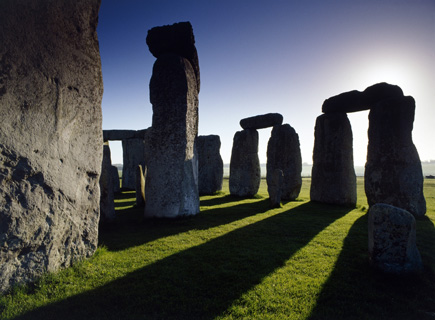
A contract to build three life-sized Neolithic homes at Stonehenge in Wiltshire has been put out to tender.

English Heritageis inviting contractors to bid for the £60,000 project, which is part of a £27m scheme to improve the setting of the monument.

Using authentic materials, the prehistoric homes will be based on those excavated at Durrington Walls.

English Heritage said the buildings will provide a “real and tangible link for visitors to the distant past”.

The Neolithic homes will be based on dwellings excavated at nearby Durrington Walls

The Neolithic homes will be based on dwellings excavated at nearby Durrington Walls

The £27m scheme to build a new visitor centre and close the road alongside the ancient monument, was begun in July.

But a “key aim” for the new centre is to create “a sense of prehistoric people using, working and living in the landscape”, an English Heritage spokesperson said.

‘Interactive and experimental’

The recreated Neolithic buildings will form part of an “interactive and experiential” external exhibition at the 3,500-year-old World Heritage site which receives more than one million visitors a year.

“Visitors will be able to walk into these houses, see how people may have lived 4,500 years ago and experience something of the lifestyle of the builders who constructed Stonehenge,” the spokesperson said.

The prehistoric homes will be based on the foundations of dwellings discovered at Durrington Walls in 2007.

The large settlement, dating back to 2600-2500 BC, was discovered under earthworks 3km (2 miles) from the stone circle.

‘Learning project’

“We’ve had about 15 to 20 contractors – mainly architects, traditional builders and civil engineers – respond,” said Robert Campbell from English Heritage.

“But it’s a learning project – the contractor will be working with volunteers, using Neolithic building techniques and materials which hopefully will have been collected from the local area.

“It’s a fantastic learning experience – but quite a commitment.”

A prototype Neolithic house will be erected at Old Sarum in early 2013 with the new visitor centre at Stonehenge due to open in Autumn 2013. Link source: http://www.bbc.co.uk/news/uk-england-wiltshire-19797815

Sponsored by ‘Stonehenge Guided Tours’ – www.StonehengeTours.com

Merlin says “I want to live in one”

The Stonehenge News Blog


The Harvest Moon is coming this weekend

27 09 2012

The Harvest Moon is coming this weekend!  The moon has been waxing larger each night, and full moon is the night of September 29th-30th, 2012. In traditional skylore, the Harvest Moon is the full moon closest to the autumnal equinox. For us in the Northern Hemisphere, the Autumnal equinox came on September 22nd. That makes the September 29-30 full moon the Harvest Moon.

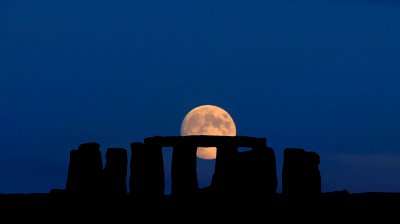
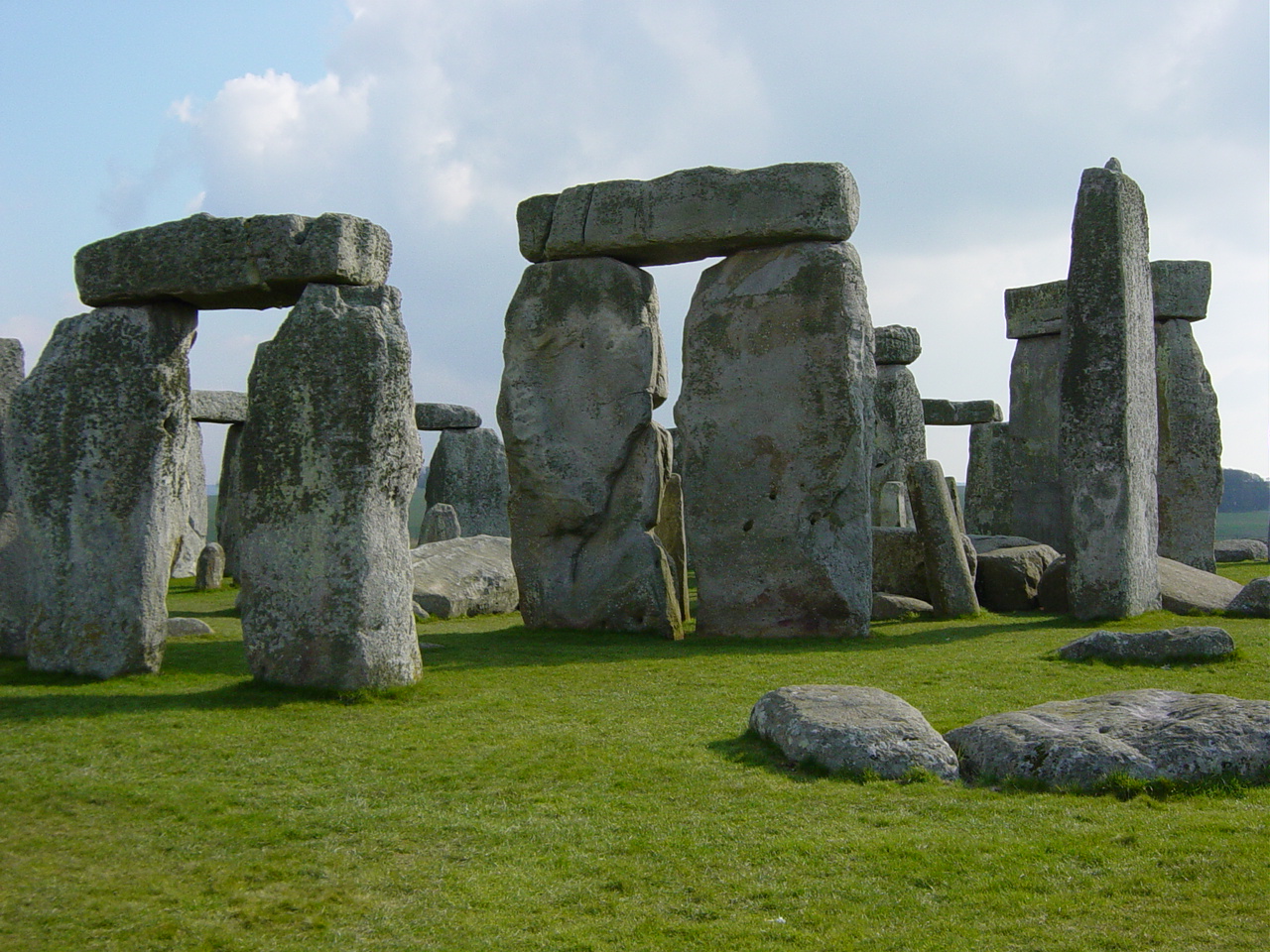
harvest-fullmoon-stonehengeSituated on the edge of Salisbury Plain, the prehistoric ceremonial landscape of Stonehenge occupies a large, sparsely populated area of ancient downland ideal for observing the Harvest Moon.

The Harvest Moon is coming! Harvest Moon is the full moon closest to the autumn equinox. It’s the full moon of September 29th-30th .


So don’t just look for the Harvest Moon on the night of September 29 or 30. Look for the moon to be bright and full-looking for several nights at the end of September, 2012. If you live far enough north – for example, in the northern states, Canada or Alaska – the Harvest Moon will continue to shine from dusk until dawn into early October. This procession of moonlit nights is what characterizes the Harvest Moon.

Why is the Harvest Moon special?

Harvest Moon is just a name. It’s the name for the full moon nearest the autumnal equinox. In the Northern Hemisphere, you’ll always see the Harvest Moon in either September or October. In the Southern Hemisphere, a moon with these same characteristics always comes in March or April.

But the Harvest Moon is more. Nature is particularly cooperative around the time of the autumn equinox to make the full moonrises unique around this time.

Here’s what happens. On average, the moon rises about 50 minutes later each day. But when a full moon happens close to the autumnal equinox, the moon (at mid-temperate latitudes) rises only about 30 minutes later daily for several days before and after the full Harvest moon. Why? The reason is that the ecliptic – or the moon’s orbital path – makes a narrow angle with the evening horizon around the time of the autumn equinox. The narrow angle of the ecliptic results in a shorter-than-usual rising time between successive moonrises around the full Harvest Moon.

These early evening moonrises are what make every Harvest Moon special. Every full moon rises around sunset. After the full Harvest Moon, you’ll see the moon ascending in the east relatively soon after sunset for several days in a row at northerly latitudes. The lag time between successive moonrises shrinks to a yearly minimum, as described in the paragraph above. Because of this, it seems as if there are several full moons – for several nights in a row – around the time of the Harvest Moon.

Is the Harvest Moon bigger, or brighter or more colorful?

Not necessarily, but the actual size of the Harvest Moon depends on the year. The Harvest Moon has the reputation of being especially big and bright and orange. But it isn’t really the Harvest Moon’s size or brightness that distinguishes it from other full moons. In fact, the 2012 Harvest Moon is a touch smaller than an average-sized full moon.

Still, you might think otherwise. That’s because the Harvest Moon has such a powerful mystique. Many people look for it shortly after sunset around the time of full moon. After sunset around any full moon, the moon will always be near the horizon. It’ll just have risen. It’s the location of the moon near the horizon that causes the Harvest Moon – or any full moon – to look big and orange in color.

The orange color of a moon near the horizon is a true physical effect. It stems from the fact that – when you look toward the horizon – you are looking through a greater thickness of Earth’s atmosphere than when you gaze up and overhead. The atmosphere scatters blue light – that’s why the sky looks blue. The greater thickness of atmosphere in the direction of a horizon scatters blue light most effectively, but it lets red light pass through to your eyes. So a moon near the horizon takes on a yellow or orange or reddish hue.

The bigger-than-usual size of a moon seen near the horizon is something else entirely. It’s a trick that your eyes are playing – an illusion – called the Moon Illusion. You can lengthy explanations of the Moon Illusion by googling those words yourself.

How the Harvest Moon got its name

So why is this moon – the moon closest to the autumnal equinox – called the Harvest Moon?

The shorter-than-usual time between moonrises around the full Harvest Moon means no long period of darkness between sunset and moonrise for days in succession. In the days before tractor lights, the lamp of the Harvest Moon helped farmers to gather their crops, despite the diminishing daylight hours. As the sun’s light faded in the west, the moon would soon rise in the east to illuminate the fields throughout the night.

Who named the Harvest Moon? That name probably sprang to the lips of farmers throughout the Northern Hemisphere, on autumn evenings, as the Harvest Moon aided in bringing in the crops. The name was popularized in the early 20th century by the song below.

Shine On Harvest Moon
By Nora Bayes and Jack Norworth (1903)

Shine on, shine on harvest moon
Up in the sky,
I ain’t had no lovin’
Since January, February, June or July
Snow time ain’t no time to stay
Outdoors and spoon,
So shine on, shine on harvest moon,
For me and my gal.

Bottom line: The Harvest Moon will come in late September in 2012. The Harvest Moon is the full moon closest to the autumnal equinox, which in 2012 comes on September 22. So the full moon of September 29-30 is 2012′s Harvest Moon. October 1 will have a beautiful bright full-looking moon, too. The Harvest Moon is not really bigger, brighter or more pumpkin-colored than other full moons, but it’s special because, at this time of year in the Northern Hemisphere, the time between successive moonrises is shorter than usual. Enjoy………….

Link: http://earthsky.org/astronomy-essentials/harvest-moon-2

Sponsored by ‘Stonehenge Guided Tours’ – www.Stonehengetours.com

The Stonehenge News Blog


The ‘Stonehenge giant’ statue is put up for ren

25 09 2012

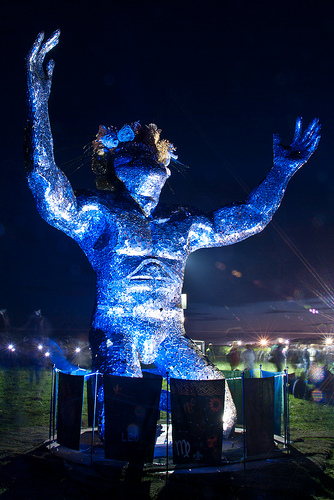
A seven-tonne steel statue, erected at Stonehenge each year to mark the summer solstice, is to be rented out.

The 22ft (6.70m) figure, known as the Ancestor, cost more than £35,000 and took nine months to build.

The Ancestor is over 20ft tall and weighs more than seven tonnes

The Ancestor is over 20ft tall and weighs more than seven tonnes

But its creators, Andy Rawlings and Michelle Topps, have been unable to sell it and now want to rent the statue out for festivals and events.

Mr Rawlings said: “We haven’t seen a penny for him so now we need the Ancestor to be working for us.”

The monumental statue with “head thrown back and arms open wide” made its debut at the summer solstice celebrations at Stonehenge in 2010.

And until recently, the “Big Man” had a prominent position outside the Holiday Inn on the A303 at Solstice Park in Amesbury.

Now it is back at the couple’s workshop undergoing refurbishment and “some anti-rust treatment”.

“He’s actually cost us closer to £40,000 – he’s had a new arm and we were paying for the insurance on having him outside the Holiday Inn,” said Mr Rawlings.

“It’s all costing us and we really need him [the Ancestor] to pay for himself now.”

Created out of thousands of hand-cut pieces of steel welded to a steel frame, the statue can – according to Mr Rawlings – be “easily” dismantled and loaded on to a 7.5 tonne lorry.

‘Easy to assemble’

“People don’t realise how easy he is to assemble and just how moveable he is,” said Mr Rawlings.

“With a crane-assisted lorry, two people can do it in a couple of hours.

“And we really like the idea of renting him out – either for a day or long-term – and taking him to festivals or places like Landsend, Blackpool or even football clubs.

“And he’ll be back for the summer solstice at Stonehenge again next year.”

Refurbishment is expected to be completed within the next couple of months, after which the Ancestor will be available to hire.

Link source: http://www.bbc.co.uk/news/uk-england-somerset-19697900

Blog sponsored by ‘Stonehenge Guided Tours’ www.StonehengeTours.com

The Stonehenge News Blog


Stonehenge marks Autumn Equinox.

23 09 2012

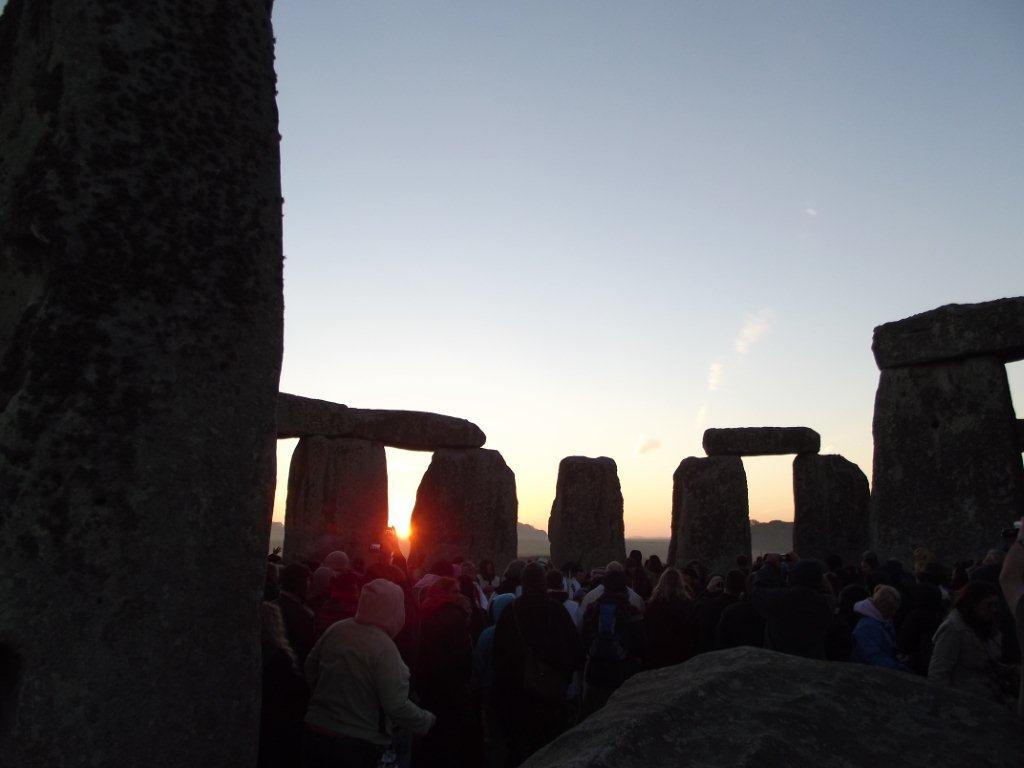
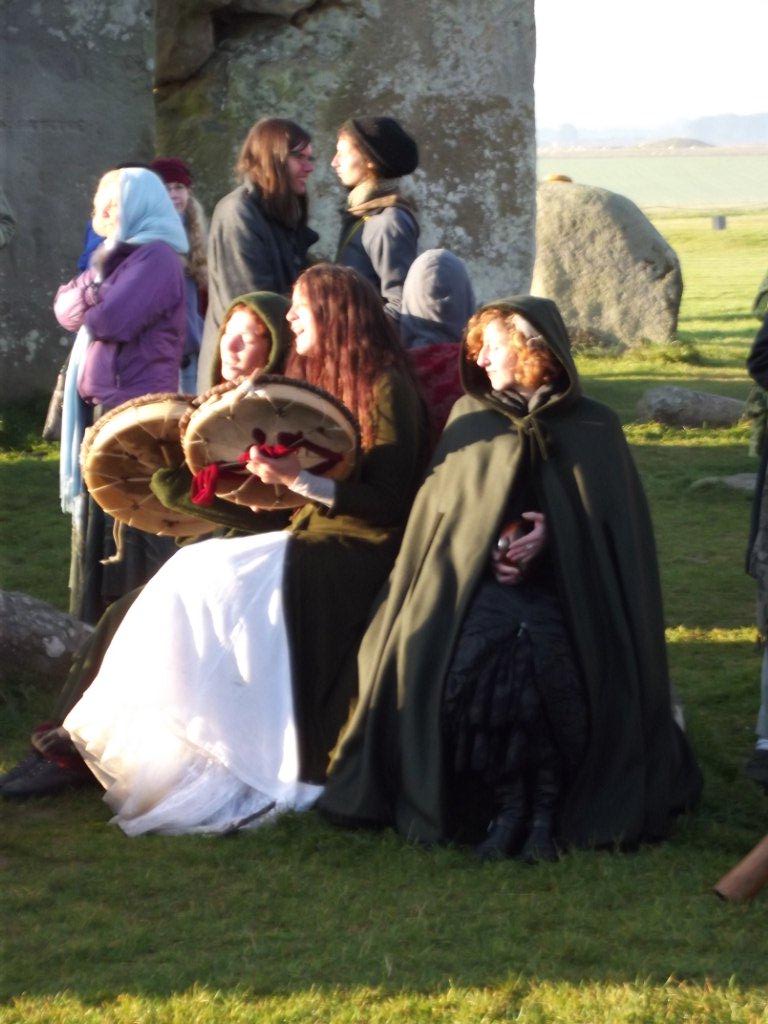
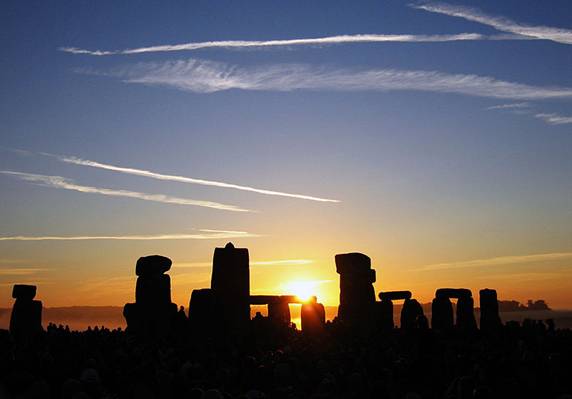
100’s of people gathered at Stonehenge to mark this years Autumn Equinox and enjoyed a spectacular sunrise.

Stonehenge has been an important religious site for over 4,000 years. Modern druids have been celebrating the Autumnal Equinox there since the early 20th Century.

On September 21st – 23rd every year 100’s of people travel to ancient religious sites, such as Stonehenge and Avebury in England, in order to celebrate the Spring and Autumn Equinox. The Autumn Equinox is also known as Mabon and is an important festival day for many modern pagans.

People were unable to access Stonehenge during the Equinox and Solstice after a ban was imposed in 1985 at the request of English Heritage. This ban was lifted in 2000 and annual celebrations have been held ever since

Almost all pagans celebrate a cycle of eight festivals. Four of the festivals have Celtic origins and are known by their Celtic names, Imbolc, Beltane, Lughnasadh and Samhain. The other four are points in the solar calendar. These are Spring and Autumn Equinoxes, and the Summer and Winter Solstices.

Autumn Equinox Photo stream – click here

The Autumnal Equinox marks the moment when the sun crosses the equator on its apparent journey southward and we experience a day and a night that are of equal length. It’s the time of the final harvest when many crops including apples, grapes, nuts, squash, corn, and berries are gathered. Astrologically speaking, this is the date when the Sun enters the sign of Libra, the balance.Stonehenge Autumn Equinox 2012

The equinoxes (there are two- the Vernal Equinox, when the Sun enters Aries around March 21, is the first day of spring) have a rich place in mythology and ancient tradition. From Stonehenge in the British Isles to the pyramids in Central America, ancient cultures created means by which to measure the change of the seasons. For example, the Anasazi Indians of Chaco Canyon, NM made a hole between some boulders that the sun could shine through. The shafts of sunlight made a dagger shape of the far wall and they drew a spiral there to mark the equinox. It is said that the Druids would cut wands from the willow trees at this time of year. The willow was sacred to them and the wands were seen as powerful tools for use in divination.

Mythically, this is the day when the god of light is defeated by his twin and alter-ego, the god of darkness. It is the time of year when night conquers day- propelling us toward the Winter Solstice which marks the longest night of the year. Mabon, a Welsh god who symbolizes the male fertility of the land, is associated with the Autumnal Equinox. In some myths, he is seen as the male counterpart to Persephone of the Greek myths.

During the weeks around the Equinox, assess your harvest of the seeds of dreams and goals you planted earlier this year. Analyze your progress, acknowledge your successes, and give thanks. After that point of balance, natural law encourages us to turn inward for growth. Like Persephone going to the underworld on her annual journey, the time from the Autumnal Equinox to the Winter Solstice is a perfect opportunity to take a deep look inside yourself. Weed out what has completed its cycle and nourish the roots of what you want to grow again in spring.

Link: http://beforeitsnews.com/spirit/2012/09/autumnal-equinox-2012-harvest-your-gold-2445928.html
L
ink: http://news.nationalgeographic.com/news/2012/09/110921-autumnal-equinox-northern-hemisphere-first-day-fall-2012-science/
Link:

Blog sponsored by The Stonehenge Tour Company – www.StonehengeTours.com

Merlin says “A Spectacular sunrise and a peaceful gathering made this years Equinox celebrations one to remember”

The Stonehenge News Blog


Autumnal Equinox 2012

18 09 2012
The Autumn Equinox (also known as Mabon) is celebrated when day and night are of equal duration before the descent into increasing darkness and is the final festival of the season of harvest.  For many pagans, this is the time to reflect on the past season, and to recognize the balance of the year has changed. 2012 Autumnal Equinox takes place on September 22nd, at 16.49am UK time , but when ‘open access’ to Stonehenge starts is decided by English Heritage and depends on visibility.

The sunrise is at 6.48am.  Equinox sunrise is Saturnday 22 September 2012, expect English Heritiage to open their gates around 6 a.m

Stonehenge EqunoxPublic access to Stonehenge is denied after dark, so if you want to see the sunset on September 22nd (18.59pm), you’ll have to stand on either the Avenue or on the side of the A344

The Autumnal Equinox

In September is the Fall Equinox, which has come to be called Mabon by many contemporary Neo-Pagans. Occuring approximately on September 21st, this is the day when the hours of daylight and nighttime are once again balanced. Calender days from now until the Winter Solstice will slowly get shorter and shorter in their daylight hours.

Agriculturally, this time of year the harvest is now in full swing, with late summer and fall fruits, vegetables and grains being gathered up before winter. This is the time of year a lot of canning or preserving of garden foods takes place. Hunting season also starts around this time, and this was when farmers would slaughter animals and preserve meat for the coming months as well.

This holiday is the last of the harvest holidays which began with the summer solstice and continued with Lammas.

September 22nd Harvest time!
The Autumn Equinox or Harvest Home is also called Mabon, pronounced ‘MAY-bon’, after the Welsh god Mabon ap Modron, which means literally ‘son of mother’. Mabon appears in ‘The Mabinogion’ tale. The Druids call this celebration, Mea’n Fo’mhair, and honour The Green Man, the God of the Forest, by offering libations to the trees. The Welsh know this time as ‘Alban Elfed’, meaning ‘light of autumn’. This is the point of the year when once again day and night are equal – 12 hours, as at Ostara, the Spring Equinox. The Latin word for Equinox means ‘time of equal days and nights’. After this celebration the descent into winter brings hours of increasing darkness and chiller temperatures. It is the time of the year when night conquers day. After the Autumn Equinox the days shorten and nights lengthen. To astrologers this is the date on which the sun enters the sign of Libra, the scales, reflecting appropriately the balanced day and night of the equinox. This was also the time when the farmers brought in their harvested goods to be weighed and sold.

Harvest festival This is the second festival of the season of harvest – at the beginning of the harvest, at Lammas, winter retreated to his underworld, now at the Autumn equinox he comes back to earth. For our Celtic ancestors this was time to reflect on the past season and celebrate nature’s bounty and accept that summer is now over. Harvest Home marks a time of rest after hard work, and a ritual of thanksgiving for the fruits of nature. This is the time to look back on the past year and what you have achieved and learnt, and to plan for the future. The full moon nearest to the Autumn Equinox is called the Harvest Moon and farmers would harvest their crops by then, as part of the second harvest celebration. Mabon was when livestock would be slaughtered and preserved (salted and smoked) to provide enough food for the winter. At the South Pole they will be celebrating the first appearance of the sun in six months. However, at the North Pole they will be preparing for six months of darkness. During Medieval times, the Christian Church replaced Pagan solstices and equinox celebrations with Christianized occasions. The Autumn equinox celebration was Michaelmas, the feast of the Archangel Michael.

The triple Goddess – worshipped by the Ancient Britons, is now in her aspect of the ageing Goddess and now passes from Mother to Crone, until she is reborn as a youthful virgin as the wheel of nature turns. At the Autumn equinox the goddess offers wisdom, healing and rest. Mabon Traditions The Wicker man There was a Celtic ritual of dressing the last sheaf of corn to be harvested in fine clothes, or weaving it into a wicker-like man or woman. It was believed the sun or the corn spirit was trapped in the corn and needed to be set free. This effigy was usually burned in celebration of the harvest and the ashes would be spread on the fields. This annual sacrifice of a large wicker man (representing the corn spirit) is thought by many to have been the origin of the misconception that Druids made human sacrifices. ‘The reaping is over and the harvest is in, Summer is finished, another cycle begins’ In some areas of the country the last sheaf was kept inside until the following spring, when it would be ploughed back into the land. In Scotland, the last sheaf of harvest is called ‘the Maiden’, and must be cut by the youngest female in attendance.

To Autumn O Autumn, laden with fruit, and stained With the blood of the grape, pass not, but sit Beneath my shady roof, there thou may’st rest, And tune thy jolly voice to my fresh pipe; And all the daughters of the year shall dance, Sing now the lusty song of fruits and flowers. William Blake Mabon is a time to reflect, as we reap the harvest of experience from the past year – the completion of another turn of the Great Wheel. Corn Dollies Corn dollies were also made from the last sheaf and kept in the house to protect the inhabitants from bad spirits during the long winter. Apples To honour the dead, it was also traditional at Mabon to place apples on burial cairns, as symbolism of rebirth and thanks. This also symbolizes the wish for the living to one day be reunited with their loved ones. Mabon is also known as the Feast of Avalon, deriving from the meaning of Avalon being, ‘the land of the apples’.

Merlin says “Equinoxes do not always occur on the same day each year, and generally will occur about 6 hours later each year, with a jump of a day (backwards) on leap years”

Link: http://pagancalendar.co.uk/

Follow Stonehenge on Twitter for latest Equinox news and information – click here

Blog sponsored by  www.StonehengeTours.com

Merlin @ Stonehenge –
The Stonehenge Stone Circle Website


Distracted motorists have most accidents passing Stonehenge

14 09 2012

Distracted motorists have more accidents passing Stonehenge than any other British landmark, a new study found

Be careful driving past Stonehenge. It's the landmark most likely to distract motorists. Photo: Alamy

Be careful driving past Stonehenge. It’s the landmark most likely to distract motorists. Photo: Alamy

Distracted motorists have more accidents passing Stonehenge than any other British landmark, a new study found.

Over a third of drivers, 34 per cent, have had a prang or near miss in the UK as a result of taking their eyes off the road to admire a view.

And an admiring 14 per cent have slammed on the brakes to get a longer look – typically reducing their speed by 27 mph.

Accidents resulting from these distractions cause an average 413.56 pounds of damage each time, the study by insurance firm MORE TH>N found.

A quarter of motorists, 26 per cent, have been distracted by the pre-historic monument of Stonehenge near Amesbury, Wiltshire.

Rubber-neckers there typically take their eyes of the road three times, each for 3.74 seconds.

This mean motorists – doing 40 mph – could drive past for 200 metres without paying attention to the road.

A careless 13 per cent of those who were distracted by Stonehenge have crashed or almost crashed as a result, the study of 2,000 motorists found.

The Angel of the North, in Gateshead, Tyne and Wear, is the second most dangerous landmark and the Blackpool Tower, in Lancs, third.

A captivated 18 per cent and 12 per cent of motorists find their eyes drifting towards these sites as they pass.

Just over one in ten of these drivers, 11 per cent, have had or nearly had an accident at these two beauty spots.

The top ten also includes the Scottish Highlands, the House of Parliament, Windsor Castle, Tower Bridge, and Clifton Suspension Bridge.

Cheddar Gorge and Severn Bridge complete the list.

Motorist Jason Richardson, from Southampton, Hants, said he often admires the view as he drives around the country for work.

The sales director, 32, said: “I spend my life on the road visiting customers and it can be incredibly boring looking at miles of tarmac on the motorways.

“So when you see a spectacular view or a landmark you have read about or seen on TV it is hard to keep your eyes on the road.

“I have driven past Stonehenge and the Angel of the North and had to settle for a peek because I didn’t have time to stop.”

Janet Connor, from MORE TH>N, said: “Travel guides, friends and family often encourage us to take the scenic route.

“But until now the perils of admiring the world beyond the windscreen have not been fully explored.

“The UK is blessed with some amazing sights but motorists need to keep their eyes on the road and resist the lure of staring at them while driving.

“To avoid having an accident, park-up and enjoy the view safely.”

Top ten accident hostpots.

1. Stonehenge, Wiltshire

2. Angel of the North, Gateshead

3. Blackpool Tower, Blackpool

4. Scottish Highlands (towards Glencoe)

5. Big Ben/Houses of Parliament, London

6. Windsor Castle, Windsor

7. Tower Bridge, London

8. Clifton Suspension Bridge, Bristol

9. Cheddar Gorge, Somerset

10. Severn Bridge, Aust-Chepstow

Link Source: http://www.telegraph.co.uk/earth/environment/archaeology/9540840/Distracted-motorists-have-most-accidents-passing-Stonehenge.html

Sponsored by ‘Stonehenge Guided Tours’ www.StonehengeTours.com

Stonehenge Stone Circle News Blog


Herders rather than farmers, built Stonehenge

10 09 2012

The ancient builders of Stonehenge may have had a surprisingly meaty diet and mobile way of life. Although farming first reached the British Isles around 6,000 years ago, cultivation had given way to animal raising and herding by the time Stonehenge and other massive stone monuments began to dot the landscape, a new study finds.

Stonehenge in southern England may have been built by herders, not farmers, suggests a new analysis of crop remains from the last several millennia.

Stonehenge in southern England may have been built by herders, not farmers, suggests a new analysis of crop remains from the last several millennia.

Agriculture’s British debut occurred during a mild, wet period that enabled the introduction of Mediterranean crops such as emmer wheat, barley and grapes, say archaeobotanists Chris Stevens of Wessex Archaeology in Salisbury, England, and Dorian Fuller of University College London. Farming existed at first alongside foraging for wild fruits and nuts and limited cattle raising, but the rapid onset of cool, dry conditions in Britain about 5,300 years ago spurred a move to raising cattle, sheep and pigs, Stevens and Fuller propose in the September Antiquity.

With the return of a cultivation-friendly climate about 3,500 years ago, during Britain’s Bronze Age, crop growing came back strong, the scientists contend. Farming villages rapidly replaced a mobile, herding way of life.

Many researchers have posited that agriculture either took hold quickly in Britain around 6,000 years ago or steadily rose to prominence by 4,000 years ago. In either case, farmers probably would have assembled Stonehenge, where initial work began as early as 5,500 years ago, with large stones hauled in around 4,400 years ago (SN: 6/21/08, p.13).

But if Stevens and Fuller’s scenario of British agriculture’s ancient rise, demise and rebirth holds up, then small groups of roaming pastoralists collaborated to build massive, circular stone and wood structures, including Stonehenge. Shifts from farming to pastoralism, sometimes accompanied by construction of stone monuments, occurred around the same time in parts of Africa and Asia, the researchers say.

“Part of the reason why pastoralists built monuments such as Stonehenge lies in the importance of periodic large gatherings for dispersed, mobile groups,” Fuller says. Collective meeting spots allowed different groups to arrange alliance-building marriages, crossbreed herds to boost the animals’ health and genetic diversity and hold ritual feasts. At these locations, large numbers of people could be mobilized for big construction projects, Fuller suggests.

“A predominantly pastoralist economy in the third millennium B.C. accords well with available evidence and provides a suitable backdrop to the early development of Stonehenge,” says archaeologist Timothy Darvill of Bournemouth University in England. But he believes many large stones were brought to Stonehenge during a later upswing in cereal cultivation, as pastoralism receded in importance.

Stevens and Fuller compiled data on more than 700 cultivated and wild food remains from 198 sites across the British Isles whose ages had been previously calculated by radiocarbon dating. A statistical analysis of these dates and associated climate and environmental trends suggested that agriculture spread rapidly starting 6,000 years ago. About 700 years later, wild foods surged in popularity and cultivated grub became rare.

Several new crops — peas, beans and spelt — appeared around 3,500 years ago, when storage pits, granaries and other features of agricultural societies first appeared in Britain, Stevens and Fuller find. An influx of European farmers must have launched a Bronze Age agricultural revolution, they speculate.

Stevens and Fuller’s analysis offers only a general breakdown of how farming and pastoralism developed in Britain, asserts archaeologist Alasdair Whittle of Cardiff University in Wales. The scale of cultivation, even during times characterized by relatively abundant remains of domesticated plants, remains uncertain, Whittle says.

Even if farmers didn’t built Stonehenge, cultivators erected plenty of massive stone monuments, Whittle holds.
Bruce Bower
Link source: http://www.sciencenews.org/view/generic/id/343984/title/Herders%2C_not_farmers%2C_built_Stonehenge

Sponsored by ‘Stonehenge Guided Tours’ www.StonehengeTours.com
The Stonehenge News Blog


Stonehenge. Henge Diggers – Salisbury & South Wiltshire Museum

8 09 2012

Saturday 8 September 2012 – Saturday 12 January 2013. This photographic exhibition captures the actions and emotions of archaeologists from universities across Britain whilst they carried out ground-breaking new work to reinterpret the Stonehenge landscape.  Bill Bevan was resident photographer on site for three years during the excavations of the internationally important Stonehenge Riverside Project (2004-2010).  His photographs and the accompanying text offer the visitor an unusual and revealing vantage point from which to view the archaeologists at work. 

Stonehenge Riverside Project is a joint collaboration between archaeologists at the Universities of Sheffield, Manchester, Bristol, UCL and Bournemouth.   This exhibition has been funded by Arts Council England and Manchester University in partnership with Salisbury Museum.

Henge Diggers

An exhibition of how archaeologists work on-site, Themes of the exhibition include the working practices of archaeologists, the brief deposition of tools that mimic the ancient tool deposits they excavate, the repetitive nature of excavation and notions of time and space. All photographs are from the Stonehenge Riverside Project. Thank you to the directors of the project for generously given access to the excavations. More information about the project can be found here –www.shef.ac.uk/archaeology/research/stonehenge

Check out http://www.billbevanphotography.co.uk/ for more information about Bill’s projects.

picture credit: In The Shadow 1 by Bill Bevan, 95 x 70 cms, (c) Bill Bevan


Booking:  No booking required.


Sponsored by ‘Stonehenge Guided Tours’ – www.StonehengeTours.com

Merlin says: “Went today with the kids, well worth a visit!”

Merlin @ Stonehenge Stone Circle
The Stonehenge News Blog


Stonehenge Film Location. Thor – The Dark World

30 08 2012

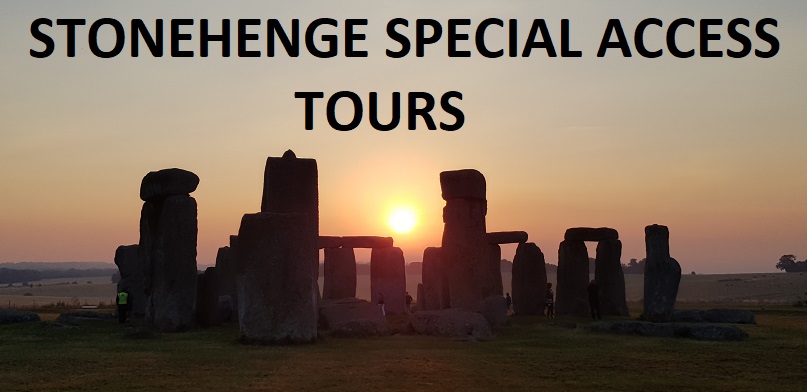
FILM crews have been at Stonehenge this morning – and rumour is they were working on upcoming Hollywood blockbuster Thor: The Dark World.

Chris Hemsworth as Thor. Pic by PA.

Chris Hemsworth as Thor. Pic by PA.

The film, starring Chris Hemsworth, Natalie Portman, Tom Hiddlestone, Stellan Skarsgård and Anthony Hopkins, is to be the eighth instalment in the Marvel Comic adaptations which have been proving a hit with cinemagoers worldwide, as well as a sequel to 2011 film Thor, directed by Kenneth Branagh.

The set at the historic monument was shrouded in secrecy on Wednesday morning but reliable sources state the location shoot for the blockbuster was being done under the film’s working title of Thursday Morning.

Australian heartthrob Hemsworth played Thor in the first film as well as in the recent Avengers movie, and also appeared in The Cabin in the Woods and Snow White and the Huntsman this year as well as 2009’s Star Trek.

Thor: The Dark World continues the adventures of Thor as seen in The Avengers, and is set to be released in November next year.

Filming on the Alan Taylor-directed production has been taking place at various locations in the UK, thought to include London and Bourne Wood near Farnham.

It is not known if any more action is due to take place at Stonehenge.


Link Source: Salusbury Journal – http://www.salisburyjournal.co.uk/news/salisbury/salisburynews/9898652.Film_being_shot_at_Stonehenge/

Sponsored by Stonehenge Guided Tours. www.StonehengeTours.com

Merlin says: “All good for Wiltshite Toursm”

Merlin @ The Stonehenge News Blog