Film promoting Stonehenge tunnel released by public bodies

2 12 2015

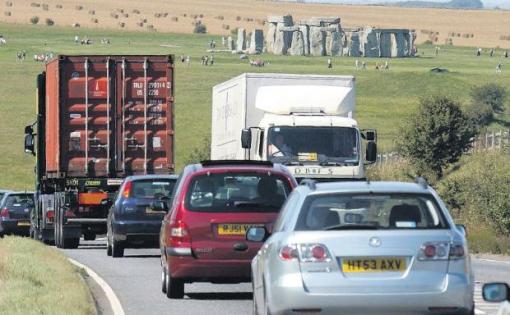
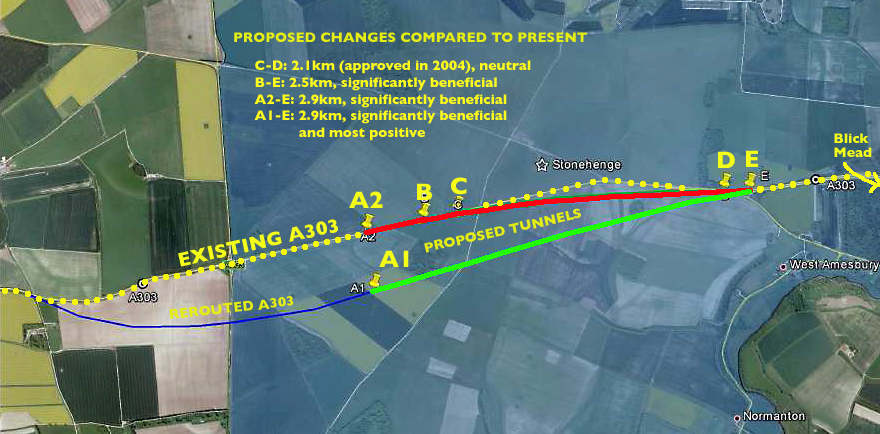
A YEAR after the Government announced plans to build a 2.9km tunnel under Stonehenge three public bodies have released a film promoting the benefits of burying the A303.

Film promoting Stonehenge tunnel released by public bodies

Film promoting Stonehenge tunnel released by public bodies

Historic England, the National Trust and English Heritage hope that construction of the tunnel will improve wildlife and nature at the World Heritage Site.

Ian Wilson, Assistant Director of Operations for the National Trust in Dorset and Wiltshire, said: “We really hope the film brings to life the very real benefits that a tunnel could bring to the Stonehenge Landscape, for people and for wildlife.

“A full scheme has yet to be designed, but the Trust supports the Government’s proposals in principle and we are committed to engaging with Highways England and others to ensure that any scheme will be fully and carefully considered and assessed.”

Alex Rennie,Source: Salisbury Journal

The Stonehenge News Blog


WINTER SOLSTICE AT STONEHENGE 2015

29 11 2015

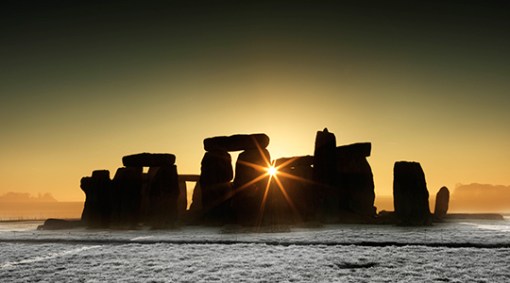
English Heritage will once again welcome people to Stonehenge to celebrate the Winter Solstice. Sunrise is just after 8am on Tuesday 22nd December and visitors will be able to access the monument as soon as it is light enough to do so safely.

frosty-sunrise

Why 22nd December? 

Many people – not least diary manufacturers – believe that the Winter Solstice always falls on 21st December. But the celebration of Winter Solstice at Stonehenge is not fixed to a specifiic date – this is because of a mismatch between the calendar year and the solar year.

MANAGED OPEN ACCESS PRACTICAL INFORMATION

Please read and respect the Conditions of Entry for Winter Solstice 2015 and the English Heritage website.

Public Transport is being provided by Salisbury Reds buses and will be running from 06:00 from Salisbury.  Stonehenge Guided Tours are offering their usual transport with expert guide service from London and Bath. Booking essential (click here to book direct)

Please be aware that parking is very limited. There is a thirty minute walk, depending on where you are parked, in low light or darkness, from the parking areas to the monument. You are therefore strongly advised to bring a torch with you for personal use.

Accessibility – parking provision for people with disabilities

A limited number of permits will be avaialable for blue badge disabled parking and there will be dedicated accessible transport to the stone circle – which will begin just prior to the opening of the monument field. Please apply to Sandra.Ross@english-heritage.org.uk

Please note that there are no other amenities or facilities available to visitors until such time as  commences.

Conditions of Entry

Please read and respect the Conditions of Entry.

Stonehenge Audio Tour: Free Download from English Heritage

Follow Stonehenge and English Heritage on Twitter for Stonehenge Solstice news and updates

The Stonehenge News Blog


English Heritage Events at Stonehenge: December 2015

29 11 2015

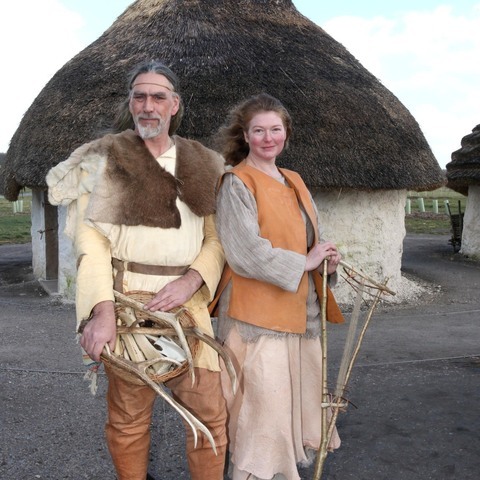
Neolithic craft and textile demonstration (Sun 6 Dec 2015)

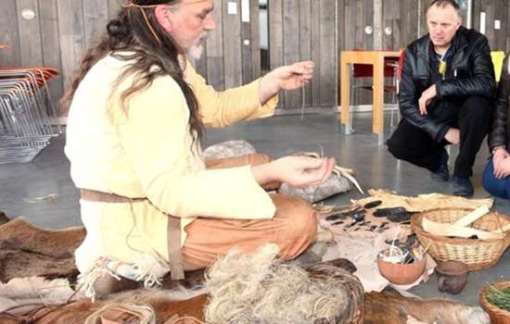
Sally Pointer and Gareth Riseborough will bring the past to life in their demonstrations of a variety of natural fabrics and crafts including cord making, twining, looped weaving, netting and leatherwork. See bone and antler worked and discover how all these materials were used in the Neolithic. Book here

neolithic-crafts-and-textile-workshop

Neolithic Textile and Craft Workshop (Mon 7 Dec 2015)

Work with textile experts Sally Pointer and Gareth Riseborough to discover more about the research and processes used to create replica Neolithic and Bronze Age clothing for Stonehenge and get hands-on experience with materials and techniques. Learn to make cordage from natural fibres and deer sinew and experiment with braiding, twining and looping techniques. All materials are supplied, and using flint tools, you will craft a needle from red deer antler to take home along with the resources to continue your project. Lunch and refreshments included. Book here

textiles-event-stonehenge

Stonehenge Christmas Shopping Evening (Wed 9 Dec 2015)

Join English Heritage on Wednesday 9th December for a festive evening of Christmas shopping and enjoy a 10% discount on purchases.

They will be serving delicious mince pies and hot mulled wine in the cafe.

Live music and Christmas carols will be sung throughout the evening and the exhibition will be open for free visits.  More info

xmas-stones.jpg

The Stonehenge News Blog


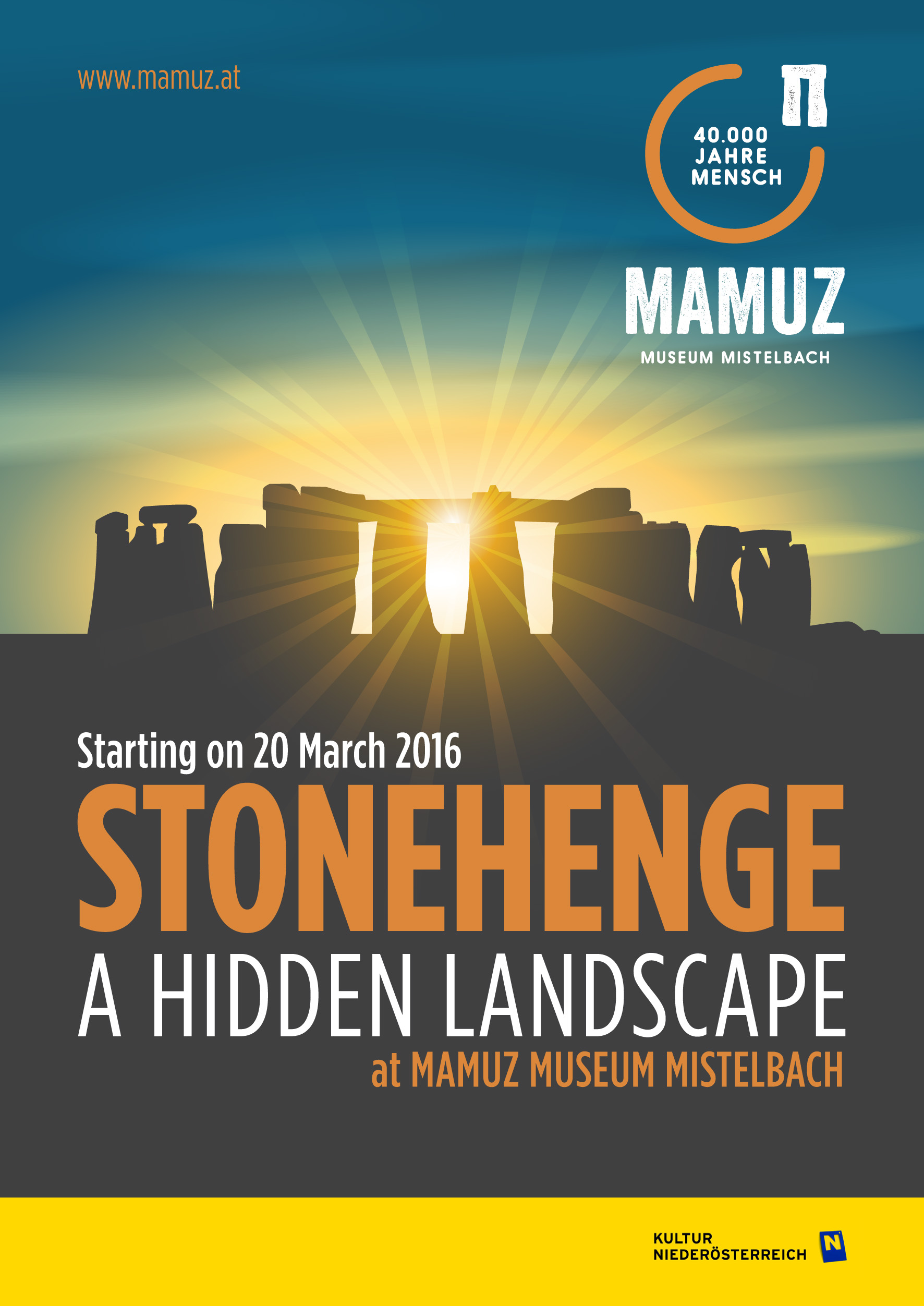
Coming 2016: “Stonehenge – A Hidden Landscape” exhibition at MAMUZ Museum Mistelbach

16 11 2015

Coming 2016: “Stonehenge – A Hidden Landscape” exhibition at MAMUZ Museum Mistelbach | Ludwig Boltzmann Institute for Archaeological Prospection and Virtual Archaeologmamuz-stonehenge-mamuz_vorderseite

New discoveries and insights into Stonehenge landscape made possible by the LBI ArchPro’s intensive research over the last five years will be – for the first time – presented in a comprehensive exhibition in Austria.

Starting on 20th March 2016, the “Stonehenge – A Hidden Landscape” exhibition at the MAMUZ Museum Mistelbach will take the visitor on a journey of more than 8.000 years through Stonehenge and its surrounding landscape including the newly discovered stone monument at Durrington Walls and original finds from the Salisbury, Wiltshire and Dorchester Museum.

MAMUZ “Stonehenge – A Hidden Landscape” website:
Article source

The Stonehenge News Blog


Stonehenge Midwinter Solstice Walk

13 11 2015

On the midwinter solstice, explore the ancient monuments of the Stonehenge landscape with National Trust. This walk is around three and a half miles. (December 20th 2015)

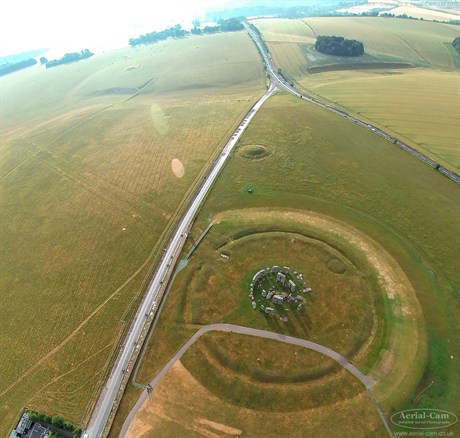
Stonehenge does not stand in isolation, but forms part of a remarkable ancient landscape of early Neolithic, late Neolithic and snow-hengeearly Bronze Age monuments. The best way to appreciate Stonehenge is on foot. You can enjoy the impressive Wiltshire countryside while exploring the ancient history that has shaped it. Follow in the footsteps of our ancient ancestors and discover the prehistoric monuments that fill the vast ancient landscape surrounding Stonehenge.

Stonehenge has far more than the stone circle. It encompass unrivalled Neolithic landscapes that contain many other fascinating and unique monuments. You could easily spend a whole day in either part of the World Heritage Site.

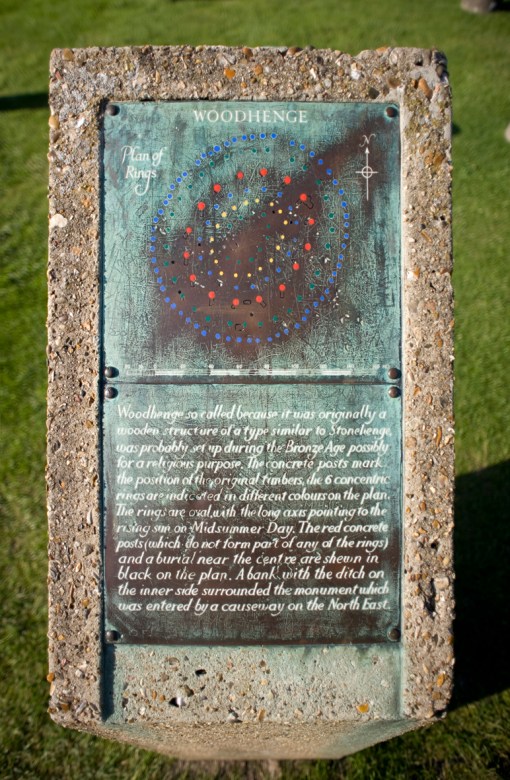
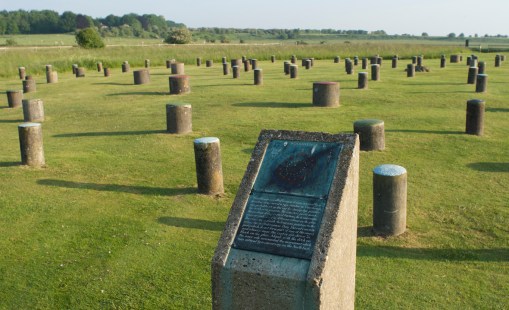
Containing more than 350 burial mounds and major prehistoric monuments such as the Stonehenge Avenue, the Cursus, Woodhenge and Durrington Walls, this landscape is a vast source of information about the ceremonial and funerary practices of Neolithic and Bronze Age people.

It can also help our understanding of regional and international contacts from the 4th to 2nd millennia BC, and shed light on how prehistoric society was organised.

National Trust Stonehenge Midwinter Walk: 20th December (1pm – 5pm)
Immerse yourself in the ancient landscape of Stonehenge, there’s so much to explore and many mysteries to unravel.
Booking essential (click here to book direct)

Stonehenge Guided Tours are offering their usual Midwinter Solstice Tours from London and Bath
Booking essential (click here to book direct)

The Stonehenge News Blog
Follow us on Twitter


Stonehenge Debate: Mike Parker Pearson at the British Academy – 9th November 2015

2 11 2015

The CBA will be hosting a debate on the future management options for the landscape around Stonehenge – including the options for the road tunnel – at their Annual General Meeting on 9th November in London.

Mike Parker Pearson has been invited to give the 2015 Beatrice de Cardi Lecture at the British Academy on 9th November 2015.  The eminent scholar and archaeologist presentation will draw together years of groundbreaking research to share new interpretations of the iconic prehistoric site of Stonehenge and the landscape in which it sits.

Mike’s lecture will be preceded by a debate on the future management of the Stonehenge landscape, the CBA’s Annual General Meeting and presentation of the 2015 Marsh archaeology awards.

The event is free but registration is essential. Tickets are available now via Eventbrite or may be booked on 01904 671417 (during office hours).

Beatrice de Cardi was first Assistant Secretary and latterly Secretary of the Council for British Archaeology (CBA) from 1949 to 1973. In order to recognise her outstanding contribution to the CBA and to the archaeology discipline, the Council decided in 1976 to inaugurate a series of lectures, to be called after her. The speakers are given the freedom to discuss their own approach to any aspect of British archaeology.

The CBA headquarters in York was renamed ‘Beatrice de Cardi House’ in honour of her 100th birthday in 2014.

The Council for British Archaeology has taken a long-standing interest in the presentation and long-term preservation of the Stonehenge World Heritage Site – a unique cultural landscape.

Details of our engagement and the development of the CBA’s view can be found on our Stonehenge Saga archive web page, which includes the summary of our case to the 2004 roads inquiry.

The CBA broadly supports the position of ICOMOS UK which seeks to “achieve a solution which respects and maintains the Outstanding Universal Value of this iconic, important and unique site at the earliest opportunity”.

CBA Director, Dr Mike Heyworth MBE said:

“Stonehenge is arguably the best known prehistoric monument in the world and we must think hard before we cause irreversible damage to the landscape surrounding it – which contains many nationally important archaeological features which are not yet fully understood.

There are potential benefits from a tunnel to bury the A303 in the area of Stonehenge, but any proposals need to carefully scrutinised and we need to think of the long term implications, not just the short term needs.”

Join the debate on future options

The CBA will be hosting a debate on the future management options for the landscape around Stonehenge – including the options for the road tunnel – at our Annual General Meeting on 9 November in London.

The event is free but registration is essential. Tickets are available now via Eventbrite or may be booked on 01904 671417 (during office hours).

LINKS:
http://new.archaeologyuk.org/news/stonehenge-debate
http://www.ucl.ac.uk/archaeology/people/staff/parker_pearson

The Stonehenge News Blog
Follow us on Twitter and Facebook


Tunnel truths

29 10 2015

Mike Pitts's avatarMike Pitts Digging Deeper

ICOMOS and UNESCO are visiting Stonehenge this week, to ponder the current set of road tunnel proposals. A lot has changed since we were last thinking about such a tunnel. Despite stories in the press, these changes add up to a much better proposition than the one that had, in principle, been accepted a decade ago.

The government has apparently promised funding for an unprecedented 2.9km-long bored tunnel and further beneficial works. After so many years of failed projects, I still find that promise difficult to believe, welcome as it is. However, I was assured it really is true by National Trust and Historic England representatives on a helpful tour put on for Council for British Archaeology trustees (who kindly invited me along) a couple of weeks ago.

HE-NT mapA 2.9km-long tunnel is (in my opinion) the best of three options, none of which has been examined in detail and for none…

View original post 467 more words


Heritage experts visit Stonehenge to scrutinise tunnel plans

29 10 2015

PLANS for a 2.9km tunnel under the Stonehenge world heritage site will scrutinised by experts today when they visit the monument.

Heritage experts visit Stonehenge to scrutinise tunnel plans

Heritage experts visit Stonehenge to scrutinise tunnel plans

The government unveiled the proposal last year as part of a £2billion project to dual the A303 from Amesbury to Honiton, Devon.

Heritage officials from Unesco and the International Council on Monuments and Sites (Icomos) were invited to visit the site by the Department for Culture, Media and Sport. They will meet with stakeholders including English Heritage and Wiltshire Council.

Ian Wilson from the National Trust said: “They will be spending several days here getting to know the landscape and the outline proposals.

“At the top of our list is agreeing how we can best work together to ensure that any scheme to tackle the blight of the road that dominates the Stonehenge Landscape is located in the right place and designed and built to the specification befitting a world heritage site.”

It is expected further trips will be made to Stonehenge as the plans become finalised.

Kate Davies, general manager of Stonehenge, said: “We’re looking forward to showing the advisors the recent improvements to Stonehenge, especially the removal of the old visitor centre and the grassing over of the A344, and highlighting how removing the A303 from the landscape would improve people’s understanding and enjoyment of the ancient stones and their setting.”

Full Article in the Salisbury Journal
Alex Rennie, Reporter /

The Stonehenge News Blog


Visit Stonehenge for half term fun.

23 10 2015

This half term Stonehenge is hosting an interactive, theatrical performance which will take families back 100 years to the dramatic auction of 1915 where Stonehenge was put up for sale!~

stoneman2Last month English Heritage marked the 100th anniversary of Stonehenge – the most iconic prehistoric monument in Europe – being sold at auction to local Wiltshire man Cecil Chubb. The auction marked a turning point in the care of the ancient monument. A series of major restorations and excavations began a few years later and Stonehenge went from isolated ruin to national treasure. Today it is cared for by English Heritage, and thanks to extensive work now sits within a restored landscape that gives a sense of its original setting.

Bring the family this half term and play a part in bringing a monumental historical moment to life in this centenary year, with this fun theatrical performance – specially developed for English Heritage by historical theatre compan Time Will Tell.The play is in two parts and will take place outside the visitor centre by the Neolithic Houses, every day of half term from Monday 26th October to Sunday 1st November, between 10am and 4pm

What better way for kids to step into England’s story than exploring a World Heritage Site and its prehistoric monuments? The Stonehenge exhibition and visitor centre will entertain the most inquisitive of minds and there is plenty of outdoor space to work off extra energy, run and picnic. Pick up a family audio tour, explore our reconstructed Neolithic Houses and imagine what life would have been like for a Neolithic family four and a half thousand years ago!

Article by jspiteri  – Blackmore Vale Magazine

Entrance to Stonehenge is now managed through timed tickets and advance booking is the only way to guarantee entry on the day and time of your choice. By booking in advance you will also benefit from an advanced booking discount.
Click here for opening hours:

The Stonehenge News Blog


Barbeque-style roasting. The culinary habits of the Stonehenge builders

15 10 2015

A team of archaeologists at the University of York have revealed new insights into cuisine choices and eating habits at Durrington Walls — a Late Neolithic monument and settlement site thought to be the residence for the builders of nearby Stonehenge during the 25th century BC.

A reconstruction drawing of how the prehistoric village of Durrington Walls  might have looked in 2500BC [Credit: English Heritage]

A reconstruction drawing of how the prehistoric village of Durrington Walls might have looked in 2500BC [Credit: English Heritage]

Together with researchers at the University of Sheffield, detailed analysis of pottery and animal bones has uncovered evidence of organised feasts featuring barbeque-style roasting, and an unexpected pattern in how foods were distributed and shared across the site.

Chemically analysing food residues remaining on several hundred fragments of pottery, the York team found differences in the way pots were used. Pots deposited in residential areas were found to be used for cooking animal products including pork, beef and dairy, whereas pottery from the ceremonial spaces was used predominantly for dairy.

Such spatial patterning could mean that milk, yoghurts and cheeses were perceived as fairly exclusive foods only consumed by a select few, or that milk products — today often regarded as a symbol of purity — were used in public ceremonies.

Unusually, there was very little evidence of plant food preparation at any part of the site. The main evidence points to mass animal consumption, particularly of pigs. Further analysis of animal bones, conducted at the University of Sheffield, found that many pigs were killed before reaching their maximum weight. This is strong evidence of planned autumn and winter slaughtering and feasting-like consumption.

The main methods of cooking meat are thought to be boiling and roasting in pots probably around indoor hearths, and larger barbeque-style roasting outdoors — the latter evidenced by distinctive burn patterns on animal bones.

Bones from all parts of the animal skeleton were found, indicating that livestock was walked to the site rather than introduced as joints of meat. Isotopic analysis indicates that cattle originated from many different locations, some far away from the site. This is significant as it would require orchestration of a large number of volunteers likely drawn from far and wide. The observed patterns of feasting do not fit with a slave-based society where labour was forced and coerced, as some have suggested.

Dr Oliver Craig, Reader in Archaeological Science at the University of York and lead author on the paper, said: “Evidence of food-sharing and activity-zoning at Durrington Walls shows a greater degree of culinary organisation than was expected for this period of British prehistory. The inhabitants and many visitors to this site possessed a shared understanding of how foods should be prepared, consumed and disposed. This, together with evidence of feasting, suggests Durrington Walls was a well-organised working community.”

Professor Mike Parker Pearson, Professor at University College London and Director of the Feeding Stonehenge project who also led the excavations at Durrington Walls, said: “This new research has given us a fantastic insight into the organisation of large-scale feasting among the people who built Stonehenge. Animals were brought from all over Britain to be barbecued and cooked in open-air mass gatherings and also to be eaten in more privately organized meals within the many houses at Durrington Walls.

“The special placing of milk pots at the larger ceremonial buildings reveals that certain products had a ritual significance beyond that of nutrition alone. The sharing of food had religious as well as social connotations for promoting unity among Britain’s scattered farming communities in prehistory. ”

Dr Lisa-Marie Shillito, who analysed the pottery samples and recently joined Newcastle University, added: “The combination of pottery analysis with the study of animal bones is really effective, and shows how these different types of evidence can be brought together to provide a detailed picture of food and cuisine in the past.”

The study has been published in the Antiquity Journal.
Source: University of York [October 12, 2015]

The Stonehenge News Blog