It’s the monument that has baffled scientists for hundreds of years. But now, experts may have finally solved one of Stonehenge’s greatest mysteries.
Boulders at Stonehenge were taken to the monument’s site by humans, rather than dragged there by glaciers, new scientific research claims.
The ancient monument, near Salisbury in south-west England, was built with stones from all parts of Great Britain, including the smaller bluestone megaliths, most of which came from north Pembrokeshire, 140 miles (225km) away.
While many archaeologists believe the smaller bluestones from the Preseli Hills were transported by humans, others believe they were transported by glacial ice long before Stonehenge was built.
Now, a research team at Aberystwyth University says its work shows there is “no evidence” to support the ice transport theory.
The bluestones are believed to have been among the first erected at the Wiltshire site about 5,000 years ago.
The team’s work focused on the so-called Newall Boulder, a 22x15x10cm rock excavated at Stonehenge in 1924 orginally from Craig Rhos-y-Felin in Pembrokeshire.
RELATIVE NEWS Stonehenge boulder debate settled, scientists say – BBC SOURCE Stonehenge’s biggest remaining mysteries: The 5 key unanswered questions – as scientists crack how enigmatic boulder was transported from Wales DAILY MAIL Stonehenge mystery is SOLVED after 5,000 years – as scientists finally crack how enigmatic boulder was transported from Wales – DAILY EXPRESS Want to visit Stonehenge with an expert tour guide and hear all about the latest discoveries? THE STONEHENGE TOUR COMPANY Visit the inner circle of Stonehenge and walk amongst the Stones and dawn or dusk – STONEHENGE GUIDED TOURS
The Stonehenge News Blog
Follow us on Twitter and Facebook for all the latest Stonehenge Newshttp://www.Stonehenge.News
This years Summer solstice will be celebrated from the evening of Friday 20th June to the morning of Saturday 21st June 2025. Sunrise and sunset will be live streamed on the official English Heritage YouTube channel. If you plan to attend in person, please read the following page carefully.
English Heritage are pleased to provide free Managed Open Access to Stonehenge summer solstice. We ask that if you are planning to join us for this peaceful and special occasion that you read the Conditions of Entry and the information provided below before deciding whether to come.
Please note: English Heritage are operating a pre-booking system for parking at Stonehenge during summer solstice in order to make best use of limited car parking on site and reduce local road congestion. We recommend travel by public transport or car sharing. If you do choose to drive, there are a limited number of parking spaces which you may wish to prebook online. Otherwise, parking will be available on the night until the carpark is full.
We recommend travel by public transport or car sharing. If you do choose to drive, limited parking will be available on the night until the carpark is full.
There is a 25-30 minute walk (approximately 1½ miles or 2km) from the Stonehenge Visitor Centre to Stonehenge. This walk is across National Trust downland which is uneven: sensible footwear and a torch are advisable.
There will be a shuttle bus to the stones operating once the monument field has been opened (see times above).
Stonehenge is a significant World Heritage Site and to many it is sacred – please respect the stones and all those who are attending.
Stonehenge is an ancient prehistoric world heritage site which has been a place of worship and celebration at the time of Summer Solstice for thousands of years. Stonehenge is a world renowned historic Monument and part of a World Heritage Site. It is seen by many who attend as a sacred place. The Stonehenge summer solstice is a popular annual event that sees thousands of people descend on Wiltshire to celebrate the changing seasons. Summer solstice falls on the longest day of the year.
What is the summer solstice?
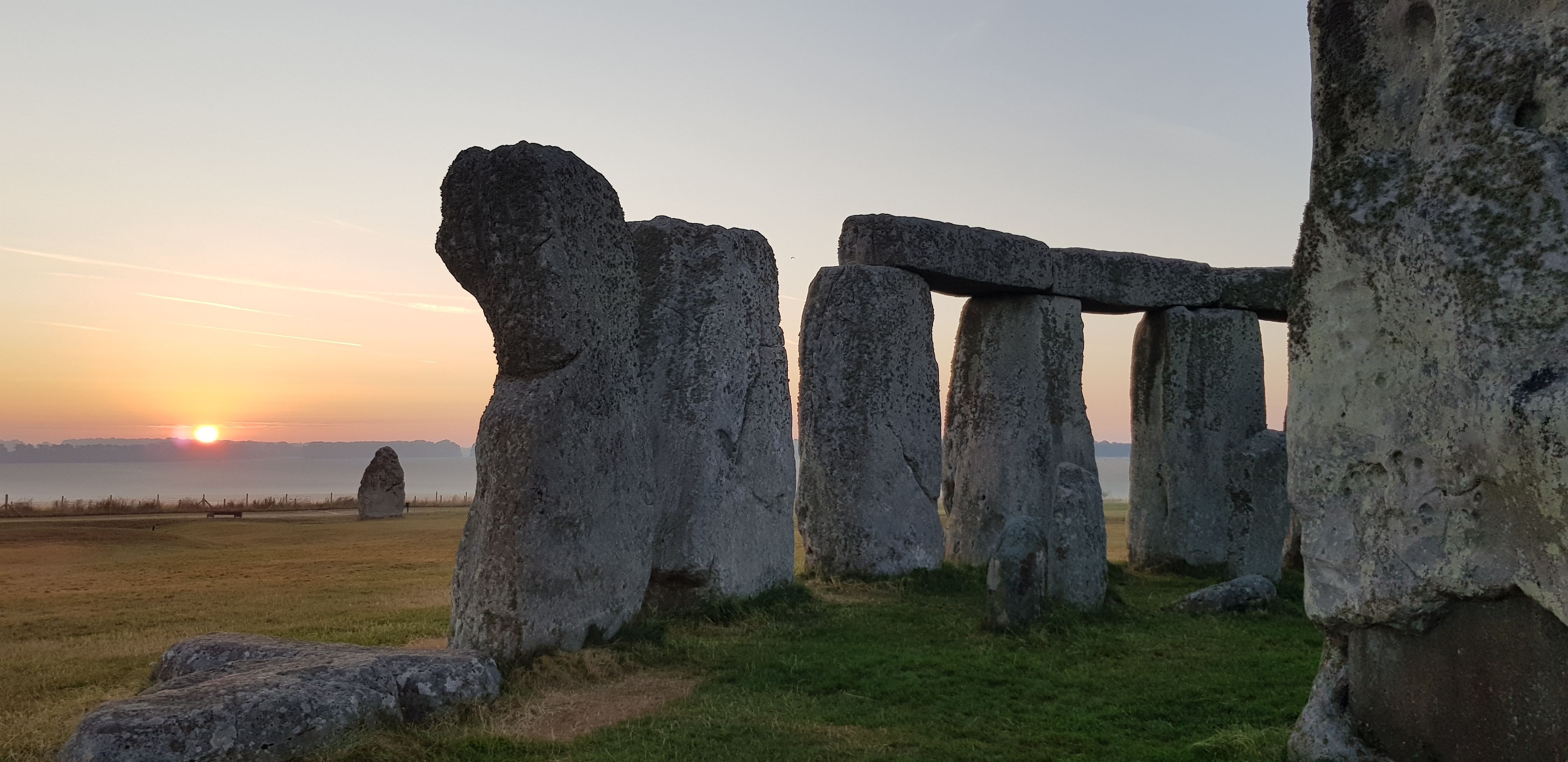
At the summer solstice, the sun travels the longest path through the sky, and therefore that day has the most daylight. The exact moment of the solstice is the time of year that the Earth is closest to the sun.
According to the astronomical definition of the seasons, the summer solstice also marks the beginning of summer, which lasts until the autumnal equinox (22 or 23 September in the Northern Hemisphere, and 20 or 21 March in the Southern Hemisphere). Under the meteorological definition, which splits the year into four seasons of three full months each based on the Gregorian calendar, winter starts on 1 December every year, and summer starts on 1 June.
This year the Spring Equinox will be celebrated on Thursday 20th March 2025.
English Heritage is pleased to give a short period of managed open access on the 20th March. Sunrise is at 6:11am, and access will commence as soon as it is safe, this is likely to be from approximately 5:45am and will end at 8:30am.The Stonehenge car park will open at 05:15am. All vehicles must vacate the car parks by 11am.
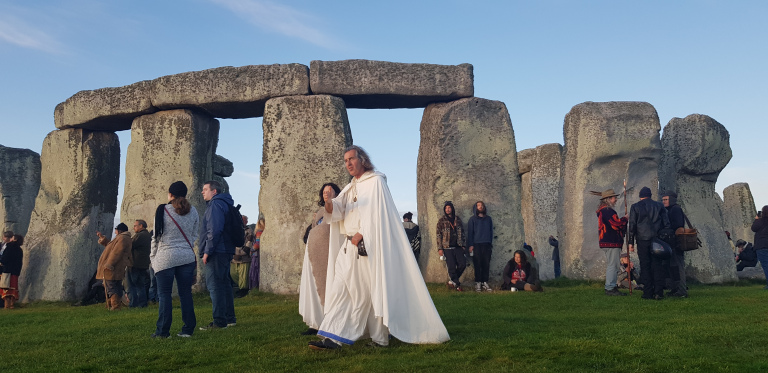
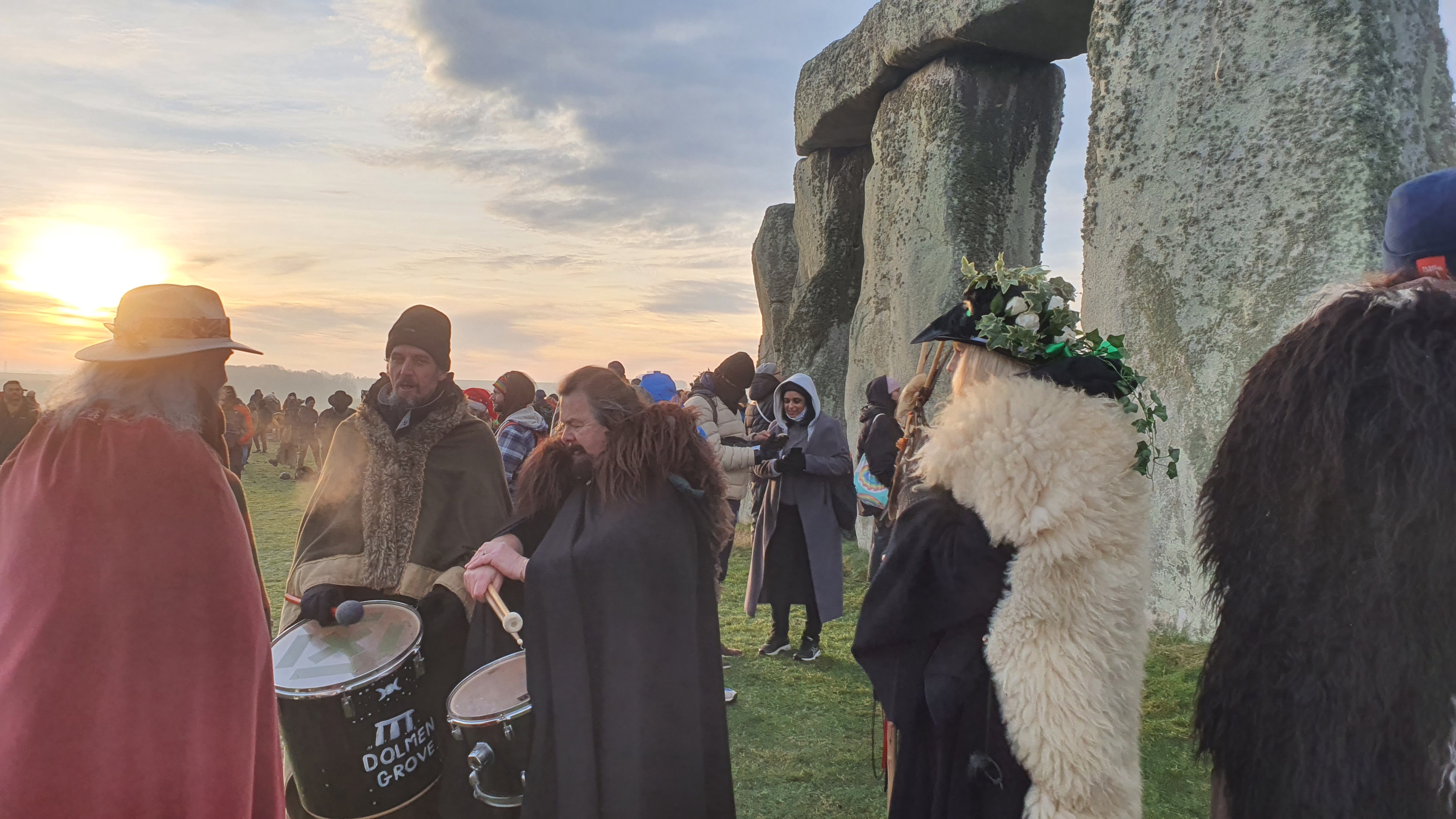
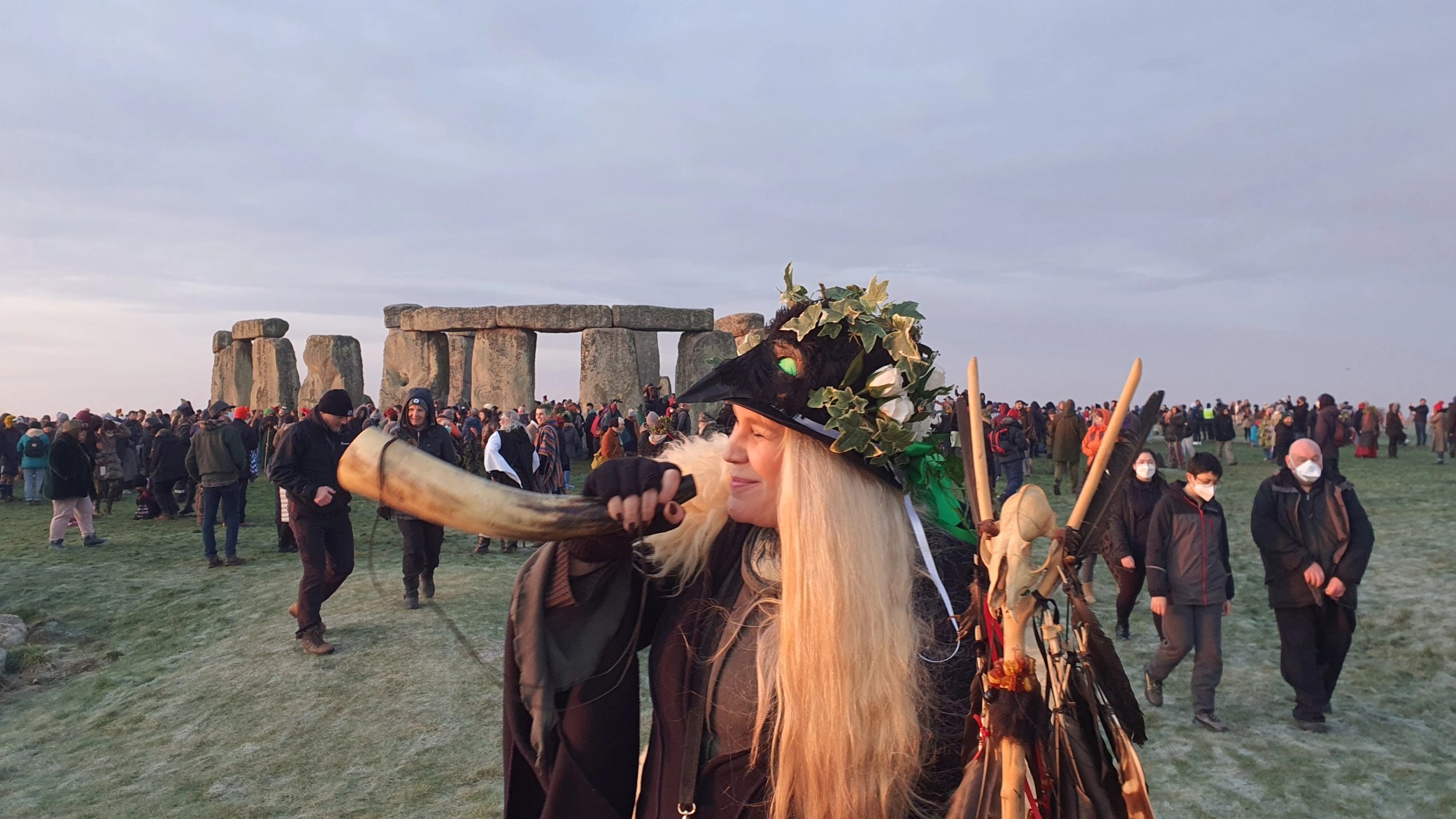
The spring equinox is one of the rare occasions that English Heritage opens up the stones for public access. Equinox open accesses attract fewer people than the Solstices – in the several hundreds rather than tens of thousands – and there are modern Druid ceremonies which are held in the circle around dawn.
Spring equinox 2025
This is the first of the four ‘sky points’ in our Wheel of the Year and it is when the sun does a perfect balancing act in the heavens. This is the point of the year when once again day and night are equal – 12 hours. The equinox, (the Latin word for Equinox means time of equal days and nights) is only the very moment the sun crosses the equator.
WHY CAN PAGANS AND DRUIDS GET SO CLOSE TO THE STONES FOR THE EQUINOX?
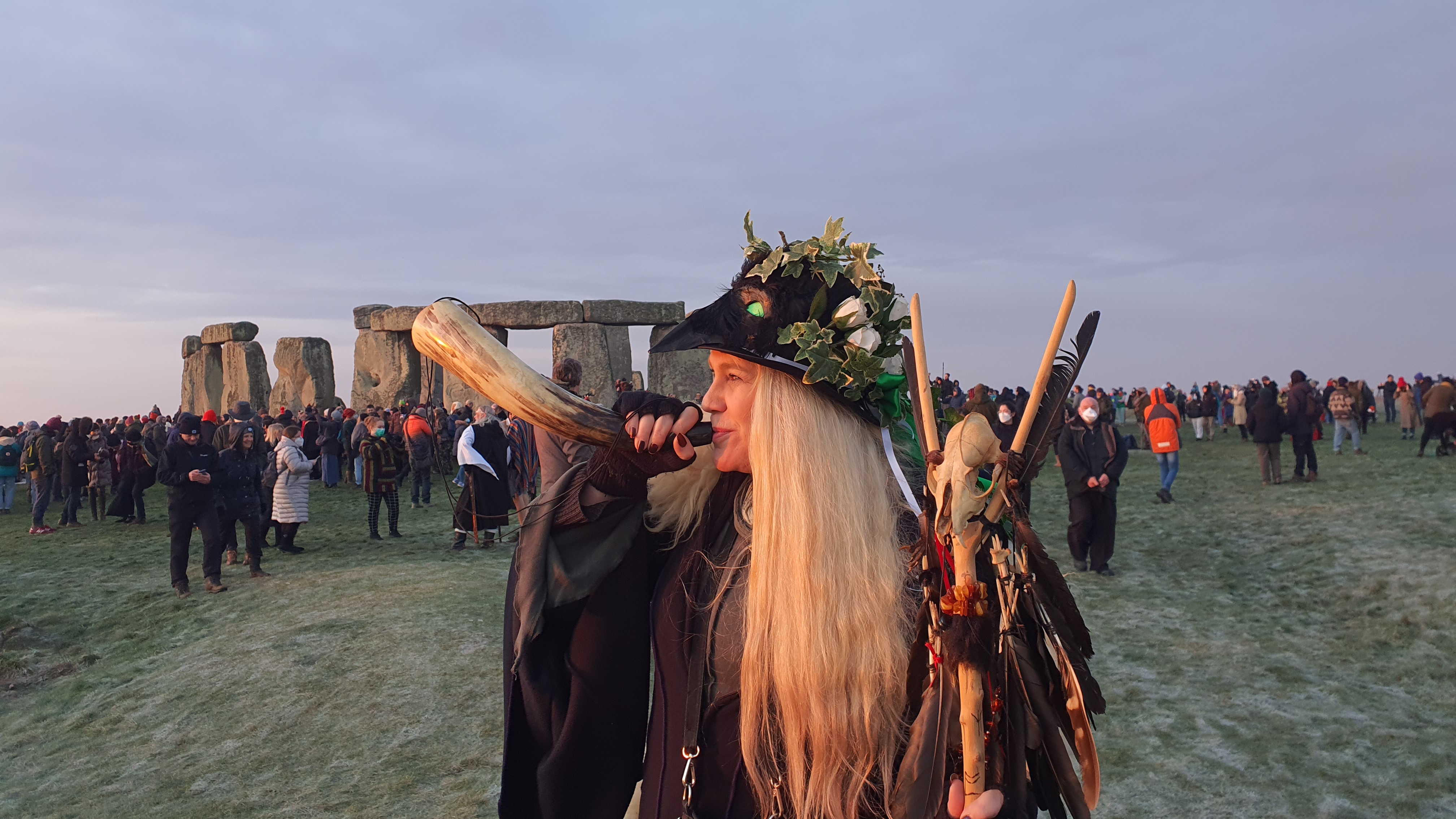
The famous Stonehenge circle is normally roped off to the public, but special access is granted four times a year. This is only on the mornings of the summer solstice, winter solstice, spring equinox and autumn equinox. English Heritage has ‘managed open access’, meaning the public can stand among the stones on these days. Anyone can turn up on the day to get close to the stones, but people are asked not to touch or climb on them. Organisers also have a ban on bringing glass bottles or pets onto the site and on playing amplified music. Stonehenge is expected to open at 5.45am when it was deemed light enough to safely allow people into the field and visitors must leave by 8.30am. English Heritage open to the paying public as normal at 9.30am.
Public access to Stonehenge currently takes place on four of the so-called ‘quarter festivals’. What exactly are the quarter festivals? And why are these occasions so celebrated by the Druids? The Quarter Festivals and the Druids
You can find out more about attending Solstice and Equinox by clicking on the links below.
Related Equinox Links: How the Spring Equinox marks the changing seasons – The Telegraph What is the vernal equinox? Why does it mark the first day of spring? – Express Summer Solstice at Stonehenge. From Past to Present – Stonehenge News Blog Stonehenge Spring Equinox Tours and Transport – Stonehenge Guided Tours Solstice at Stonehenge – English Heritage The Stonehenge Pilgrims – Stonehenge News Blog What Exactly Is the Spring Equinox? – Country Living Stonehenge Equinox / Solstice Guided Tours – Solstice Events UK Visiting Stonehenge this year for the Spring Equinox Celebrations? RESPECT THE STONES
Recent findings show that Stonehenge’s stones came from all over Britain – and this offers clues to the monument’s purpose, say archaeologists
A symbol of British unity? Wiltshire’s famous stone circle is one of the world’s most iconic historic sites and a British cultural icon – but its intended purpose has long divided academics
Stonehenge may have been erected explicitly to unite early farming communities across the island of Britain at a time of cultural stress, argues Mike Parker Pearson, professor of British later prehistory at University College London – and the altar stone may have been taken from a distant Scottish monument as a gift or marker of political alliance.
While the structure is unique for many reasons – including its extensive stone-dressing and that it has lintels – no other monument in Britain or Ireland incorporates stones that were brought such huge distances, Parker Pearson writes in a forthcoming paper in the journal Archaeology International. “Stonehenge stands out in being a material and monumental microcosm of the entirety of the British Isles.”
As such, we should consider Stonehenge to be a political monument as much as a religious one, Parker Pearson said. “It’s not a temple – that has been a major stumbling block for hundreds of years. It’s not a calendar, and it’s not an observatory.” The structure’s famous alignment to the winter and summer solstices echoes earlier constructions such as Newgrange in the Boyne valley in Ireland, but may not be its main purpose, he said.
“I think we’ve just not been looking at Stonehenge in the right way. You really have to look at all of it to work out what they’re doing. They’re constructing a monument that is expressing the permanence of particular aspects in their world.”
The altar stone is often overlooked by visitors to Stonehenge because it lies flat and partly obscured by a huge fallen sarsen. It was long assumed that it had also fallen, said Parker Pearson – yet north-east Scotland is home to multiple circles in which the stones are purposely laid flat.
“Given what we now know about where it’s from, it seems all the more likely that it was deliberately set as a recumbent stone,” he said, adding that it is “highly likely” that the altar stone had been part of an earlier Scottish monument. “These stones are not just plucked out of anywhere.”
With Orkney having been ruled out as a potential origin, other potential sites or origin are now being examined. “I think we’ll wait and see. It’s very exciting,” he said.
Archaeologists believe the altar stone may have been installed around 2500BCE, about the time Stonehenge was being remodelled from its original form.
Visitors celebrate the winter solstice at Stonehenge, but the theory that the site was a solar calendar has been superseded by suggestions that it was built for political purposes
This was a period of cultural change in Britain amid new arrivals from mainland Europe. “There’s obviously some kind of interaction – you might call it first contact,” said Parker Pearson. “That is the moment that Stonehenge is built, and I wonder if it is that moment of contact that serves, in whatever way, as the catalyst for this really impressive second stage of Stonehenge. It’s an attempt to assert unity, quite possibly integrating the newcomers – or not.”
Ultimately, however, “it doesn’t succeed” – given genetic research shows the incoming “beaker people” would largely displace the earlier neolithic populations. “That said, Stonehenge is adopted [as a monument] by those beaker-using people whose descendants become the dominant population of Britain,” said Parker Pearson.
“So despite the change in population, Stonehenge continues to exert its significance in the wider world.”
RELEVANT LINKS: Stonehenge may have been built to unite early British farming communities – Archeology News Stonehenge may have been erected to unite early British farming communities, research finds – The Guardian Stonehenge may have been built to unify people of ancient Britain – NEW SCIENTIST Tours of Stonehenge with local guided experts – STONEHENGE GUIDED TOURS Stonehenge mystery is SOLVED after 5,000 years – as scientists finally crack why the mysterious monument was built – DAILY MAIL Stonehenge built to unite native Britons after influx of European migrants, researchers suggest – THE TELEGRAPH Stonehenge Guided Landscape Tours – STONEHENGE TOUR COMPANY Stonehenge Equinox and Solstice Tours – SOLSTICE EVENTS U.K
Winter Solstice at Stonehenge will take place at sunrise on Saturday 21st December 2024. English Heritage are expected to offer a short period of access, from first light or safe enough to enter the monument field (approximately 07.45am until 10.00am)
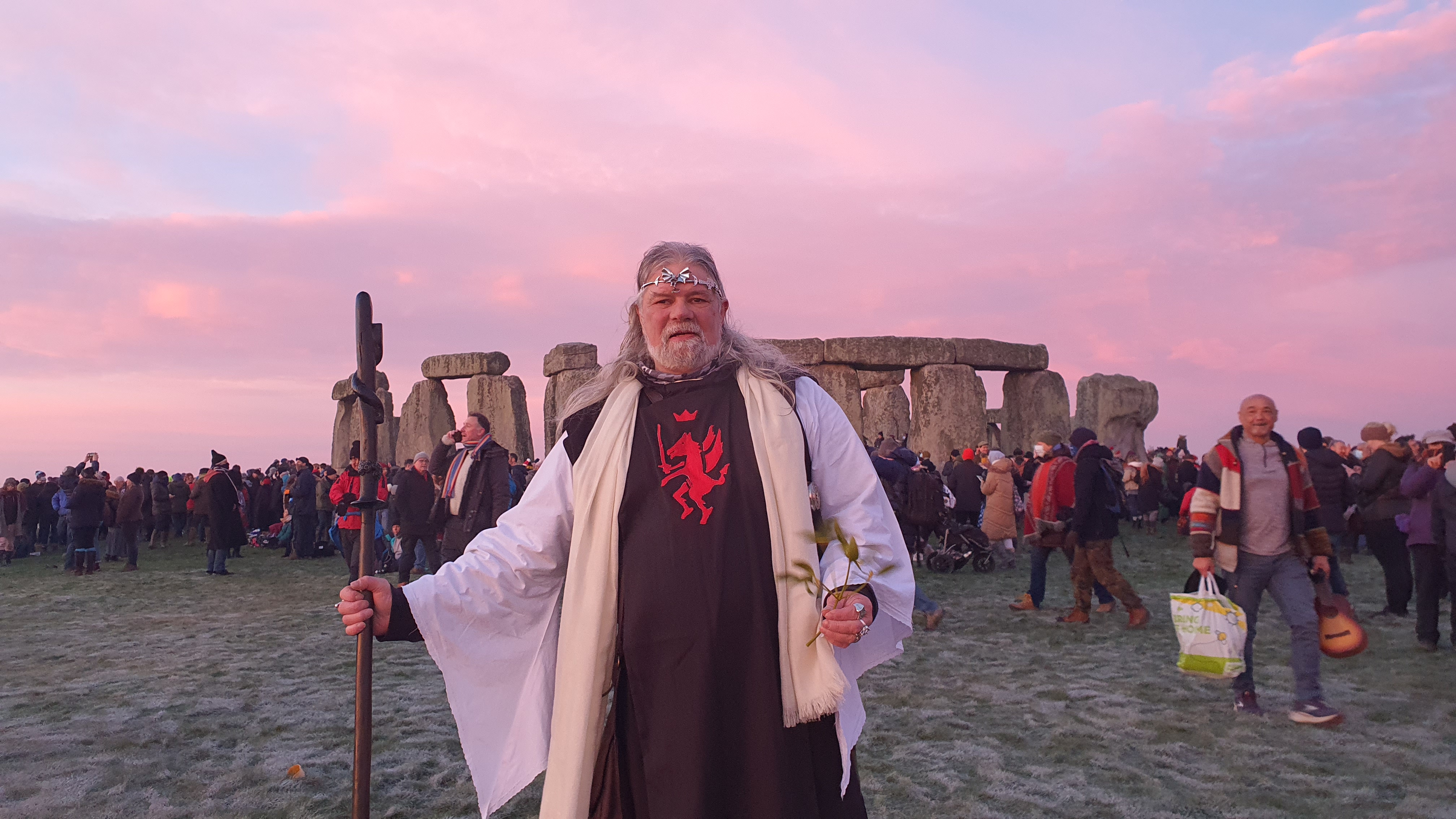
Winter Solstice, access to the stones themselves is free and without restriction, and visitors can get up close with the marvel that is Stonehenge. After it passes, the days will begin to get longer and longer until June when the Summer Solstice takes place.
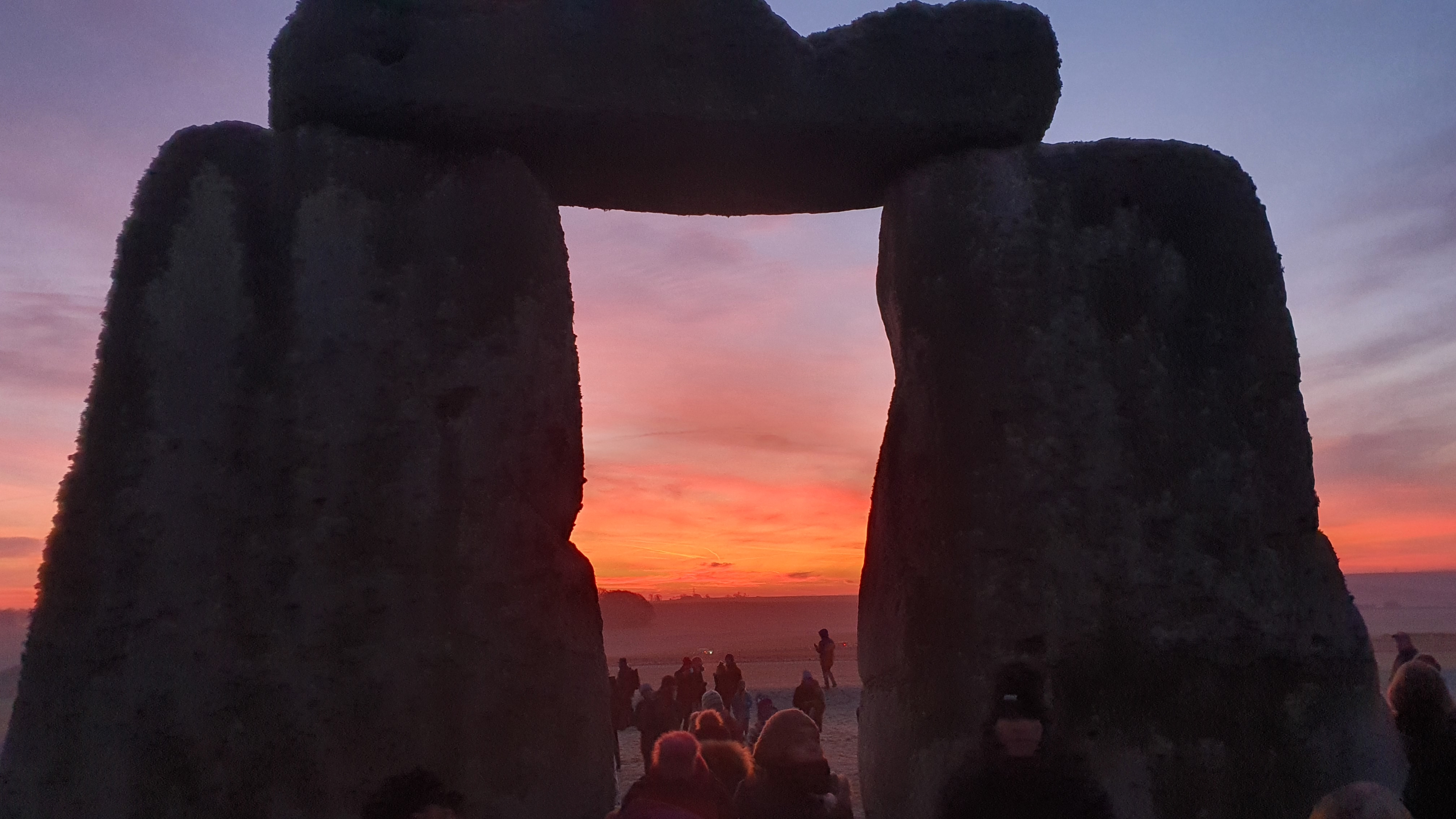
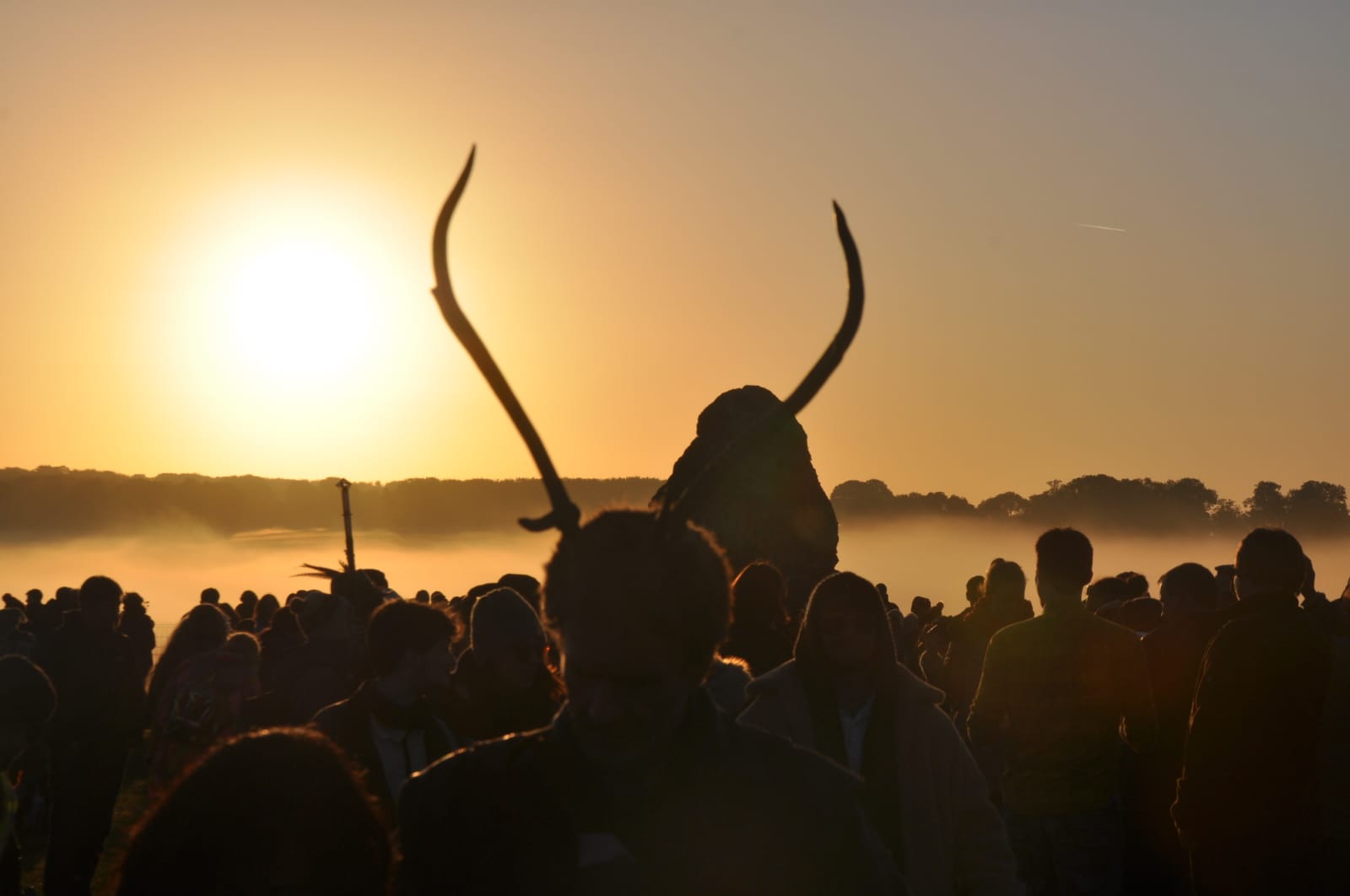
The Winter Solstice, marking the shortest day and longest night of the year approaches, drawing neo-druid and neo-pagan pilgrims to Stonehenge to watch the sunrise through the sacred site.
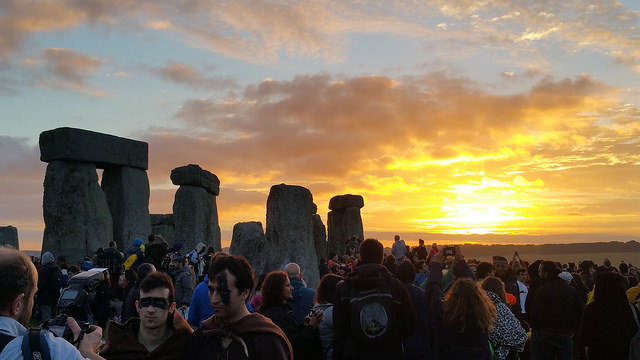
This is a twice-yearly pilgrimage for many visitors, including Druids and Pagans, with the Summer Solstice in June being the largest of the two events. The festivals which have celebrated the passing of the seasons and new beginnings throughout human history, offer a unique opportunity to visit Stonehenge with no barriers and draws crowds every year.
Whatever the weather, it could be cold and wet. So please dress accordingly. Shuttle buses will be running to take you from the car parks to the stones. However, you may choose to walk from the Visitor Centre up to the stones. This takes 30 minutes on average and will be in low-light. So a torch would be essential.
Access to Stonehenge for Winter Solstice is is subject to the Conditions of Entry. Please read these before deciding whether to attend. Stonehenge is in a field on Salisbury Plain and the weather in December will be cold and wet. Even if it isn’t raining, the ground will be wet from the dew and there may also be frost. Sensible footwear and warm, waterproof clothing is essential. Please note, parking charges apply.
Can I watch the sunrise on a live stream? English Heritage will be live streaming the sunrise on the morning of 21st December for free on their digital channels. Visit the official Stonehenge or English Heritage Facebook page, or the English Heritage YouTube channel. Please beware of fake/scam Facebook pages, events and groups that might have been set up.
Getting there:
Extremely limited parking available and strongly recommend using public transport to avoid disappointment. Salisbury Reds are operating a dedicated Solstice service from Salisbury train station via Amesbury. Please check their website for details. We also have a dedicated car sharing website which is available here.
As you approach Stonehenge, please follow signs to the car park. This is located close to Airman’s Corner Roundabout just off the A303. We ask that you park sensibly and only where directed by a steward or police officer. This will help us make full use of the car park.
Stonehenge Winter Solstice Links: Stonehenge Winter Solstice 2024 – ENGLISH HERITAGE When is the shortest day of the year — date of winter solstice and what it means – DAILY MIRROR The Rebirth of the Sun: the Winter Solstice at Stonehenge – STONEHENGE NEWS BLOG Winter Solstice: Wild tales of slaughtered bulls, human sacrifice and much merriment – THE SCOTSMAN The Rebirth of the Sun: the Winter Solstice at Stonehenge – STONEHENGE NEWS BLOG Solstice Transport service rom London or Bath with expert guides – STONEHENGE GUIDED TOURS Winter solstice: Why do pagans celebrate the shortest day of the year? THE TELEGRAPH The Sun Stones: The Story of the Winter Solstice at Stonehenge – STONEHENGE NEWS BLOG Solstice at Stonehenge. From Past to Present. – STONEHENGE NEWS BLOG What has Stonehenge got to do with the winter solstice? – METRO NEWS Stonehenge Winter Solstice Tours from Bath – SOLSTICE TOURS U.K Celebrate Winter Solstice at Stonehenge – HOLIDAY EXTRAS Solstice and Equinox Experience Tours – SOLSTICE EVENTS UK The Stonehenge Solstice Pilgrims – STONEHENGE NEWS BLOG Stonehenge, the Winter Solstice, and the Druids – INTERESTRING ENGINEERING Respecting the Stones. Managed Open Access –STONEHENGE NEWS BLOG
The Stonehenge News Blog Follow us on Twitter and Facebook for all the latest Stonehenge News and Winter Solstice updates.
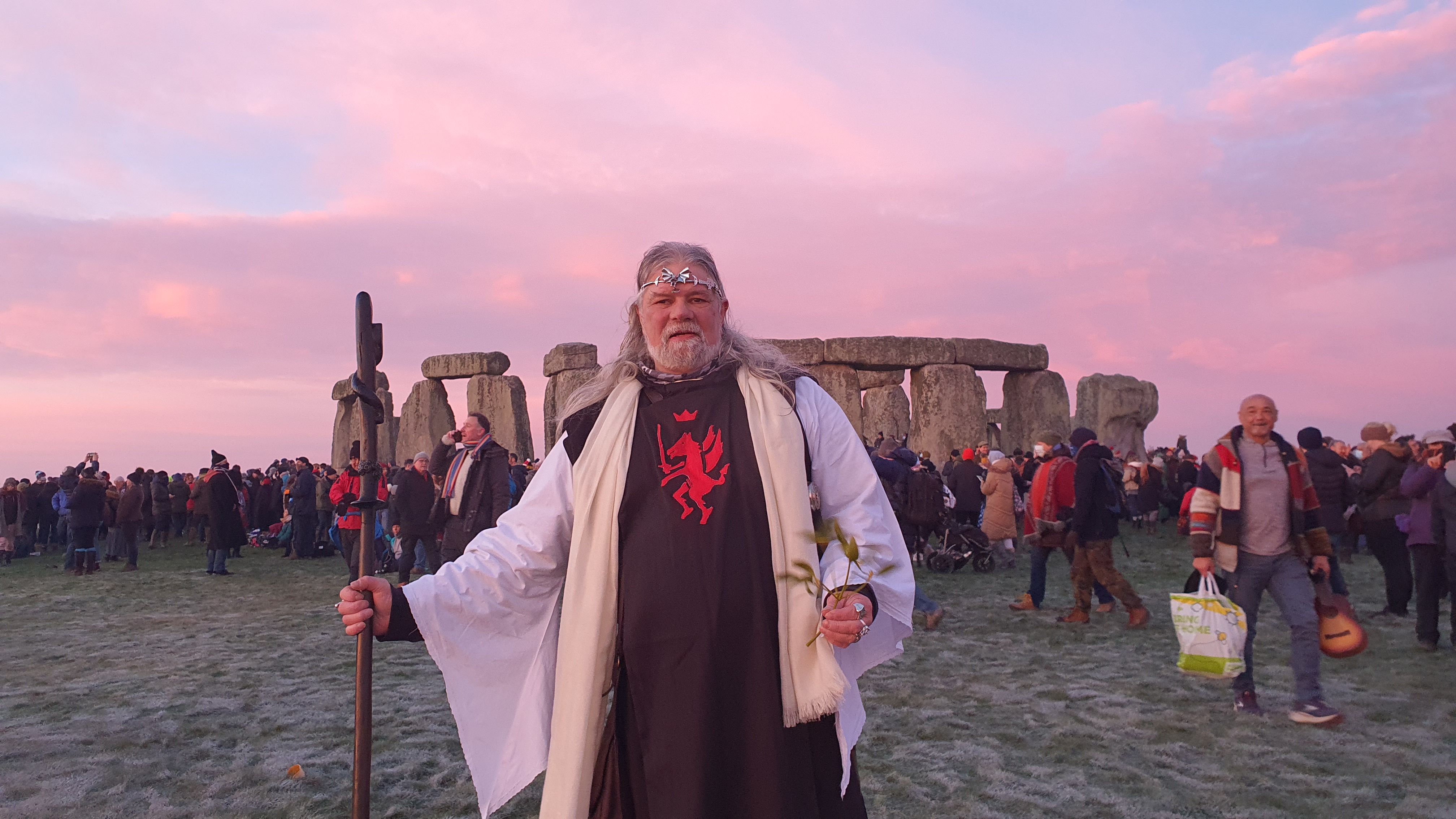
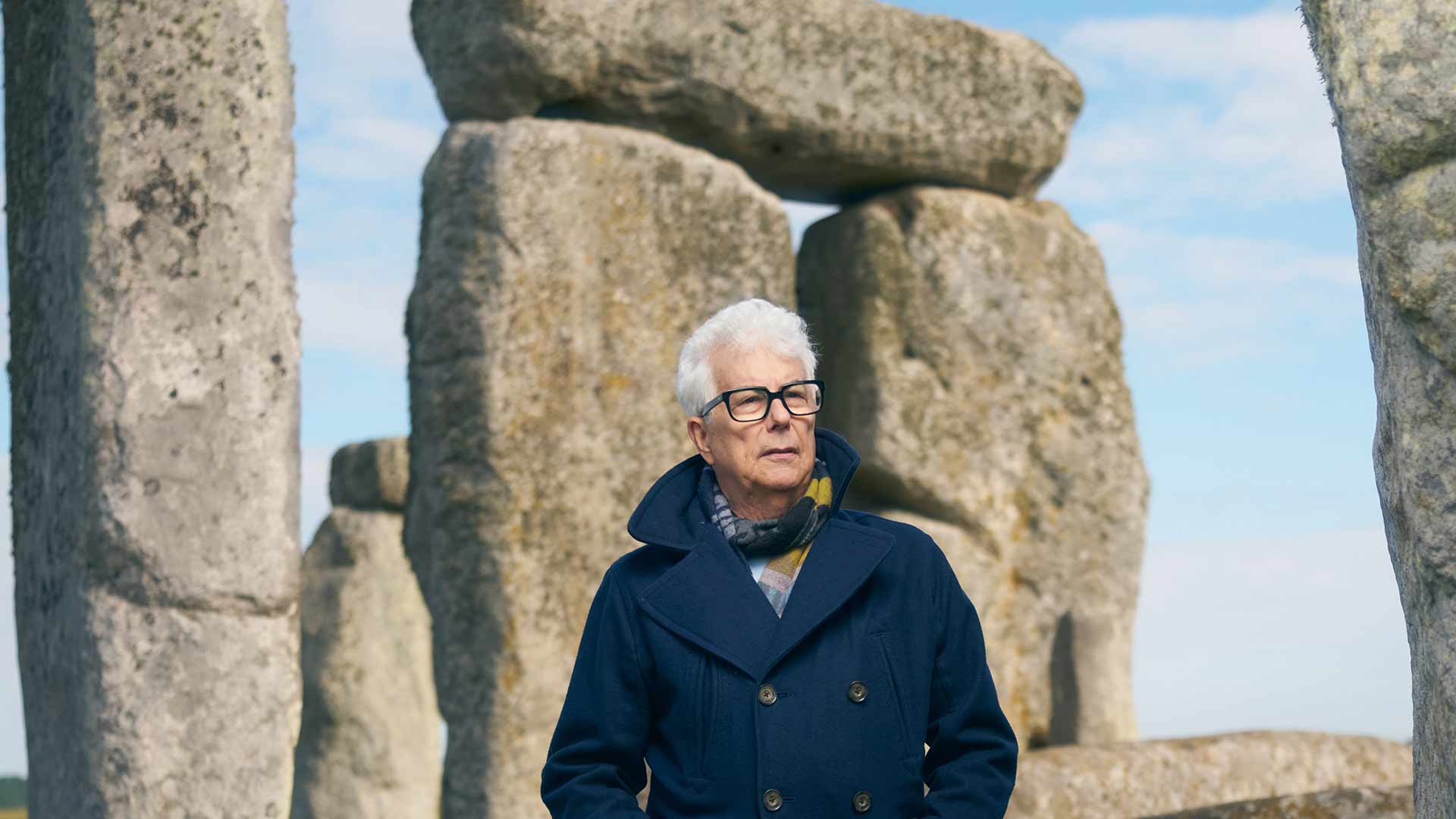
Ken Follett’s next historical epic will look back to the origins of one of the world’s most famous and enigmatic destinations — Stonehenge.
The Welsh author’s “Circle of Days” is scheduled for next Sept. 23, according to Hachette Book Group, which on Tuesday announced the book through imprints in the U.S. and the U.K. Through such characters as a miner named Seft and the priestess Joia, Follett will explore the ancient stone circle in England that has long been an international gathering place for tourists and for celebrants of summer solstice and an endless source of research for scholars.
“Stonehenge is one of the world’s most iconic and recognizable monuments but, in reality, so little is known about it. How was it built? Why was it built? Who built it?” Follett said in a statement. “I’ve written before about moments of great human achievement and I’ve always been drawn to stories of ordinary people doing seemingly impossible things, and what could be more extraordinary than the construction of this enormous monument. It’s such a remarkable achievement and one of the greatest mysteries of all time and that’s a fantastic combination for a story.”
Follett, 75, has become one of the world’s most popular authors through such blockbusters as “The Pillars of the Earth” and its sequel, “World Without End.” His books have sold more than 160 million copies worldwide.
Follett’s new book will be released in the U.S. by the Hachette imprint Grand Central Publishing and in the U.K. by Quercus. The announcement follows the new global deal with the publisher after Follett left his long-time publisher Pan Macmillan earlier this year.
The Autumn Equinox (Mabon) is rapidly approaching as the last days of summer slowly come to an end. English Heritage are expected to offer a short period of access, from first light or safe enough to enter the monument field (approximately 06.15am until 08:30am) on the 22nd September.
Entry to the monument will begin between 05:45 – 06.15 hours (or when it is light enough to safely enter) on Sunday 22nd September.
The Stonehenge car park will open at 05:15am. All vehicles must vacate the car parks by 11am. Please note: there is a 25-30 minute walk (approximately 1½ miles or 2km) from the Stonehenge Visitor Centre to Stonehenge. This walk is across National Trust downland which is uneven: sensible footwear and a torch are advisable.
There will be a shuttle bus to the stones operating once the monument field has been opened (see times above).
he Autumn Equinox is one of the rare occasions that English Heritage opens up the stones for public access. Equinox open access attracts fewer people than the Solstices – in the several hundreds rather than tens of thousands – and there are modern Druid ceremonies which are held in the circle around dawn, so if you prefer a quieter experience then attending the Autumn Equinox is a good choice.
English Heritage has facilitated Managed Open Access (MOA) to Stonehenge for the celebration of the summer solstice, winter solstice, spring and autumn equinox (spring and autumn equinox fall outside of this contract). English Heritage provides access to the stone circle and the monument field, free of charge to anyone who wishes to attend, but asks all those attending to comply with conditions of entry to ensure the safety of all visitors and to protect the monument. To safely provide MOA across the year, English Heritage works in partnership with Wiltshire Police and Wiltshire Council and engages experienced event managers and health and safety experts.
Please note: there is a 25-30 minute walk (approximately 1½ miles or 2km) from the Stonehenge Visitor Centre to Stonehenge. This walk is across National Trust downland which is uneven: sensible footwear and a torch are advisable.
Mabon is a harvest festival, the second of three, that encourages pagans to “reap what they sow,” both literally and figuratively. It is the time when night and day stand equal in duration; thus is it a time to express gratitude, complete projects and honor a moment of balance.
What is the Equinox? The equinox is when day and night are actually the same length. It happens several days before the spring equinox, and a few days after the autumn one.
The reason day and night are only almost equal on the equinox is because the sun looks like a disk in the sky, so the top half rises above the horizon before the centre
The Earth’s atmosphere also refracts the sunlight, so it seems to rise before its centre reaches the horizon. This causes the sun to provide more daylight than many people might expect, offering 12 hours and 10 minutes on the equinox.
The word ‘equinox’ itself actually mean ‘equal’ (equi) and ‘night’ (nox).
Respecting the Stones Stonehenge is protected under the Ancient Monuments and Archaeological Areas Act and you must adhere to the regulations outlined in the act or face criminal prosecution. No person may touch, lean against, stand on or climb the stones, or disturb the ground in any way. View the conditions of entry and respect the Stones
If you do not have your own transport and don’t want the hassle of public transport you may want to book a direct tour from London or Bath with the local touring experts – Stonehenge Guided Tours
The discovery was made during a study led by Australian scientists, who think the massive stone could have been transported by sea more than 5,000 years ago.
Previous geological research suggested that the six-tonne slab probably originated from the Brecon Beacons in south east Wales.
Now, scientists have concluded that the monumental Altar Stone actually hails over 460 miles from Salisbury Plain in north east Scotland.
For more than a century, archaeologists have known that some of the stones at Stonehenge came from Wales and were transported – somehow – about 125 miles ( 200km) to the site of the Neolithic monument on Salisbury Plain.
Now, a “jaw-dropping” study has revealed that one of Stonehenge’s central megaliths is not Welsh at all – it is actually Scottish.
In a discovery described by one of the scientists involved as “genuinely shocking”, new analysis has found that the largest “bluestone” at Stonehenge was dragged or floated to the site from the very north-east corner of Scotland – a distance of at least 466 miles (about 750km)
RELATIVE NEWS Stonehenge megalith came from Scotland, not Wales, ‘jaw-dropping’ study finds – THE GUARDIAN Experts believe the Stonehenge Altar Stone could have come from as far away as northern England or Scotland. We anticipate an exciting revelation shortly. STONEHENGE NEWS BLOG Stonehenge mystery deepens after iconic stone is from a surprising location – THE METRO Stonehenge’s altar stone was brought all the way from Scotland – THE NEW SCIENTIST Famous Stonehenge stone came from Scotland not Wales – BBC Want to visit Stonehenge with an expert tout guide and hear all aboithe the latest discoveries? THE STONEHENGE TOUR COMPANY
The Stonehenge News Blog
Follow us on Twitter and Facebook for all the latest Stonehenge Newshttp://www.Stonehenge.News
Speaking in the House of Commons yesterday, chancellor of the exchequer Rachel Reeves has said that the scheme is unaffordable and that “if we cannot afford it, we cannot do it”.
Plans to build a two-mile tunnel near to Stonehenge have been cancelled by the government.
The scheme along the A303 in Wiltshire, which was agreed by the previous Conservative government, had faced a number of legal challenges from campaigners.
But the new Labour government has now scrapped the £2bn project altogether, as announced by Chancellor Rachel Reeves, who said the Transport Secretary has agreed not to “move forward” with the project.
Wiltshire Council said it was “extremely dismayed and disappointed” by the announcement.
The plan has been controversial with locals spilt on the issue and there has been international interest, with UNESCO raising concerns about the World Heritage Site.
Prime Minister Sir Keir Starmer had failed to commit to the scheme during the election campaign.
Campaigners have gone to the High Court several times over the project, including just a couple of weeks ago.
It was put on hold after another High Court challenge in December, then a judicial review dismissed their challenge in February and said the DfT had followed the correct process.
The outcome of the judicial review was believed to be incorrect by campaigners, and after appealing the decision, they were granted approval to challenge it in May.
They had been waiting on another update before the news earlier that Labour would scrap the plans.
Campaigner John Adams, from Save Stonehenge World Heritage Site, said: “We think that all the agencies involved should get together and look at other intelligent alternatives.
“Not necessarily a whole road scheme, but there are things that could be done at both ends of the World Heritage Site and to stop rat-running through local villages.”
Residents have complained of rat-running for many years when the A303 is congested.
The Conservative MP for the area, Danny Kruger, said the new government “must fund an alternative plan to help communities around the A303 cope with the volume of traffic”.
“Road improvements have been needed for years but delayed in anticipation of the tunnel. The status quo is completely unacceptable,” he added.
Paul McKernan, a parish councillor in the village of Shrewton, told the BBC: “We routinely have traffic at a complete standstill through these very narrow roads as people’s satnavs take them away from the A303.
“We don’t even need an accident or a blockage now. The impact for the villages is that they can’t use the high street – much of it doesn’t have pavements – people tend to feel besieged. It’s getting worse.”
STONEHENGE TUNNEL LINKS: Stonehenge Tunnel among infrastructure projects axed by government in budget overhaul NEW CIVIL ENGINEER Stonehenge tunnel plans axed by Chancellor Rachel Reeves – SALISBURY JOURNAL Stonehenge tunnel scheme scrapped by government – BBC Stonehenge: Tunnel Vision. THE STONEHENGE NEWS BLOG: The Stonehenge Tunnel Debate – the good, the bad, and the ugly – THE STONEHENGE NEWS BLOG
On July 4th 2024, the UK goes to the polls to choose who’ll govern us for the next five years. You’d be forgiven for thinking that nothing will ever change – that they’re all in it for themselves and that there’s no point in engaging with the process.
Hardly surprising really, the last 14 years have revealed just how self-serving the “political elite” can be when they become emboldened by the lack of proper scrutiny or accountability.
A supine broadcast media, in the case of the BBC largely because they are always terrified of the consequences of upsetting those who control whether their Charter is renewed, doesn’t help.
Newspapers (who reads them these days?) controlled mostly by offshore moguls whose only interest is in manipulating the levers of power behind the scenes are the plant-based media’s version of echo chambers for their audience.
What’s needed is to break the stranglehold of vested interests and start electing people who don’t give a stuff about the existing power structures and trample roughshod over conventional ideas of who our politicians should be.
In the Salisbury constituency there’s an option to do just that.
Step forward, King Arthur Uther Pendragon. Leader of the Loyal Arthurian Warband, Druid and environmental campaigner since before it became fashionable, and a firebrand who has been a thorn in the side of “The Authorities” for decades.
Loud, annoying and surprisingly effective at raising the profile of causes that may otherwise be ignored, Arthur’s nothing like the usual herd of career politicians.
Ex-Army, ex-biker, once photographed defying the bailiffs and a bloke with a chainsaw at the top of a tree during the 3rd Battle of Newbury while protesting against the bypass.
Levitating Druid from “The Trials of Arthur”, photo Clive Odinson
He’s stood an independent in every Parliamentary election in Salisbury since 2010, without the backing of any party machinery and supported only by grass-roots contributions.
As Prof. Ronald Hutton once put it, in “The Trials of Arthur” (ISBN 0-00-712114-8):
“A contemporary historian has therefore, to take Arthur Pendragon seriously. Upon the one hand he is a major figure in modern Druidry, leading one of the largest orders and representing a distinctive form of spirituality. On the other, he has an equally important place in the history of groups concerned with environmental issues and civil rights. It is an impressive dual achievement.”
A measure of the strength of the existing political system is that Arthur has mysteriously failed to be invited to a large number of the Hustings events held in the constituency.
The last thing the “ruling class” want is some independent-minded chap showing up and speaking uncomfortable truths it seems.
If we’re all content to carry on as we are, feeling powerless and shrugging our shoulders as Parliament becomes ever less relevant to the daily struggles of the public then fine.
If instead we think that it’s time for a change, then – at least in Salisbury – we get the chance to do it differently and elect a King.
Arthur Pendragon Links: Vote for me as your champion, says senior druid standing to be MP – THE INDEPENENT King Arthur Pendragon: ‘The people of Salisbury deserve a champion’ – THE SALISBURY JOURNAL GE Interviews: Arthur Pendragon – Independent – SALISBURY RADIO General Election: Who will be standing to be Salisbury’s next MP – SALISBURY JOURNAL Arthur Pendragon – FACEBOOK Druid Leader King Arthur Uther Pendragon, Head of the Loyal Arthurian Warband – STONEHENGE NEWS Arthur Pendragon, Stonehenge and the Solstice – STONEHENGE NEWS BLOG
We aim to make this the ultimate source of the latest Stonehenge news available on the web. This blog is updated almost daily and promises to deliver accurate 'up to date' information on new theories, new digs, solstice events, Druid gatherings, the new visitor centre, general megalithic links and some fun along the way. We welcome your input....
"There is so much misinformation about Stonehenge on the web, so it’s really refreshing to see such a clear and lucid presentation, what you have here looks like best general overview of Stonehenge to date, well done!"
Mystery surrounds this 5,000 year old monument in the centre of the World Heritage Site. Visit this prehistoric South West site near Salisbury in Wiltshire, and decide for yourself whether Stonehenge was a place of sun worship, a healing sanctuary, a sacred burial site, or something different altogether!
THIS BLOG claims no credit for any images posted on this site unless otherwise noted. Images on this blog are copyright to its respectful owners. If there is an image appearing on this blog that belongs to you and do not wish for it appear on this site, please E-mail with a link to said image and it will be promptly removed.