International Day For Monuments and Sites 2020. World Heritage Day is observed every year on 18th April. #WorldHeritageDay

18 04 2020

World Heritage is the shared wealth of humankind. Protecting and preserving this valuable asset demands the collective efforts of the international community. This special day offers an opportunity to raise the public’s awareness about the diversity of cultural heritage and the efforts that are required to protect and conserve it, as well as draw attention to its vulnerability.

Download the World Heritage app and discover all the UNESCO world heritage sites!

On 18th April 1982 on the occasion of a symposium organised by ICOMOSin Tunisia, the holding of the “International Day WHSfor Monuments and Sites” to be celebrated simultaneously throughout the world was suggested. This project was approved by the Executive Committee who provided practical suggestions to the National Committees on how to organise this day.

The idea was also approved by the UNESCO General Conference who passed a resolution at its 22nd session in November 1983 recommending that Member States examine the possibility of declaring 18th April each year “International Monuments and Sites Day”. This has been traditionally called the World Heritage Day.

A World Heritage site is a landmark or area which is selected by the United Nations Educational, Scientific and Cultural Organization (UNESCO) as having cultural, historical, scientific or other form of significance, and is legally protected by international treaties.

Stonehenge, Avebury and Associated Sites is a UNESCO World Heritage site

Stonehenge and Avebury, in Wiltshire, are among the most famous groups of megaliths in the world. The two sanctuaries consist of circles of menhirs arranged in a pattern whose astronomical significance is still being explored. These holy places and the nearby Neolithic sites are an incomparable testimony to prehistoric times.

“Celebrate it with a virtual visit to Stonehenge and observe a minute of silence for the ones we have lost to insensitive developments” Visit the English Heritage website and click the hotspots to find out more.

The Stonehenge News Blog
Follow us on Twitter and Facebook for all the latest Stonehenge News
http://www.Stonehenge.News


Monumental Lockdown: A period of Rejuvenation for Stonehenge

13 04 2020

On the 23rd of March, Boris Johnson announced strict ‘lockdown’ measures to curb the spread of the Coronavirus. This followed similar measures put in place worldwide. Subsequently, people have been restricted to their homes, allowed out only for essential work and shopping. Global tourism has been placed in indefinite suspension.

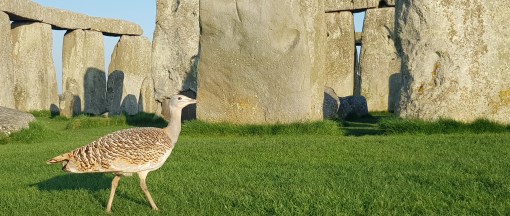
Stonehenge wildlife

One of Britain’s rarest – and strangest – birds is back at Stonehenge. The Great Bustard was affectionately christened by Stonehenge staff as “Gertrude”

Although a grave shame, the restrictions are essential for the fight against the terrible Coronavirus, and there are even environmental positives to the lockdown. The break in tourism has given the worlds cities and monuments a well needed break, a chance to rejuvenate. A silver lining in the crisis, appears to be a global drop in air pollution – Paul Monks, professor of air pollution at the University of Leicester, told the Guardian: ‘this fact ‘this might give us some hope from something terrible’.  The positives of this rejuvenation are becoming visible. In Venice have cleared and wildlife has returned in droves: “It is calm like a pond… We Venetians have the feeling that nature has returned and is taking back possession of the city,”

This period of rest for the worlds monuments and natural resurgence is set to benefit the world and will improve the tourists experience when they return. Nature needs time to breathe, so it could be that the way tourism is viewed may alter to allow nature further breathing space.

This period of rest is also set to benefit the ancient monoliths of Stonehenge, which remains unvisited for weeks, in a number of ways. Firstly, just like in Venice, the latent wildlife surrounding Stonehenge will have reclaimed full rights to the area – not only the grasses and plants that make up the verdant surroundings of the stones, but also birds and insects that call the planes of Wessex home. The resurgence of the nature in the surrounding area will surely make the site all the more pleasant when it reopens.

The drop-in air pollution and return of wildlife signal a return to environmental conditions closer to that of the stone’s erection, thousands of years ago. It is believed that this is crucial for the rejuvenation of the site’s primordial energies. For thousands of years, the site would have only seen large gatherings of people once or twice a year. Today, the rate of foot fall has increased exponentially. Experts in earth energies believe a short period of rest for the stones is sure to revitalise the wealth of energy that flows beneath the stones, and indeed all the lay lines which run through Wessex and the country as a whole.

All these factors combine to create a healthy environment for all monuments across the world, cleaner air, healthier wildlife and rest is sure not only to improve the aesthetics of our country, but also the deeper health of the monuments and even our own health when experiencing them. Across the land, nature is reclaiming land, allowing us to reconnect with nature and recreating a healthier environment for us to return to when normal life resumes.

RELEVANT LINKS:
Coronavirus: Is wildlife the big beneficiary of the COVID-19 lockdown? – EURONEWS
Venice canals clear up due to Covid-19 lockdown – BUSINESS TRAVELLER
Wild animals wander through deserted cities under Covid-19 lockdown –RFI
People in India can see the Himalayas for the first time in ‘decades,’ as the lockdown eases air pollution – CNN
UNESCO supports culture and heritage during COVID-19’s shutdown – UNESCO
UK road travel falls to 1955 levels as Covid-19 lockdown takes hold – THE GUARDIAN

News Blog
Follow us on Twitter and Facebook for all the latest Stonehenge News
http://www.Stonehenge.News


Origins of Easter Customs. A Natural Blend of Pagan and Christian Beliefs

10 04 2020

Have you ever wondered why we celebrate Easter at this time of year? Or better yet, why we give one another Easter eggs? Or, where the Easter bunny comes from? Where does the word ‘Easter’ come from?! The traditions and symbols of Easter that we engage in today are in fact a grand amalgamation of various traditions from all over the world – these tangled strings, pagan and Christian, have combined to give us our modern-day celebration.  Here, I will answer the most common questions relating to origins of our Easter customs, tracing the often-overlapping story across Europe and beyond.Although

Easter has become known as a Christian holiday around the world, celebrating the sacred death and rebirth of Jesus, the true pagan Easter and its symbols is a clear testament to the historical melting pot of cultures and traditions that make Easter what is is today.

Stonehenge origins

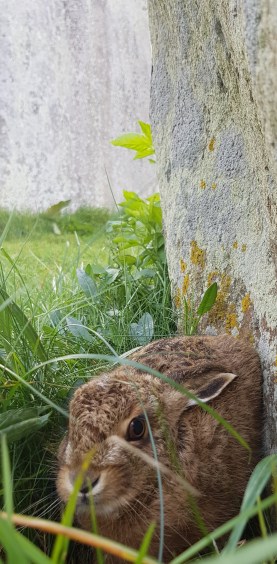
Easter Bunny at Stonehenge. The rabbit is a pagan symbol and has always been an emblem of fertility.

Eostra
Starting in the UK, the word ‘Easter’ has Saxon origins – stemming from ‘Eostra’, the saxon goddess of spring. We have this connection on good authority, the writings of the Venerable Bede (672-735 AD), an influential chronicler and monk. He elucidated later Anglo-Saxon Christians on the etymology and his influence was thus that the name stuck and developed into ‘Easter’ as we have it today.

The connection with goddess ‘Eostra’ from Saxon tradition is deeper than mere nomenclature. A pagan celebration of the goddess took place at the vernal equinox, around the 20th of March. Not only is this day extremely close to when we celebrate Easter today, but it also has symbolic significance. The celebration of Eostra was a celebration of Spring, of fertility, new life. Crucially it was a time when light conquered dark and the world was reborn. These celebrations had a deep thematic connection with the story of Jesus Christ’s rebirth. The celebration of Eostra was the obvious celebration to be replaced by that of Christ.

Rebirth
Pagan celebrations of rebirth and fertility in the spring time were commonplace all across Europe. Many ancient cultures had stories relating to rebirth. In ancient Greek culture, Persephone, daughter of the goddess of fertility Ceres, was kidnapped by Hades and taken to the underworld. A distraught Ceres was too miserable to tend to the world and all crops and plants withered.

Unbeknownst to Persephone, imbibing the food of the underworld was a life sentence in that realm, and Hades laid on a feast.  When she is found in the underworld, it is discovered that she has eaten six pomegranate seeds and Zeus decrees she must henceforth stay in the underworld for six out of the twelve months of the year.  Therefore, when her daughter is free Ceres tends to the world like a garden, bringing bounty and prosperity. But, when her daughter is taken she lets the crops wither and die.

This story of fertility is common across the pagan beliefs in Europe, a cyclical story of descent into darkness and lights eventual triumph.  It is one of a number of accounts of dying and rising gods that represent the cycle of the seasons and the stars. For example, the resurrection of ‘Horus’, in Egypt or the Sumerian goddess ‘Inanna’ and the Mesopotamian ‘Ishtar’. This gave the Christian story of resurrection a natural home in the springtime.

The Rabbit and the Egg
The symbols of Easter have similarly tangled origins. The egg is an extremely common symbol of spring all across the world, representing fertility, renewal and rebirth. Similar to us, ancient Persians painted eggs at this time of the year and the Egyptians believed the eggs symbolised the sun and its rebirth in the spring time.

The rabbit was a common symbol of the goddess Eostra, who was also an important deity for the Saxons of mainland Europe. Thus, we find the first mention of the ‘Easter bunny’ in German writing dating from around 1572. Although the bunny was perhaps born in Europe, it is believed that the modern tradition of an Easter bunny, was largely formulated and developed by German immigrants in the united states – as opposed to puritan settlers who didn’t believe in Easter celebrations.

All of these symbols of Easter are a result of a natural blend of pagan and Christian beliefs and demonstrate the power the natural world has over our celebratory calendar.

RELEVANT LINKS:

The pagan roots of Easter – THE GUARDIAN
The Ancient Pagan Origins of Easter – ANCIENT ORIGINS
Pagan Easter: Where Did the Modern Tradition Really Originate? HISTORIC MYSTERIES
Origin of Easter: From pagan festivals and Christianity to bunnies and chocolate eggs – ABC NEWS

The Stonehenge News Blog
Follow us on Twitter and Facebook for all the latest Stonehenge News
http://www.Stonehenge.News


The 25th Century BC: Stonehenge vs The Great Pyramid of Giza  

4 04 2020

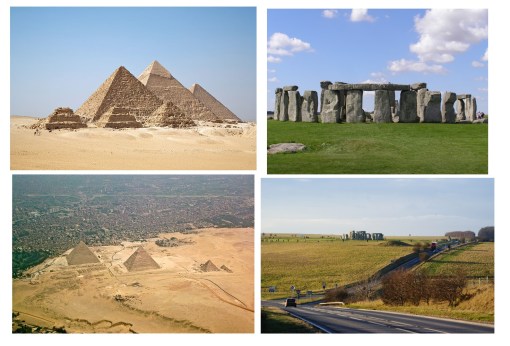
When people think of the greatest wonders of the ancient world, they will almost certainly consider the pyramids of Giza and Stonehenge. However, a surprising fact about two of the world’s most heralded monuments is that they were built in the same century- and are perhaps the two most significant features of their century from today’s perspective. These seemingly immortal monuments possess a similarly mesmeric quality – gained through their sheer antiquity and the mystery surrounding their construction. Given their temporal bond I thought I would compare and contrast the two great monuments, Stonehenge and the Great Pyramid of Giza: their size, their construction, the civilizations which constructed them and the myths that have followed them to this day.

Stonehenge and the Pyrimids

Is the construction of Stonehenge far more interesting than the Great Pyramid?

Size
If this were a competition, then the great pyramid would win this round- it quite literally would tower over our beloved stone circle. Stonehenge’s largest stones, the Sarsens stones, boast a height up to 9m and an individual weight of up to 35 tonnes. On the other hand, the Great Pyramid of Giza stands at 146.7m, with a length of 230.34m- the whole mass weighing in at an estimated 6.5 million tonnes. Stonehenge comes in at an estimated 680 tonnes. The sheer scale of the pyramid is truly astonishing.

Construction
But is the construction of Stonehenge far more interesting than the Great Pyramid? Again, if this were a competition this round might end in a draw. Of course, the scale of the pyramid is more impressive, but the two monuments share a similar sense of mystery when it comes to their construction. With both, there are very few facts surrounding construction – we deal mainly in inferences and theories. A key theory about the construction of the pyramid is the theory that great ramps were constructed linking the pyramids to quarries and allowing the workmen to reach such a great height without the advent of the crane.

One of the greatest discoveries surrounding the construction of Stonehenge was the location of a quarry in Preseli hills, Pembrokeshire, south wales where the smaller Blue stones were sourced – 140 miles away from the site of Stonehenge! Theories of how the stones were transported are multifarious (and the myths are even more wide ranging). However, a popular theory chimes with the construction of the pyramids as some have suggested a continuous proto-rail system was constructed between the sites to push the stones along.

Alas, the pyramid might score more points on the transportation of materials – there is a suggestion that some stones from the King’s Chamber in the The Great Pyramid were brought from 500 miles away.

Civilisations
The scale of the Great Pyramid in comparison to Stonehenge is easily explained in reference to the two different civilisations that built them. Whilst most of Europe in this period was literally stuck in the stone age – Britain lagged particularly behind and was mostly inhabited by relatively primitive farming peoples. In comparison, the civilisation of Egypt was the greatest civilisation on Earth at this point and one of the greatest civilisations in the history of our planet. They had far more advanced construction techniques, paper and writing on which to plan, complex irrigation systems, artwork… the list goes on. I would argue that the relative primitiveness of the society which constructed Stonehenge makes It more impressive.

Myths
The mystery which inexorably links these two monuments will always spawn the most fascinating mythology. Out of the possibly thousands of myths about the monuments I will pick my favourite about the construction of each. Egypt had its own mythology, but modern-day thinkers have added to that treasure trove with their own theories about the pyramids. A popular myth is that the pyramids were constructed by either a lost civilisation with advance technology or perhaps even aliens (as reported in the Daily Express). As for Stonehenge, it has long been claimed that it was magically constructed by Merlin, the wizard of Arthurian legend.

Whichever you think is the ‘best’- there can be no doubt that these two great monuments of the 25th Century BC share an extraordinary history of intrigue.

Relevant Links:
From the pyramids to Stonehenge – were prehistoric people astronomers? ZME SCIENCE
To understand the pyramids and Stonehenge, look up – not down – THE GUARDIAN
Egypt SHOCK: Aliens BUILT the pyramids claims INTERGALACTIC medium – THE EXPRESS
The Lore and Lure of Ley Lines –LIVE SCIENCE
The pyramids, the Minoans, Stonehenge: 6 of the greatest unsolved mysteries in history – THE MIRROR

The Stonehenge News Blog
Follow us on Twitter and Facebook for all the latest Stonehenge News
http://www.Stonehenge.News


BREAKING NEWS: Plans for proposed dome to cover Stonehenge from 2021

31 03 2020

Stonehenge is one of the countries most beloved sites, the Neolithic monument becoming a UNESCO world heritage site in 1986. Although many measures have been taken since to protect the ancient stones, the current climate crisis is beginning to take its toll; increased carbon dioxide levels and acid rain have both contributed to the stones’ deterioration.  On top of that, vandalism and even the threat of terrorism has led English Heritage, in partnership with UNESCO, to seek drastic measures for the preservation of the prehistoric wonder:  namely covering the stones with a glass dome.

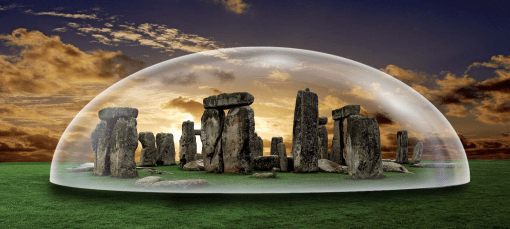
STONEHENGE GLASS DOME

Stonehenge Dome Architectural Illustration. Copyright Thor Design

The dome is the simplest way to preserve the monument, both protecting the stones from any external threat whilst allowing a nitrogen rich atmosphere to be maintained within the dome, preserving the delicate lichen which grows on the surface of the stones – slowing the rate of decay inexorably. An English Heritage representative excitingly described the project as an attempt to create “the world’s first climate-controlled stone circle”

Proposed Glass Specifications: UV resistant | Water resistant | Wind resistant |EN 1090- 1:2009+A1:2011 Compliant | Polyethylene 140 g/m2 

At this stage various firms are bidding for the project and their exact specifications
differ. An Exeter based architectural firm has proposed ‘a polycarbonate titan arch’, whilst another unnamed bidder has put forward a ‘louvre style pyramid’. The most likely option seems to be the idea put forward by the London based architectural engineering firm PCMR, who specify an ‘Igloo style dome’, designed with a PVC weatherproof cover. PCMR’s patented scratch resistant glass is reportedly ‘perfect’ for the project.

Sources at PCMR say the dome will take nothing away from the viewers experience whilst its “…magnifying properties would also make the stones look bigger from the outside as many tourists are disappointed by the size of the stones”.

However, with conservative estimates of the project getting into the millions, cheaper alternatives may have to be considered. Local councils have suggested more of a ‘gazebo’ style design or even a giant poly tunnel.

The plans have been labelled ‘project snowglobe’- and have summer Solstice organisers are excited by the technological prospects the project could bring to the celebrations. The dome allows for advanced lighting and sound systems to be installed; the Chemical Brothers are already rumoured to be interested in playing the maiden show and tickets could retail from upwards of £100.

Some plans even include adding additional features within the globe. One proposal plans to utilise the climate-controlled environment and plant an elegant orange grove, adding some continental beauty to Neolithic stones as well as the prospect of Wiltshire’s first orange juice vintage. Although the orange grove idea has been met with enthusiasm by residents, suggestions that the giant globe design could also be used for growing herbs has been called a waste of thyme.

However, the glass isn’t all rose tinted.  Representatives of the World Greenhouse Federation (WGF) have registered concerns as to the magnifying capabilities of the proposed dome, releasing a statement that nearby villages such as Amesbury and perhaps even parts of Salisbury could ignite if the sun was to shine on the globe from particular angles. Furthermore, local window cleaning firms have been fervently bidding for the job of cleaning the proposed dome, it being called the biggest job in the industry since the Shard. But things have turned nasty and there have been reports of threats and even of violent clashes between rival firms in the build up to the announcement. On top of that, Salisbury window company, Curt & Rod are disappointed local companies were not contacted and one preeminent Archaeologist claimed the greenhouse idea would be a costly and a real pain.

However, setbacks haven’t stopped the tide of incoming ideas. British Company Vision Express submitted plans for a grand ‘Crystal Palace’ design, however UNESCO dismissed the design and said, ‘we should have gone to Specsavers.’

Let’s hope whoever lands the contract, goes out there and absolutely smashes it.

The Stonehenge News Blog
Follow us on Twitter and Facebook for all the latest Stonehenge News
http://www.Stonehenge.News


WHILST STONEHENGE IS TEMPORARILY CLOSED YOU MAY WANT TO TAKE A VIRTUAL TOUR OF THE STONES

20 03 2020

Take an interactive tour of Stonehenge with the 360 degree view from inside the monument. Visit the English Heritage website and click the hotspots to find out more.

There is a also a great panoramic tour inside the stones created by Howard Goldbaum whose website Voices of the Dawn mainly concentrates on the Folklore of Ireland’s Ancient Monuments. Stonehenge virtual inner circle tour.Back in 2010 he spent many sessions taking thousands of photographs inside Stonehenge, when it was closed to the public, which have been ‘stitched’ together to unique set of views of the inner circle. All similar ones we have seen are taken from just one spot, but what makes this unique is that you can take a panoramic view from several different places inside Stonehenge – just choose your viewpoint on the plan in the bottom left hand corner and away you go.

INTERACTIVE MAPS OF THE STONEHENGE LANDSCAPE: Discover what the landscape around Stonehenge has looked like from before the monument itself was first built through to the present day. Move between the four maps to see the Stonehenge landscape at different periods, and open the image windows to find out more about each feature. Click here

Nearby Avebury Stone Circle remains open (from dawn to dusk) for you to enjoy, while observing social distancing measures.

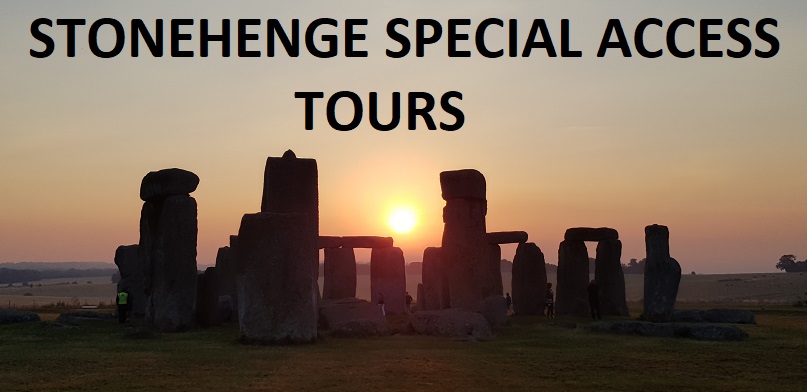
If this has whetted your appetite and you want to go inside Stonehenge and learn more about the other monuments in the surrounding landscape which help explain why the stones are where they are, then have a look at the Stonehenge special access tours 

The Stonehenge News Blog
Follow us on Twitter and Facebook for all the latest Stonehenge News
http://www.Stonehenge.News
Read the rest of this entry »


STONEHENGE CLOSED FROM 19th MARCH DUE TO COVID-19

18 03 2020

English Heritage and The National Trust are both taking drastic action to limit the spread of Covid-19.

Stonehenge

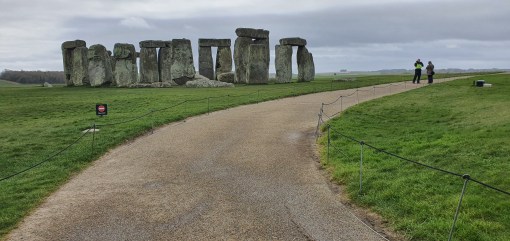
In what would ordinarily be busy tourism season, visitor numbers have slumped due to the Covid-19 virus

Following the latest government recommendations, English Heritage have taken the decision to close Stonehenge and all their staffed historic sites from the end of Wednesday 18th March. They will be reviewing this and will keep you updated. Some sites may be opened earlier and they will let you know if this is the case. They will also need to cancel public events during this period. Visit the English Heritage website for more details.

In an email to its members, Kate Mavor the Chief Executive of English Heritage said:

“Following the latest government recommendations, we have taken the decision to close all our staffed historic sites from the end of Wednesday 18th March until 1st May. We will be reviewing this and will keep you updated. Some sites may be opened earlier and we will let you know if this is the case. We also need to cancel our public events during this period.

Free-to-enter sites will remain open to visitors. These sites have large open spaces in which visitors can maintain social distancing and they are often located in quieter spots away from crowds.

Our first priority is the health and wellbeing of all our Members, visitors, volunteers and staff, and we hope you can understand why we have taken this unprecedented step.

England’s past is full of stories of hope in the face of adversity, and of people coming together to overcome all kinds of challenges.

We look forward to welcoming you at our sites again soon, and we will let you know about our plans for reopening as soon as we are able. Until then, I hope that you and those close to you keep healthy and safe.”

The Stonehenge News Blog
Follow us on Twitter and Facebook for all the latest Stonehenge News
http://www.Stonehenge.News


Stonehenge Spring (Vernal) Equinox 20th March 2020

14 03 2020

The Spring, or Vernal, Equinox is the point at which the sun crosses the equator, returning to the northern hemisphere, the point when day and night are at equal length.  The exact time of the 2020 Spring (Vernal) Equinox is at 03.49am

Stonehenge Vernal Equinox

As the sun returns, bringing with it the prospect of spring and all its light and warmth, where better to witness this celestial dance then amongst the essential beauty of the world’s most famous megaliths.

English Heritage are expected to give a short period of managed open access from approximately 05.45m to 8.00am. Due to the current climate concerning coronavirus we recommend checking the English Heritage website for any updates.

Spring equinox 2020

This is the first of the four ‘sky points’ in our Wheel of the Year and it is when the sun does a perfect balancing act in the heavens. This is the point of the year when once again day and night are equal – 12 hours. The equinox, (the Latin word for Equinox means time of equal days and nights) is only the very moment the sun crosses the equator.

The return of the sun and the promise of spring has always been a cause for celebration.

At the North Pole the sun will blaze for the next 6 months, here the days will elongate. Across the northern hemisphere, across the centuries, our ancestors have rejoiced in celebration at the end of winter. Globally, it is a time of unity between the northern and southern hemispheres as our days hang in perfect balance with one another. Stonehenge’s connection with the stars has ensured it as a hub for equinox celebrations and to this day the celebrations continue.

The time is for the instant when the Sun crosses the celestial equator moving northwards and has a celestial longitude of 0°

For the ancients, as well as today the celebrations welcomed the spring and the end of a harsh winter; this was the time when crops were resewn and the people celebrated the triumph of light over dark, of life over death. The celebrations have always been full of hope and joy – it is even foretold that as the wind and the weather are at the vernal equinox, so they will be for the next few months.

Public access to Stonehenge currently takes place on four of the so-called ‘quarter festivals’. What exactly are the quarter festivals? And why are these occasions so celebrated by the Druids? The Quarter Festivals and the Druids

Stonehenge and the Druids – who are the Druids?

Visiting Stonehenge this year for the Spring Equinox Celebrations? RESPECT THE STONES

English Heritage –  conditions of entry for ‘Managed Open Access’

If you are considering visiting Stonehenge for the Vernal Equinox and do not have transport you can join a specialist organised small group tour.  Use a reputable tour operator who respect the conditions of entry.  Stonehenge Guided Tours are the longest established company offering award winning discreet tours from London and Bath – click here for their exclusive Spring Equinox tour.  Solstice Events offer small group sunrise tours using local expert guides.

If you are unable to visit Stonehenge on the Equinox you can watch our FACEBOOK or  LIVE PERISCOPE STONEHENGE BROADCAST

The Stonehenge News Blog
Follow us on Twitter and Facebook for all the latest Stonehenge News
http://www.Stonehenge.News


The government has given the go ahead to the controversial Stonehenge tunnel scheme.

12 03 2020

Plans to dig a two-mile (3.2km) road tunnel near Stonehenge have been given the go ahead by the chancellor

Stonehenge tunnel

The A303, which often suffers from severe congestion, currently passes within a few hundred metres of the ancient monument.

The full Budget documents posted on the government website state: “The government is boosting regional connectivity and transforming connections through the largest ever investment in England’s strategic roads.

The announcement made yesterday, (Weds 11th March), quashes rumours that the multi-million pound project was about to be scrapped.

Earlier this week Wiltshire Council came out IN FAVOUR of A303 Stonehenge scheme.

Chancellor pledges A303 tunnel ‘will get done’

“Through RIS2 the government will spend over £27 billion between 2020 and 2025.

“It will take forward schemes such as building a new, high-quality dual carriageway and a two-mile tunnel in the South West to speed up journeys on the A303, and to remove traffic from the iconic setting of Stonehenge.”

In February, campaign group the Stonehenge Alliance amassed more than 50,000 objections to the plans and delivered the petition to Downing Street.

RELEVANT LINKS:

Chancellor pledges A303 tunnel ‘will get done’ SPIRE FM

Government gives go ahead to Stonehenge A303 scheme in Budget – SALISBURY JOURNAL

A-OK Chancellor gives green light to landmark A303 Stonehenge tunnel scheme to end traffic nightmare  THE SUN

Stonehenge A303 tunnel given go ahead by chancellor – BBC

The Stonehenge News Blog
Follow us on Twitter and Facebook for all the latest Stonehenge news and stories
www.Stonehenge.News


‘Scrapped’ – End of the Road for the Stonehenge Tunnel?

28 02 2020

The proposed plans to ‘upgrade’ the A303, which currently runs within 165 meters of the Neolithic monument, is set to be ‘scrapped’. In the wake of an UNESCO survey which uncovered a plethora of issues which were set to escalate the costs of the build to over £2 billion. The proposal sought to both ease traffic around the monument and improve the environment surrounding the 5,000-year-old the world heritage site by creating a 2-mile-long dual carriageway, within a tunnel, beneath the monument. The projects scrapping sees the end of a 25-year battle and will leave thousands of campaigners feeling triumphant.

Stonehenge Tunnel

When it comes to the initiation and completion of this project there doesn’t seem to be much light at the end of the tunnel.

Escalating Cost

In 2018 the budget for the project was a whopping £1.6 billion, a figure that unsettled many MPs at the time. However, due to the rich Neolithic history of the area surrounding Stonehenge, UNESCO conducted an archaeological survey around the area of the proposed tunnel. The survey found significant material, which adds more layers of complexity to the project. With the project already spiralling into a complexity nightmare – with amongst other things, four green bridges, a viaduct, 100 ha of grassland – the additional costs required by the surveys findings pushed costs to over £2 billion, a figure the government is not likely to pay. Ultimately, the decision lies with Grant Schnapps, the secretary of state for transport, who still has time to announce his decision. However, it seems almost certain that the plan will be scrapped by the time the budget is announced on March 11.

Opposition

One group who will be over the moon with the news is the Stonehenge alliance:

A group of non-governmental organisations and individuals that seeks enhancements to the Stonehenge World Heritage Site

The group have represented a staunch opposition to the proposed tunnel, regularly siting its archaeological shortfalls, as it says on their website:

All archaeology in the construction zones would be destroyed and the A303 would become the largest ever human intervention in an area fashioned and revered by over a hundred generations of our ancestors.

They will certainly feel vindicated in the light of UNESCO’s survey, proving that archaeological considerations were in fact inadequate in the original plan. Todays announcement comes only a week after Stonehenge alliance gathered over 50,000 signatures for a petition against the project.

However, this might not be an end to the saga. The fact remains that the A303 ‘bottleneck’ around Stonehenge is getting worse and the government are believed to be looking at alternatives to the tunnel. Long serving Salisbury City MP John Glen, a supporter of the proposal, said: ‘Large, strategic infrastructure projects like this are always subject to ongoing controversy and rumour until the final decision is made by government…. I appreciate there is considerable cost accompanying the project but I have always been clear that the alternatives to what have been proposed do not stack up.’

For now this exact plan seems dead in the water, but don’t be surprised if another iteration springs up to replace it.

Relevant links:

Two mile tunnel underneath Stonehenge is set to be scrapped over funding problems after survey uncovered issues that could send costs soaring to £2billion – DAILY MAIL

Stonehenge Tunnel scheme ‘scrapped’  – Salisbury Journal

The Stonehenge News Blog
Follow us on Twitter and Facebook for all the latest Stonehenge news and stories
www.Stonehenge.News