Stonehenge and Avebury World Heritage Site is one of Wiltshire and the UK’s greatest assets. It is internationally recognised as one of the top ranking places in the world alongside cultural marvels such as the Pyramids and natural wonders like the Great Barrier Reef.
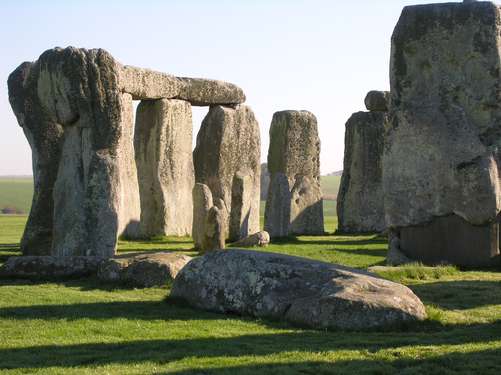
World Heritage Sites need very careful management and protection. A new consultation has just been launched on a document that should help us to provide this.
The consultation gives the public a chance to comment on a document that summarises exactly what it is that makes Stonehenge and Avebury internationally important. The document will provide a crucial reference for those making decisions on how best to manage the World Heritage Site and look after the very special features which qualify it to appear on the World Heritage List. A clear definition in one document should help us protect the World Heritage Site for this and future generations.
Since 2007 UNESCO has asked new World Heritage Sites to provide a Statement of Outstanding Universal Value as part of the nomination process. Stonehenge and Avebury became a World Heritage Site back in 1986 and along with a large number of other sites across the world we now need to produce a Statement of Outstanding Universal Value.
Stonehenge and Avebury are important to very many people for a wide range of different reasons that are taken into account in their respective Management Plans. The Statement of Outstanding Universal Value sets out to define only the values related to its impressive prehistoric monuments which got Stonehenge and Avebury onto the World Heritage Site list in 1986. If you would like to be part of the process of protecting the World Heritage Site you can look at the draft Statement of Outstanding Universal Value on line and leave your comments. The consultation is open until the end of October. You can find it by visiting the Wiltshire Council website.
The consultation closes on 31 October 2010.
For further information please contact: Sarah Simmonds, Avebury World Heritage Site Officer
Email: sarah.simmonds@wiltshire.gov.uk
Tel: 01225 718470
Mobile: 07966 900324
Statement of Significance
The Stonehenge, Avebury, and Associated Sites World Heritage property is internationally important for its complexes of outstanding prehistoric monuments.
It comprises two areas of chalkland in Southern Britain within which complexes of Neolithic and Bronze Age ceremonial and funerary monuments and associated sites were built. Each area contains a focal stone circle and henge and many other major monuments. At Stonehenge these include the Avenue, the Cursuses, Durrington Walls, Woodhenge, and the densest concentration of burial mounds in Britain. At Avebury, they include Windmill Hill, the West Kennet Long Barrow, the Sanctuary, Silbury Hill, the West Kennet and Beckhampton Avenues, the West Kennet Palisaded Enclosures, and important barrows.
The World Heritage property is of Outstanding Universal Value for the following qualities:
Stonehenge is one of the most impressive prehistoric megalithic monuments in the world on account of the sheer size of its megaliths, the sophistication of its concentric plan and architectural design, the shaping of the stones, uniquely using both Wiltshire Sarsen sandstone and Pembroke Bluestone, and the precision with which it was built.
At Avebury, the massive Henge, containing the largest prehistoric stone circle in the world, and Silbury Hill, the largest prehistoric mound in Europe, demonstrate the outstanding engineering skills which were used to create masterpieces of earthen and megalithic architecture.
There is an exceptional survival of prehistoric monuments and sites within the World Heritage site including settlements, burial grounds, and large constructions of earth and stone. Today, together with their settings, they form landscapes without parallel. These complexes would have been of major significance to those who created them, as is apparent by the huge investment of time and effort they represent. They provide an insight into the mortuary and ceremonial practices of the period, and are evidence of prehistoric technology, architecture, and astronomy. The careful siting of monuments in relation to the landscape helps us to further understand the Neolithic and Bronze Age.
Criterion (i): The monuments of the Stonehenge, Avebury, and Associated Sites World Heritage Site demonstrate outstanding creative and technological achievements in prehistoric times.
Stonehenge is the most architecturally sophisticated prehistoric stone circle in the world. It is unrivalled in its design and unique engineering, featuring huge horizontal stone lintels capping the outer circle and the trilithons, locked together by carefully shaped joints. It is distinguished by the unique use of two different kinds of stones (Bluestones and Sarsens), their size (the largest weighing over 40t), and the distance they were transported (up to 240km). The sheer scale of some of the surrounding monuments is also remarkable: the Stonehenge Cursus and the Avenue are both about 3km long, while Durrington Walls is the largest known henge in Britain, around 500m in diameter, demonstrating the ability of prehistoric peoples to conceive, design and construct features of great size and complexity.
Avebury prehistoric stone circle is the largest in the world. The encircling henge consists of a huge bank and ditch 1.3km in circumference, within which 180 local, unshaped standing stones formed the large outer and two smaller inner circles. Leading from two of its four entrances, the West Kennet and Beckhampton Avenues of parallel standing stones still connect it with other monuments in the landscape. Another outstanding monument, Silbury Hill, is the largest prehistoric mound in Europe. Built around 2400 BC, it stands 39.5m high and comprises half a million tonnes of chalk. The purpose of this imposing, skilfully engineered monument remains obscure.
Criterion (ii): The World Heritage Site provides an outstanding illustration of the evolution of monument construction and of the continual use and shaping of the landscape over more than 2000 years, from the early Neolithic to the Bronze Age. The monuments and landscape have had an unwavering influence on architects, artists, historians, and archaeologists, and still retain a huge potential for future research.
The megalithic and earthen monuments of the World Heritage Site demonstrate the shaping of the landscape through monument building for around 2000 years from c 3700 BC, reflecting the importance and wide influence of both areas.
Since the 12th century when Stonehenge was considered one of the wonders of the world by the chroniclers Henry de Huntington and Geoffrey de Monmouth, the Stonehenge and Avebury sites have excited curiosity and been the subject of study and speculation. Since early investigations by John Aubrey, Inigo Jones, and William Stukeley, they have had an unwavering influence on architects, archaeologists, artists, and historians. The two parts of the World Heritage Site provide an excellent opportunity for further research.
Today, the Site has spiritual associations for some.
Criterion (iii): The complexes of monuments at Stonehenge and Avebury provide an exceptional insight into the funerary and ceremonial practices in Britain in the Neolithic and Bronze Age. Together with their settings and associated sites, they form landscapes without parallel.
The design, position, and inter-relationship of the monuments and sites are evidence of a wealthy and highly organised prehistoric society able to impose its concepts on the environment. An outstanding example is the alignment of the Stonehenge Avenue (probably a processional route) and Stonehenge stone circle on the axis of the midsummer sunrise and midwinter sunset, indicating their ceremonial and astronomical character. At Avebury the length and size of some of the features such as the West Kennet Avenue, which connects the Henge to the Sanctuary over 2km away, are further evidence of this.
A profound insight into the changing mortuary culture of the periods is provided by the use of Stonehenge as a cremation cemetery, by the West Kennet Long Barrow, the largest known Neolithic stone-chambered collective tomb in southern England, and by the hundreds of other burial sites illustrating evolving funerary rites.
The State Party also proposes the revision of the brief description as follows:
The Stonehenge, Avebury, and Associated Sites World Heritage Site is internationally important for its complexes of outstanding prehistoric monuments. Stonehenge is the most architecturally sophisticated prehistoric stone circle in the world, while Avebury is the largest in the world. Together with inter-related monuments and their associated landscapes, they help us to understand Neolithic and Bronze Age ceremonial and mortuary practices. They demonstrate around 2000 years of continuous use and monument building between c. 3700 and 1600 BC. As such they represent a unique embodiment of our collective heritage.
Merlin @ Stonehenge
The Stonehenge Stone Circle Website
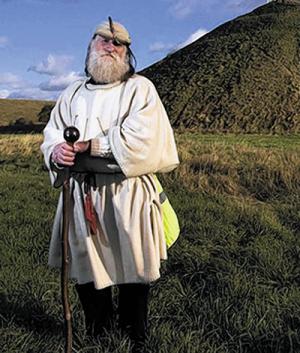 It has taken more than 11,000 years but finally the Druids, who lead the seasonal celebrations at Avebury and Stonehenge, can say they belong to an officially recognised religion.





 StonehengeNews
 travelstonehenge

 Stonehenge Stone Circle News and Information