

The Story of Carbon Dating
10 03 2010Ive had a number of questions recently about ‘Radio carbon dating at Stonehenge’ Here is a comprehensive anwser:
Radio carbon dating determines the age of ancient objects by means of measuring the amount of carbon-14 there is left in an object. A man called Willard F Libby pioneered it at the University of Chicago in the 50’s. In 1960, he won the Nobel Prize for Chemistry. This is now the most widely used method of age estimation in the field of archaeology.
How it works
Certain chemical elements have more than one type of atom. Different atoms of the same element are called isotopes. Carbon has three main isotopes. They are carbon-12, carbon-13 and carbon-14. Carbon-12 makes up 99% of an atom, carbon-13 makes up 1% and carbon-14 – makes up 1 part per million. Carbon-14 is radioactive and it is this radioactivity which is used to measure age.
Radioactive atoms decay into stable atoms by a simple mathematical process. Half of the available atoms will change in a given period of time, known as the half-life. For instance, if 1000 atoms in the year 2000 had a half-life of ten years, then in 2010 there would be 500 left. In 2020, there would be 250 left, and in 2030 there would be 125 left.
By counting how many carbon-14 atoms in any object with carbon in it, we can work out how old the object is – or how long ago it died. So we only have to know two things, the half-life of carbon-14 and how many carbon-14 atoms the object had before it died. The half-life of carbon-14 is 5,730 years. However knowing how many carbon-14 atoms something had before it died can only be guessed at. The assumption is that the proportion of carbon-14 in any living organism is constant. It can be deduced then that today’s readings would be the same as those many years ago. When a particular fossil was alive, it had the same amount of carbon-14 as the same living organism today.
The fact that carbon-14 has a half-life of 5,730 years helps archaeologists date artefacts. Dates derived from carbon samples can be carried back to about 50,000 years. Potassium or uranium isotopes which have much longer half-lives, are used to date very ancient geological events that have to be measured in millions or billions of years.
Comments : Leave a Comment »
Categories : Stonehenge
Stonehenge team wins project of the year
9 03 2010The team which discovered the site of a second stone circle, 500 years older than the nearby Stonehenge has won a prestigious archaeology award.
The sensational discovery of a 5000 year-old “Blue Stonehenge” was made by a team led by archaeologists from Manchester, Sheffield and Bristol Universities on the West bank of the River Avon last year.
The Stonehenge Riverside Project – as they are known – won the Research Project of the Year award at the Current Archaeology awards held at the British Museum.
The Stonehenge Riverside Project is funded by the Arts and Humanities Research Council and the Royal Archaeological Institute.
The award was given following an online vote by readers of Britain’s biggest archaeology magazine.
The new circle was 10m in diameter and was surrounded by a henge – a ditch with an external bank.
However, the stones were at some point removed, leaving behind nine uncovered holes. The team believe they were probably part of a circle of 25 standing stones.
The outer henge around the stones was built around 2,400 BC, but distinctive chisel-shaped arrowheads found in the stone circle indicate that the stones were put up as much as 500 years earlier.
When the newly discovered circle’s stones were removed by Neolithic tribes, they may, according to the team, have been dragged to Stonehenge, to be incorporated within its major rebuilding around 2500 BC.
Archaeologists know that after this date, Stonehenge consisted of about 80 Welsh stones and 83 local, sarsen stones. Some of the bluestones that once stood at the riverside probably now stand within the centre of Stonehenge.
Professor Julian Thomas, from The University of Manchester and a co-director of the Stonehenge Riverside Project, said: “We are delighted to win this award – and it’s a tribute to the team who have done such a great job.
“We are still coming to terms with this truly sensational discovery: it’s amazing the circle of bluestones were dragged from the Welsh Preseli mountains, 150 miles away around 5,000 years ago.
“It adds weight to the theory that the River Avon linked a ‘domain of the living’ – marked by timber circles and houses upstream at the Neolithic village of ‘Durrington Walls’ – with a ‘domain of the dead’ marked by Stonehenge and this new stone circle.
“The Stonehenge Riverside Project also discovered a Late Neolithic settlement outside the enormous henge at Durrington Walls, upriver from Stonehenge, and a series of contemporary timber buildings and other structures in and around Durrington which may have been ceremonial in character.”
Notes for editors
The Stonehenge Riverside Project is run by a consortium of university teams. It is directed by Prof. Mike Parker Pearson of Sheffield University, with co-directors Dr Josh Pollard (Bristol University), Prof. Julian Thomas (The University of Manchester), Dr Kate Welham (Bournemouth University) and Dr Colin Richards (The University of Manchester). The 2009 excavation was funded by the National Geographic Society, Google, the Society of Antiquaries of London, and the Society of Northern Antiquaries.
Most of the circle remains preserved for future research and the 2009 excavation has been filled back in.
Comments : Leave a Comment »
Categories : Stonehenge
Stonehenge Funny Picture – Its not all serious…….
5 03 2010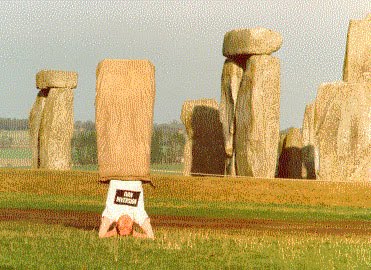

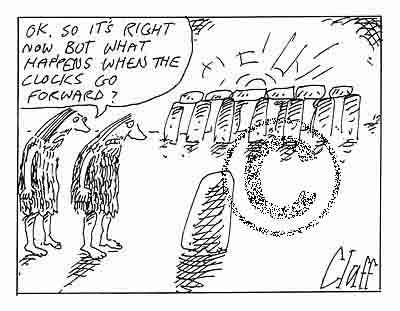
Comments : Leave a Comment »
Categories : Stonehenge
New Stonehenge Tour
4 03 2010Evan Evan Tours have just launched a new tour that includes Stonehenge Private access. In my opinion its a little ambitious (see below) but thats my opinion. There is a link below if you want to book
Their itinerary is as follows:

A PRIVATE VIEWING OF THE INNER CIRCLE AT STONEHENGE – an early start gives the opportunity to visit the inner circle of Stonehenge at sunrise, a walking tour of Oxford and visit to the state apartments at Windsor Castle.
Included Highlights
•Private Viewing at Sunrise of the Inner Circle at Stonehenge
•Walking tour of Oxford
•Visit Christ Church college (where Harry Potter was filmed)
•Entrance to Windsor Castle and a tour of the State Apartments and St George’s Chapel
•First-class luxury Motor-coach and the services of a Professional Guide
Private Viewing of Stonehenge
Most visitors to Stonehenge are not allowed direct access to the stones. On this special day trip from London, you’ll be invited to enter the stone circle itself, and stand beside the mysterious rocks towering above you. Your guide will unlock the secrets of this ancient World Heritage site. Enjoy the peace, away from the crowds, as you experience Stonehenge at its atmospheric best at sunrise.
Oxford
The colleges in Oxford date back to the 13th century and among its famous students were Bill Clinton, C.S. Lewis, J.R.R. Tolkien and Lewis Carroll. We take you on a fascinating walking tour, which includes visiting the Great Hall in Christ Church, where many scenes from Harry Potter were filmed. We’ll also see the Bodleian Library and the picture perfect college courtyards for which Oxford is famous.
Windsor Castle
Our day continues with a visit to Windsor Castle, the largest and oldest occupied Castle in the world, and home of the Royal Family for 900 years. Its proud, strong walls dominate the delightful town that has grown around the castle over the years. You’ll see the lavishly decorated State Apartments containing priceless furniture in glorious colours and St George’s Chapel, home to the 14th Century Order of the Royal Garter, our senior chivalric order.
Evan Evans Coach Tours – Click Here
The Stonehenge Tour Company
Comments : Leave a Comment »
Categories : Stonehenge, Stonehenge news, Stonehenge tours
Avebury Stone Circle – Wiltshire
2 03 2010
Avebury is the largest stone circle in the world and often overlooked. Its only 30 minutes north of Stonehenge and well worth exploring:
Situated in southern England in the county of Wiltshire the village of Avebury is close to two small streams….the Winterbourne and the Sambourne which unite to form the source of the River Kennet. After being re-inforced by a number of springs this beautiful English river rapidly gains in stature as it passes through the North Wessex Downs on its way to Reading where it eventually flows into the River Thames of which it has become the main tributary. The waters of the Kennet therefore pass through London before reaching their ultimate destination in the North Sea.
Around 4,500 years ago, when the site of England’s capital was a thinly inhabited marshland, the area around Avebury almost certainly formed the Neolithic equivalent of a city. By coincidence this waterway has become a link between the two largest cultural centres of their day to have ever existed in the British Isles. As London now contains most of England’s largest buildings Avebury is the location of the mightiest megalithic complex to have ever been constructed in Britain. This henge with its enormous ditch, bank, stones and avenues survives in a much depleted state but the nearby Silbury Hill which is the largest man-made mound in pre-industrial Europe still dominates the surrounding landscape. The two largest surviving British long barrows of West Kennet and East Kennet are also prominent a short distance away and in recent years the remains of two massive palisaded enclosures have also been found. The quote that antiquarian John Aubrey made of Avebury……”it does as much exceed in greatness the so renowned Stonehenge as a Cathedral doeth a parish church” recognises the true importance of what has now been largely absorbed into the modern landscape of Wiltshire. If we could return to the time when the Romans occupied the British Isles it is a sobering thought that we would have to go back as far again to find an Avebury that was already several centuries old.
The history of the modern village is inevitably linked to the prehistoric monuments that surround it. Abandoned for several thousand years the land around the stones became occupied oncemore when people of the Saxon period began to settle in the area. Their arrival and subsequent development of the present village was to have a dramatic effect on the history of the stones. The relationship between the local inhabitants and the monuments has now added an unfortunate dimension to the Avebury story that helps make it one of the most fascinating historical sites to be found in the British Isles if not the world.
It remains a magical place as so many who have been there will agree. A visit to Avebury is a very personal event. It still seems to retain, somehow, the spirits of all those who laboured in its creation or whatever it was that led them to create it. If you have never been there a visit will not be an empty experience. You will come away with a head full of questions and probably a realisation that somewhere over the years modern society has lost something important.
If you cant make your own way there try this company:
HISTOURIES UK
They are based in Salisbury and opearate quality private tours of Stonehenge and Avebury
Comments : Leave a Comment »
Categories : Stonehenge, Stonehenge tours, UK Stone Circles
Stonehenge Virtual Download
26 02 2010
There is a new download available so you can explore Stonehenge virtually, Its quick to register and you will mixing with the Druids in minutes. Link at bottom of page.
What they say…………
“The druid beckons us to travel back in time with him, to find out all about the mysteries of Stonehenge. He swivels to face away from us; we follow him. Suddenly the land around us changes – we’re right in the heart of a dense forest, with all the plants, animals and atmosphere of Stonehenge brought to life right before our eyes.
“The druid carries on regardless. He turns, and he’s changed: his clothes have dated thousands of years. A quick smile and a wink reassures us as we’re whisked away through millennia of human history.
“And here we are – Stonehenge circa 2,400 BC, right around the time the last famous stones are being put in their fateful place. The giant megaliths resonate through the ages; just as breathlessly beautiful as they are today…”
Storylines
This is just the smallest tip of an epic story we at Heritage Key are developing, in the journey through Stonehenge Virtual.
Mystery
A place intertwined with history, controversy and ethereal mystery, Stonehenge has been a subject of speculation for centuries – its stones tell a silent story of thousands of years of clandestine ceremony, royal burials and celestial ambitions.
From the twisted bodies of the land’s first people, to the majestic beauty of the midsummer’s sunrise over its sarsens, Stonehenge raises just as many questions as it answers about life in prehistoric Britain.
Come with us!
Heritage Key invites you on an exclusive tour back thousands of years to the dawn of British history with Stonehenge Virtual.
•Explore the Neolithic settlement of Durrington Walls
•See the wonder of Stonehenge as it once stood over four thousand years ago.
•Interact with the people of the time, and take part in an ancient sunset ritual.
•Experience life as one of the ancient people who built Stonehenge.
Learn everything about Britain’s most spectacular prehistoric landmark. Explore the plants, animals and food which made Bronze Age Britain such an awe-inspiring place. Invite your friends along to a modern-day Druid ritual at the world-famous summer solstice festival, and learn about its greatest characters.
Incredible people
There’s so much more to the story of Stonehenge than its magnificent stones – fierce foreign warriors who came seeking magical medical redemption; powerful leaders who lived and died for the magnificent monument.
An amazing place
Stonehenge is one of the world’s greatest landmarks, with a history that never ends – and we want you to be able to explore it in all its incredible glory while you enjoy our Virtual Experience.
Unlock the wonders of Stonehenge with Stonehenge Virtual: Coming soon to Heritage Key. Go to website
Comments : Leave a Comment »
Categories : Stonehenge, Stonehenge news, UK Stone Circles
Stonehenge Tour to expand
23 02 2010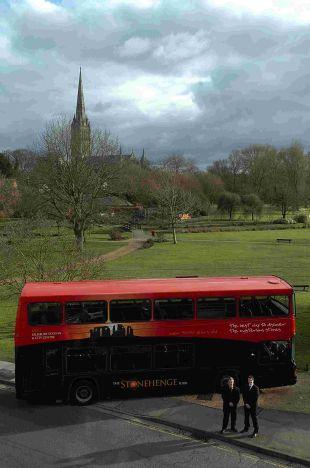
VISITORS to Stonehenge will now be able to take advantage of an expansion to the always popular Stonehenge Tour.
The new package for 2010/11, beginning on March 16, will feature Salisbury Cathedral and the Magna Carta and enable visitors to explore Stonehenge, the hillfort of Old Sarum, and the cathedral using a single ticket.
The tour allows visitors to step off trains at Salisbury station and straight onto the dedicated bus service.
Stuart Maughan, English Heritage head of visitor operations for Stonehenge and Old Sarum, said “Neatly wrapping up three of the area’s top heritage attractions into one easy package like this will have real appeal for tourists and most especially for overseas visitors.
“I feel sure it will encourage them to visit all three attractions – and inspire them to explore the city of Salisbury and surrounding countryside – so that everyone benefits from this new partnership.”
Customers join The Stonehenge Tour buses at Salisbury rail station, the bus station or any of the stops in Salisbury city centre or at the historic sites themselves.
Buses run every 30 minutes during the summer and once an hour for the remainder of the year. Tickets are bought from the driver. Adult ticket prices range from £11 (tour only) to £22 (including admission to Stonehenge, Old Sarum and a donation to Salisbury Cathedral).
Comments : Leave a Comment »
Categories : Stonehenge, Stonehenge news, Stonehenge tours
Concrete Post Henge is Oldest Structure In England
22 02 2010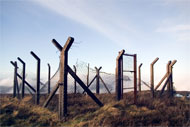
English Heritage, working in conjunction with The National Trust, are fighting ‘tooth and nail’ to preserve the newly discovered ancient Henge found in Wiltshire, England.
Also located in Wiltshire is Stonehenge thought to have been erected in around 3000BC. Coincidently, Concrete Post Henge is only, a remarkable, fifty feet away from the former, just over a small hill. Chartered Surveyors were called to the scene immediately and were able to verify that the structure had been around since at least two days after The Big Bang. Primitive drill bit markings and circular saw striations were, apparently, the most obvious clues in the age determining process.
“I can’t believe we didn’t spot it before; it was right under our noses. The significance of this find cannot be underestimated. I’ve seen a few henges in my time, nobody knows what the heck a henge is yet, but I know this is a good one.”
National Trust stalwart Walter Ernest made only one comment to The Spoof:
“It’s a sad day here for us in Wiltshire. I’ve put my life, heart and soul into promoting ‘old stoney’ as the nation’s oldest treasure, since my divorce it’s been like a friend to me. No doubt some young bucks will get the job of looking after the new find and I’ll probably have to go back to a career
in druid stone circles now…”
Now that was funny! The story above is a satire or parody. It is entirely fictitious.
This was from the Spoof website.
Comments : Leave a Comment »
Tags: Stonehenge, Stonehenge news
Categories : funny, Stonehenge, Stonehenge news, UK Stone Circles
Stonehenge Summer Solstice Tour 2010
21 02 2010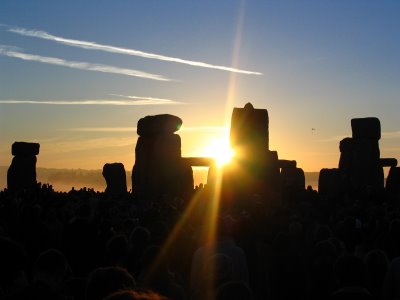
Our friends at the Stonehenge Tour Company have just announced their 2010 Summer Solstice Tour. See itinerary below. Works out cheaper and far less hassle if you are travelling from London. See link at bottom of page.
STONEHENGE SUMMER SOLTICE ‘EXCLUSIVE’ TOUR – JUNE 21st 2010 After the huge success of our tours in previous years we are delighted to announce our 2010 departure.
Each year on the 21 June visitors from around the world gather at Stonehenge overnight to mark the summer solstice and to see the sunrise above the stones. At dawn the central Altar stone aligns with the Slaughter stone, Heel stone and the rising sun to the northeast.
“A Once in a Lifetime Opportunity!”
STONEHENGE SPECIAL ACCESS TOUR
Each year on the 21 June visitors from around the world gather at Stonehenge overnight to mark the summer solstice and to see the sunrise above the stones. At dawn the central Altar stone aligns with the Slaughter stone, Heel stone and the rising sun to the northeast.
The Summer Solstice is the most important day of the year at Stonehenge and a truly magical time to be there. It’s an ad hoc celebration that brings together England’s New Age Tribes (neo-druids, neo-pagans, Wiccans) with ordinary families, tourists, travelers and party people – 1000’s of them!
For many the impulse to arrive at Stonehenge in time for the Solstice is a little like all those people drawn to the strange rock in Close Encounters of the Third Kind. It’s akin to a spiritual experience. Anyone who has witnessed the crowd become silent as the sky begins to brighten can attest to that. You will enjoy 3 – 4 hours within the circle at sunset on June 20th or sunrise on June 21st. The small group (16 people) nature of this tour means you can have a real personal experience.
We are offering two departure options for this special tour:
TOUR OPTION 1:
Depart central London at 5pm June 20th. Mini Coach Travel to Stonehenge with guide and spend 3 – 4 hours inside the circle and witness the sun setting, Druid Ceremony and festivities. Back to London at 1am
TOUR OPTION 2:
Depart central London at 1am June 21st. Mini Coach Travel to Stonehenge with guide and spend 3 – 4 hours in side the circle and witness the sun rising, Druid Ceremony and festivities. Back to London at 8am
IMPORTANT INFORMATION:
This is not like our traditional guided ‘Private Access’ tour. Although this tour is guided it does not visit other attractions and is not everyone’s cup of tea, however those who do participate will never forget it and will surely ‘tell the tale’ for many years to come…… Please take the time to view our images / video of previous ‘Solstice Tours’.
For those of you who have not visited this sacred site, we should mention that the complex is roped off. Visitors observe the stones from a distance and are not permitted within the temple complex……….our ‘Summer Solstice’ tours allow you to be amongst the stones and to actually touch them.
N.B. With this exception English Heritage do not allow any other ‘private access’ tours between 16th June and 1st July
English Heritage provides Managed Open Access to Stonehenge for the Summer Solstice and works closely with agencies, and people from all sectors of the community, in order to create a peaceful occasion – ensuring an event that can be safely enjoyed by all and protects Stonehenge and its surrounding Monuments.
Due to the nature of this ‘special access’ tour and the strict entry conditions that English Hritage impose please register your interest for this tour on the form below and we will contact you with booking details and terms and conditions. This is on a first come first serve’ basis.
Comments : Leave a Comment »
Categories : Stonehenge





 StonehengeNews
 travelstonehenge

 Stonehenge Stone Circle News and Information