Distracted motorists have most accidents passing Stonehenge

14 09 2012

Distracted motorists have more accidents passing Stonehenge than any other British landmark, a new study found
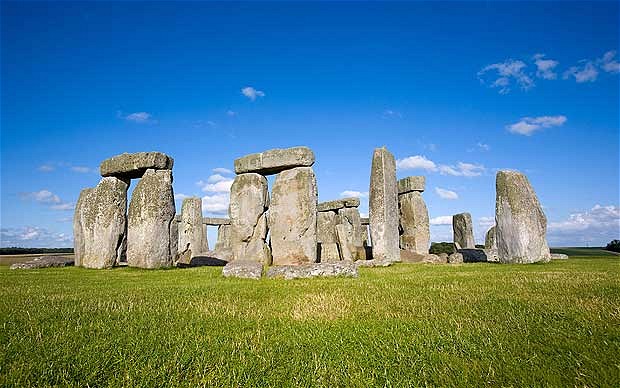
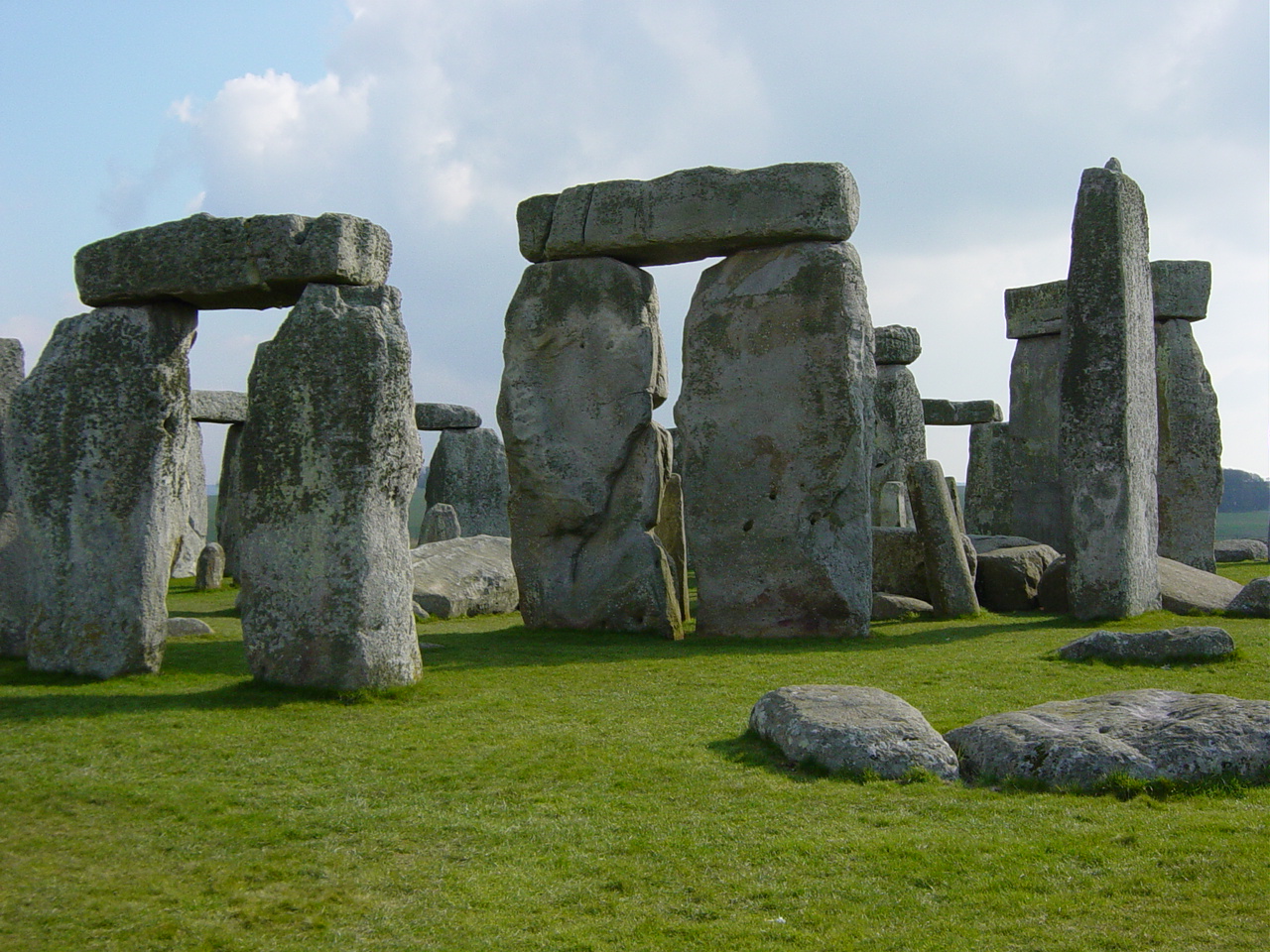
Be careful driving past Stonehenge. It's the landmark most likely to distract motorists. Photo: Alamy

Be careful driving past Stonehenge. It’s the landmark most likely to distract motorists. Photo: Alamy

Distracted motorists have more accidents passing Stonehenge than any other British landmark, a new study found.

Over a third of drivers, 34 per cent, have had a prang or near miss in the UK as a result of taking their eyes off the road to admire a view.

And an admiring 14 per cent have slammed on the brakes to get a longer look – typically reducing their speed by 27 mph.

Accidents resulting from these distractions cause an average 413.56 pounds of damage each time, the study by insurance firm MORE TH>N found.

A quarter of motorists, 26 per cent, have been distracted by the pre-historic monument of Stonehenge near Amesbury, Wiltshire.

Rubber-neckers there typically take their eyes of the road three times, each for 3.74 seconds.

This mean motorists – doing 40 mph – could drive past for 200 metres without paying attention to the road.

A careless 13 per cent of those who were distracted by Stonehenge have crashed or almost crashed as a result, the study of 2,000 motorists found.

The Angel of the North, in Gateshead, Tyne and Wear, is the second most dangerous landmark and the Blackpool Tower, in Lancs, third.

A captivated 18 per cent and 12 per cent of motorists find their eyes drifting towards these sites as they pass.

Just over one in ten of these drivers, 11 per cent, have had or nearly had an accident at these two beauty spots.

The top ten also includes the Scottish Highlands, the House of Parliament, Windsor Castle, Tower Bridge, and Clifton Suspension Bridge.

Cheddar Gorge and Severn Bridge complete the list.

Motorist Jason Richardson, from Southampton, Hants, said he often admires the view as he drives around the country for work.

The sales director, 32, said: “I spend my life on the road visiting customers and it can be incredibly boring looking at miles of tarmac on the motorways.

“So when you see a spectacular view or a landmark you have read about or seen on TV it is hard to keep your eyes on the road.

“I have driven past Stonehenge and the Angel of the North and had to settle for a peek because I didn’t have time to stop.”

Janet Connor, from MORE TH>N, said: “Travel guides, friends and family often encourage us to take the scenic route.

“But until now the perils of admiring the world beyond the windscreen have not been fully explored.

“The UK is blessed with some amazing sights but motorists need to keep their eyes on the road and resist the lure of staring at them while driving.

“To avoid having an accident, park-up and enjoy the view safely.”

Top ten accident hostpots.

1. Stonehenge, Wiltshire

2. Angel of the North, Gateshead

3. Blackpool Tower, Blackpool

4. Scottish Highlands (towards Glencoe)

5. Big Ben/Houses of Parliament, London

6. Windsor Castle, Windsor

7. Tower Bridge, London

8. Clifton Suspension Bridge, Bristol

9. Cheddar Gorge, Somerset

10. Severn Bridge, Aust-Chepstow

Link Source: http://www.telegraph.co.uk/earth/environment/archaeology/9540840/Distracted-motorists-have-most-accidents-passing-Stonehenge.html

Sponsored by ‘Stonehenge Guided Tours’ www.StonehengeTours.com

Stonehenge Stone Circle News Blog


Herders rather than farmers, built Stonehenge

10 09 2012

The ancient builders of Stonehenge may have had a surprisingly meaty diet and mobile way of life. Although farming first reached the British Isles around 6,000 years ago, cultivation had given way to animal raising and herding by the time Stonehenge and other massive stone monuments began to dot the landscape, a new study finds.

Stonehenge in southern England may have been built by herders, not farmers, suggests a new analysis of crop remains from the last several millennia.

Stonehenge in southern England may have been built by herders, not farmers, suggests a new analysis of crop remains from the last several millennia.

Agriculture’s British debut occurred during a mild, wet period that enabled the introduction of Mediterranean crops such as emmer wheat, barley and grapes, say archaeobotanists Chris Stevens of Wessex Archaeology in Salisbury, England, and Dorian Fuller of University College London. Farming existed at first alongside foraging for wild fruits and nuts and limited cattle raising, but the rapid onset of cool, dry conditions in Britain about 5,300 years ago spurred a move to raising cattle, sheep and pigs, Stevens and Fuller propose in the September Antiquity.

With the return of a cultivation-friendly climate about 3,500 years ago, during Britain’s Bronze Age, crop growing came back strong, the scientists contend. Farming villages rapidly replaced a mobile, herding way of life.

Many researchers have posited that agriculture either took hold quickly in Britain around 6,000 years ago or steadily rose to prominence by 4,000 years ago. In either case, farmers probably would have assembled Stonehenge, where initial work began as early as 5,500 years ago, with large stones hauled in around 4,400 years ago (SN: 6/21/08, p.13).

But if Stevens and Fuller’s scenario of British agriculture’s ancient rise, demise and rebirth holds up, then small groups of roaming pastoralists collaborated to build massive, circular stone and wood structures, including Stonehenge. Shifts from farming to pastoralism, sometimes accompanied by construction of stone monuments, occurred around the same time in parts of Africa and Asia, the researchers say.

“Part of the reason why pastoralists built monuments such as Stonehenge lies in the importance of periodic large gatherings for dispersed, mobile groups,” Fuller says. Collective meeting spots allowed different groups to arrange alliance-building marriages, crossbreed herds to boost the animals’ health and genetic diversity and hold ritual feasts. At these locations, large numbers of people could be mobilized for big construction projects, Fuller suggests.

“A predominantly pastoralist economy in the third millennium B.C. accords well with available evidence and provides a suitable backdrop to the early development of Stonehenge,” says archaeologist Timothy Darvill of Bournemouth University in England. But he believes many large stones were brought to Stonehenge during a later upswing in cereal cultivation, as pastoralism receded in importance.

Stevens and Fuller compiled data on more than 700 cultivated and wild food remains from 198 sites across the British Isles whose ages had been previously calculated by radiocarbon dating. A statistical analysis of these dates and associated climate and environmental trends suggested that agriculture spread rapidly starting 6,000 years ago. About 700 years later, wild foods surged in popularity and cultivated grub became rare.

Several new crops — peas, beans and spelt — appeared around 3,500 years ago, when storage pits, granaries and other features of agricultural societies first appeared in Britain, Stevens and Fuller find. An influx of European farmers must have launched a Bronze Age agricultural revolution, they speculate.

Stevens and Fuller’s analysis offers only a general breakdown of how farming and pastoralism developed in Britain, asserts archaeologist Alasdair Whittle of Cardiff University in Wales. The scale of cultivation, even during times characterized by relatively abundant remains of domesticated plants, remains uncertain, Whittle says.

Even if farmers didn’t built Stonehenge, cultivators erected plenty of massive stone monuments, Whittle holds.
Bruce Bower
Link source: http://www.sciencenews.org/view/generic/id/343984/title/Herders%2C_not_farmers%2C_built_Stonehenge

Sponsored by ‘Stonehenge Guided Tours’ www.StonehengeTours.com
The Stonehenge News Blog


Stonehenge. Henge Diggers – Salisbury & South Wiltshire Museum

8 09 2012

Saturday 8 September 2012 – Saturday 12 January 2013. This photographic exhibition captures the actions and emotions of archaeologists from universities across Britain whilst they carried out ground-breaking new work to reinterpret the Stonehenge landscape.  Bill Bevan was resident photographer on site for three years during the excavations of the internationally important Stonehenge Riverside Project (2004-2010).  His photographs and the accompanying text offer the visitor an unusual and revealing vantage point from which to view the archaeologists at work. 

Stonehenge Riverside Project is a joint collaboration between archaeologists at the Universities of Sheffield, Manchester, Bristol, UCL and Bournemouth.   This exhibition has been funded by Arts Council England and Manchester University in partnership with Salisbury Museum.

Henge Diggers

An exhibition of how archaeologists work on-site, Themes of the exhibition include the working practices of archaeologists, the brief deposition of tools that mimic the ancient tool deposits they excavate, the repetitive nature of excavation and notions of time and space. All photographs are from the Stonehenge Riverside Project. Thank you to the directors of the project for generously given access to the excavations. More information about the project can be found here –www.shef.ac.uk/archaeology/research/stonehenge

Check out http://www.billbevanphotography.co.uk/ for more information about Bill’s projects.

picture credit: In The Shadow 1 by Bill Bevan, 95 x 70 cms, (c) Bill Bevan


Booking:  No booking required.


Sponsored by ‘Stonehenge Guided Tours’ – www.StonehengeTours.com

Merlin says: “Went today with the kids, well worth a visit!”

Merlin @ Stonehenge Stone Circle
The Stonehenge News Blog


Stonehenge Film Location. Thor – The Dark World

30 08 2012

FILM crews have been at Stonehenge this morning – and rumour is they were working on upcoming Hollywood blockbuster Thor: The Dark World.

Chris Hemsworth as Thor. Pic by PA.

Chris Hemsworth as Thor. Pic by PA.

The film, starring Chris Hemsworth, Natalie Portman, Tom Hiddlestone, Stellan Skarsgård and Anthony Hopkins, is to be the eighth instalment in the Marvel Comic adaptations which have been proving a hit with cinemagoers worldwide, as well as a sequel to 2011 film Thor, directed by Kenneth Branagh.

The set at the historic monument was shrouded in secrecy on Wednesday morning but reliable sources state the location shoot for the blockbuster was being done under the film’s working title of Thursday Morning.

Australian heartthrob Hemsworth played Thor in the first film as well as in the recent Avengers movie, and also appeared in The Cabin in the Woods and Snow White and the Huntsman this year as well as 2009’s Star Trek.

Thor: The Dark World continues the adventures of Thor as seen in The Avengers, and is set to be released in November next year.

Filming on the Alan Taylor-directed production has been taking place at various locations in the UK, thought to include London and Bourne Wood near Farnham.

It is not known if any more action is due to take place at Stonehenge.


Link Source: Salusbury Journal – http://www.salisburyjournal.co.uk/news/salisbury/salisburynews/9898652.Film_being_shot_at_Stonehenge/

Sponsored by Stonehenge Guided Tours. www.StonehengeTours.com

Merlin says: “All good for Wiltshite Toursm”

Merlin @ The Stonehenge News Blog


Your guide to the August night sky, Stonehenge Landscape, Wiltshire

1 08 2012

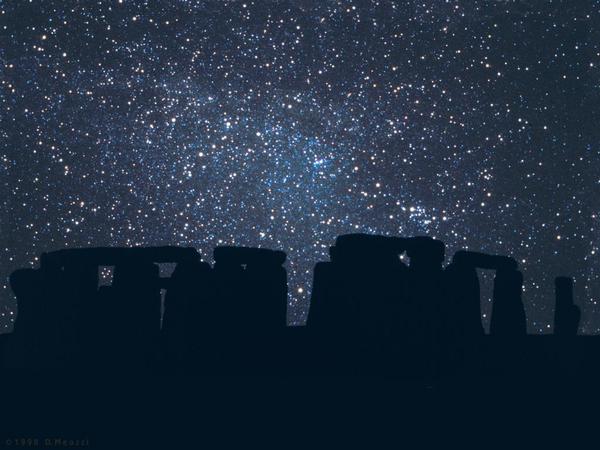
Stonehenge Landscape, Wiltshire.  Big, open skies are a defining feature of the countryside and on a clear night you can see some 4,000 stars sparkling in our universe.

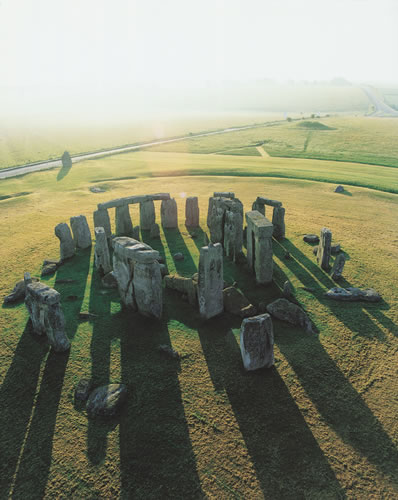
Situated on the edge of Salisbury Plain, the prehistoric ceremonial landscape of Stonehenge occupies a large, sparsely populated area of ancient downland ideal for star gazing. The monuments here are directly connected to the skies above, with stones aligned to moonrises and moonsets, in addition to the Midsummer and Midwinter solstices. Keep an ear out for the Stone Curlew’s haunting ‘coo-ree’ bird call, particularly in autumn.  Terrain and safety: The route to the star-gazing spot follows regular tracks through the fields. Grassy areas are fairly smooth; off the worn route grass can be tall and tussocky. Be aware that the Cursus Barrows field is grazed by cattle. Byway 12 has some large potholes, becoming deep puddles after rain.
 Location: 2 miles west of Amesbury, near the junction of the A303 and A344. Stonehenge car park closes in the evening, but it is possible to park nearby. Grid ref: SU120420

Your guide to the summer night sky, Stonehenge Landscape, Wiltshire
In prehistoric times the night sky would have looked very different. The stars were much clearer and stories about them were likely to have been included in a rich oral history, now lost. Today, light pollution makes it difficult to see all but the brightest stars (© Tony Evershed).  Enter a prehistoric ceremonial landscape: hundreds of monuments with physical and visual connections to each other, to the land and to the skies above. All this lies on the edge of Salisbury Plain, a large, sparsely populated area of downland good for star gazing.

The August skies are filled with all manner of interesting objects that can be viewed in dark sky conditions. Arrive before sunset to see the ancient earthworks at their best in slanting evening light. The banks of the 4,000-year-old Stonehenge Avenue can be seen leading north-east, away from the stone circle.
The Perseid meteor shower is set to peak around 12/13 August, but it’s well worth keeping an eye out for meteors any time from July 23 to August 22. The thin, crescent moon will be out of the way early, setting the stage for a potentially spectacular show.
For best viewing, pick a cloudless night and look to the northeast after midnight.
Overhead there is the summer triangle starting with Vega (a bright white star which is almost overhead, part of the constellation Lyra), Deneb to the left in Cygnus (the swan constellation) and Altair, south east in Sagitta/Aquila. These stars can be used as pointers to other stars. Go to Vega and look westward to find the bright reddish star Arcturus, part of Bootes the Kite. The pretty group of curved stars to the east of Arcturus is Corona Borealis, a cornet of stars. The Plough/Big Dipper is in the north west sky and becomes the tail and rear end of the Great Bear/ Ursa Major.
If the sky is dark and clear of any clouds you should be able to make out the Milky Way, a ribbon of millions of stars threading its way across the heavens. If you are using binoculars this really is a stunning sight.

Download the National Trust Stonehenge Guide (PDF) here: http://www.nationaltrust.org.uk/servlet/file/store5/item479325/version1/w-walk-stonehenge_dark_skies2010.pdf
More Night walks: http://www.nationaltrust.org.uk/visit/activities/walking/view-page/item479320/

Sponsored by ‘The Stonehenge Tour Company’ www.StonehengeTours.com

Merlin says “Neolithic Britons might have held objects of the sky as gods, and predicting the will of the gods was something essential to their existence, thus mixing the concepts we distinguish from each other today – religion and astronomy.”

Merlin @ Stonehenge


Stonehenge Landscape. Events and Tours – August 2012

28 07 2012

Summer Stonehenge archaeology walk (4th / 18th August 2012)

Discover the wider Stonehenge World Heritage Site with a guide and discover hidden histories, ancient mysteries, and downland wildlife.

Stonehenge Landscape ToursExplore the downs in summer with an afternoon walk up on the downs to visit the ancient archaeology and varied wildlife of the Stonehenge World Heritage Site. On this three mile walk with views of the Stone Circle, we’ll visit ancient earthworks that have revealed much about the people who once lived and celebrated here. Talking points include the Cursus, the many and varied barrows, an ancient avenue connecting ceremonial centres, and a rich diversity of wildlife.

  • Dress for the weather – bring a hat and sunscreen as there’s little shade out on the downs – and wear stout footwear. You may like to bring a cooling drink and a snack.
  • Meeting at the Stonehenge car park SP4 7DE (not NT) by the two ‘touching stones’ at the top of the slope that leads down towards the Stonehenge Cafe.
  • Dogs on leads welcome
  • Accompanied children welcome, free
  • Although your guide will tell you about it, this walk doesn’t visit the Stone Circle. You might like to visit it before or after the walk; NT members are admitted free.
  • Access is by pedestrian and farm gates; the terrain is mostly grassland and trackways, often uneven underfoot. Cattle and sheep graze the gently sloping downs.

Durrington Walls to Stonehenge… and back again! (9th August 2012)

Join this walk to imagine yourself walking in the footsteps of Neolithic revellers…

Explore the Stonehenge World Heritage Site and especially the close connections between the two great henge monuments of Durrington Walls and Stonehenge. Your guide will take you on a circuit of around 6 miles over the downs, also exploring some of the less visited monuments that together form the Stonehenge World Heritage Site.


  • Please dress for the weather and wear stout footwear. Wrap up warm ‘ it gets chilly up on the downs!
  • Meeting at Woodhenge Car Park (not NT) (SP4 8LR) – take turn-off signed to Woodhenge from A345 between Amesbury and Durrington. Parking at own risk. No parking charge.
  • Dogs on leads welcome
  • Accompanied children welcome, free
  • Access is by pedestrian and farm gates; the terrain is mostly grassland and trackways, often uneven underfoot. Cattle graze the gently sloping downs. Toilets in Stonehenge Car Park (on walk route).

Stargazing and storytelling, meteors and myths

Discover the night sky through telescopes and exciting myths and legends. (15th August 2012)

Join our friendly team of astronomers for an adventure exploring the night sky with telescopes, alongside legends told by our own starry storyteller, activities, and toasting marshmallows. As well as learning about the constellations, we hope the Perseid Meteor Shower will be putting on a show! Telescopes and expertise are provided by Chipping Norton Amateur Astronomy Group, storytelling with Lizzie Bryant.

  • Bring a torch. Wrap up warm – we recommend plenty of layers, gloves, scarf and a hat – and wear stout footwear. Bring your own seating and blankets. You may like to bring a drink and a snack, too.
  • Meeting on byway 12, close to the Stonehenge Car Park (which will be closed when the event starts) parking at own risk – OS grid reference SU 120 424, postcode SP4 7DE.
  • Ideal for accompanied children, 8 years and up
  • Access is by pedestrian and farm gates; the terrain is grassland, and trackways that are uneven underfoot and sometimes potholed.

Wings over Stonehenge – Military Airplane Competition centenary walk

This walk will commemorate the centenary of the Military Aeroplane Competition held at Lark Hill in August 1912 in which Colonel Sam Cody’s bi-plane ‘The Cathedral’ was the outright winner.

Walk in the slipstream of the early pioneer military aviators at Larkhill. See where the Bristol Boxkite made its first flight in 1910 and where the first British military aeroplane unit was formed in 1911. These walks will cover how aviation developed on Lark Hill from 1909-1914 and how military aviation ‘took off’around Stonehenge from 1914-1918. These walks aim to recreate the period with contemporary photographs and maps and include viewing the early hangars and crash sites.

  • Please dress for the weather and wear stout footwear. You are welcome to bring a snack and a drink to enjoy on the walk.
  • Meeting on Wood Road, Larkhill, grid reference SU143438; the post code is SP4 8LX.
  • Accompanied older children welcome, free
  • Access is by pedestrian and farm gates; the terrain is public roads, as well as grassland and trackways, uneven underfoot.

More Information: Lucy Evershed,             01980 664780      stonehenge@nationaltrust.org.uk

Booking Essential            0844 249 1895
A 5% booking fee applies. Phone lines are open Mon to Fri 9am-5.30pm, plus Sat and Sun 9am-4pm.
Booking Fee Applies
http://www.nationaltrust.org.uk/

Merlin says  “These are truly great events and need to be booked in advance”

Sponsored by ‘The Stonehenge Tour Company’ www.StonehengeTours.com

Merlin @ Stonehenge
The Stonehenge Stone Circle website


A New Dawn for Stonehenge

26 07 2012

Stonehenge Improvements: Work Starts On Site

Work to realise the long-held vision to return Stonehenge to a more tranquil setting and improve its visitor facilities has officially started. Successful fundraising also means that virtually all of the total project cost has now been secured with only £500,000 left to raise, English Heritage has announced.

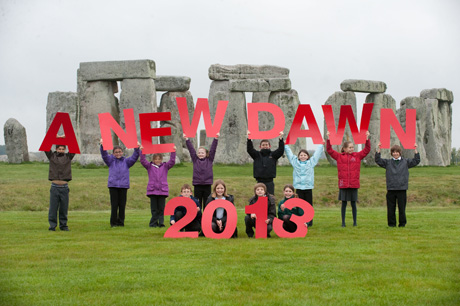
School children from Greentrees Primary School near Salisbury on a recent visit to Stonehenge.

School children from Greentrees Primary School near Salisbury on a recent visit to Stonehenge.

Contractor VINCI Construction UK has taken possession of the site at Airman’s Corner, 1.5 miles to the west of the Stones, to start construction of the new exhibition and visitor building out of sight of the stone circle. In September, the Highways Agency will start work to upgrade Longbarrow Roundabout prior to the closure of the A344 in April 2013.

The £27-million project is financed almost entirely by Heritage Lottery Fund money, commercial income and philanthropic donations including significant gifts from the Garfield Weston Foundation, the Linbury Trust and the Wolfson Foundation.

A new dawn

Dr Simon Thurley, Chief Executive of English Heritage, said: “A new dawn at Stonehenge is truly upon us. Though the stones themselves have never failed to awe visitors their setting has been a national embarrassment and disgrace. After nearly 30 years English Heritage finally has a scheme that will transform the setting of the stones and our visitor’s experience of them. The restoration of the landscape together with a major new exhibition on site will finally give our greatest and most famous monument the treatment it deserves.

“Almost all the money to achieve our vision comes from commercial or private sources. We are tremendously grateful to have so many partners and private sector sponsors supporting us along the way.”

Heritage Minister John Penrose said:  “People have been talking about the project for nearly 30 years and so I’m absolutely delighted that work is finally underway to preserve this internationally recognisable prehistoric World Heritage Site, and to improve the visitor experience for those who come to marvel at it too.”

Transforming the setting of Stonehenge

The project, developed with the support of the National Trust, Wiltshire Council, the Highways Agency, and Natural England, will transform the setting of Stonehenge. The section of the A344 which currently runs past the monument – almost touching the Heel Stone – will be closed and grassed over, reuniting the stone circle with its ancient processional way and the surrounding landscape. The remaining part of the A344 will be closed to public vehicles, and will become the route of a new visitor shuttle service to the stones.

The existing outdated facilities, car park, fences and clutter near the monument will be removed. Visitors will be welcomed at the new facilities located at Airman’s Corner and, instead of approaching the stone circle from the east on a busy road, they will approach over chalk downland from the west either via a 10-min journey on the visitor shuttle, or on foot.

New exhibition, education rooms and more

A visit to the stones will, for the first time, be enhanced by a large exhibition which will tell the story of this complex site and its relationship with the wider landscape. It will feature important objects excavated near Stonehenge on loan from the Wiltshire Heritage Museum and the Salisbury and South Wiltshire Museum.

Sensitively designed by Denton Corker Marshall, the low-key visitor building also features education rooms and much improved amenities with full disabled access.

Visitor centre opens Autumn 2013

The Stonehenge project will be completed in two phases:

  • In autumn 2013, the new visitor facilities and galleries will open and the A344 will be closed to traffic. (The section of the A344 adjacent to the stones will already have been closed earlier in 2013.) Visitors will be taken to near the stones on a low-impact shuttle, with the option to disembark mid-way at a landscape viewpoint and walk to the stones from there.
  • By summer 2014, the existing car park, toilets, shop and fencing near the stones will have been removed and restoration of the landscape will be well underway. Visitors will be able to walk and enjoy the wider landscape and other outstanding prehistoric monuments.

Throughout the construction, Stonehenge will continue to welcome visitors as normal at its existing facilities. An opening date for the new visitor building will be announced in 2013, and the switch-over to the new facilities will be overnight so that there will be no disruption to visitors.

Visit the English Heritage website for more details: http://www.english-heritage.org.uk

Sponsored by ‘The Stonhenge Tour Company’ – www.StonehengeTours.com

Merlin @ Stonehenge


Circle of light: how Stonehenge shapes a landscape

17 07 2012

Jonathan Jones continues his story of British art in pictures with a look at the mystical monument on Salisbury Plain that has haunted the British imagination for centuries
Stonehenge Art 

Stonehenge is a circle that shapes a landscape. The hills and valleys around it seem to radiate from it. Shaped and mounted between 3,000 and 2,500BC in a powerful architecture of pillar and lintel, its stones define geometry, mathematics, the power of the mind. It has haunted the British imagination. The medieval chronicler Geoffrey of Monmouth claimed Merlin brought the stones from Ireland; the romantic artists Blake and Constable powerfully pictured this mystic place

Photographer: Patrick Eden /Alamy
Source Link: http://www.guardian.co.uk/artanddesign/picture/2012/jul/16/stonehenge-shapes-landscape-british-art

Sponsored by ‘The Stonehenge Tour Company’ www.StonehengeTours.com 

Merlin @ Stonehenge


Olympic torch: Michael Johnson takes flame to Stonehenge

12 07 2012

Michael Johnson has carried the Olympic flame on a dawn visit toStonehenge before the start of day 55 of the torch relay on Thursday.

Michael Johnson carried the torch around Stonehenge

Michael Johnson carried the torch around Stonehenge

The sprint legend took his torch to the World Heritage Site as the sun rose.

He will start the relay at 07:49 BST and it travels from Salisbury across Dorset to the fossil mecca of the Jurassic Coast

It ends up at the Olympic sailing venues of Portland and Weymouth for a boat trip into Lyme Bay.

A total of 116 runners will carry the torch on a 107-mile route.

After an early start to the day at the ancient stones – scene of a fire garden Cultural Olympiad event on Tuesday – the torch will travel back to Salisbury, where the world 400m record holder and four-times Olympic gold medal winner will set off the relay from Cathedral Green.

The convoy goes from Salisbury to Wilton then through the Wiltshire villages of Barford St Martin, Fovant and Ludwell, where it will pass the famous chalk regimental badges cut into the hillside.

Source Link: http://www.bbc.co.uk/news/uk-18802568

Merlin @ Stonehenge


Stonehenge upgrade to finally begin

8 07 2012

Work to improve the environment of Stonehenge gets under way next week – after decades of wrangling and many millions spent on schemes and consultations that came to nothing

The A344 is due to close in April 2013 and the new visitor centre to open in autumn 2013

The A344 is due to close in April 2013 and the new visitor centre to open in autumn 2013

“It’s the official start,” said Renée Fok of English Heritage, which manages   the World Heritage Site. “Things are finally getting done.”

The mysterious monument in Wiltshire is one of the most famous tourist sites   in the world. Each year it receives more than a million visitors, half of   them from overseas. But while the stones themselves continue to amaze,   Stonehenge’s setting and facilities have come in for withering criticism.   Simon Jenkins, the chairman of the National Trust, has called the site a   “national disgrace”.

The principal problem is that Stonehenge is beset by traffic and roads – the   always-busy A303, and the A344 that branches from it and passes close to the   stone circle. The car parks become overcrowded in summer and the visitor   centre is dated. Under the new scheme, which will cost £27 million, English   Heritage promises “a landscape transformed”.

The keystone of the project is the closure of the A344, part of which will be   grassed over. The existing buildings and car parks will be removed and a new   “energy-efficient” visitor centre built, with a shop, café, “education   space” and galleries. An adjacent coach and car park will be built 1½ miles   west of the stones at Airman’s Corner.

A shuttle service will take visitors to the stones, and people will have the   option of walking all or part of the way.

The scheme has received cautious approval. Nigel Swift, the chairman of   Heritage Action, which is dedicated to the conservation of Britain’s   prehistoric sites, expressed “sheer relief and gratitude that a nightmare   that has lasted for many decades is over”.

Frank Somers of the Amesbury and Stonehenge Druids, who regard the site as a   temple, said he was “broadly happy that some improvements are finally   scheduled to happen”.

The A344 is due to close in April 2013 and the new visitor centre to open in   autumn 2013. The area of the existing buildings will be returned to grass by   the summer of the following year. Stonehenge will remain open during the   building work. For more information, visit www.english-heritage.org.uk/stonehenge.

Aricle by By  – Telegraph

Sponsored by ‘The Stonehenge Tour Compan’ www.StonehengeTours.com

Merlin says “All good for wiltshire tourism”
Merlins @ Stonehenge Stone Circle