A new dawn at Stonehenge – A Monumental Journey

10 05 2012

An exhibition about the ways in which Stonehenge has been presented and experienced over time -as a place of wonder, religious pilgrimage, tourist curiosity, celebration and protest. Exhibits include information about how the monument will soon be released from the ‘roads triangle’ that currently surrounds it and reconnected with the wider landscape.

Stonehenge: Monumental Journey (9 May – 24 June): For centuries, Stonehenge has been a place of wonder and of religious pilgrimage, of celebration and of protest, of music festivals and of tourist curiosity. This exhibition will show how the monument has been experienced and presented over time and how Stonehenge will soon be freed from the “roads
Link: http://www.english-heritage.org.uk/about/news/wellington-arch-reopens/

Sponsored by ‘The Stonehenge Tour Company’ – www.StonehegeTours.com

Merln says “Taking the family on Saturday, heard good reports

The Stonehenge Stone Circle News Blog


‘Supermoon’ Alert: Biggest Full Moon of 2012 Occurs Today over Stonehenge

5 05 2012

Skywatchers take note: The biggest full moon of the year is due to arrive over Stonehenge tonight.

Situated on the edge of Salisbury Plain, the prehistoric ceremonial landscape of Stonehenge occupies a large, sparsely populated area of ancient downland ideal for star gazing and viewing the Supermoon.
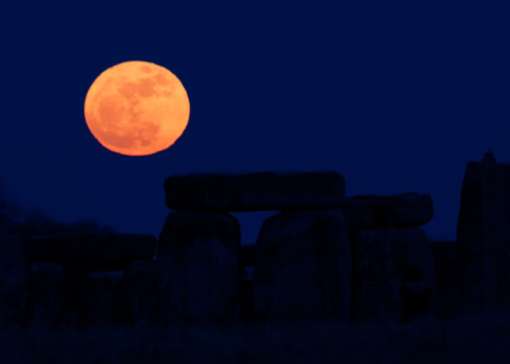
Supermoon over Stonehenge

Supermoon over Stonehenge

The moon will officially become full Saturday (May 5th) at 11:35 p.m. EDT. And because this month’s full moon coincides with the moon’s perigee — its closest approach to Earth — it will also be the year’s biggest.

The moon will swing in 221,802 miles (356,955 kilometers) from our planet, offering skywatchers a spectacular view of an extra-big, extra-bright moon, nicknamed a supermoon.

And not only does the moon’s perigee coincide with full moon this month, but this perigee will be the nearest to Earth of any this year, as the distance of the moon’s close approach varies by about 3 percent, according to meteorologist Joe Rao, SPACE.com’s skywatching columnist. This happens because the moon’s orbit is not perfectly circular.

This month’s full moon is due to be about 16 percent brighter than average. In contrast, later this year on Nov. 28, the full moon will coincide with apogee, the moon’s farthest approach, offering a particularly small and dim full moon.

Though the unusual appearance of this month’s full moon may be surprising to some, there’s no reason for alarm, scientists warn. The slight distance difference isn’t enough to cause any earthquakes or extreme tidal effects, experts say.

However, the normal tides around the world will be particularly high and low. At perigee, the moon will exert about 42 percent more tidal force than it will during its next apogee two weeks later, Rao said.

The last supermoon occurred in March 2011.

To view this weekend’s supermoon to best effect, look for it just after it rises or before it sets, when it is close to the horizon. There, you can catch a view of the moon behind buildings or trees, an effect which produces an optical illusion, making the moon seem even larger than it really is.

Sponsored by ‘The Stonehenge Tour Company’ www.StonehengeTours.com 

 Merlin says “Lets hope the skies are clear – Howllllllllllllll……….”

Merlin at Stonehenge
The Stonehenge Stone Circle News Blog


Tasteful architecture – CheeseHenge

3 05 2012
Totally crackers … food artist Prudence Staite made Stonehenge out of cheese and biscuits

Food artist Prudence Staite made some of the UKs most iconic landmarks out nothing but FOOD.

Totally crackers … food artist Prudence Staite made Stonehenge out of cheese and biscuits

Caters News Agency

By EMILY FAIRBAIRN
Food artist Prudence Staite, 32, has meticulously hand-crafted some of the  UK’s most iconic landmarks using dairy and other food snacks.

The collection includes a Stonehenge that’s built from chunks of Cheddar, Red  Leicester and Stilton cheeses set on a green salad platter with crackers  forming the perimeter.

Full story – http://www.thesun.co.uk/sol/homepage/news/4292408/Food-artist-Prudence-Staite-creates-iconic-British-landmarks-out-of-food.html

Merlin says “NEVER has something so cheesy been so brilliant”

Sponsored by The Stonehenge Tour Company – www.StonehenegeTours.com


Prehistoric Wiltshire. Sites of Significance

1 05 2012

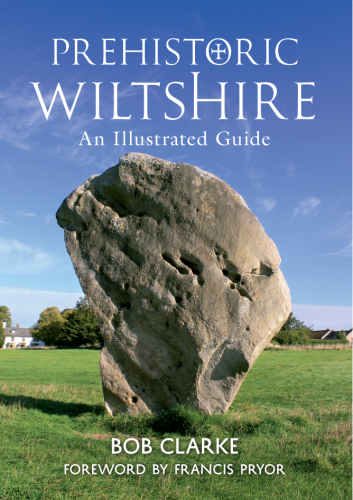
If you are in doubt about the key role Wiltshire plays in the long history of these Islands, and that it has done so since the time humans first set foot on our soil, this book joins the growing scholarly titles from the excellent ‘heritage; publisher Amberley Publishing will dispel it.

Prehistoric Wilsthire

Prehistoric Wilsthire

This attractive book is the latest in a successful series from the Stroud-based publisher Amberley. (Amongst others, their titles include Prehistoric Gloucestershire by Tim Darvill, and John Aubrey and Stone Circles: Britain’s First Archaeologist by Aubrey Burl.) It is well written by a knowledgeable local archaeologist in a style that is pleasingly free of jargon, and opens with a fitting tribute from Francis Pryor.

As with some other titles in the series, this pocket-sized book is specifically designed as a field guide (at 235 x 165mm it is slightly larger than A5), in this instance describing nearly 50 of the most visible and accessible prehistoric monuments within the county of Wiltshire. The selected sites are grouped by topographic region (the Marlborough Downs, the Vale of Pewsey and so on), the majority situated on the chalk uplands. All the familiar forms of earthwork from causewayed camps and long barrows to round barrow groups and hillforts are covered. Appropriately, they include the monuments of the World Heritage Site centred on Avebury and Stonehenge, but information from the latest fieldwork in those areas ensures up-to-date coverage.

An introductory section provides a brief outline of the conventional sub-divisions of later prehistory (the Mesolithic to the Iron Age). Thereafter, details are offered on how best to reach each site: although there are no maps, National Grid References and useful directions are offered. Some of the sites are on private land and hence the book judiciously warns ‘this guide does not infer rights of way’, deferring to the county’s highway authority for the latest information on footpaths and bridleways. Nonetheless, it describes what can be seen at each site from the best publicly-accessible vantage points. The entries briefly describe the history of investigation at each site and summarize current understanding of its function and date.

The book is beautifully illustrated. The majority of the figures are the author’s own fine colour photographs, although some monochrome archival images are also used where necessary. Arguably the best views are the excellent oblique aerial photographs. Their use as an invaluable aid to comprehension recalls the local tradition pioneered by O. G. S. Crawford and Alexander Keiller in their 1928 work, Wessex from the Air. Evidently, the author enlisted the help of several pilots, employing a range of micro-light and private aircraft to gain the necessary perspective. Because the book focuses on visible sites, most of the subjects are obviously upstanding earthworks. Nonetheless, the photographs include a few soil-marks, crop-marks and excavations to emphasis that even in an area which boasts some of the country’s best-known monuments, many others have been lost from normal view.

It is well known that Wiltshire contains a remarkable number of well-preserved field monuments of various forms, and hence the author is in the enviable position of being able to select the most impressive. Because of the quality and visibility of its ancient monuments, Wiltshire is an ideal region to serve as an introduction for those unfamiliar with prehistoric remains, but equally it is an unceasing source of inspiration for the most experienced archaeologist. The field monuments are complemented by outstanding local museums whose displays reflect the long history of archaeological investigation within the county. Yet, despite the richness of their collections, these museums remain the responsibility of private trusts and societies that constantly struggle to find the necessary resources to conserve and exhibit their assets. It is most commendable, therefore, that Bob Clarke, the author, has written Prehistoric Wiltshire as a personal contribution to the Wiltshire Archaeological and Natural History Society’s fund raising effort to re-display the famous Bronze Age gallery at Devizes Museum. There are thus two compelling reasons to buy this excellent book – to guide you to some of the best prehistoric sites in Southern England, and to help display the spectacular objects found in some of those sites.

Sponsored by The Stonehenge Tour Companyhttps://stonehengetours.com/

Merlin says “Visiting Wiltshire ? Buy this book!”

Merlin @ Stonehenge
The Stonehenge Stone Circle Website


STONEHENGE SUMMER SOLSTICE 2012

25 04 2012

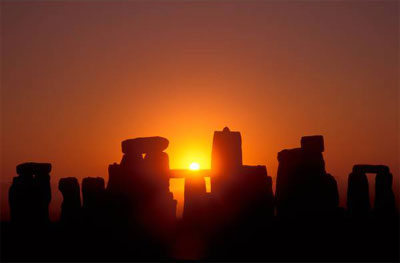
Stonehenge is an ancient pre-historic site. It has been a place of worship and celebration at the time of Summer Solstice since time immemorial.

Stonehenge Summer Solstice 2012

Stonehenge Summer Solstice 2012

English Heritage is pleased to be providing Managed Open Access to Stonehenge for the Summer Solstice. Please help us to create a peaceful occasion by taking personal responsibility and following the Conditions of Entry and guidelines set out on the following pages. We have a duty of care to ensure public safety and are responsible for the protection of Stonehenge and its surrounding Monuments. If we are to ensure that future access is sustainable, it is essential that everyone observes and abides by these Conditions of Entry.

During the Summer Solstice access to Stonehenge, we support all individuals and groups conducting their own forms of ceremony and celebration providing that they are mutually respectful and tolerant of one another. It is a place seen by many as a sacred site – therefore please respect it and those attending.

English Heritage continues to work closely with the many agencies and people from all sectors of the community and we would like to thank them for their help and support.

Parking and entry to the Monument will be free, subject to the Conditions of Entry. Please do not arrive at the Solstice Car Park or Stonehenge in advance of the opening times listed below:

SOLSTICE CAR PARK OPENS
1900 hours (7pm) Wednesday 20th June
ACCESS TO STONEHENGE
1900 hours (7pm) Wednesday 20th June

LAST ADMISSION TO SOLSTICE CAR PARK
0600 hours (6am) Thursday 21st June
STONEHENGE CLOSES
0800 hours (8am) Thursday 21st June
SOLSTICE CAR PARK TO BE VACATED
1200 hours (12 Noon) Thursday 21st June – see the pages on Travel and Parking for further information on travel and parking arrangements.
WE HOPE THE WEATHER WILL BE KIND AND WISH YOU A PEACEFUL AND CELEBRATORY SOLSTICE.
Sunset and sunrise occur at the following times:

  • Sunset on Wednesday 20th June 2012 is at 2126 hrs (9.26pm)
  • Sunrise on Thursday 21st June 2012 is at 0452 hrs (4.52am)TRANSPORT FROM LONDON: As usual our friends at The ‘Stonehenge Tour Company’ will be providing tours and transport from London – click here

ENGLISH HERITAGE CONDITIONS OF ENTRYCLICK HERE

Helpful links

For directions, click here.
For bookings, dog policy etc., you need to contact English Heritage, click here, the custodians of the site.
For special access to the Stones (not during the Solstice), click here.
The Avebury complex is a must on your itinerary and only a short journey, north, from Stonehenge. There is free, open access to the whole of this huge site. click here for more information.
Stonehenge and Solstice News / updates: https://twitter.com/#!/ST0NEHENGE 

Link Source: http://www.efestivals.co.uk/festivals/stonehenge/2012/
Link source: http://www.visit-stonehenge.org/2012/04/summer-solstice-celebrations-at.html

Merlin says “Respect the Stones and see you there”


Was Stonehenge designed for sound? Researchers recreate what ancient site would have sounded like for Neolithic man.

19 04 2012

Stonehenge could have been designed with acoustics in mind like a Greek or Roman theatre, a study has revealed.

A team of researchers from the University of Salford spent four years studying the historic site’s acoustic properties in a bid to crack the mystery of why it was built.

While they could not confirm the exact purpose of the stones, the researchers did find the space reacted to acoustic activity in a way that would have been noticeable to the Neolithic man.

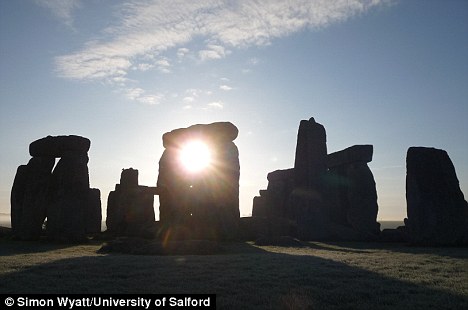
Mystery: The researchers found Stonehenge reacted to acoustic activity in a way that would have been noticeable to the Neolithic man suggesting it was built with acoustics in mind  Read more: http://www.dailymail.co.uk/sciencetech/article-2131519/Was-Stonehenge-designed-sound-Researchers-recreate-ancient-site-sounded-like-Neolithic-man.html#ixzz1sTueveN7

Mystery: The researchers found Stonehenge reacted to acoustic activity in a way that would have been noticeable to the Neolithic man suggesting it was built with acoustics in mind

Stonehenge is very well known, but people are still trying to find out what it was built for and we thought that doing this research would bring an element of archaeology that so far hasn’t been looked at,’ lead researcher, Bruno Fazenda said.

He added the new area of acoustic science, named archaeoacoustics, could be helpful in the archaeological

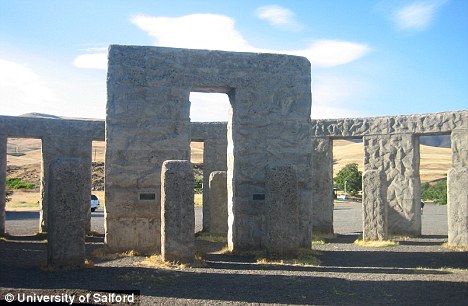
Because the site in Wiltshire is in a derelict state, researchers travelled to Maryhill in the U.S. where a full-sized concrete reconstruction of Stonehenge was built in 1929 as a memorial to the soldiers of WWI.

Recreation: To get a more accurate representation, researchers travelled to Maryhill in the U.S. where a full-sized concrete reconstruction of Stonehenge was built in 1929

Recreation: To get a more accurate representation, researchers travelled to Maryhill in the U.S. where a full-sized concrete reconstruction of Stonehenge was built in 1929

They were able to make proper acoustic measurements that allowed an investigation into striking acoustic effects such as echoes, resonances and whispering gallery effects.

The second phase consisted in the creation of a full 3D audio-rendition of the space using a system comprised of 64 audio channels and loudspeakers especially developed at the University of Salford based on Wave Field Synthesis.

This system enables an accurate and immersive recreation of what Stonehenge would have sounded like.

Dr Fazenda said: ‘This type of research is important because now we can not only see ourselves surrounded by the stones using virtual reality, but we can also listen how the stone structure would have enveloped people in a sonic experience. It is as if we can travel back in time and experience the space in a more holistic way.’

Dr Fazenda also thinks that this research opens a whole new world for archaeoacoustics: ‘Of course there are other sites of interest, and as soon as the methodology for studying acoustics in ancient spaces becomes robust then it can be used as a part of archaeology and I believe in the next ten years a lot of such studies will include acoustics.’

Now listen to recording done at Maryhill, U.S., where where a concrete reconstruction of Stonehenge was built in 1929. Click here

Link source : Amy Oliver – http://www.dailymail.co.uk/sciencetech/article-2131519/Was-Stonehenge-designed-sound-Researchers-recreate-ancient-site-sounded-like-Neolithic-man.html?ito=feeds-newsxml

Sponsored by ‘The Stonehenge Tour Company’ www.StonehengeTours.com

Merlin @ Stonehenge Stone Circle


Celebrate World Heritage Day at Stonehenge and Avebury.

18 04 2012

World Heritage Day is celebrated annually on 18th April. This year, (also the 40th anniversary of the World Heritage Convention), English Heritage experts are on hand to help you discover the prehistoric landscapes at Stonehenge and Avebury and to show how World Heritage Status is helping to conserve them.
Stonehenge Heritage

Stonehenge and Avebury became a World Heritage Site in 1986 for their outstanding prehistoric monuments dating from around 3,700 to 1,600 BC. The stone circle of Stonehenge is recognised throughout the world and the site is very special. The 2,600 hectares  of surrounding landscape contains 350 burial mounds and prehistoric monuments such as the the Cursus, Woodhenge and Durrington Walls. Part of this landscape is also managed by the National Trust.

Avebury is the largest prehistoric stone circle in the world. The site includes Windmill Hill, the West Kennet Long Barrow, the West Kennet and Beckhampton Avenues, the Sanctuary, Silbury Hill (the largest prehistoric mound in Europe),  the West Kennet Palisaded Enclosures, and important barrows.

The event is  from 10am to 6pm on April 18th and tickets cost £35 (includes refreshments).  Booking via English Heritage is essential: 0870 333 1181.
Link: http://www.insidewiltshire.co.uk

What is World heritage Day ?

World Heritage Day 18th April 2012 – Get Involved!

This year’s theme has been chosen to mark the 40th anniversary of the UNESCO World Heritage Convention, which was adopted in 1972. The focus will be on “World Heritage and Sustainable Development: the Role of Local Communities”.

This special day offers an opportunity to celebrate local heritage all over the world! Why not get involved … there’s any number of things you could do to celebrate World Heritage Day 2012 …

  • Provide free admission to your heritage site
  • Publicise your site in local newspapers or radio
  • Hang World Heritage Day banners on your local sites
  • Organise a public talk or lecture on your local heritage
  • Put together an exhibition celebrating your local heritage
  • Award a prize to soemone who has made an outstanding contribution to your local heritage
  • Inaugurate a recently restored monument
  • Get the kids involved with tours or treasure hunts

World Heritage Day (International Day for Monuments & Sites) was created in 1982 by ICOMOS (International Council on Monuments & Sites) and was later approved at the UNESCO General Conference in 1983.
Sponsored by ‘The Stonehenge Tour Company’ www.StonehengeTours.com

Merlin @ Stonehenge
The Stonehenge Stone Circle News Blog Blog


Prehistoric Stonehenge to be recreated on Glasgow Green by Turner Prize Winner

16 04 2012

Turner Prize Jeremy Deller Creates Plastic Stonehenge

Plastic Stonehenge The Turner Prize-winner Jeremy Deller will be creating a plastic version of the mysterious stone monument as part of the city’s International Festival of the Visual Arts.

The work will be entitled ‘Sacrilege’, and will be revealed in Glasgow later this week, but will ultimately be transported to and displayed in London for the Olympic Games. It will be Deller’s first major public project in Scotland, and promotional images online show a walker standing in front of a carved pillar of stone.

Deller, in a rather cagey moment, hinted at the nature of the piece, saying ‘The public can go on it, as it were. The public can interact with it. It’s a big public thing in a public place.’ He believes it will be ‘an enjoyable experience’: ‘That’s what I’m hoping for, that people enjoy it, become part of it, as it were. It’s meant to be a celebratory thing. Hopefully, people’s interaction with it will bring out the character of the place. Hopefully people will respond to it in a Glaswegian manner.’

The 18-day Glasgow International Festival of Visual Art, opening on Friday (20 April 2012 – 7 May 2012), is now in its fifth edition. Showcasing work by more than 130 artists across nearly 50 of Glasgow’s best permanent and temporary exhibition venues, the Festival will bring together exhibitions by the best international and local artists. Directed by Katrina Brown, the programme will feature a series of newly-commissioned works that draw on a range of disciplines, including visual art, dance, film, music, performance and theatre.

Wolfgang Tillmans, winner of the Turner Prize in 2000 – the first ever photographer to win the award – will be staging his first solo exhibition in Sotland since 1995. The show will feature an exemplary range of Tillmans’ practice which over the past two decades has been thought to have redefined photography. First recognized in the early 1990s for his intensely affecting and unconventional images of friends and other young people in his social circle, he has developed a highly developed style of image making that encompasses a broad range of subjects and includes a powerfully unique presentation. In 2009 he was awarded the Kulturpreis der Deutschen Gesellschaft für Photographie.

Other highlights include the largest show to date in Scotland by Glasgow-based 2011 Turner Prize contender Karla Black, who will exhibit a series of new major sculptures in the grand ground floor of the Gallery of Modern Art (GoMA). The Festival will also see the first exhibition of works on paper by Glasgow-based 2009 Turner Prize winner Richard Wright at Kelvingrove Art Gallery and Museum.

Follow ArtLyst on Twitter for breaking art news and latest exhibition reviews
Link: http://www.artlyst.com/articles/turner-prize-jeremy-dellery-creates-plastic-stonehenge

Sponsored by “The Stonehenge Tour Company” http://www.StonehengeTours.com

Merlin says “Plastic fantastic”
The Stonehenge Stone Circle Website


Bass-fueled Stonehenge replica at Burning Man Festival 2012

9 04 2012

Just read this in the Sandiego Reader – watch this video below. As part of their series of fundraisers to construct a bass-fueled Bass HengeStonehenge replica at Burning Man 2012, Basshenge is hosting an art auction at the 10th Avenue Theatre and Arts Centre, Downtown.

“2012 is a mystical time for the world, so we wanted to build one of the wonders of the world,” Cosmic Family promoter Christophe Lobe, a project manager behind the Basshenge sound camp, told The Reader in January.

As such, a group of volunteers from across the country is building a life-size (150 feet in diameter) Stonehenge replica for this year’s Burning Man art and music festival in Nevada.

The structure will be powered by 100,000 watts of sound, over 120 LEDs, pyrotechnics, interactive art, and circus performances on the 2000-person capacity dance floor.

“Somebody built a ‘henge in ‘04 and burnt it afterwards, but we’re going to take this on tour around the country,” says Loeb. “Our goal is to supply jobs and to be of service to local and cross continental promoters.”

To fund the project, which will be fabricated in Chula Vista, Lobe and project partner Per-sep-sion have run now-closed Kickstarter and IndieGoGo campaigns in addition to a series of fundraiser parties.

The art auction on Tuesday, April 10, includes live painting, body/face painting, silent auctions, handmade crafts and clothing, fire dancers, music by Jungle Presents, a chillout rooftop lounge.

Link: http://www.sandiegoreader.com/weblogs/out-about/2012/apr/08/basshenge-art-auction/
Link: http://www.burningman.com/

Sponsored by ‘the stonehenge Tour Company’ www.StonehengeTours.com

Merlin says “I have always wanted to add ‘The Burning Man’ to my list of Festivals – this could be the year to go”

Merlin @ Stonehenge


The Festival presents Fire Garden at Stonehenge for the London 2012 Festival

4 04 2012
As the sun goes down over one of Britain’s most iconic World Heritage sites, French outdoor alchemists Compagnie Carabosse fan the flames of our imaginations with an elemental Fire Garden.

A magical, sensory experience awaits you as Stonehenge is transformed into a glowing fairytale

Fire Garden at Stonehenge 2012

Fire Garden at Stonehenge 2012

environment where fire sculptures dance in the landscape, mysterious fiery engines illuminate the stones and flaming fire pots and cascades of candles line the pathways.

The experience promises to be a highlight of the London 2012 Festival, a 12 week UK-wide celebration in the summer of 2012 featuring leading artists from the UK and around the world.

Maria Bota, Festival Director said:

“We aim to inspire, entertain and make moments which transform people and spaces.  Our thanks to the remarkable Compagnie Carabosse for their beautiful fire garden creations, to English Heritage, with whom we have worked for many years at Stonehenge, for their continued collaboration and to London 2012 for enabling us to bring this idea to flickering life.”

The event will run in the evenings from Tuesday 10th July to Thursday 12th July 2012. Spend 30 minutes or an hour one evening and enjoy this gloriously atmospheric feast for the senses.

Carabosse have staged their striking installations across Europe. Each event is unique to its specific location, and here they ignite their creative spark to create a remarkable moment in the historic Wiltshire landscape, especially presented by Salisbury International Arts Festival.

As the event runs, visit our website to see the project celebrated on a digital platform.

Fire Garden at Stonehenge and to register your interest for future updates.  Those registering interest will receive regular e-mail updates from Salisbury International Arts Festival about the event including announcements of the on sale date in 2012 and ticket information.

The London 2012 Festival, 21 June – 9 September, will celebrate the huge range, quality and accessibility of the UK’s world-class culture, and give the opportunity for people across the UK to celebrate the London 2012 Olympic and Paralympic Games. For more information on the programme which spans music, theatre, dance, visual arts, literature, film and fashion, visit http://www.london2012.com/festival.

Press:

Contact Abi Singleton, Development and Communications Manger, Salisbury International Arts Festival, abi@salisburyfestival.co.uk01722 332241

Link: http://www.salisburyfestival.co.uk

Merlin says “This looks well worth a visit, see you there”

Sponsored by ‘The Stonehenge Tour Company’ www.StonehengeTours.com

Merlin @ Stonehenge
The Stonehenge New Website