Stonehenge: Could 2011’s solstice mass event be the last?

8 05 2011
 

As we recently observed people are fully entitled to see Stonehenge as their temple. However, while such claims are harmless in themselves they have also been responsible for some unwelcome effects. For isn’t it clear that a wish to avoid offending people of a spiritual nature has led to a reluctance to say that no, access by tens of thousands of revellers at Summer Solstice is unseemly and damaging and really must end?
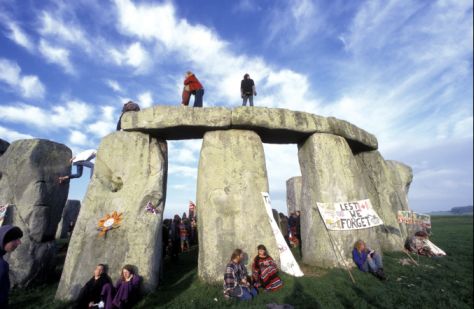
1995 Stonehenge Summer Solstice

Get off those Stones! 1995 Stonehenge Summer Solstice

It seems to us there’s an easy and equitable solution that balances tourism, spirituality and conservation in a proper manner:

1. No more thousands of tipsy revellers standing on the stones. (It’s recent, not traditional, it carries a risk of damage to both the monument and the revellers and brings shame on our country – and it simply shouldn’t happen as English Heritage knows full well.)
2. Spiritual people yes. Of course. But in limited numbers, selected by ballot from the membership of well established pagan organisations.
3. Other people (whether non-spiritual or spiritual but without demonstrable group affiliations), yes of course and also in limited numbers, selected by ballot from those who apply.

So how many in total? That’s entirely EH’s affair, depending purely on how many they think can be safely and sensibly admitted without imposing a risk of damage or broadcasting an image to the world that we don’t treat Stonehenge as it should be treated.  It’s certainly time they decided what they could cope with rather than unsuccessfully trying to cope with many times more than they can!

So let’s SHARE Stonehenge, it’s the obvious thing to do. But not abuse it, which is also obvious.

If spiritual people agree to that and people in general agree to that (following a consultation) then English Heritage could surely have a mandate to make radical changes to what happens at Stonehenge as soon as next year? 

How about it?

Article extracted rom the excellent Heritage Journal – http://heritageaction.wordpress.com/
Sponsored by the Stonehenge Tour Company

Follow us on twitter for all the Stonehenge Summer Solstice News: http://www/twitter.com/ST0NEHENGE

Merlin @ Stonehenge
The Stonehenge Stone Circle Website


Beltane Facts (May Day)

1 05 2011

May Day is Beltane, which means ‘day of fire’. It is an ancient Pagan festival. Bel was the Celtic God of the sun. May Day marks the seasonal transition from Winter to Summer and celebrated the first spring planting.

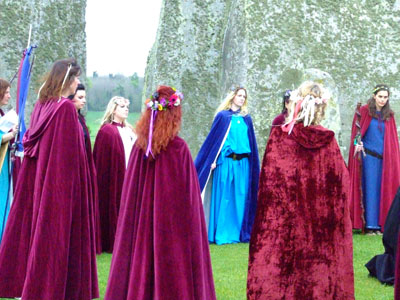
Beltane Celebrations at Stonehenge

Beltane Celebrations at Stonehenge

Beltane kicks off the merry month of May, and has a long history. This fire festival is celebrated on May 1 with bonfires, Maypoles, dancing, and lots of good old fashioned sexual energy. The Celts honored the fertility of the gods with gifts and offerings, sometimes including animal or human sacrifice. Cattle were driven through the smoke of the balefires, and blessed with health and fertility for the coming year. In Ireland, the fires of Tara were the first ones lit every year at Beltane, and all other fires were lit with a flame from Tara.

  • May Day is Beltane, which means ‘day of fire’. It is an ancient Pagan festival. Bel was the Celtic God of the sun.
     
  • May Day marks the seasonal transition from Winter to Summer and celebrated the first spring planting.
  • Putting a Maypole up involved taking a growing tree from the wood and bringing it to the village to mark the coming of Summer. Single men and women would dance around the Maypole holding on to ribbons until they became entwined with their (hoped for) new loves.
  • Social hierarchy was set aside on May Day to involve everyone from the highest to the lowest.
  • May Day is a celebration of fertility. In the old days whole villages would go to the woods and all sorts of temporary sexual liaisons would take place.
  • Robin Goodfellow, also known as the Green Man was the Lord of Misrule on May Day. He and his supporters would make jokes and poke fun at the local authorities.
     
  • Parliament banned May Day festivities in 1644.
  • Unlike Easter, Whitsun, or Christmas, May Day is the one festival of the year with no significant church service.
     
  • In previous centuries working people would take the day off to celebrate, often without the support of their employer.
     
  • William Davidson, a black trade unionist and a revolutionary, was executed on May Day 1820. Davidson was born in the then pirate capital, Kingston, Jamaica and put a skull and crossbones on a black flag to say:“Let us die like men and not be sold like slaves.” He was executed for being part of a conspiracy to kill the entire cabinet, which was hoped to give the spark to a revolution in Britain.
  • May Day is recognized throughout the world as International Workers’ Day, or Labour Day. In 1884 US and Canadian trade unions declared that after May 1st 1886, 8 hours would constitute a legal days work.
  • May 1st was declared a holiday by the International Working Men’s Association (First International) in Paris in 1889. This was to commemorate the Haymarket Martyrs of 1886: 8 anarchists were wrongly accused of throwing a bomb at police and 4 were executed.
  • The USA and Canada do not recognize May Day. The US government attempted to erase the its history by declaring that May 1st was ‘Law Day’ instead. They pronounced that Labour Day was to be on the first Monday of September, a date of no significance.

    Links: http://www.new-age.co.uk/celtic-festivals-beltane.htm
    Sponsors: The Stonehenge Tour Company – www.StonehengeTours.com

    Happy Beltane everybody!
    Merlin @ Stonehenge Stone Circle


Super moon spectacle will light up skies tonight at Stonehenge (but there’s no need to worry about a rise in lunacy)

19 03 2011

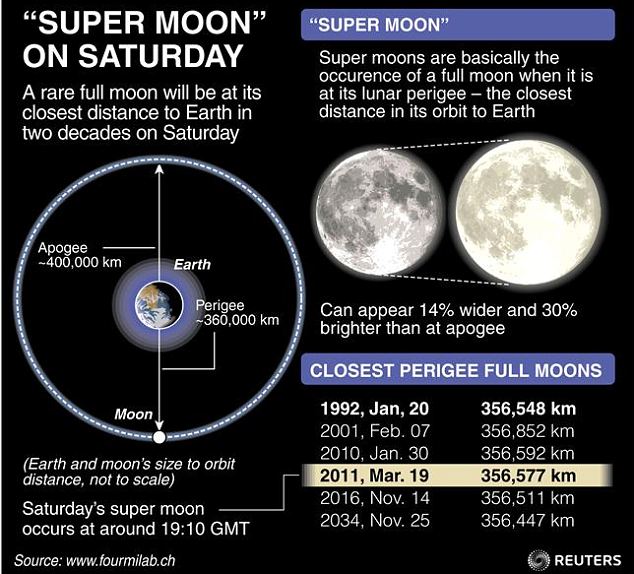
Tonight’s event will be the closest full moon in almost 20 years

Keep your fingers crossed for clear skies tonight – a full moon of rare size and beauty will rise in the east at sunset.

The natural phenomenon happens when the full Moon coincides with when it travels closest to Earth on its orbit.

‘The last full Moon so big and close to Earth occurred in March of 1993,’ said Geoff Chester of the US Naval Observatory in Washington DC.

Full Moons vary in size because of the elliptical (or oval) shape of the Moon’s orbit. At its furthest point (the apogee) it is around 252,731miles away from us, but it is only around 226,426miles at its closest point (the perigee).

So nearby perigee moons, like the one we will see tonight, is around 14 per cent bigger and 30 per cent brighter than lesser moons that occur on the apogee side of the moon’s orbit.

However, it will be difficult to detect the change once the moon is high in the sky as the human eye is unble to put it in context without any nearby objects to compare it to.

Therefore the most impressive view of the moon will be seen when it is close to the horizon due to the ‘moon illusion’. It appears larger as you will automatically compare it to the hills and houses nearby.

‘I’d say it’s worth a look and so close to the Spring Equinox

Lnks: http://www.dailymail.co.uk/sciencetech/article-1367474/Super-moon-spectacle-light-skies-tomorrow-night-theres-need-worry-lunacy.html#ixzz1H1i0CPkD
Sponsors:  The Stonehenge Tour Company

Merlin @ Stonehenge (Happy Equinox)

The Stonehenge Stone Circle Website


Stonehenge Folklore

16 03 2011

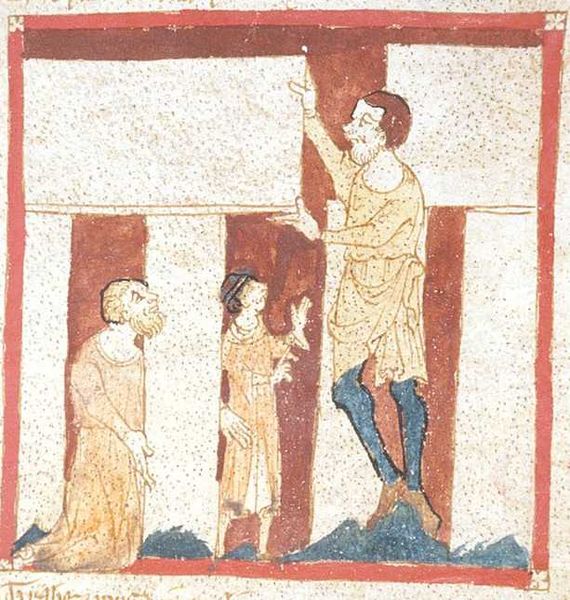
The stones have inspired many legends and folklore over the centuries. Much of the folklore seems to try and explain the origin of the circle structure as the work of giants, gods or wizards. It was probably easier to accept this than to believe that a past culture could have better technology.  

During the Middle Ages Geoffrey of Monmouth, whose colourful writing have had great influence on British mythology, wrote that the stones were originally brought from Africa to Ireland by a race of giants. They were then transported across the sea by the magic of Merlin during the beginning of the Dark Ages on the request of Ambrosius Aurelianus, who was king of the Britons at the time. They were needed as a monument to the treachery of Hengist, a Saxon leader who killed Prince Vortigern 

The heel stone is said to have been thrown by the Devil at a monk who was spying on him between the stones. The stone pinned the unfortunate clergyman to the ground by his heel.

 Other folklore suggests that the stones are uncountable, a baker tried to count them by placing a loaf of bread on each stone. He came up with a number but then made the mistake of going through the whole process again, and could never get the sets of numbers to tally.

 According to folklore African giants came and settled in Ireland many thousands of years ago, they brought with them a temple of stone from their country and re-erected it in County Kildare.
The stones were renown for their healing properties especially when infused with water, known as the Giant’s Dance they still existed in Ireland long after the giants had died out as a race.  

In the 5th Century Merlin brought the stones over from Ireland in ships and with the aid of magic, and erected them on Salisbury Plain. They were to mark the graves of some British nobles who were slaughtered by the invading Saxons under the command of Hengist.

In times gone by it was said that the Devil had made Stonehenge, transporting all of the great stones from the heathen shores of Ireland using his magical powers. He was so proud of this work that he was want to boast about the number of stones to the local populace. In one particularly fine display of pride he bet the residents of nearby Amesbury that  no one would be able to count the numerous stones. Many tried but as the Devil belived none was able to count them all accurately. A dozen different totals were arrived at. Then finally a local Friar who had come late to the game sidled up to the Devil and claimed to know the answer. Not unaturally the Devil, sure that he had won asked the Friar to give his answer. The Friar said “More than be counted”. The Devil was so cross at being caught out in the way that he picked up one of the stones and threw it at the Friar. It bounced of the Friars heel which was so hard that it dented the stone and landed upright a short distance away from the circle and so became the “Heel Stone”.

Some say that the stones were a circle of dancing wizards who were turned to stone by the enchantment of another wizard.

Sponsors:  The Stonehenge Tour Company

Merlin @ Stonehenge
The Stonehenge Stone Circle News Website


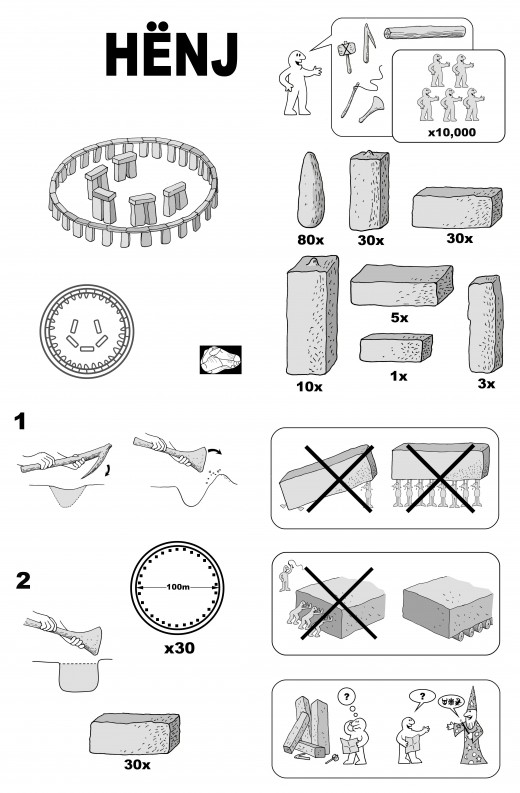
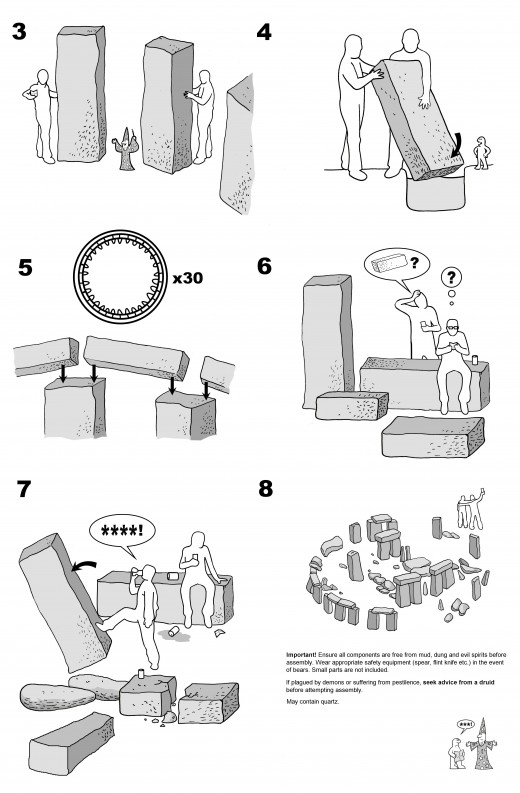
Ikea Stonehenge (HENJ) DIY flat-pack henge.

18 02 2011

Ikea Henge

Ikea Henge

Ikea Henge (Henj)

Ikea Henge (Henj)


Don’t forget “When all else fails, read the instructions”

Have a great weekend…………..
Merlin @ Stonehenge
The Stonehenge Website


Stonehenge Druids – The mysterious guardians of the ancient Celtic knowledge.

7 02 2011
Druids_celebrating_at_Stonehenge

Druids_celebrating_at_Stonehenge

The Druids were the priests of the Celtic religion during the Iron Age

The Druids were the priests of the Celtic religion during the Iron Age which was before the Romans invaded Britain.

The Druids has been popularly associated with Stonehenge ever since an earlier researcher John Aubrey said in 1666 that stone circles were built and used by Druids as places where they conducted their rituals.

Today we know that this ancient Druid connection to Stonehenge is not true.

Druids and most of what we know of them today have been written about by Julius Ceasar and Pliny during the Gaelic wars.

According to Ceasar Druids chose to conduct their rituals in densely wooded areas and did not built special places to perform their ceremonies. Druid comes from the Celtic word for “knowing the oak tree

Pliny writes mostly about the Druids practicing medicine and sorcery.

According to him the Druids held the mistletoe plant in the highest veneration. Groves of oak were their chosen retreat. Mistletoe grows on the oak trees and a priest dressed in a white robe would cut it with a golden knife. It was the custom that two white bulls were to be sacrificed on the spot.

Druidic lore consisted of a large number of verses to be learned by heart and a novice would apparently train for up to 20 years to prepare for his duties as a guardian of the sacred knowledge.

It is interesting that many Druids were women. Celtic woman enjoyed more freedom and rights than women in any other contemporary society. They had the right to enter a battle and even divorce their husbands.

The modern version of the Druids is known as The Ancient Order of Druids and was formed in 1781. Neo Druidism is apparently based on Freemasonry.

The Ancient Order of Druids was not able to hold a ceremony at Stonehenge until 1905 and at this occasion 650 of them arrived for a mass initiation.

They erected their own marquee and were well stocked with food and drink.

Druids Autumb Equinox

Druids Autumb Equinox

Apparently they used a secret password to keep outsiders outside. Sir Edmund Antrobus the then owner of Stonehenge was also one of the 258 novices present to be initiated.

After the feasting the initiates were blindfolded and led into the stone circle while an anthem which was especially composed for the event was played.

The ceremony was lead by GA Lardner, Most Noble Grand Arch Brother of the Order who waved his battleaxe over a so called sacred fire. After he recited the sacred oath the blindfolds were removed and everyone apparently had a hearty singsong of the anthem.

Over the years a number of famous names have had involvement with the Druids.

Here are some of their members;

Winston Churchill – Prime Minister

Ludwig van Beethoven – Composer.

Benjamin Franklin – Politician and American President.

Salvador Dali –Artist.

More recently Rowan Williams, the Archbishop of Canterbury who is the head of the Anglican Church was initiated as a member.

Today Druids mostly gather at Stonehenge during the summer and winter solstice days.

which was before the Romans invaded Britain. The Druids has been popularly associated with Stonehenge ever since an earlier researcher John Aubrey said in 1666 that stone circles were built and used by Druids as places where they conducted their rituals. Today we know that this ancient Druid connection to Stonehenge is not true. Druids and most of what we know of them today have been written about by Julius Ceasar and Pliny during the Gaelic wars. According to Ceasar Druids chose to conduct their rituals in densely wooded areas and did not built special places to perform their ceremonies. Druid comes from the Celtic word for “knowing the oak tree” Pliny writes mostly about the Druids practicing medicine and sorcery. According to him the Druids held the mistletoe plant in the highest veneration. Groves of oak were their chosen retreat. Mistletoe grows on the oak trees and a priest dressed in a white robe would cut it with a golden knife. It was the custom that two white bulls were to be sacrificed on the spot. Druidic lore consisted of a large number of verses to be learned by heart and a novice would apparently train for up to 20 years to prepare for his duties as a guardian of the sacred knowledge. It is interesting that many Druids were women. Celtic woman enjoyed more freedom and rights than women in any other contemporary society. They had the right to enter a battle and even divorce their husbands. The modern version of the Druids is known as The Ancient Order of Druids and was formed in 1781. Neo Druidism is apparently based on Freemasonry. The Ancient Order of Druids was not able to hold a ceremony at Stonehenge until 1905 and at this occasion 650 of them arrived for a mass initiation. They erected their own marquee and were well stocked with food and drink. Apparently they used a secret password to keep outsiders outside. Sir Edmund Antrobus the then owner of Stonehenge was also one of the 258 novices present to be initiated. Image Credit After the feasting the initiates were blindfolded and led into the stone circle while an anthem which was especially composed for the event was played. The ceremony was lead by GA Lardner, Most Noble Grand Arch Brother of the Order who waved his battleaxe over a so called sacred fire. After he recited the sacred oath the blindfolds were removed and everyone apparently had a hearty singsong of the anthem. Over the years a number of famous names have had involvement with the Druids. Here are some of their members; Winston Churchill – Prime Minister Ludwig van Beethoven – Composer. Benjamin Franklin – Politician and American President. Salvador Dali –Artist. More recently Rowan Williams, the Archbishop of Canterbury who is the head of the Anglican Church was initiated as a member. Today Druids mostly gather at Stonehenge during the summer and winter solstice days.

External links:
The British Druid Order – http://www.druidry.co.uk/
The Council of Druid Orders – http://www.cobdo.org.uk/
The Druid Network – druidnetwork.org
Stonehenge Guide – stonehengeguide.com
Stonehenge Tours – StonehengeTours.com

Merlin @ Stonehenge
The Stonehenge Stone circle Website


Background to the Stonehenge Solstice Celebrations…

8 01 2011

Crowds of people gathering to celebrate the modern day summer solstice at Stonehenge has developed from a grass-roots level and this is something we are not used to in our fast-paced consumer driven society. The notion of people gathering together under their own terms is in some ways a lost art in Britain outside the confines of major sporting occasions, concerts, weekend shopping trips and nights out on the town. Major royal and civic events could also be added to this list. The festival scene however, has given more alternative gathering a real boost. The nature of celebration is to have a joyous time and it is interesting to note that the United Kingdom has amongst the least number of public holidays in Europe. We work increasingly long hours and stresses of modern living can take a toll on the body, as well as the mind. There is certainly a market for a successful summer solstice celebration at Stonehenge for people intending to free their spirits in a communal gathering at an age-old and identifiable site.
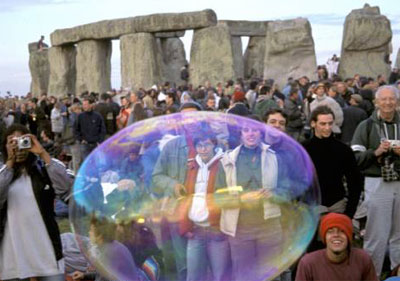
So, who actually attends the modern celebrations?

The answer is many different groups of people – Druids, pagans, wiccans, witches, tourists, locals, revellers, hippies, night-clubbers, bikers, students, curious on-lookers, spiritualists, historians, political activists, anarchists, eccentrics, environmentalists, travellers and astronomers. Some adherents to eastern religions such as Hare Krishna devotees and some practitioners of Buddhist meditation may also attend, as well as many people from abroad.

The fact is, that this is now an occasion open to anyone who wants to come; gone are the days of exclusion.

The first sizeable groups to visit the stones in modern times, other than passing travellers and nearby townsfolk were 19th century day trippers; often using the railway to Salisbury as a connecting point. At the turn of the 20th century ownership was transferred from private hands to the nation. Modern day Druids started to hold ceremonies with groups of onlookers. This soon developed into a larger gathering or open fair by the 1920’s, with music and crowds ranging from a few hundred to a few thousand. Later by the 1960’s the site became a focus for counter-culture and a large annual ‘free festival’ started to emerge from 1974 onwards. Several leading figures including Phil Russell, alias ‘Wally Hope’ dedicated the stones as a people’s temple open to all and the developing free festival became the embodiment of these ideals.

In 1985 the growing festival and its associated peace convoy of travellers was brutally ambushed by the police in the infamous ‘Battle of the Beanfield’. In this year the festival was smashed before it even began. An antagonistic exclusion zone was then set up around the stones for what eventually amounted to the next fourteen years. People however, still yearned to gather at this special place and after several years of negotiation, arrangements were finally granted for a few hours of access at midsummer 2000.

The issue of the festival is still a contentious issue. There are those who argue for the right to gather at the stones for a few days and party. The National Trust, who are the major landowners around the site, the police, local residents and English Heritage all continue to express the concern that the original free festival was unsustainable. It had grown out of all proportion to the site and threatened the surrounding landscape.  They believe the same would happen again if another free festival emerged and that the best way forward is through the structure of Managed Open Access (MOA).

However, there continues to be an open debate about what the nature of the occasion is all about.

In my mind some people still attend the summer solstice celebrations hoping to find a ‘rock’ festival with bands, DJ’s, dance tents and headline acts taking centre stage. When, in fact today they actually get a ‘rock’ festival with ‘rocks’ of the stone variety. This can result in a number of people wandering around not being exactly sure what to do with themselves in the absence of ‘amplified’ music. It is possible that a supporting festival could be provided at an alternative location to cater for those with music on their minds. This happened in part with the 2006 Somerset based ‘Sunrise Festival’ and subsequently attendance at the celebrations was lower than usual. Andy Worthington notes this distinction as follows;

‘Even during the festival years, the number of people actually visiting the stones on the solstice was rarely more than a few thousand, a situation that concerned Bev Richardson, who noted that, as the festival grew, the spiritual significance of the temple dwindled, so that two thirds of those attending the festival in 1977 visited the stones at the solstice, but only a thousand out of 40,000 did so in 1984’. (1)

Crowd numbers are another major factor concerning the modern celebrations. This happened in 2003 when the MOA fell on a weekend for the first time and 30,000 people turned up. The management of such large numbers is a real concern for English Heritage. It is possible that attendance might increase again, but since the high point of 2003 numbers have generally levelled out at about 21,000. This proves that the appeal of the gathering does indeed have its limitations, especially when other factors such as the weather, a midweek solstice and even *England international football matches are taken into consideration.

Entering the solstice space of MOA the central horseshoe of the main circle is filled to capacity with revellers cheering to an undulating beat of drums. The majority of the crowd, however, sit and stand outside waiting for the sun to arrive under the ambient glow of mobile flood light units. A simple sheet of rules known as the ‘Terms and Conditions of Entry’ is provided to all attendees. Apart from the time of sunrise and the preceding sunset, there is a distinct lack of information about the main torch-lit parade and Druid ceremony. Yet, even with this lack of knowledge about things to do, the celebrations are a major draw. The lack of any structure is there to allow the occasion to develop from the ground up rather than be imposed from the top down. Revelry and drunkenness is a common feature of the solstice and many do go there to get high. However, if the event is to move forward the provision of more information with the emphasis on the positive would be a good idea. For most, having a drink at the solstice is no more than a social lubricant, but unfortunately for a small minority the drunkenness can take on a slightly anti-social element with sometimes misplaced exuberance around others, especially those with young children.

Whilst drunkenness will always be a feature of the summer solstice celebrations, the anti-social aspect to the revelry can often be quite shocking for those expecting a more sedate occasion and whilst Stonehenge can enthral an audience, it can also greatly disappoint. The lack of respect for the site created by the debris of the all-night party scene has led some people to ask themselves the question – would they really want to go again?

The very nature of Stonehenge is that it is all things to all people and thankfully, there are many who do treat the site with respect, and take a positive view of the place. A small band of volunteer ‘Peace Stewards’ help with general advice and aim to defuse tensions with the unruly few.

Personally, I am attracted to the solstice because it represents a free-space where ideas can germinate. It is a place where a connection can be made with a primeval urge to follow in the footsteps of the ancestors and mark out a sustainable path for the future. Without the vision of the original festival organisers and the campaign for access after the Beanfield none of this would have happened. This included those who kept turning up at the stones attempting to celebrate the solstice during the years of exclusion.

Many archaeologists and historians also agree that psychedelics were used at ancient solstice celebrations through the use of naturally available fungi, plant extracts and dried herbs. This would have been a way of communing with nature and contacting the spirit world in shamanic type rituals. In the book ‘Hengeworld’ Mike Pitts notes that;

‘It’s not a joke: some of them it seems really were stoned.’

‘An early idea in recent discussions of altered states by archaeologists concerned Beaker pots. You will remember that these pots were once equated with invading peoples, but that this interpretation gave way to less sweeping links with peculiar social sects or fashions, or perhaps beer drinking cults. ….Maybe there was a cult, involving not beer but plant hallucinogens.’ (2)

Perhaps the emphasis on excessive hedonism is a continuing part of an ancient tradition and a ritual for some in its own right? The recent discovery and excavation of the temple’s original associated village at the nearby Durrington Walls confirmed that the place also had associations of being where people ‘went to party’ (3) in the distant past, albeit with reference to the winter solstice, rather than the summer one. In reality drunkenness at the stones today only mirrors issues of ‘binge-drinking’ in wider British society. What you see at the summer solstice celebrations is no different to what goes on during most weekends in any major UK town or city centre.

Public safety however, is paramount in the minds of the authorities and memories of the football disasters of the 1980’s combined with the current climate for ‘compensation culture’ has lead to a cautious approach. Local authorities and governmental agencies tend to like events which they conceive and manage themselves, rather than ones which grow out of the public imagination, which they then have to manage afterwards. The current MOA arrangement at Stonehenge is just this type of situation and is a good example of one big compromise between a whole-range of interested parties.

Anyone who has followed the story of solstice access over the last few years will have no doubt realised that excluding people just does not work. Stonehenge is a temple open to everyone. Everyone, really meaning everyone and the saying, ‘bring what you expect to find’ could not be truer.

Aricle with thanks to Jim Rayner (Re: The forthcoming book ‘A Pilgrim’s Guide to Stonehenge’)

(1) WORTHINGTON, Andy. 2004 ‘Stonehenge Celebration and Subversion’ Alternative Albion, page 240
(2) PITTS, Mike 2000 ‘Hengeworld’ Century Press, page 232
(3) PARKER PEARSON, Mike. 2007 online at; http://news.bbc.co.uk/1/hi/sci/tech/6311939.stm
http://www.stonehengecelebrations.co.uk/
http://www.stonehengetours.com/html/summer-solstice-tour.htm
http://www.efestivals.co.uk/festivals/stonehenge/

The Stonehenge News Blog
Follow us on Twitter and Facebook for all the latest Stonehenge Summer Solstice News
http://www.Stonehenge.News

[tweetmeme]


Stonehenge Winter Solstice Panoramic pictures

21 12 2010

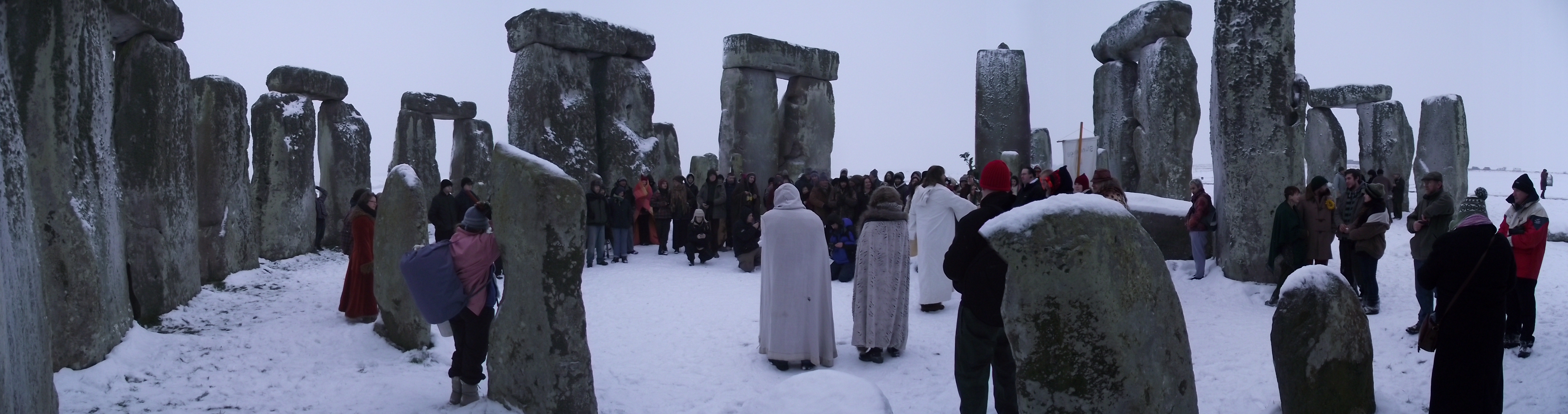
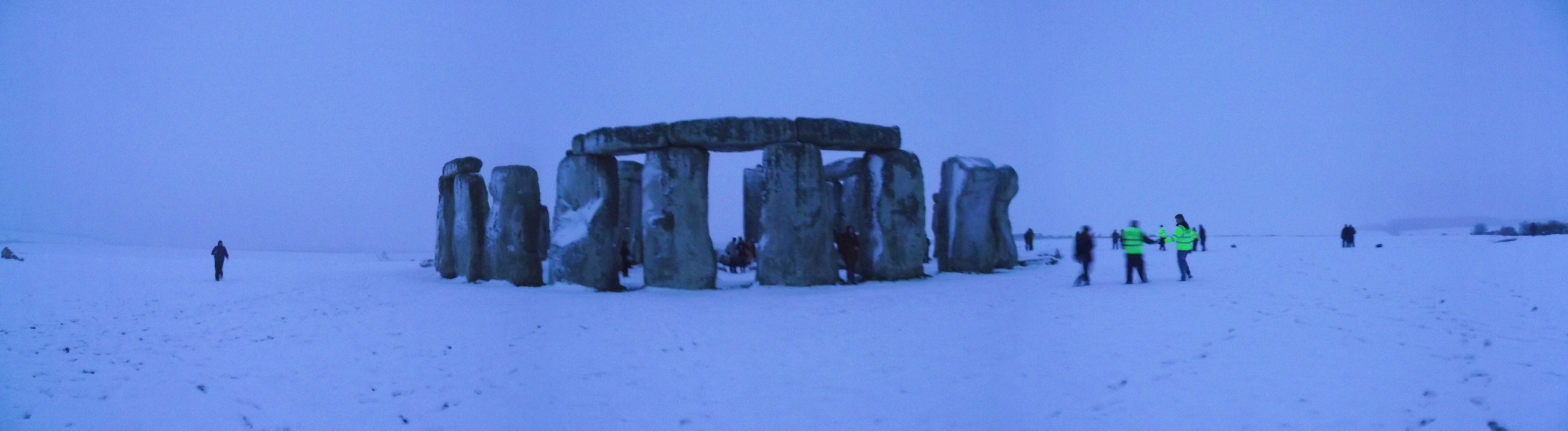
Stonehenge Winter Solstice 2010 Panoramic

Stonehenge Winter Solstice Panoramic

Stonehenge Winter Solstice Panoramic (Copyright)

Stonehenge Winter Solstice Panoramic

Stonehenge Winter Solstice Panoramic

Stonehenge Winter Solstice Panoramic (Copyright)

Images are subject to Copyright.  Full Terms and Conditions of Submission and Use of Pictures can be requested.

All rights reserved. All images included herein this  Internet Web Site publication are the copyright and property of the photographer and the text/design/html files are the property of The Stonehenge News Blog. All images and text are copyright in accordance  with the terms of the United Kingdom’s Copyright, Designs and Patent Act 1988, and  are protected under the United Kingdom and international copyright laws and  treaties which provide substantial penalties for infringement.
The use of any images or other materials included herein, in whole or in part,  for any purpose other than for the private purpose of the user, including,  but not limited to, copying, reproduction, publication (including on Internet Web  Site), storage in a retrieval system (other than internet browser), manipulation (digital or otherwise),  or transmitted in any form or by any means, electronic, mechanical, photocopying,  recording or otherwise, is expressly prohibited without the written permission of  The Stonehenge News blog or and the photographer 

What is © Copyright?

The images on this website are known as “intellectual property”.  In law, they are hardly different from other forms of property (such as  your computer), as the creation of images also requires personal skill,  equipment, time and money. To take and distribute images without consent  is a form of theft and is therefore illegal. The images on this  Internet web site publication are not royalty free and a fee is required  for each specific usage. All of the images have been visibly and invisibly watermarked so that  they can be identified if used without permission, whether whole or in part. International  law now permits substantial penalty charges for infringement of copyright.

Other Web Pages

Unfortunately you may not use any of the images in your web pages without express written  permission as this constitutes publishing  the images and could conflict with the interests of our many clients. If, for instance, a  corporation buys a picture for a specific purpose which conflicts with  your website, then the corporation could take legal action against you.  We have to say “no” in order to protect you and our clients.

More Stonehenge Winter Solstice 2010 images – click here
Merlin @ Stonehenge


Stonehenge Winter Solstice 21stDecember 2010

21 12 2010

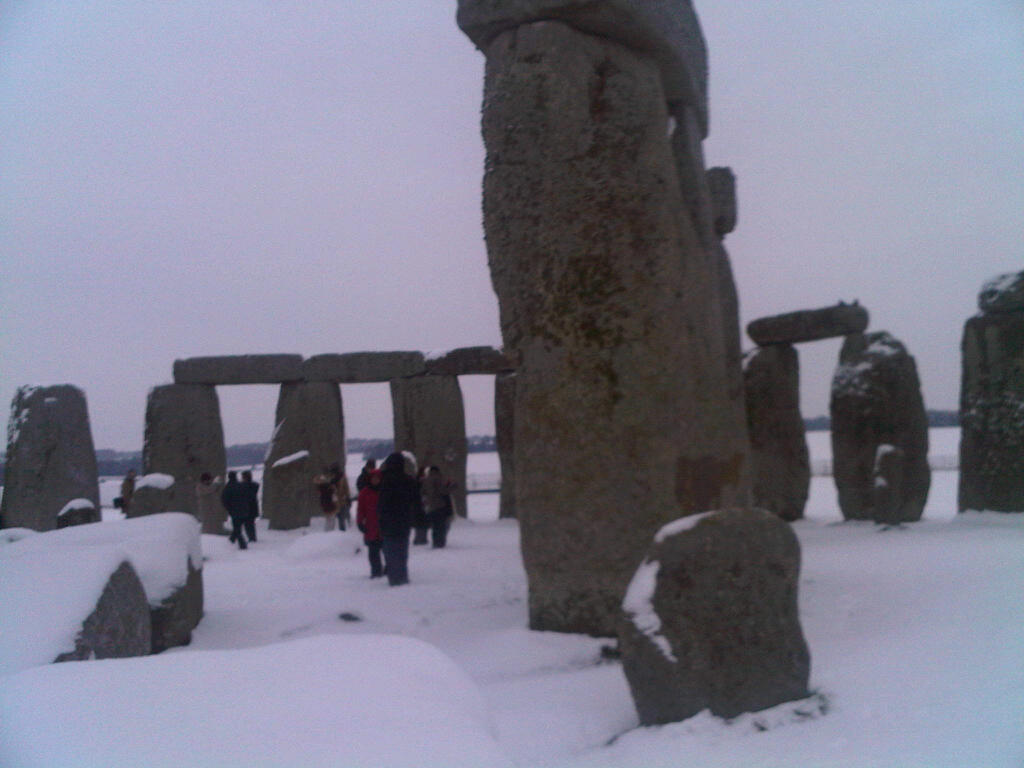
I went to Stonehenge this morning hoping to witness the Lunar eclipse between 7.30am and 8am.  Sadly there was freezing fog and a snowy sky?  It was a pleasant surprise to find that English Heritage decided to grant access into Stonehenge today as well as tomorrow (22nd)  There were a few hundred ‘happy’ people, a pagan wedding and a small Druid ceremony.  It was extremely cold but well worth it. 
I have uploaded these photos for your perusal – hot off the press!  They anticipate 2-3000 people for tomorrows Solstice celebrations – See you there!

This slideshow requires JavaScript.


Happy Solstice
Merlin @ Stonehenge
The Stonehenge Stone Circle Website


Winter Solstice Celebrations at Stonehenge

20 12 2010

THE winter solstice will be celebrated at Stonehenge on Wednesday. Sunrise is at 8.09am on December 22 and visitors will be able to access the monument as soon as it is light enough to do so safely.

Entrance is free and will be available from roughly 7.30am until 9am, when the site will close to visitors before re-opening as per usual at 9.30am.

This photo was emailed to me yesterday ?

Peter Carson from English Heritage said: “We are delighted to offer people a warm welcome to Stonehenge this Winter Solstice. Over the years, the event has grown from a handful of people to a celebration enjoyed by a couple of thousand of people. We work very closely with the Druid and Pagan community to ensure that the event is a success.”

A date for the diary, that is if you are prepared to face the winter snow, but perhaps in the circumstances it would be wiser to stay at home and celebrate the Winter Solstice safely there!

THE winter solstice will be celebrated at Stonehenge on Wednesday.

Sunrise is at 8.09am on December 22 and visitors will be able to access the monument as soon as it is light enough to do so safely.

Entrance is free and will be available from roughly 7.30am until 9am, when the site will close to visitors before re-opening as per usual at 9.30am…….

There is no public transport to Stonehenge at that time of the morning and parking is limited – you have been warned!  Avebury Stone Circle could be a safer alternative ?

Happy Solstice!
Merlin @ Stonehenge
I will upload images to this blog on the 22nd