Pagan stone circle built at US Air Force training academy

29 11 2011

The US military has built a stone circle in its Air Force academy to give pagans, druids and witches somewhere to practice their religion.

Stonehenge, UK: The Colarado base has spent around £50,000 building the Stonehenge-like structure

Stonehenge, UK: The Colarado base has spent around £50,000 building the Stonehenge-like structure


The Colorado base has spent around £50,000 building the Stonehenge-like structure to allow witches to cast spells, and pagans to form “circles of power” by night.

it is situated on top of a wooded hill and includes a fire pit.

The academy says it is for cadets who practice ‘Earth based’ religions including druids, witches and North American faiths.

Despite the expenses it is believed only three out of the 4,300 cadets have openly admitted that they are pagan.

Bob Barr, a former Republican congressman, campaigned to ban witches from the military, saying: “What’s next? Will armoured divisions be forced to travel with sacrificial animals for Satanic rituals? Will Rastafarians demand the inclusion of ritualistic marijuana cigarettes in their rations?”

The Wiccan religion was added to the US Army’s chaplain’s handbook in the 1970s and includes details on how covens are organised and how Druids worship ‘Mother Earth and Father Sky.’

“Most Wiccan groups also practise magic, by which they mean the direction and use of ‘psychic energy’ — those natural but invisible forces which surround all living things,” it explains.

The air force says the site is to help to protect the constitutional right to religious freedom.

But some think it is an attempt to attract more Wiccans to the army.

“Many men attracted to wicca are also attracted to this fantasy of the ancient warrior who is spiritually adept, but also a great fighter,” Margot Adler, a renowned witch and broadcaster, said.

The American Religious Identification Survey estimated that there were 700,000 pagans and wiccans in the US

US Army says Wiccan work it out

Sponsored by ‘The Stonehenge Tour Company’ www.StonehengeTours.com

Merlin @ Stonehenge
The Stonehenge Stone Circle Website


Stonehenge Autumn Equinox 2011

22 09 2011
 The Autumn Equinox (also known as Mabon) is celebrated when day and night are of equal duration before the descent into increasing darkness and is the final festival of the season of harvest.  For many pagans, this is the time to reflect on the past season, and to recognize the balance of the year has changed.

 2011 Autumnal Equinox takes place on September 23rd, at 10.04am UK time (3.03 UTC), but when ‘open access’ to Stonehenge starts is decided by English Heritage and depends on visibility. The sunrise is at 6.48am.
autumn-equinox-stonehenge

Public access to Stonehenge is denied after dark, so if you want to see the sunset on September 22nd (18.59pm), you’ll have to stand on either the Avenue or on the side of the A344

The Autumnal Equinox

In September is the Fall Equinox, which has come to be called Mabon by many contemporary Neo-Pagans. Occuring approximately on September 21st, this is the day when the hours of daylight and nighttime are once again balanced. Calender days from now until the Winter Solstice will slowly get shorter and shorter in their daylight hours.

Agriculturally, this time of year the harvest is now in full swing, with late summer and fall fruits, vegetables and grains being gathered up before winter. This is the time of year a lot of canning or preserving of garden foods takes place. Hunting season also starts around this time, and this was when farmers would slaughter animals and preserve meat for the coming months as well.

This holiday is the last of the harvest holidays which began with the summer solstice and continued with Lammas.

23rd September Harvest time!
The Autumn Equinox or Harvest Home is also called Mabon, pronounced ‘MAY-bon’, after the Welsh god Mabon ap Modron, which means literally ‘son of mother’. Mabon appears in ‘The Mabinogion’ tale. The Druids call this celebration, Mea’n Fo’mhair, and honour The Green Man, the God of the Forest, by offering libations to the trees. The Welsh know this time as ‘Alban Elfed’, meaning ‘light of autumn’. This is the point of the year when once again day and night are equal – 12 hours, as at Ostara, the Spring Equinox. The Latin word for Equinox means ‘time of equal days and nights’. After this celebration the descent into winter brings hours of increasing darkness and chiller temperatures. It is the time of the year when night conquers day. After the Autumn Equinox the days shorten and nights lengthen. To astrologers this is the date on which the sun enters the sign of Libra, the scales, reflecting appropriately the balanced day and night of the equinox. This was also the time when the farmers brought in their harvested goods to be weighed and sold.
Harvest festival This is the second festival of the season of harvest – at the beginning of the harvest, at Lammas, winter retreated to his underworld, now at the Autumn equinox he comes back to earth. For our Celtic ancestors this was time to reflect on the past season and celebrate nature’s bounty and accept that summer is now over. Harvest Home marks a time of rest after hard work, and a ritual of thanksgiving for the fruits of nature. This is the time to look back on the past year and what you have achieved and learnt, and to plan for the future. The full moon nearest to the Autumn Equinox is called the Harvest Moon and farmers would harvest their crops by then, as part of the second harvest celebration. Mabon was when livestock would be slaughtered and preserved (salted and smoked) to provide enough food for the winter. At the South Pole they will be celebrating the first appearance of the sun in six months. However, at the North Pole they will be preparing for six months of darkness. During Medieval times, the Christian Church replaced Pagan solstices and equinox celebrations with Christianized occasions. The Autumn equinox celebration was Michaelmas, the feast of the Archangel Michael.

The triple Goddess – worshipped by the Ancient Britons, is now in her aspect of the ageing Goddess and now passes from Mother to Crone, until she is reborn as a youthful virgin as the wheel of nature turns. At the Autumn equinox the goddess offers wisdom, healing and rest. Mabon Traditions The Wicker man There was a Celtic ritual of dressing the last sheaf of corn to be harvested in fine clothes, or weaving it into a wicker-like man or woman. It was believed the sun or the corn spirit was trapped in the corn and needed to be set free. This effigy was usually burned in celebration of the harvest and the ashes would be spread on the fields. This annual sacrifice of a large wicker man (representing the corn spirit) is thought by many to have been the origin of the misconception that Druids made human sacrifices. ‘The reaping is over and the harvest is in, Summer is finished, another cycle begins’ In some areas of the country the last sheaf was kept inside until the following spring, when it would be ploughed back into the land. In Scotland, the last sheaf of harvest is called ‘the Maiden’, and must be cut by the youngest female in attendance.
To Autumn O Autumn, laden with fruit, and stained With the blood of the grape, pass not, but sit Beneath my shady roof, there thou may’st rest, And tune thy jolly voice to my fresh pipe; And all the daughters of the year shall dance, Sing now the lusty song of fruits and flowers. William Blake Mabon is a time to reflect, as we reap the harvest of experience from the past year – the completion of another turn of the Great Wheel. Corn Dollies Corn dollies were also made from the last sheaf and kept in the house to protect the inhabitants from bad spirits during the long winter. Apples To honour the dead, it was also traditional at Mabon to place apples on burial cairns, as symbolism of rebirth and thanks. This also symbolizes the wish for the living to one day be reunited with their loved ones. Mabon is also known as the Feast of Avalon, deriving from the meaning of Avalon being, ‘the land of the apples’.

Sponsored by ‘The Stonehenge Tour Company’ www.StonehengeTours.com

Merlin @ Stonehenge – The Stonehenge Stone Circle Website


Druid leader King Arthur loses legal fight over Stonehenge remains

24 08 2011

High court refuses judicial review of decision to remove 5,000-year-old ‘royal’ remains from Stonehenge for analysis

King Arthur Pendragon after losing the latest leg of his battle to have ancient human remains returned to Stonehenge

King Arthur Pendragon after losing the latest leg of his battle to have ancient human remains returned to Stonehenge

A druid leader who claims to be the incarnation of a legendary British king has suffered defeat in the latest legal skirmish of his long-running battle over the removal of ancient remains from Stonehenge.

King Arthur Pendragon appeared at the high court in London to argue that the “royal” remains should be returned to their age-old resting place in Wiltshire.

Pendragon, a 57-year-old former soldier and biker who changed his name by deed poll, wanted the high court to give permission for a judicial review of the government’s decision to allow the remains to be taken away for analysis.

But Mr Justice Wyn Williams refused King Arthur, ruling there was insufficient evidence to show the Ministry of Justice (MoJ) had acted unreasonably.

Outside court Pendragon, who styles himself as battle chieftain of the Council of British Druid Orders and “titular head and chosen chief” of the Loyal Arthurian Warband druid order, remained defiant.

Wearing white flowing robes, he called for a day of action on Monday to draw attention to the cause.

He said: “Even though on this occasion my appeal has been dismissed I am still very much hopeful that I can win in the future. “I wasn’t asking for the bones to be put back straight away, I simply wanted confirmation that they will be returned to the site as soon as possible.” He said druids felt the remains were “guardians” of the site.

The judge heard that the cremated remains of more than 40 bodies – thought to be at least 5,000 years old – were removed from a burial site at Stonehenge in 2008 , with ministers giving researchers from Sheffield University permission to keep the bones until 2015.

Pendragon, who represented himself, said the bones were remains of members of the “royal line” or “priest caste” who could have been the “founding fathers of this great nation”.

He told the judge he feared the remains would never be returned, but moved to a museum, adding that the MoJ had “unreasonably” failed to take account of his views. The MoJ denied the allegation.

Researchers say their work on the remains is yielding “fascinating insights” into the history of the site.

After the decision English Heritage, which manages the site, said the scientists wanted to keep the remains until 2015 so full analysis could be carried out. “Otherwise we will lose an opportunity to learn more about this important site,” a spokesman added.

A spokesperson for the University of Sheffield said: “Research on the cremated bones is beginning to yield fascinating insights about the people of Stonehenge.

“Due to the large number of remains and the fact many of them were mixed together by archaeologists in the 1920s, study of them has been difficult and time consuming. However, we will now be able to apply new scientific techniques, developed only in the last few years, to find out more about who these people were.

“Human remains are an important part of our shared past and they should be treated with respect. The benefit of the research is balanced with any ethical concerns that may be caused by excavations.”

Link: http://www.guardian.co.uk/travel/stonehenge

Sponsored by ‘The Stonehenge Tour Company’ www.StonehengeTours.com

Merlin @ Stonehenge
The Stonehenge Stone Circle Website


Lugnhasadh – The Celtic harvest festival on August 1st

27 07 2011

Lugnhasadh, also known as Lammas, First Harvest
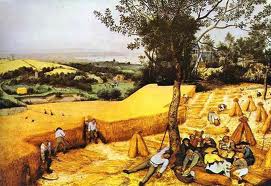
The name of this festival is Irish Gaelic for “Commemoration of Lugh”. Some authors give the meaning as marriage, gathering or feast (in the name of) of Lugh. The meaning remains basically the same: Lugh is the Deity of Lughnasadh, and there is a feast.

Although Lugh gives his name to this festival, it is also associated with Lugh’s foster mother Tailtiu, who is said to have cleared the way for the introduction of agriculture in Ireland, thus linking Lughnasadh to the land and the harvest.

The modern Irish Gaelic name for the month of August is Lúnasa. In Scottish Gaelic Lunasda means the 1st of August.
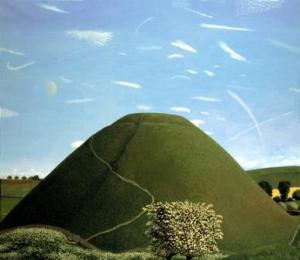
Silbury Hill

Silbury Hill -Wiltshire

One of several historic sources for the four Celtic fire festivals Imbolc, Bealtaine, Lughnasadh und Samhain is the early medieval Irish tale “Tochmarc Emire” (The Wooing of Emer), which is part of the Ulster Cycle. In the form we know it today it was written in the 10th or 11th century CE, but it is safe to assume that this tale – like so many others – contains a much older nucleus.

The tale narrates how the hero Cú Chulainn is courting Emer. He receives several tasks to fulfill, one of them being that he must go without sleep for one year. As Emer utters her challenge, she names the four major points of the Irish-Celtic year, as they are also mentioned in other Irish sources. Doing this, she does not use the solar festivals, nor Christian ones, which were certainly well known and established by the 10th century. Instead Emer choses the first days of each season.
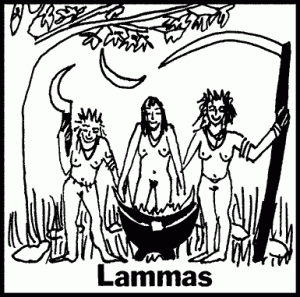
One of these days is Lughnasadh, marking the beginning of fall. It takes place on the 1st of August, a date internationally agreed upon, or on the day of the full moon next to this date, if you want to celebrate when the ancient Celts probably did.

Since the Celtic day started with sunset, the celebration takes place on the evening before the calendaric date.

Lughnasadh marks the begin of the noticeable descent of the Sun into the darkness of winter. From the connection between the Earth (female principle) and the Sun (male principle), the marriage of the Sky Father (Sun God) with the Earth Mother we celebrated at Bealtaine, emerge the fruits of the first harvest of the year. Lughnasadh is a time of joy about the first fruits. It is also a time of tension, because the dark days of winter are coming nearer, and most of the harvest is not brought in and stored away yet.

The God of the harvest is the Green Man (also known as John Barleycorn). He sacrifices himself every year in order to enable human life on Earth. In some areas his death is mourned with wreaths decorated with poppies or cornflowers.

The grain is cut, part of it goes into bread and nutrition, another part is stored away and used as seeds next spring, to create new life. Looking at that, thoughts about sacrifice, transformation, death and rebirth are also part of Lughnasadh.

The celebration of Lughnasadh includes the ritual cutting of the first grain and an offering thereof, possibly the making of a first meal and the ritual eating of it, as well as dancing. Fires are mentioned, but fire or light do not play such a prominent role as with the other fire festivals. This is probably because August is a warm month in most of Europe, with still long daylight hours, where no fire is needed. Lughnasadh celebrations are reported from Ireland, Isle of Man, Scotland, Wales and Cornwall.

Another name used for Lughnasadh is “Lammas”, from the old-anglosaxon “hlaef-mass” (loaf mass, mass where the first loaf of bread is consecrated), which developed into the later medieval English and Scottish “Lammas”. As such it is first mentioned in old anglosaxon chronicles as early as 921 CE as “Feast of the First Fruits”. In an agricultural society the begin of the harvest was a natural occasion to celebrate and to give thanks to the Divine for Its gifts.

In Bavarian tradition, the most important festival in August is the “Ascension of Mary” on the 15th of August. On this day, numerous processions through the villages and along the fields are held. During these processions, decorated bundles of herbs, consisting of up to 77 different herbs, are carried along on wooden sticks. These herbs are specially consecrated and stored away then. They are used for ritual incense burning later in the year, e.g. during the “rough nights”, the time of the winter solstice. An older name for this festival is “Maria Kräuterweih”, meaning “Day of Mary and the Consecration of Herbs”.

The beginning of fall was marked by the day of St. Bartholomäus (Bartholomew) on August 24th.

The original Lughnasadh customs have obviously shifted to August 15th and additionally into numerous local and regional harvest celebrations. Lughnasadh is the therefore only one of the eight Celtic festivals which did not survive in Bavaria as a compact celebration ON or near the original date (August 1st). Harvest celebrations are instead dispersed over all of August. This might have to do with the geographical situation of Bavaria, where August tends to be a rather warm month, and harvest and fall are a bit later than elsewhere.

The Deities of Lughnasadh are Danu (Anu), the Mother of Gods and Men, and Lugh, the patron of scholars, craftsmen, warriors and magicians. Lugh is also known as Lugh Samildánach (the Many Skilled) and Lugh Lámhfada (Lugh with the Long Arm). It is disputed among authors whether this refers to Lugh’s magical spear or to the rays of the Sun. Lugh seems to have been worshipped, like his Greek and Roman correspondences Hermes and Mercury, mostly on elevations, hills or mountaintops.

The plant of Lughnasadh is any form of grain or corn, in a wider sense every fruit of field and garden.

The meaning of Lughnasadh on the inner planes is the start of the harvest of the fruits that we have sown in spring. Which things or projects are reaping in us in the moment? What would we like to finish, what to start anew? Do we have the insight that to every harvest there is a necessity of preparation?

The essence of Lughnasadh is the joy of life under the knowledge that darker times are moving in. We take in the warming rays of the Sun and store their power for the times coming. At the time we celebrate the next festival, Alban Elfed, it will be fall and the warm summer days will already be a memory.

Of course Lughnasadh is a very good time to express gratitude to the Gods and the Earth Spirits for their blessings and gifts that we are now receiving. In times of microwave and frozen pizza it may seem anachronistic to thank for the harvest. Many of our modern food stuffs make it hard to still recognize the waving grain on the field in them. And yet there is a way to connect with nature via the food that we eat. This is especially valid for self-harvested fruits. But also conscious eating, eating with focus on the food and not on TV or newspaper, is one way of expressing our thanks for the harvest – all year round, but especially at Lughnasadh.

Links:
http://www.mythinglinks.org/Lammas.html
http://www.chalicecentre.net/lughnasadh.htm

Sponsored by ‘The Stonehenge Tour Company’ – www.StonehengeTours.com

Merlin at Stonehenge (I will be at Avebury Stone Circle this year for Lammas)
The Stonehenge Stone Circle Website
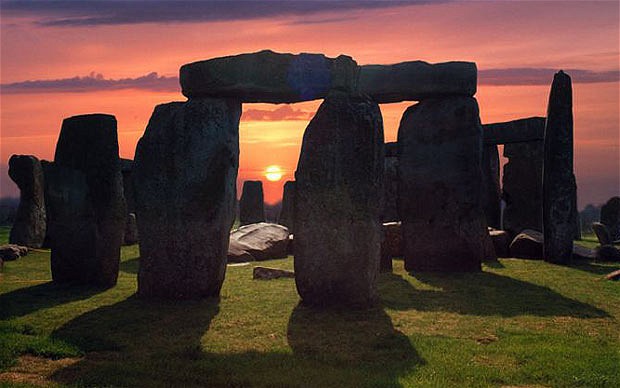
Costly changes to Stonehenge

30 06 2011

English Heritage seems determined to spend millions of pounds of taxpayers’ money on not altogether necessary changes to the site around Stonehenge in Wiltshire.

The saga began last summer when the Coalition government cancelled a proposed £25m scheme to replace the current visitor centre and shift it one and a half miles away from the stones, as well as diverting the nearby A344. This was all for aesthetic reasons so as to present the Neolithic stones in a more pleasing environment away from horrid cars and pesky tourists.

At the time, the Chief Secretary to the Treasury said the scheme had been devised when the previous government was going on a ‘pre-election spending spree’ and the English Heritage proposal did not ‘represent good value for money’.
Stonehenge

Five months later, however, the scheme was back on when English Heritage received a £10m grant towards the new visitor centre and closure of the A344. Now, it is happy to see taxpayers’ money spent on a costly public inquiry into diverting the road away from the site so as to ‘restore the dignity’ of the stones.

Chief Druid Arthur Pendragon, however, smells a rat, believing the costly shifting of visitor centre and road will actually reduce public access to the prehistoric monument and give English Heritage a monopoly over visiting it.

‘We will not shrink from our responsibilities,’ he says, ‘to ensure that future generations can enjoy the environs of Stonehenge and the World Heritage site without being excluded for fiscal reasons.’

Still, maybe we should be grateful for small mercies, as English Heritage had earlier asked for £500m so they could place the section of road that runs nearest the stones to be hidden away in a tunnel. Even the previous free spending government thought this was going too far and binned the extravagant scheme in 2007.

Sponsored by the Stonehenge Tour Company – www.StonehengeTours.com

Merlin @ Stonehenge
The Stonehenge Stone Circle Website
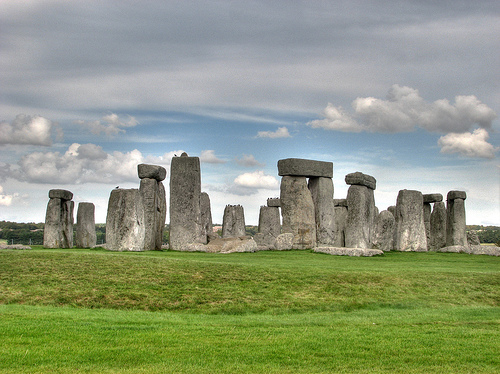


18,000 gather at a cloudy Stonehenge for all-night summer solstice party

22 06 2011

Tens of thousands of revellers gathered at Stonehenge for an all-night party to celebrate the longest day of the year this morning – despite grey clouds that obscured the sunrise.

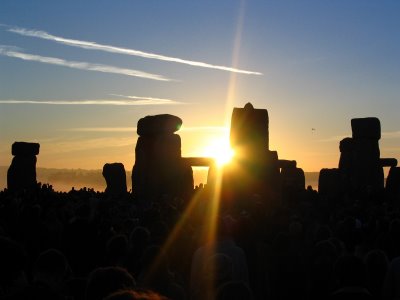
Here comes the sun: Revellers cheer as the sun finally breaks through the clouds, more than a couple of hours after daybreak

Here comes the sun: Revellers cheer as the sun finally breaks through the clouds, more than a couple of hours after daybreak

English Heritage say 18,000 revellers descended on the site that is usually roped off to the public to witness dawn at exactly 4.43am. The event is significant for druids, who were joined by hippies, pagans and tourists as well as hordes of younger visitors in search of a good party.

However the number of people who camped out overnight or arrived early to witness the dawn was down on previous years because of the poor weather and the solstice falling on a weekday.

There was no beautiful sunrise into clear blue skies – heavy overnight rain gave way to overcast but dry skies as the sun rose, greeted by cheering and applause.

The self-styled King Arthur Pendragon, the veteran druid who led the event, said it had passed off smoothly.

‘We didn’t get a great sunrise but it was dry,’ he said. ‘Everyone seems happy with the result.

‘It is great to see the stones being used in this way, as opposed to the usual manner with tourists being herded around.’

Stonehenge, which is between 4,000 and 5,000 years old, has in past years been the site of confrontations between revellers and police.

But Superintendent Gavin Williams, of Wiltshire Police, said the majority of the crowd this year were well-behaved and ‘came to see the sunrise in the spirit of the event’, which was policed in the same way as night spots in the county. However, two men were photographed fighting at the event.

Of the 20 arrests, 11 were for drugs offences and five for public

Mr Williams said: ‘Although it was disappointing that some individuals chose to bring drugs with them, they were dealt with robustly.’

English Heritage, which manages the Stonehenge site on Salisbury Plain in Wiltshire, said the atmosphere had been ‘peaceful and good natured’.

The annual event is a modern take on solstice celebrations which were once a highlight of the pre-Christian calendar. Celebrations focus on the Heelstone, which sits just outside the main circle, and is aligned with the midsummer sunrise.

The solstice is one of the few times access is granted inside the stone circle, which has been roped off since 1978 following years of erosion and vandalism.

Stonehenge’s origins remain a mystery, but one theory is that it is a huge astronomical calendar. Others say an ancient sun-worshipping culture aligned the structure with the midsummer sunrise and the midwinter sunset.

The World Heritage site was used as a cremation cemetery since its inception, archaeologists say, but it is unclear if that was its principal function.

It was build in three phases, with stones brought from up to 150 miles away, between 3000 BC and 1600 BC

http://www.dailymail.co.uk/news/article-2006112/Summer-solstice-18-000-gather-cloudy-Stonehenge-night-party.html

Sponsored by the Stonehenge Tour Company – www.StonehengeTours.com

Merlin @ Stonehenge
The Stonehenge Stone Circle website


Druids celebrate summer solstice at Stonehenge for first time as mainstream faith

17 06 2011

When robed Druids gather at Stonehenge for the summer solstice in next week, they will be worshipping at the prehistoric stone-circle monument for the first time as members of an established religion under British charity law. The classification means members of the ancient pagan tradition, which some see as a curiosity of Britain’s ancient past, have mainstream status equal to the Church of England. The change of status, which is controversial, gives them tax advantages.
Stonehenge Druid

Opponents of the change of status regard it as a mistake made for the sake of political correctness by a government agency, the Charity Commission. The see it as the first step to recognition of Scientology, sorcery, witchcraft or even the Jedi as religions eligible for tax-exempt status. The 2001 census recorded the country as having some 390,127 Jedi, the fictional Star Wars religion, in England and Wales.

After a four-year campaign by the Druids, the Charity Commission says it accepts that they worship nature and believe in the spirits of places such as mountains and rivers, as well as in divine guides.

Druids are best known for the gathering at Stonehenge each year on Jun 21 to greet the dawn, but they hold festivals eight times a year to mark stages in the solar and lunar cycles. Encyclopedia Britannica describes the ancient Druids as members of the learned class among the Celts. They do not worship a single god or creator, but seek to cultivate a sacred relationship with the natural world. The earliest known records of the Druids come from the 3rd Century BC. 

RELATED READING:

Druids: Worshippers of nature who were said to sacrifice humans (Telegraph 2 Oct 2010)
http://www.telegraph.co.uk/news/newstopics/religion/8037258/Druids-Worshippers-of-nature-who-were-said-to-sacrifice-humans.html

MELANIE PHILIPS: Druids as an official religion? Stones of Praise here we come (Daily Mail 4 Oct 2010)
http://www.dailymail.co.uk/debate/article-1317490/Druids-official-religion-Stones-Praise-come.html?ito=feeds-newsxml

Stonehenge preperations
THOUSANDS of revellers are expected to descend upon Stonehenge for this year’s Summer Solstice.
Sunrise will occur at about 4.45am on June 21, which is the longest day of the year.
English Heritage is opening Stonehenge to the public from 7pm on Monday, June 20, to 8am the following day.
The Solstice car park, just off the A303, will open from 7pm on Monday, June 20, with last admission at 6am on Tuesday, June 21. Access to the stones and car park will be free of charge but organisers have advised people to use public transport where possible.
Wilts and Dorset bus company will be running a regular service from Salisbury railway station, via the bus station, from 6.30pm on the Monday evening through to 1.15am on Tuesday. A return service will operate frequently from 4am to 9.45am on Tuesday – with buses stopping at any recognised bus stop along the Amesbury route

Sponsored by ‘The Stonehenge Tour Company’  www.StonehengeTours.com

Merlin at Stonehenge
The Stonehenge Stone Circle website


Druids celebrate summer solstice for first time as mainstream faith

8 06 2011

When robed Druids gather at Stonehenge for the summer solstice in 2011, they will be worshipping at the prehistoric stone-circle monument for the first time as members of an established religion under British charity law. The classification means members of the ancient pagan tradition, which some see as a curiosity of Britain’s ancient past, have mainstream status equal to the Church of England. The change of status, which is controversial, gives them tax advantages.
Stonehenge solstice druids

Opponents of the change of status regard it as a mistake made for the sake of political correctness by a government agency, the Charity Commission. The see it as the first step to recognition of Scientology, sorcery, witchcraft or even the Jedi as religions eligible for tax-exempt status. The 2001 census recorded the country as having some 390,127 Jedi, the fictional Star Wars religion, in England and Wales.

After a four-year campaign by the Druids, the Charity Commission says it accepts that they worship nature and believe in the spirits of places such as mountains and rivers, as well as in divine guides.

Druids are best known for the gathering at Stonehenge each year on Jun 21 to greet the dawn, but they hold festivals eight times a year to mark stages in the solar and lunar cycles. Encyclopedia Britannica describes the ancient Druids as members of the learned class among the Celts. They do not worship a single god or creator, but seek to cultivate a sacred relationship with the natural world. The earliest known records of the Druids come from the 3rd Century BC. 

RELATED READING:
Druids: Worshippers of nature who were said to sacrifice humans (Telegraph 2 Oct 2010)
http://www.telegraph.co.uk/news/newstopics/religion/8037258/Druids-Worshippers-of-nature-who-were-said-to-sacrifice-humans.html

MELANIE PHILIPS: Druids as an official religion? Stones of Praise here we come (Daily Mail 4 Oct 2010)
http://www.dailymail.co.uk/debate/article-1317490/Druids-official-religion-Stones-Praise-come.html?ito=feeds-newsxml

Sponsored by ‘The Stonehenge Tour Company’ www.StonehengeTours.com

Merlin @ Stonehenge
The Stonehenge Stone Circle Website
Follow me on twitter for all the Solsice news: http:/www.TWITTER.COM/ST0NEHENGE


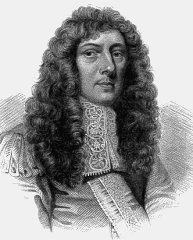
John Aubrey (12 March 1626 – 7 June 1697)

7 06 2011

John Aubrey died today 1697

John Aubrey

John Aubrey

John Aubrey was an English antiquary and miscellaneous writer. He was born in Kingston, Wiltshire, and educated at Trinity College, Oxford. His most famous work is “Lives of Eminent Men”, which was not published, however, until 1823. He also wrote “Miscellanies” (1696), a collection of stories and folklore, the “Natural History of Wiltshire” (edited by John Britton, 1847), and a “Perambulation of Surrey”. His most important contribution to the study of British antiquities, the lengthy and discursive “Monumenta Britannica”, remains in manuscript. A scheme was afoot in 1692 to publish the manuscript and a prospectus and a specimen page were issued in 1693, but nothing more came of the project. It contains the results of Aubry’s field-work at Avebury and Stonehenge and notes on many other ancient sites, including Wayland’s Smithy. Apparently the original title of the manuscript was to be “Templa Druidum”.

It was Aubrey who, in 1648, at the age of 22, while out hunting with some friends near Avebury in Wiltshire, recognized in the earthworks and great stones placed about the landscape in and about the village a great prehistoric temple. In the following century, William Stukeley was to develop the claim that Avebury was as an ancient cult centre of the Druids.

In addition to his ‘discovery’ of the Avebury complex, Aubrey is also remembered for his inclusion in a plan of Stonehenge in his “Monumenta Britannica” of a series of slight depressions immediately inside the enclosing earthwork. Curiously, Stukeley does not record them in his painstaking examination of the site, and it was not until excavations undertaken in 1921-25 by the Society of Antiquaries that they were found to be holes cut in the chalk to hold timber uprights. A total of 56 holes were discovered and named the Aubrey holes in honour of John Aubrey’s observation. These holes are now recognized as belonging to the first phase of the monument’s construction.

What a guy…………………….

Sponsored by ‘The Stonehenge Tour Company’ www.StonehengeTours.com

Merlin at Stonehenge
The Stonehenge Stone Circle Website


Secrets of the Stones

30 05 2011

As the summer solstice will soon see thousands gather at Stonehenge, an archaeologist discusses his belief that the Wiltshire monument is evidence of a great civilisation which once thrived there

Sunrise at Stonehenge - June 21st

Sunrise at Stonehenge - June 21st

IN three weeks’ time, thousands of devotees will gather in the dark in a field in Wiltshire. They do this every year and each time their number grows.

They are there to celebrate the midsummer Solstice, the longest day of the year, and will wait until daybreak when the sun sends a piercing ray of light through Stonehenge, the ancient ruin they have come to venerate.

This primordial circle of stones, eight miles north of Salisbury in Wiltshire, exerts an extraordinary power over the people of Britain.

Some, like the Druids, claim it is the source of a mystical power while others, curious but sceptical, believe it to be the site of an ancient monument that has no relevance to the way we live today.

Whatever their conviction they are all missing the point according to one man who has studied the location for 30 years and believes he knows the real reason why Stonehenge is so special.

“Stonehenge is unique; it is already recognised as a World Heritage Site but it’s more than just an ancient curiosity, it is the place where civilisation began,” says writer and archaeologist Robert John Langdon.

“It’s simply the most amazing place in the world and we should all be celebrating the meaning of this incredible place.”

Robert fell under the spell of Stonehenge as a boy. He explored the massive stone monoliths and was intrigued by the official explanation of their origin. As the years passed and he learned more he was puzzled by contradictions in official explanation of its origins.

“The carbon dating of the stones is not consistent. I have discovered that stone post holes in what is now the car park for the site predate the accepted date for Stonehenge by 5,000 years. If this evidence is accepted, and it has been denied for years, it turns the conventional history of Stonehenge, and the rest of the world for that matter, on its head.”

If Robert is right, and he says he has the scientific evidence to prove he is, Stonehenge is the most important archaeological site in the world. It would mean Salisbury Plain is home to the first and most significant civilisation on earth. So how could this have happened?

“The geography and landscape of the site would have been very different. Britain would have been emerging from the last Ice Age, so much of the country we now recognise would have been under water. Stonehenge would have been on an estuary that led to the open sea. Too many important facts have been ignored,” says Robert.

“There is evidence that water was close, but that has been classified as a moat which I believe is wrong. It is also believed the stones were dragged over land from Wales which is misleading.

“The large sarsen stones came from an area close to Avebury which is not far from Stonehenge.  To have brought them overland all the way from Wales takes no account of the fact that according to the official time scale Salisbury Plain at that time would have been heavily forested which would have made that access all but impossible. The bluestones, which are the key to the secret of Stonehenge, were smaller and did come from Wales but they were brought there by boat.”

Robert’s hypothesis is based on his conviction that the men who built Stonehenge were much more skilled and sophisticated than is currently believed. In 10,000 BC, the Mesolithic period, he believes that men in ancient Britain developed the first recognisable civilisation and that Stonehenge was their greatest achievement.

“These were extremely capable people who found a way of drilling into stone and used sophisticated mortice and tenon joints to erect Stonehenge but most importantly they mastered the seas. These boat people, as we can call them, travelled widely and traded and these are the people I believe that Plato referred to in his writings on the origins of civilisation.”

So why did these people make such an effort to build Stonehenge? what was it intended to do?

“Stonehenge was accessible to boat people from  all over Europe and Mesolithic men and women came there to be cured of their ailments and to depart from this world. The alignment of the site to the sun and the moon is immensely significant but so is the presence of the bluestones in the circle.

“Bluestone turns blue in water, and was believed to have incredible powers of healing. Evidence from bones found close to Stonehenge suggests that the original inhabitants practised sophisticated medical procedures which included dentistry, limb removal and even brain surgery.

“These were not the fur-clad hunter gatherers living in mud huts that many mistakenly believe were the builders of Stonehenge. They were instead members of a great civilisation that moved out, leaving Stonehenge as the only surviving physical evidence of their genius.”

If Robert Langdon is right Stonehenge is much older than the Pyramids and there is a surprising connection between the two ancient stone monuments.

“Over the centuries the climate and landscape in Britain changed. Mesolithic men used their seafaring skills to move to a more sympathetic environment. They traded widely and sailed south to what is now the Mediterranean and moved in along the coast from Egypt to Greece and Italy. The ancient Egyptians’ skill at engineering and building with stone had its roots in the lessons learnt by the men who built Stonehenge.”

It is not only archaeologists with a theory about the significance of Stonehenge. The Druids regard it as a sacred place where they perform spiritual rituals.

Robert says: “I don’t have any disputes with the Druids and they don’t seem to mind me. I’ll be rubbing shoulders with lots of them at the midsummer solstice. The Druids may well have their beliefs but they came on the Stonehenge scene very late in the day.

“They would have discovered the site as an ancient and abandoned temple and taken it over but that’s all right. I get on pretty well with other archaeologists too although they do tend to dismiss my work, but that’s their loss. Stonehenge has a special hold on me and the more I learn about it the more fascinated I become. I’m already working on a new book which I think will ruffle quite a lot of feathers.

“In a sense what we know as Stonehenge is almost the foundations of a much bigger edifice. Stonehenge is, despite all the myths that have been fostered, a very special place. It is, I believe, the birthplace of civilisation and we all ought to give it the respect that it really deserves.”

Article from The Express Newspaper
Sponosred by ‘The Stonehenge Tour Compant’ www.StonehengeTours.com

Merlin @ Stonehenge
The Stonehenge Stone Circle Website