An exhibition opened at Stonehenge on Friday, showing the remarkable similarities between prehistoric cultures in Britain and Japan.
The exhibition features over 80 Japanese artifacts, none of which have been displayed in Britain before, including a 5,000-year-old Jomon Flame Pot, according to English Heritage, the body which cares for Stonehenge.
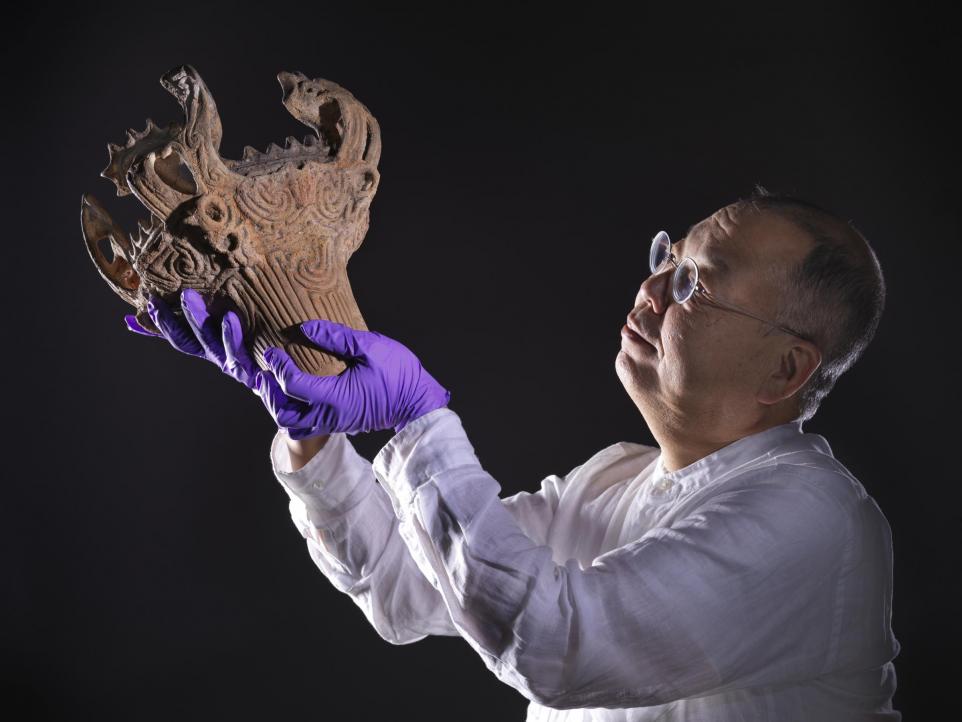
Circles of Stone: Stonehenge and Prehistoric Japan opened on Friday (September 30) will feature ancient Japanese artefacts – none of which have been displayed in Britain before.
It will be Britain’s first ever exhibition about Japanese stone circles, and through more than 80 objects, will tell the story of prehistoric cultures six thousand miles apart.
The star of the show, the ‘flame pot’ is designated in Japan as a national treasure and is a highly decorated type of Jomon ceramic made in central Japan about 5,000 years ago. The Jomon period in Japan spanned the European Mesolithic, Neolithic and early Bronze Age periods put.
Senior curator for English Heritage, Martin Allfrey said: “Exploring what is happening elsewhere in the prehistoric world is key to understanding the significance of Stonehenge. It’s tantalising to look at what these extraordinary objects from Japan tell us about the similarities between these communities who, while thousands of miles apart, were perhaps ideologically closer than one might imagine.”
The exhibition also explores more recent connections between Stonehenge and Japan through the art of Japanese woodblock printer Yoshijiro Urushibara who worked in Britain in the 1920s and British archaeologist William Gowland.
Gowland used the techniques he had learnt in Japan to influence the way in which he carried out excavations and interpreted the evidence at Stonehenge at the dawn of the 20th century.
Martin added: “Equally intriguing is the fact that William Gowland’s experience working on archaeological sites in Japan at the end of the nineteenth century helped him to develop the first scientific study of Stonehenge and to formulate new theories about the building of Stonehenge and its alignment with the sun.
“We are thrilled to tell the story of this extraordinary place and time, and hope to bring a little bit of Japanese inspiration and wonder to the visitor centre at Stonehenge.”
Also featured in the exhibition will be fragments of clay figurines, known as dogu in Japanese.
These have been found at Jomon settlements and stone circles and it has been suggested they may have represented earth goddesses or spirits, for use in fertility or healing rituals.
The exhibition is a partnership project with the Sainsbury Institute for the Study of Japanese Arts and Cultures at the University of East Anglia.
The exhibition runs until August 2023.






 StonehengeNews
 travelstonehenge

 Stonehenge Stone Circle News and Information