Ancient faeces suggests that Stonehenge builders ate badly cooked cow offal during epic winter feasts.

23 05 2022

An analysis of fossilised poo found at the site of a prehistoric village near the monument has uncovered evidence of eggs laid by parasitic worms.
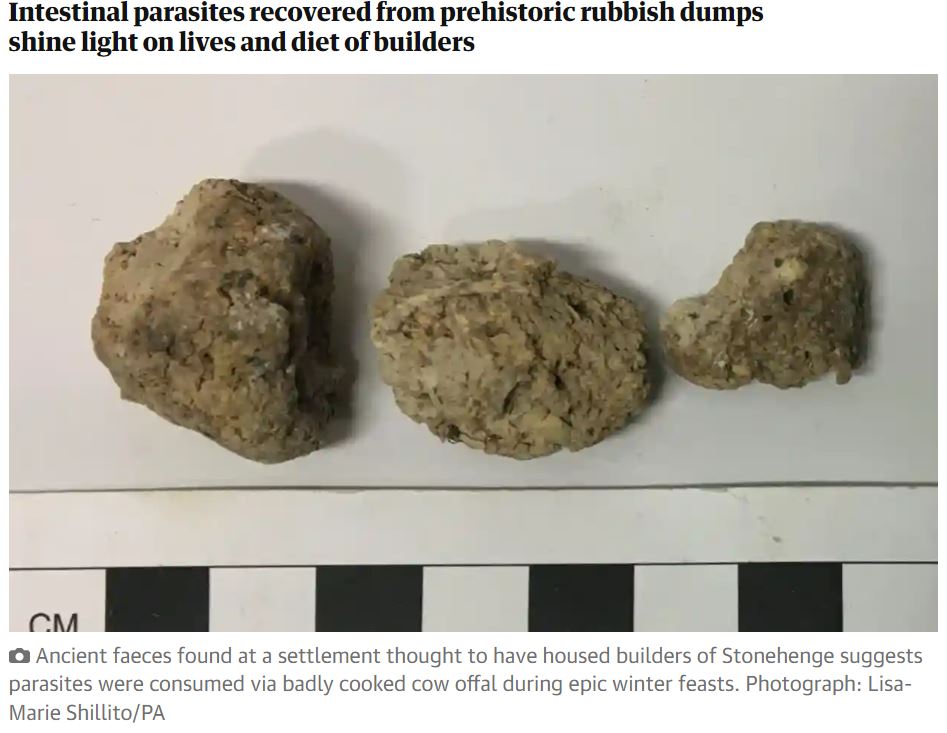
This suggests the inhabitants feasted on the internal organs of cattle and fed leftovers to their dogs, scientists say.

The Neolithic settlement at Durrington Walls is just 1.7 miles from Stonehenge and dates back to 2500 BC, when much of the famous site was constructed.

A team of archaeologists led by the University of Cambridge analysed 19 pieces of faeces which had been preserved at the settlement for more than 4,500 years.

Five of them — one belonging to a human and four to dogs — contained the eggs of parasitic worms.

The researchers suggest this is the earliest evidence for intestinal parasites in the UK where the host species that produced the faeces has also been identified.

‘This is the first time intestinal parasites have been recovered from Neolithic Britain, and to find them in the environment of Stonehenge is really something,’ said lead author Dr Piers Mitchell, from Cambridge’s Department of Archaeology.

‘The type of parasites we find are compatible with previous evidence for winter feasting on animals during the building of Stonehenge.’

Scientists believe that the presence of these parasites indicates the person had eaten the raw or undercooked lungs or liver from an already infected animal.

RELEVANT STONEHENGE LINKS:
Prehistoric poo gives hints about the builders of Stonehenge – The Metro
Stonehenge builders ate undercooked offal, ancient faeces reveals – The Guardian
Stonehenge builders ate parasite-infested meat during ancient feasts, according to their poop – Live Science
Visit Stonehenge with the megalithic experts and hear all the latest theories – STONEHENGE GUIDED TOURS
Stonehenge breakthrough as Neolithic chefs’ ‘winter feast’ secrets unveiled for first time – The Express
Secrets surrounding 5,000-year-old Stonehenge revealed in ancient fossilised POO – The Mirror

The Stonehenge News Blog
Follow us on Twitter and Facebook for all the latest Stonehenge News
http://www.Stonehenge.News
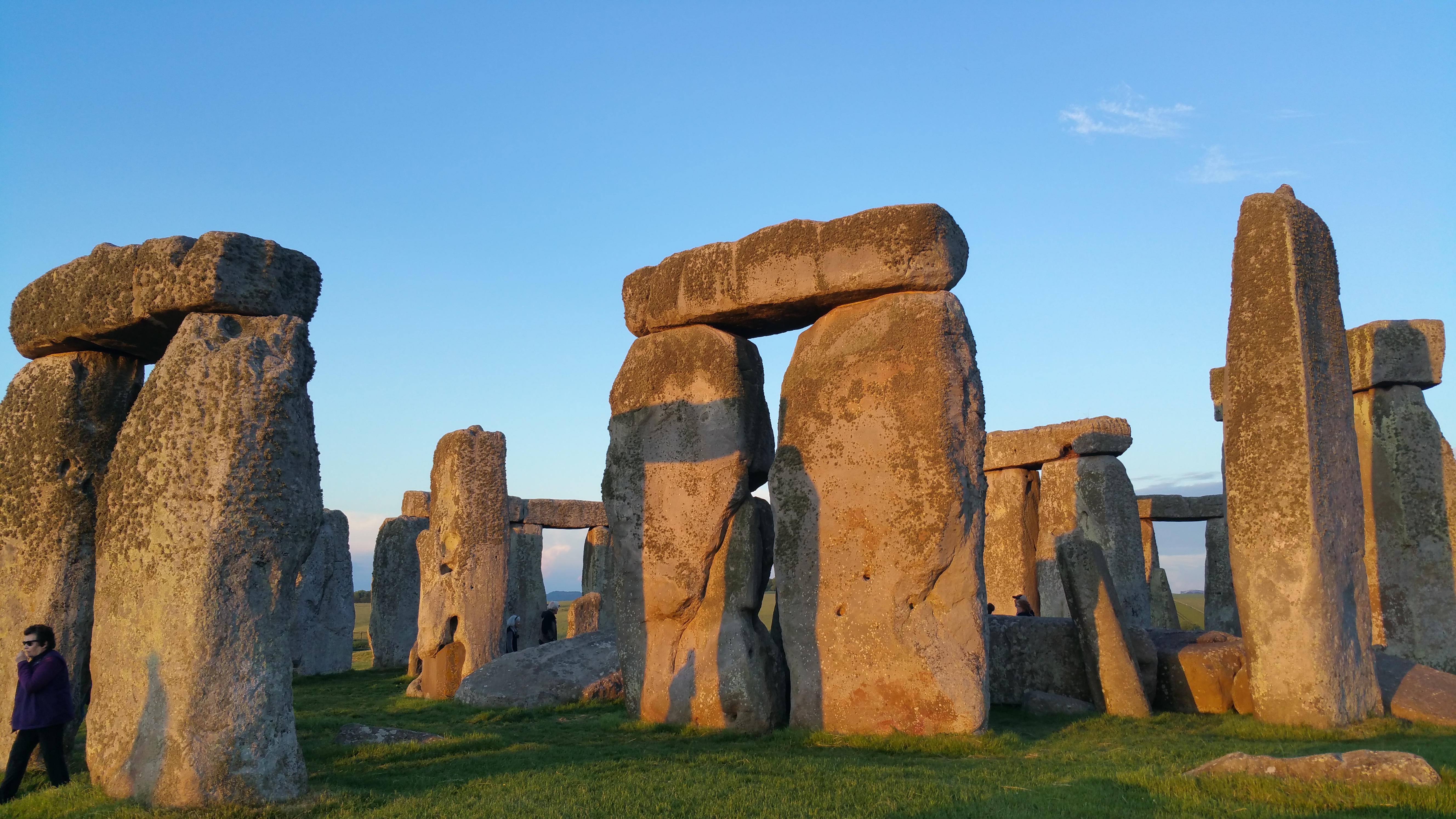


Red deer, wild boar and elk would have roamed the Stonehenge area 4,000 years before the stones were constructed, according to new research.

3 05 2022

Scientists examined a nearby Mesolithic site and found the area was not a forest as previously thought.

Instead they believe it would have been populated by grazing animals and hunter-gatherers.

Scientists from the University of Southampton have examined Blick Mead, a Mesolithic archaeological site about a mile away from Stonehenge.

The work has helped build a picture of the habitat at the Wiltshire site from up to the Neolithic period (4,000 BC).

Samuel Hudson, from the University of Southampton, explained: “There has been intensive study of the Bronze Age and Neolithic history of the Stonehenge landscape, but less is known about earlier periods.

“Past theories suggest the area was thickly wooded and cleared in later periods for farming and monument building.

“However, our research points to pre-Neolithic, hunting-gatherer inhabitants, living in open woodland which supported aurochs and other grazing herbivores.”

The research team analysed pollen, fungal spores and traces of DNA preserved in ancient sediment, combined with optically stimulated luminescence and radiocarbon dating to produce an environmental history of the UNESCO World Heritage site.

“The study indicates that later Mesolithic populations at Blick Mead took advantage of more open conditions to repeatedly exploit groups of large ungulates (hoofed mammals), until a transition to farmers and monument-builders took place,” explained a university spokesman.

“In a sense, the land was pre-adapted for the later large-scale monument building, as it did not require clearance of woodland, due to the presence of these pre-existing open habitats.”

The findings of the team from Southampton, working with colleagues at the universities of Buckingham, Tromso and Salzburg, are published in the journal PLOS ONE.

RELEVANT STONEHENGE NEWS:
Stonehenge ‘built on land inhabited by deer and wild boar’ – BBC
New study reveals landscape 4,000 years before Stonehenge construction – HERITAGE DAILY
Stonehenge ‘built on land inhabited by deer and wild boar 4,000 years earlier’ – SALISBURY JOURNAL
Pre-Stonehenge Landscape Was Perfect for Hunter-Gatherers, Study Shows – ANCIENT ORIGINS
Visit Stonehenge with the megalithic experts and hear all the latest theories – STONEHENGE GUIDED TOURS
Stonehenge ‘was built on land inhabited by deer and wild boar 4,000 years earlier’ – THE INDEPENDENT

The Stonehenge News Blog
Follow us on Twitter and Facebook for all the latest Stonehenge News
http://www.Stonehenge.News