The Mystery of Stonehenge
Possible Meanings of the Stonehenge Monument
Despite a number of significant discoveries since the 1950s, the purpose of Stonehenge remains a mystery.
The Stonehenge monument on the Salisbury Plain in Wiltshire, England, has been a source of controversy since serious scientific study of its purpose and construction began in the mid-20th century.
Early Theories
Three phases of Stonehenge construction were originally proposed in the 1940s and 1950s. They were referred to as Stonehenge I, II, and III, and were dated from approximately 1900 to 1600 BC. However, since the 1950s, there have been significant advances in the dating of the monument. The most recent scientifically-verified dates for the monument are approximately 3100 to 3000 BC for Stonehenge I, 3000 to 2600 BC for Stonehenge II, and 2600 to 1930 BC for Stonehenge III.
One effect of the corrected dates for the various phases of Stonehenge was to force a re-evaluation of the theories associated with the construction of the monument. The new dates show that the construction of Stonehenge preceded the Mycenaean civilization of the central Mediterranean. Thus, the traditional explanation that ideas and people diffused from the Mediterranean region to Western Europe and influenced local cultures is no longer tenable. In other words, it is now generally accepted that Stonehenge was an indigenous development.
Neolithic and Bronze Age Cultures
Stonehenge I and II, the first stages of construction of the monument, and part of Stonehenge III were built during the late Neolithic period of Britain, which dates from approximately 3200 to 2000 BC. The lifestyle of the Neolithic or New Stone Age period as a whole, in Britain and elsewhere, was characterized by farming, pottery and the building of elaborate ceremonial monuments, such as earth and stone circles.
Henges, which refer to circular formations of earth, timber, or stone, were an important ceremonial structure during the Neolithic period. Stonehenge I is not a typical henge, but rather resembles a causewayed enclosure, a feature found earlier in the Neolithic period and characterized by a roughly circular bank inside a discontinuous chain of quarry ditches. In general, henges may have served a multifunctional purpose as both social meeting places (for livestock fairs, trade, political meetings, religious ceremonies and so forth) and sites for the celebration of major astronomical events.
Stonehenge III construction took place in the late Neolithic and early Bronze Age and is primarily associated with the Wessex culture. This culture may have been a chiefdom society and may have been characterized by well-developed religious and ceremonial activities. The archaeological evidence that might support these suggestions include the marked increase in the number of burial mounds (barrows) during the period of Stonehenge III, the fact that there were now mounds for single rather than communal burial, and that these graves were often richly decorated.
What is Stonehenge?
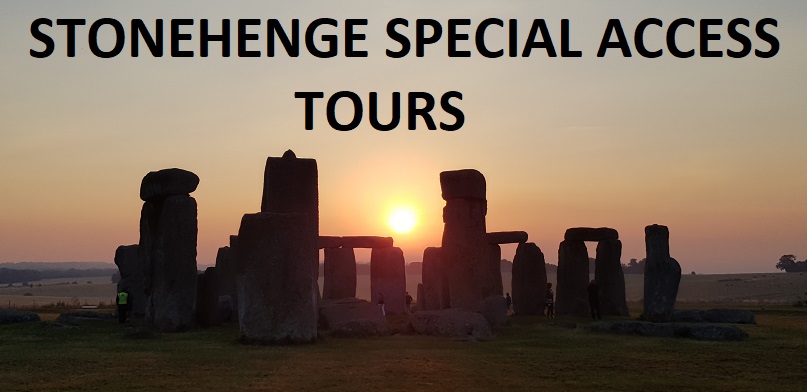
A number of theories have been proposed to explain the purpose of Stonehenge. Some scholars have focused on the sunrise alignment of the monument, which can be viewed by an observer on midsummer morning standing in the centre of the site and looking northeast toward the heel stone, as evidence for the early astronomical significance of Stonehenge. Others have suggested that the 56 Aubrey Holes found on the site coincide with the 56-year cycle for tracking the motions of the moon and thus served as an early computer for tracking eclipses of the moon and sun.
In the 1960s, it was discovered that about 240 Stonehenge alignments translated into celestial declinations. These declinations, which correspond to latitude circles on Earth, seemed to fit the extreme positions of the sun and the moon. So in phases I and III of the monument, the midwinter moonset and sunrise and midsummer sunset and moonrise could be viewed when standing within the monument and looking out in the direction of the corresponding declinations. Various theories have been proposed to explain the Stonehenge sun-moon alignments, including the possibility that the alignments form a calendar, particularly useful to tell the time for planting crops, and that they were used as part of religious ceremonies. However, some scholars have questioned the alignments and have suggested that they may be coincidental or not purposeful.
Other archaeologists prefer an evolutionary approach to explain the origin of Stonehenge. According to this explanation, Stonehenge began as a wooden structure, with posts set in a ring, and was eventually transformed into a stone ring. This wooden circle, and the stone circle to follow, may have been manifestations of some powerful religious belief. The religious importance of Stonehenge is suggested by the Aubrey holes, which contained deposits of cremated human bones, and thirty other cremations placed in the enclosure’s ditch and at other points within the monument, as if the site was later transformed into a cremation cemetery.
Two recent theories about the function of Stonehenge have been proposed. One of these suggests that the monument was part of a ritual landscape and was joined to another site, Durrington Walls, by their corresponding avenues and the River Avon. According to this theory, the Durrington Walls timber henge was oriented towards the rising sun on the midwinter solstice and represented a place of the living, while Stonehenge was aligned with the setting sun on the summer solstice and represented a place of the dead. A journey between the two sites was then part of a ritual passage from life to death to celebrate ancestors and the recently deceased. Another theory proposes that Stonehenge was a place of healing, as evinced by the high number of burials in the area and the discovery of trauma deformity in some of the graves.
Stonehenge Today
Excavations at Stonehenge continue today, the most recent being the Stonehenge Riverside Project digs held between 2003 and 2008, in the hopes of uncovering further evidence to explain the purpose of the monument.
Merlin @ Stonehenge
Stonehenge Stone Circle


I will be at Stonehenge on the Winter Solstice this year, (2010). I am attempting to discover the frequency of the lunar eclipse and full moon on the Winter Solstice.
I have read that the full moon occurs on the Winter Solstice every 19 years. I am guessing this corresponds to the Metonic Cycle.
From what I read above it appears that the eclipse is on a 56 year cycle. Is that correct?
Any information anyone can provide would be most appreciated.
Troy Wisehart, fimbultyrson@yahoo.com
Amazing fact that Stonehenge preceded the Mycenaean civilization and also that the measurement of the celestial declinations it was modeled on must have taken hundreds of years of knowledge, prior to its construction, to gather. Fascinating place!